“We do not inherit the Earth from our ancestors; we borrow it from our children.”
Introduction
In a time when the planet cries out for healing, when forests fall faster than they grow, when natural disasters displace the vulnerable, and when development too often comes at the cost of nature, the world needs more than awareness; it needs action. It needs people like Dr. Peter Mawaitho.
This biography is not just the life story of a man—it is the story of a movement, lived and breathed through the footsteps of one remarkable human being. It is a journey that stretches across dusty trails in rural Kenya, winds through the dense forests of Nigeria, rises into the boardrooms of Amsterdam, and finds purpose in pharmaceutical laboratories in the Netherlands. Through all this, one thing remains constant: Dr. Mawaitho’s unwavering dedication to protecting the planet while uplifting the people who live on it.
Born into a society where environmental concerns often take a backseat to economic survival, Peter could have chosen the path of indifference. But instead, he chose to see nature not as a resource to exploit, but as a legacy to protect. His early work in Samburu County with Farm Africa, guiding communities in forest conservation and introducing fruit tree nurseries and modern beekeeping, marked the beginning of a purpose-driven life; one that blended sustainability with social impact.
As the pages of this book will reveal, Dr. Mawaitho is not bound by geography or conventional roles. His work in Nigeria with VSO and Shell Company brought renewable energy solutions and forest awareness to remote communities. His time at Nainyoie and VEDAMAN allowed him to work with children, women, and disaster-prone communities: educating, organizing, and protecting.
Later, in the heart of Europe, he did not abandon his cause but carried it into new territory. At Fair Food International, he fought for ethical food systems. At Lekkerland BV, he ensured quality food supply chains. At Amgen Europe, he contributed to global healthcare solutions and launched an environmental campaign that resulted in the planting of over 1,200 trees in Kenya, proving that impact knows no boundaries.
This biography is built upon years of service, countless hours of fieldwork, and a deep reservoir of humility and resilience. It chronicles not just the milestones of a career, but the values behind them: compassion, responsibility, equity, and courage.
Through every chapter, you will witness a man who leads not with prestige, but with purpose. A man who does not separate professional excellence from environmental advocacy. A man who believes that real leadership lies in mentoring others, building inclusive teams, and listening before speaking. His story is also the story of a changing Africa, a connected world, and a future that must be green if it is to be livable.
“He who plants a tree plants hope.”
Phase 1: Roots Beneath the Soil
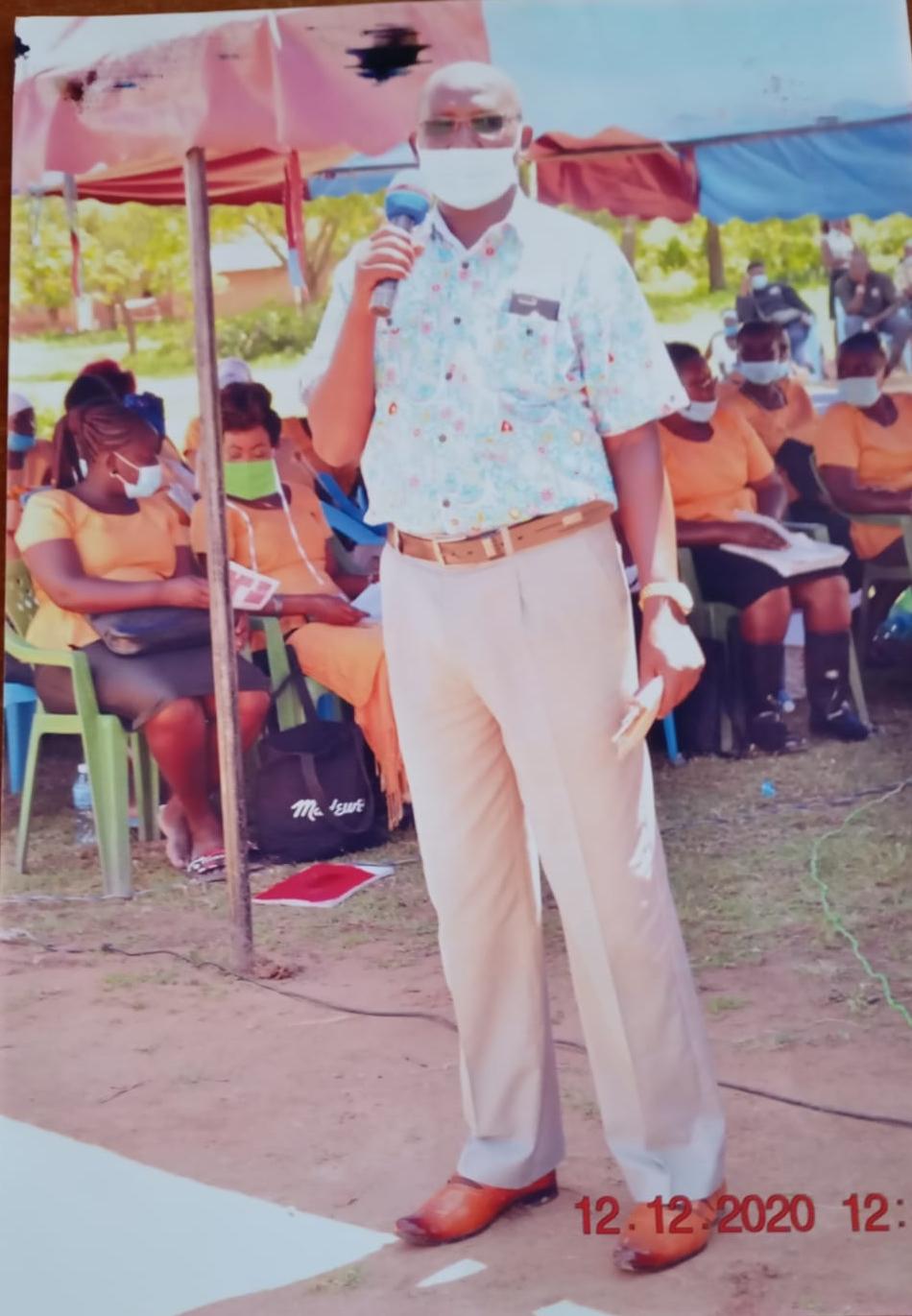
Long before the world called him “Doctor,” long before international agencies recognized his contributions, and before academic titles followed his name, Peter Mawaitho was simply a young man standing in the arid but resilient soil of Samburu County, Kenya, looking at the land not as it was, but as it could be.
It was the mid-1990s, Droughts were more frequent, livestock thinner, and the forests that once provided shade, food, and fuel were retreating with alarming speed. Dr. Peter, freshly armed with academic training in range management and a heart full of purpose, joined Farm Africa Kenya as a project officer. For many, it was a job. But for Dr. Peter, it was a calling: the first seed in a lifetime of service to the Earth.
He arrived not with lofty speeches but with listening ears. He walked through villages, sat under thorny acacia trees with elders, joined youth groups on nature walks, and shared tea with women who carried bundles of firewood on their backs. He understood something deeply profound; that conservation cannot be imposed; it must be cultivated from within the culture, values, and needs of a community.
Dr. Peter quickly earned the trust of local communities by grounding his initiatives in relevance. His first major intervention was deceptively simple: fruit tree nurseries. To many, trees meant shade or firewood. But Dr. Peter introduced a vision where trees were also livelihoods. Mangoes, papayas, citrus; he brought in saplings and paired them with practical training on grafting, watering techniques, and soil conservation. The trees grew, and so did hope. Children began walking past orchards on their way to school, mothers sold fruit at market stalls, and the barren land began to turn green, one sapling at a time.
But Dr. Peter didn’t stop there. He knew that true sustainability required more than planting; it required income alternatives that worked with nature, not against it. That’s when he turned to the ancient art of beekeeping, modernized for new purpose.
Under his leadership, communities were introduced to modern beehives, strategically placed along forest edges and within fruit orchards. The bees did more than make honey; they pollinated the very trees he had planted. It was nature working in harmony, and Dr. Peter was its conductor. The sale of honey became a new stream of income for many families, especially women and youth who took pride in managing the hives. Beekeeping clubs were formed. Trainings were held under trees. The buzz of bees became a symphony of regeneration.
“The environment is where we all meet; where we all have a mutual interest; it is the one thing all of us share.”
Phase 2 : The Forest Whisperer
The forest doesn’t speak in words, but Dr. Peter Mawaitho learned to understand its language. He could hear it in the rustling of dry leaves, in the silence of cut stumps, and in the sigh of winds sweeping across barren hills where trees once stood tall. By the time the new millennium dawned, Dr. Peter had begun to emerge as something rare: not just an environmentalist, but a forest whisperer; a quiet yet powerful voice that spoke both for nature and for the people whose lives depended on it.
His growing expertise and rising reputation led him from the familiar soils of Kenya into new terrain. In 1999, he joined Resource Projects Kenya, where he expanded his advocacy for environmental conservation by working directly with rural communities to raise awareness on forest protection and sustainable land use. It was a role that bridged knowledge with grassroots action, one where Peter spent long hours in community halls, village councils, and beneath trees, educating farmers, elders, and schoolchildren alike on why the forest was more than a source of firewood; it was a lifeline.
But it was his next chapter that would truly test his conviction and expand his influence.
In the year 2000, Dr. Peter embarked on a transformative journey beyond the Kenyan border. He was selected to serve with Volunteer Services Overseas (VSO) in Nigeria, an opportunity that would mark a pivotal evolution in his professional and personal philosophy. As an Environmental Protection Specialist stationed in Sokoto and other parts of northern Nigeria, Dr. Peter was no longer just teaching about trees; he was rebuilding relationships between people and nature, between policy and action, and between environment and justice.
The challenges in Nigeria were vast. The region suffered from deforestation, desertification, poverty, and fragile social structures. Fuelwood was the primary energy source, and trees were vanishing rapidly to meet daily cooking needs.
To many, environmental protection seemed like a distant concern, something for academics or international agencies. But Peter knew otherwise. He had seen firsthand how a degraded environment could deepen poverty, hunger, and displacement. And he knew that the key to transformation was not enforcement; it was empowerment.
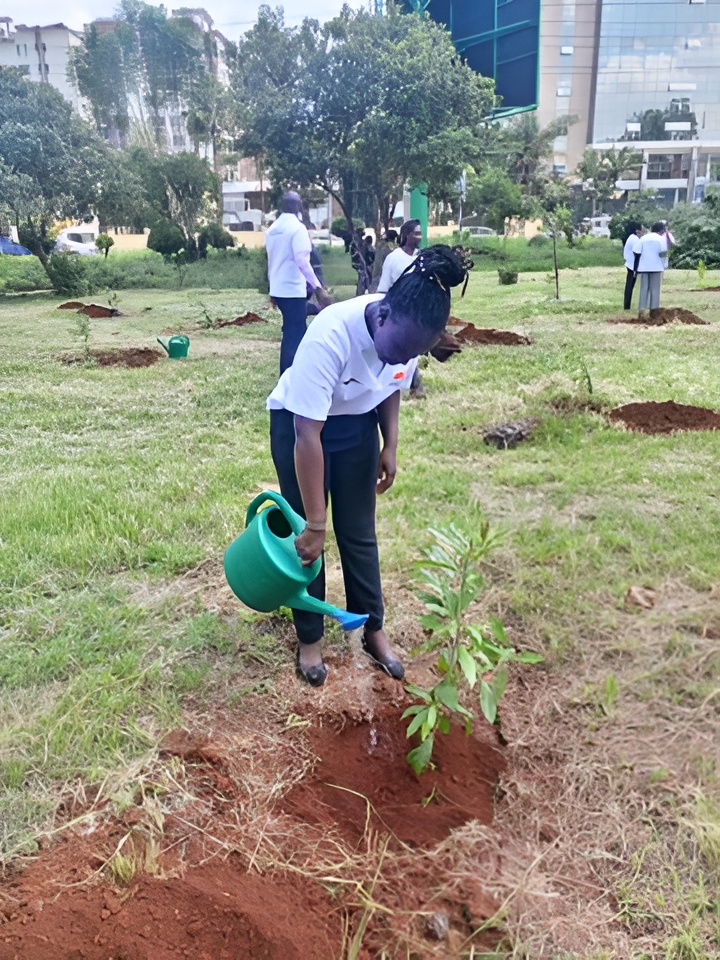
He began by mobilizing local communities, not with top-down orders, but through trust, empathy, and shared vision. Working with a consortium of community environmental conservation groups, Dr. Peter launched a bold afforestation campaign. He established tree nurseries, introduced fast-growing drought-resistant species, and trained local volunteers in how to nurture saplings into maturity. Tree planting became a communal ritual: villagers, students, and elders alike took part in what Dr. Peter called “reclaiming the future.”
“In the long term, solar power is the only way to go.”
Phase 3 : Solar Dreams in Africa
By 2003, the whispering trees of Nigeria had heard Peter Mawaitho’s voice. Now, the sun would begin to respond.
That year, Dr. Peter Mawaitho took on an ambitious role with Shell Oil Company in Nigeria, but not in the way one might expect from a major oil conglomerate. Rather than drilling into the Earth, Peter was looking up to the sun, and to the untapped promise it held for millions of African families living without access to clean, affordable energy.
In the rural villages and peri-urban communities across Nigeria, the daily act of cooking was a ritual burdened with danger, drudgery, and environmental harm. Women, often with young children strapped to their backs, walked for miles in search of firewood. Trees fell daily to meet the demands of fuel. The smoke from open fires blackened the walls of huts and the lungs of children. Burns, respiratory illnesses, and deforestation were the price of a hot meal.
But Dr. Peter saw something different. He saw light not just in the sun overhead but also in the potential of renewable energy to liberate the poor from this cycle. With characteristic curiosity and empathy, he embarked on a bold initiative to design and test solar cookers using locally available materials. This wasn’t a corporate experiment; it was a grassroots revolution in the making.
Working closely with engineers, local artisans, and community members, Dr. Peter led the development of affordable, efficient, and replicable solar cookers that could withstand the harsh West African climate while being simple enough for widespread adoption. The design was elegant in its practicality: a parabolic reflector to capture solar rays, a heat-resistant box to trap energy, and basic insulation to retain cooking temperatures. The materials? Sheet metal, mirrors, glass panels, cardboard, and clay are all readily available or easily adapted.
But the true brilliance of the project lay not in the hardware, it lay in how Dr. Peter brought people into the process.
He didn’t just hand out solar cookers. He trained women’s cooperatives, youth groups, and village elders on how to use them, repair them, and most importantly, understand their environmental value. Demonstrations were held in village centers. Pilot families were selected to test the cookers and provide feedback. Recipes were adapted to solar timing. Children came home from school to see their mothers cooking without smoke. And slowly, something extraordinary began to happen.
Note of Thanks
As this story comes to life in words, I am overwhelmed with gratitude for the people, places, and experiences that have shaped my journey and allowed me to serve the Earth and its people.
To begin with, I extend my deepest thanks to my family, the roots from which I draw strength. Your unwavering love, patience, and belief in me have been my anchor through every storm and my fuel through every success. Every tree I’ve planted, every policy I’ve helped shape, every community I’ve served, has, in many ways, been made possible by your silent sacrifices and constant support. Thank you for understanding the long hours, the travel, and the unrelenting call of purpose.
I offer heartfelt appreciation to my mentors, educators, and academic institutions, especially the University of Nairobi, Egerton University, and the University of the People, among others. You have not only sharpened my intellect but have expanded my vision. To all the professors, lecturers, and guides who nurtured my thirst for knowledge and leadership, thank you for lighting the path I now walk upon.
To my professional colleagues and partners across Kenya, Nigeria, and Europe especially those at Farm Africa Kenya, Resource Projects Kenya, Volunteer Services Overseas, Shell Nigeria, VEDAMAN Consultants, Nainyoie Community Organization, Fair Food International, Lekkerland BV, and Amgen Europe, thank you for believing in my ideas and walking beside me. Together, we have turned ideas into action, policies into programs, and initiatives into impact. Your camaraderie, cultural insight, and dedication made each challenge a lesson and every victory a shared one.
To the government departments, NGOs, forest services, and environmental activists who collaborated with me on tree planting drives, drought preparedness efforts, child labor eradication, and community education, thank you for standing tall with me in defense of our planet and its people. Your support transformed visions into reality.
To the community members, farmers, schoolteachers, street children, women’s cooperatives, and youth groups I’ve worked with over the years, thank you for welcoming me into your lives, for trusting in our shared mission, and for teaching me the real meaning of resilience, hope, and strength. You are the heartbeat of every success story I’ve been part of.
A special note of gratitude goes to my colleagues at Amgen Europe, your support extended far beyond the production floor. When I proposed the tree-planting initiative in Baringo County, you didn’t just listen; you rallied behind it. Your generosity and sense of global responsibility made it possible to plant 1,200 trees that will live long after us. You remind me that environmentalism has no borders.
To the unsung heroes: the drivers, technicians, data collectors, field workers, translators, and volunteers, your work often goes unnoticed, but never unvalued. You are the invisible thread holding the fabric of this journey together.
To the institutions that granted me the opportunity to expand my knowledge through online and global certifications—The Open University (UK), Penn State University, University of Groningen, Hanyang University, University of Warwick, University of Twente, University of the People (California), Orange County University (California), and St. Kennedy University (Florida), thank you for bringing the world into my study and empowering me to grow without limits.
To my readers, thank you for taking the time to walk through this journey with me. My hope is that these pages inspire you not just to admire the work, but to become part of it. The world doesn’t need perfect heroes; it needs passionate doers. My story is but one example of what’s possible when conviction meets community.
And finally, to Mother Earth, my eternal teacher, thank you for your boundless generosity, your patience despite exploitation, and your ability to heal when given even the smallest chance. Everything I do, I do for you.
In gratitude,
– Dr. Peter Mawaitho