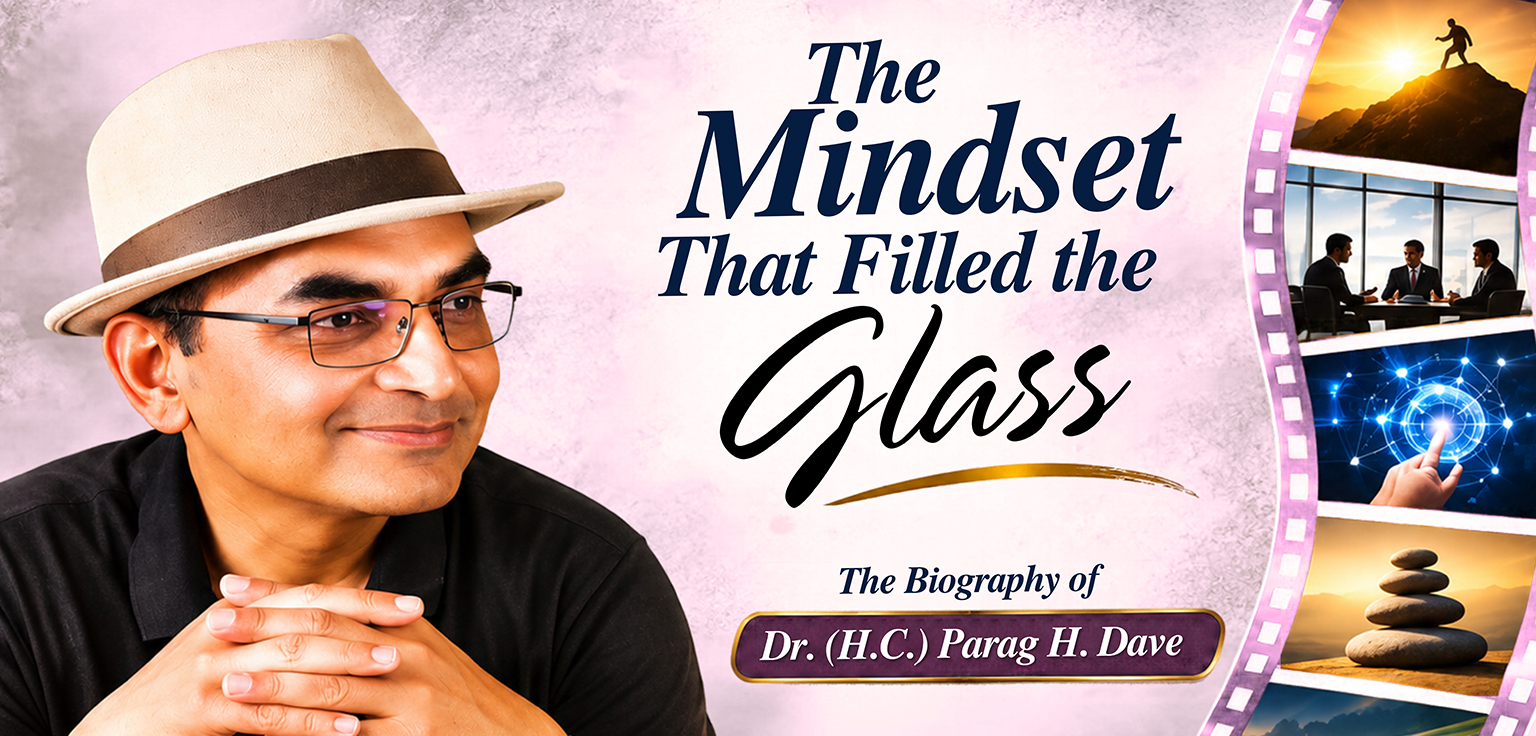
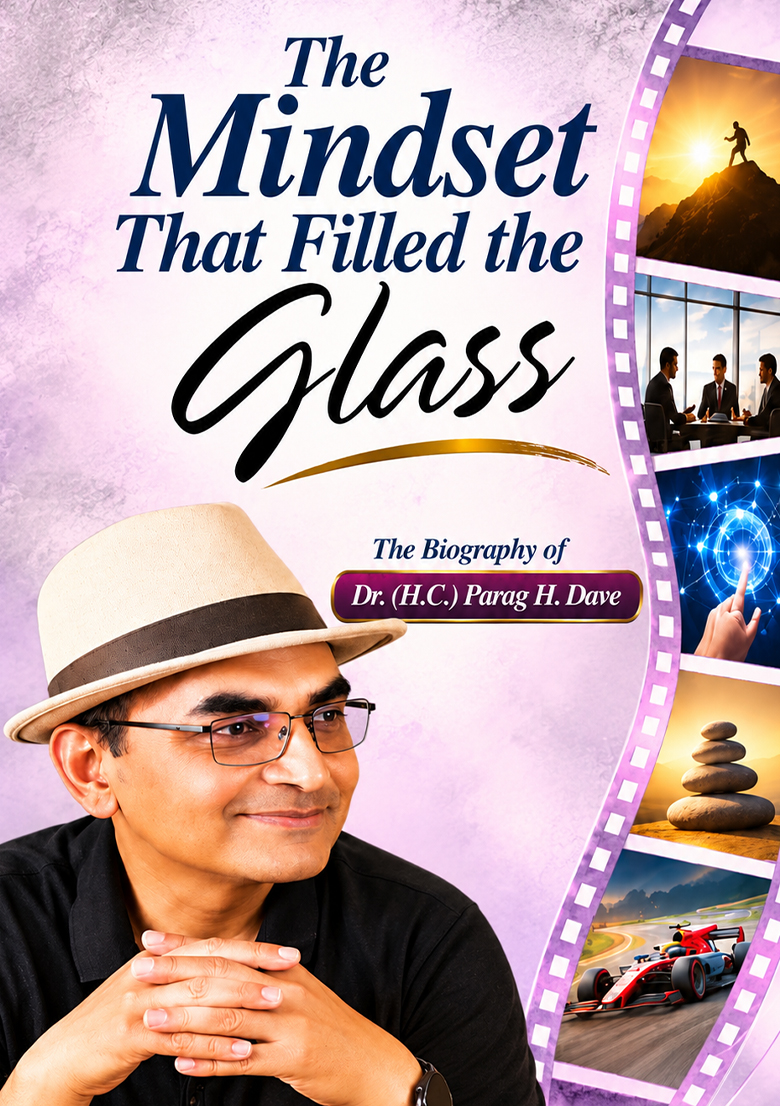
“The glass may not always be full, but the way we look at it determines what we are able to create from what we have.”
Introduction
After more than three decades in technology and consulting, Dr. Parag began to question whether constant activity was the same as meaningful progress. Meetings, conversations and the next task could keep a day full without ensuring the most important work was done. This reflection became the starting point for Busy Is a State of Mind, his examination of how people use their time and direct their effort.
The same question informs his work as a partner at PwC, where he leads a portfolio serving technology, media and telecommunications clients. Before recommending a technology solution, he tries to understand the business problem the organization needs to solve. His career has taken him from maintaining machinery and delivering technology projects to helping clients make broader business and technology decisions, while his technical background continues to inform those conversations.
His contributions to technology also extended into innovation. During his years at Accenture, Dr. Parag worked alongside colleagues to develop ideas that resulted in two U.S. patents, one related to application development management and the other to cloud resource utilization. Both patents were granted in 2019, marking a significant achievement in his professional career.
Away from work, meditation and Pranic Healing are part of Dr. Parag’s life. The practice has helped him meet difficult periods more calmly and reflect on his decisions.
Dr. Parag has long followed cricket, hockey, golf, football and Formula One. Since moving to the United States, he has also become especially interested in American football. He has collected caps from six or seven NFL teams so far, choosing official merchandise when he visits their cities. His goal is to watch a game in the home city of each of the 32 NFL teams and add a cap from each visit.
Enjoying the T20 World Cup with Friends in Australia
Friendship gives these interests another dimension. In 2022, he travelled to Australia with college friends to watch matches during the T20 World Cup. They attended games in Sydney, Melbourne and Perth, sharing cricket and memories of their college years. The occasion brought an established friendship into a new setting. Their conversations could move between the game before them and the lives they remembered, making the trip valuable for reasons that extended beyond the results on the field.
He also makes a point of meeting friends and relatives when travel brings him to their cities. Distance can make contact less frequent, but he does not want an available opportunity to pass simply because other arrangements are easier. His reasoning is direct: another meeting cannot always be assumed. This habit gives practical expression to the importance he places on staying connected. A visit does not need to mark a formal reunion to matter. Sometimes, being nearby is reason enough to make time.
"The way we grow depends greatly on the values we absorb before we even realize they are shaping us."
Phase 1: The Home That Shaped His Outlook
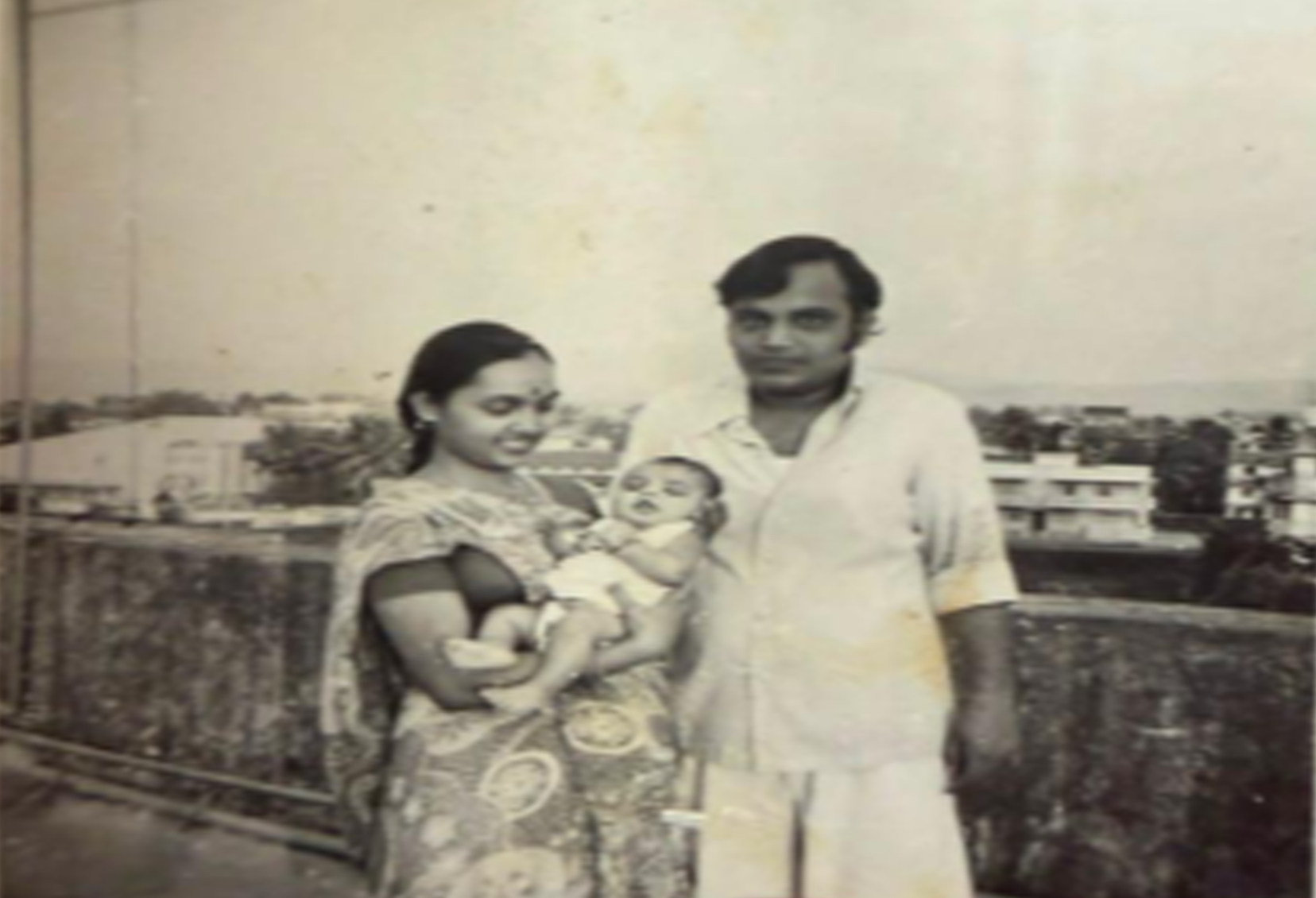
By half past eight in the evening, everyone was expected home for dinner. Growing up in Mumbai, Dr. Parag and his sister knew the meal as a time to talk openly about the day, raise concerns, and share anything troubling them. The family talked things through, so they would not carry the day’s worries into the night. It was an ordinary household routine, but it gave each of them a regular place to be heard.
His childhood was comfortable and happy. His father worked at a bank, and the household had sufficient means to meet its needs. There was food on the table and the security of a stable middle-class upbringing.
His father gave him a sense of security; he knew there was someone to turn to when he needed help. Haresh Dave’s practical, analytical approach also brought discipline to the household. Expectations were clear, and daily routines made room for study, rest, and recreation.
Mornings began early. As children, he and his sister were expected to rise early too. For him, this meant having enough time to complete his studies and take breaks without staying awake late into the night. The habit remained with him long afterwards. Even on weekends, waking around half past six or seven continued to feel natural. A routine established at home had become part of the way he organized his own day.
His mother approached situations differently. Nayana Dave tended to move past the unpleasant part of an argument and look towards what remained good. She did not dwell excessively on what had already happened. Her son saw how this allowed her to move forward without becoming caught in repeated analysis. Alongside his father’s caution, her manner gave him another example of how everyday concerns could be handled.
His grandmother provided a more protective kind of affection. As a child who was on the heavier side, he felt especially sheltered by her. After her death, adjusting to the absence of that protection was difficult. His attachment to her was an important part of his childhood, and losing her meant learning to live without a familiar source of comfort.
Beyond home, he had friends and enjoyed school. His circle was small, but some friendships continued into adulthood. At times, he felt self-conscious around more confident peers, even as he valued those relationships.
These were the beginnings of his life: family conversations, established routines, affection and companionship. Within that familiar setting, he also started developing interests of his own. His attention was beginning to turn towards how things worked, opening the next chapter of his childhood.
“Curiosity is where every journey begins. The willingness to explore creates the opportunity to discover.”
Phase 2 : Curiosity Behind the Circuit
Small transistor radios attracted the young Dr. Parag for reasons beyond the sound they produced. By the fourth or fifth grade, he was opening them, trying to make changes inside and attempting to put them back into working order. Electricity interested him, and handling these devices gave that interest a practical outlet. He could explore what lay beneath the casing, although his experiments did not always end as intended.
There were occasions when he blew the fuses at home. During one experiment, the disruption extended to the apartment building. His parents scolded him for these incidents, but they did not discourage him. These were childhood attempts to explore something that fascinated him, complete with mistakes and consequences. He later looked back on those experiments with humor, recognizing that he had often been breaking things rather than building them.
By the seventh grade, engineering had become an ambition he could name. Someone in his neighborhood was studying the subject, and the example caught his attention. Seeing someone around him pursuing engineering helped him recognize the field as a possible direction for himself. What mattered was the course of study itself.
The choice was not immediately settled in every detail. He considered whether to pursue a diploma or a degree. Eventually, he continued through the twelfth standard in science and secured a place in engineering. An interest that had begun through experiments at home now had an academic direction. He enrolled at Shah and Anchor Kutchhi Engineering College, where he studied electronics engineering.
His education remained rooted in Mumbai, the city in which he had grown up. In May 1995, he passed his Bachelor of Engineering examination in the electronics engineering branch. The University of Bombay formally conferred the degree at its convocation on 20 December that year. The qualification marked the completion of a course he had wanted to pursue since his school years.
Engineering also exposed him to computer science, although that part of the course was not extensive. His degree was in electronics, and the fuller development of his technical abilities in the software industry would come later. This distinction is important to his educational journey: his eventual work in software grew beyond the preparation provided by his original specialization. At graduation, he had completed his engineering studies; the direction his technical career would take was still unfolding.
He began working at around twenty-one or twenty-two. Further study did not disappear from his plans, and he undertook an MBA but left after the first year. He did not complete the qualification. In later life, this remained a specific regret. He wished he had found the strength and energy to finish his master’s studies alongside the demands of his early working years.
By the time he entered employment, he had moved from opening radios at home to earning a recognized engineering qualification. His experiments had found direction through formal study. The next stage would place him among working machines, where technical problems carried responsibilities beyond his own curiosity and where his interests would begin to expand again.
“Every role teaches something valuable. Growth comes when we remain open to learning from every experience.”
Phase 3 : A Young Engineer Finds His Path Beyond Borders
The first year of Dr. Parag’s working life involved machinery, maintenance, and shifts. At Vidhyut Metallics Ltd, where he began as a trainee engineer in 1995, his responsibilities included attending to injection molding machines. The company was associated with Topaz blades, and his work placed him within its manufacturing operations. Morning and night shifts formed part of that experience. His immediate concerns were practical, centered on equipment that needed attention and the work required to keep it functioning.
At the same time, his interests were extending towards software. As the information technology industry grew, he began learning to write code outside his existing responsibilities. This was a deliberate addition to his working life. He was employed in one area while developing the ability to enter another. The move into software therefore began before a new designation or employer made it official.
His next role, at Aplab Ltd, brought that change into his daily work. Joining as a support engineer in 1996, he moved from supporting machines to supporting software used by banks. It was an important transition in the nature of the problems he handled. The technical environment had changed, and the programming knowledge he was developing now belonged more directly to the field in which he worked.
However, support was not where he wanted to remain. He wanted greater involvement in development, with the opportunity to write software himself. That preference guided his next decision. After his time at the company, he joined Comtek Pvt. Ltd. as a software engineer in 1997. The organization was small, but the work offered the direction he was seeking at that stage.
There, he worked on software for the Bombay Stock Exchange and deepened his understanding of object-oriented coding. His reason for making the move was specific: he wanted to develop rather than concentrate solely on support. The position gave him room to pursue that interest through his work. Each change of employer had brought a corresponding change in what he was learning and doing, from machinery to banking software and then into development.
In 1998, he joined Datamatics Ltd as a senior software engineer. The role became an important turning point because it opened the way to his first overseas assignment. Until then, his early career had been taking shape through successive technical positions in India. Now, his work would take him to the United Kingdom.
The assignment lasted approximately four or five months. It was a professional visit, preceding the longer period he would later spend there. Its place in his journey is therefore distinct: this was the first occasion on which an employer gave him the opportunity to work abroad. The international experience that would become a substantial part of his career began with this limited assignment.
By the end of this period, he had gained both development experience and his first exposure to working in another country. The next chapter would bring a different kind of change, as marriage and a longer stay abroad joined his professional decisions to the beginnings of a shared life.
Note of Thanks
Dr. Parag offers his heartfelt thanks to the people who have contributed to his life, both through their presence and through what they have helped him understand. His appreciation reaches across family, friendship, and professional relationships, recognizing that the ability to move forward has often been strengthened by another person’s encouragement, perspective or trust.
He remembers his father, Haresh Dave, with love and thanks his mother, Nayana Dave, with deep affection. To his wife, Neera Dave, and his daughters, Urja and Dhruvi, he expresses gratitude for all they bring to his life. His sister holds an affectionate place in this acknowledgement, as does Kaya, whose companionship is cherished within the family.
He also values the friends who have remained part of his world through different stages of life. Some have known him since school or college; others became friends through work. The years and distances between meetings have not diminished his appreciation of these connections. Each belongs to a part of his life that he continues to hold close.
His thanks extend to the mentors and colleagues who invested in his development. He recognizes the value of guidance that requires time, patience, and an honest interest in his progress. He is grateful, too, for the opportunities to work alongside people whose abilities and perspectives helped him broaden his own understanding.
Those he has mentored also belong in this acknowledgement. Their continued progress matters to him, and he values having shared a part of their professional lives.
Across changing roles and circumstances, he remains grateful for the people with whom he has learned, worked, and shared his life, and for the relationships that continue to enrich it.
thanks,
– Dr. (H.C.) Parag H. Dave

AIMLAY is a leading global education platform empowering ACADEMIC and EXPERIENTIAL learners, uniquely focused on recognizing knowledge gained through experience and building a diversified community of doctorates and aspiring researchers.