“The choice will always be yours to make sure your life is proper and good enough, because nobody will do it for you.”
Introduction
Dr. Nigel Bobb’s story begins on Nelson Street in Trinidad, where one income supported a growing family. His mother had seven children, and he was the second. Poverty and crime shaped the surroundings. While he was still young, his aunt, Meave Phillips, took him and his brother Deon Bobb to Tobago to live with their grandparents. Plymouth replaced city danger with quiet nights filled by the sound of frogs.
Tobago offered safety without removing responsibility. Under the care of Emelda Bobb, whom he called Mommy, every day began with work. The children tended the garden, cared for animals, cleaned the house, and completed their chores before eating. Food was shared, clothes were passed down, and everything had to be appreciated. His father, a sign painter who worked with one functioning hand after an accident, remained in Trinidad and died when Dr. Nigel was ten.
At Plymouth Anglican Primary School, he struggled with spelling and needed time to understand the Tobago dialect. One teacher continued to assure him that understanding would come. When his name was announced among those who had passed the Common Entrance examination, even some of the teachers were surprised. Scarborough Secondary School brought a different pressure. Other students appeared to have more, while he sometimes wore trousers that were visibly too short. Evelyn Alexander noticed his circumstances and encouraged him to ignore the laughter, remain out of trouble, and concentrate on his studies.
He later attended Signal Hill Senior Comprehensive School, studying electricity and electronics, agricultural science, principles of business, metalwork, woodworking, and physics. Not every subject came easily, yet he continued trying. At home, electricity was not available, so examination preparation sometimes took place by candlelight.
Practical work entered his life while he was still at school. From a classroom balcony, he watched a garage across the road and eventually asked whether he could help after classes. There he met Keron Joseph, known as Baker, who taught him collision repair, welding, vehicle alignment, filling, and painting. He accepted every opportunity to work, learning from each experience and never considering any honest task beneath him. Each role helped him support his grandmother and develop skills he never considered unimportant.
A chance encounter connected his practical skills with the Trinidad and Tobago Fire Service, beginning a career that would combine technical ability, emergency response, and public service.
Away from duty, his life is anchored by his wife, Dr. Lyn Alison Blackman-Bobb, their children, Catholic faith, and the home they have built together. Their first date took them by boat to No Man’s Land near Pigeon Point, even though she could not swim at the time. Fishing, boating, and scuba diving later became ways to step away from professional pressure.
Dr. Nigel speaks about his early jobs with the same respect he gives his present responsibilities. His life has not been shaped by a desire to appear important. It has been shaped by survival, useful work, continued learning, family, and the willingness to leave his comfort zone whenever growth required it, while always remembering where he began.
“Most of my life was about trying to survive.”
Phase 1: From Nelson Street to Plymouth
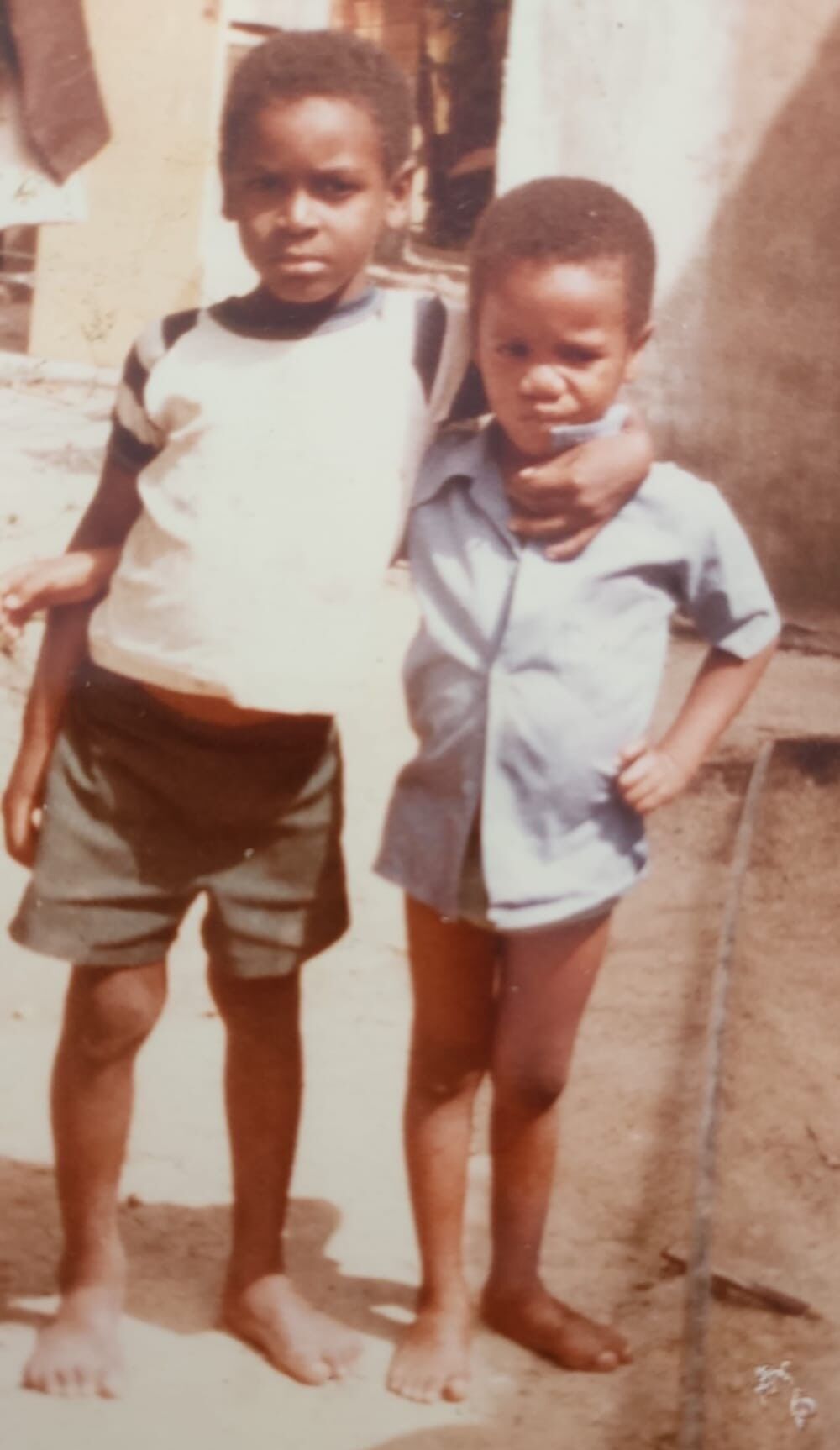
Long before professional titles entered his life, Dr. Nigel Bobb knew what it meant to live with very little. He was born in Trinidad in a place called Nelson Street, within surroundings he remembered as deeply affected by poverty. Both parents were present at the beginning, but only one person was working. There were children to care for, needs to meet, and few signs that life would suddenly become easier. Beyond the walls of the home, crime and violence were common enough to be heard at night.
His mother, Christiana Betty Bobb, had seven children. The oldest was Marlon Duncan, then there was Nigel, the second. Deon Bobb, then Leon Bobb, then Joel Reid, then Stefan Reid and finally Natoya Reid, the youngest and the girl of the family. Stefan later on died. Several had not yet been born when his life changed direction, and the distance between Trinidad and Tobago eventually divided their everyday experiences.
His father worked as a sign painter. One of his hands had been damaged in an accident, yet he continued painting with his right hand. He was still very young when he left Trinidad, so there was little opportunity for a lasting relationship to develop between them. His father remained behind, later became homeless, and died when his son was ten years old.
His mother was also largely absent from the years that followed. He has spoken plainly about hardly having either parent around him as he grew. The people who raised him, the place where he settled, and the responsibilities he learned there became the centre of his early world.
The change began with a visit from his aunt, Meave Phillips. She took him and his younger brother, Deon Bobb from Trinidad to Tobago. He was around six or seven years old. The other children had not all been born, and those who came later continued living in Trinidad. The move separated the boys from their parents, familiar surroundings, and the city environment into which they had been born.
Tobago presented an entirely different setting. In Trinidad, the night had often carried the sounds of crime and violence. In Plymouth, the night was quiet enough for frogs to be heard. There was more space, less immediate danger, and room for children to move without the same fear surrounding them. He described the contrast as being like chalk and cheese. One place had taught him that trouble could be close. The other showed him that daily life could have a different rhythm.
“What you have is yours. Do not watch what other people have, because you do not know how they got it.”
Phase 2 : The Values Beneath Emelda Bobb’s Roof
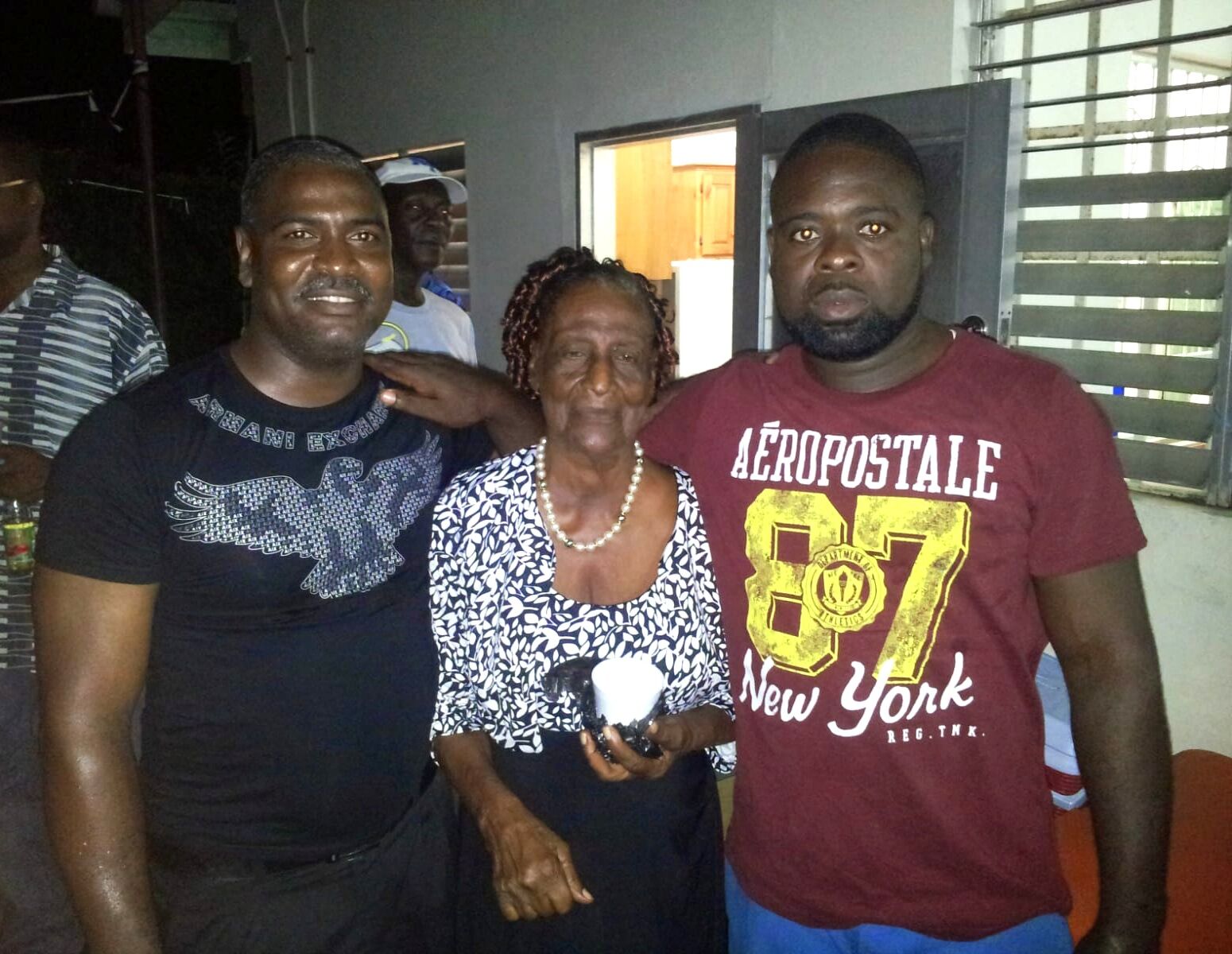
For Dr. Nigel Bobb, the person who stood at the centre of his childhood was his grandmother, Emelda Bobb. He called her Mommy, not as a casual term of affection, but because she was the woman whose presence shaped his everyday life. Love existed beside firm expectations, and belonging to the household meant accepting a share of its work.
Morning did not begin with food. It began with responsibility. The children went to the garden, cared for the animals, and completed whatever chores had been assigned. Only when the required work was done could they eat. This was not presented as punishment. It was simply how the home functioned. Everyone depended upon the effort of others, and no one was excused merely because he was young.
Resources were limited, but they were handled with fairness. If Emelda Bobb had one loaf of bread, everyone received a share of that same loaf. Nothing available to the family belonged only to the person who reached it first. Each member of the household had to recognise the needs of the others. The lesson was practical and immediate. Whatever entered the home had value because several people might depend upon it.
Cleanliness carried equal importance. His grandmother insisted that the house be put in order before anyone ate. Dirty dishes were not to be left sitting around, and the children were expected to complete their tasks properly. She disliked disorder and made her standards clear. The habit remained with Dr. Nigel long after childhood. Even after completing his own work, he cleans the kitchen and dries the sink with a cloth. What began as a rule in his grandmother’s home became part of the way he still approaches a task. Completion means leaving nothing neglected.
She was equally strict about conduct outside the home. The children were not permitted to remain out late, and bad company was treated as a danger that could bring trouble through the door. With so many boys in the household, maintaining order required consistency. The children understood what was expected and also understood that disobedience would have consequences.
One memory captures both her strictness and the alertness with which she watched over them. She once told Dr. Nigel and his cousins not to go to the beach. They decided to go anyway, believing they could remove the evidence by rinsing their skin before returning home. His grandmother had another way of finding out. She rubbed their heads, tasted her hand, and recognised the salt left by the sea. The punishment that followed left him requiring seven stitches. He never disobeyed that particular instruction again. Even while recalling the incident, he described her as a sweet soul. The memory remained serious, but affection was stronger than resentment.
Material differences were visible to him from an early age. New clothes and shoes were rarely his. Older children received them first, while he wore what had been handed down after others no longer needed it. He did not complain. His grandmother reminded the children that what they possessed was theirs and that they should not become distracted by what belonged to someone else. They could not know how another person had obtained something, so comparison served no useful purpose. Appreciation was more valuable than envy.
“I had to study for examinations with a candle, and I am here. Look, I am talking to you now.”
Phase 3 : The Name No One Expected to Hear

Education became important to Dr. Nigel Bobb long before learning felt easy. He began attending Plymouth Anglican Primary School in 1982, after settling in Tobago. The classroom introduced a difficulty that went beyond ordinary schoolwork. He struggled with spelling, and the local dialect sounded different from the language he had known in Trinidad. When people spoke, he sometimes needed extra time to process what they meant.
One teacher noticed the struggle without treating it as a permanent limitation. She continued assuring him that understanding would come. Her confidence was expressed in simple words. He would get it, she told him, and when he did, others would be surprised.
The Common Entrance examination became the first clear test of that belief. At the end of primary school, results were announced one name at a time, with each successful student being told which secondary school he or she would attend. He listened as the names were called. When his own name was announced, the reaction around him revealed how little some people had expected. Even teachers were surprised that he had gained a place at Scarborough Secondary School.
Among the relatives growing up beside him, only he and one uncle passed for secondary school at that point. His uncle earned a place at Bishop’s High School, while he went to Scarborough Secondary School. The result did not mean that every earlier difficulty had disappeared. It showed that the child who needed more time to understand a different dialect could still succeed once he found his footing.
He attended Scarborough Secondary School from 1989 to 1992. The move from primary to secondary education brought a new kind of pressure. In his earlier school, the people around him understood that his family did not possess as much as others. At secondary school, he entered an environment where many students appeared to have what he lacked. Clothing made the difference visible. A pair of trousers that was too short could reveal that it had belonged to someone else before reaching him.
Peer pressure was strong, but he did not describe himself as someone who had been bullied into silence. Fitting into the new environment required care. He had to manage what he possessed, meet small needs where possible, and prevent embarrassment from interfering with his education.
A teacher named Evelyn Alexander understood more than he needed to explain. She noticed the trousers that did not fit properly and recognised what they suggested about his home situation. Rather than drawing attention to it before others, she spoke to him directly. She advised him not to get into trouble and not to be disturbed by anyone who laughed. Laughter, she reminded him, was all they could offer. His responsibility was to attend school, study, and use the ability she believed he possessed.
Note of Thanks
Dr. Nigel Bobb wishes to thank those who looked after him, guided him and encouraged him on his way.
He thanks Meave Phillips, the aunt who made the decision that changed the environment in which he was to grow up. Her place in his life reaches back to childhood, when she carried responsibility for his wellbeing and helped place him within the care of family in Tobago.
His appreciation also goes to Denzil Sandy. He created an opportunity which developed into a career for life in service, valuing practical ability and encouraging professional growth. The trust he placed in Dr. Nigel Bobb became a motivation to study, qualify and continue to develop.
He thanks Keron Joseph, also known as Baker, for sharing the practical knowledge that formed his early foundation in vehicle repair. The patience to teach him collision work, welding, alignment, preparation, and painting gave him skills that remained useful throughout his professional life.
Dr. Nigel Bobb also recognises Gillian Lewis, whose encouragement led him to take the Institution of Fire Engineers examinations. That route proved valuable during a difficult course of study that required years of perseverance.
He wishes to thank his wife, Dr. Lyn Alison Blackman-Bobb. Her faith in him has inspired him to go farther than he has gone before. She has shared professional demands, family responsibilities, faith, and the routines that give their life together its meaning.
These expressions of thanks are offered. Each person contributed something different, yet every contribution carried the same message: he did not have to face every responsibility alone. Dr. Nigel Bobb pays tribute to them not just for what they did but also for the confidence, instruction and companionship they gave to his life.
thanks,
– Dr. (H.C.) Nigel Bobb