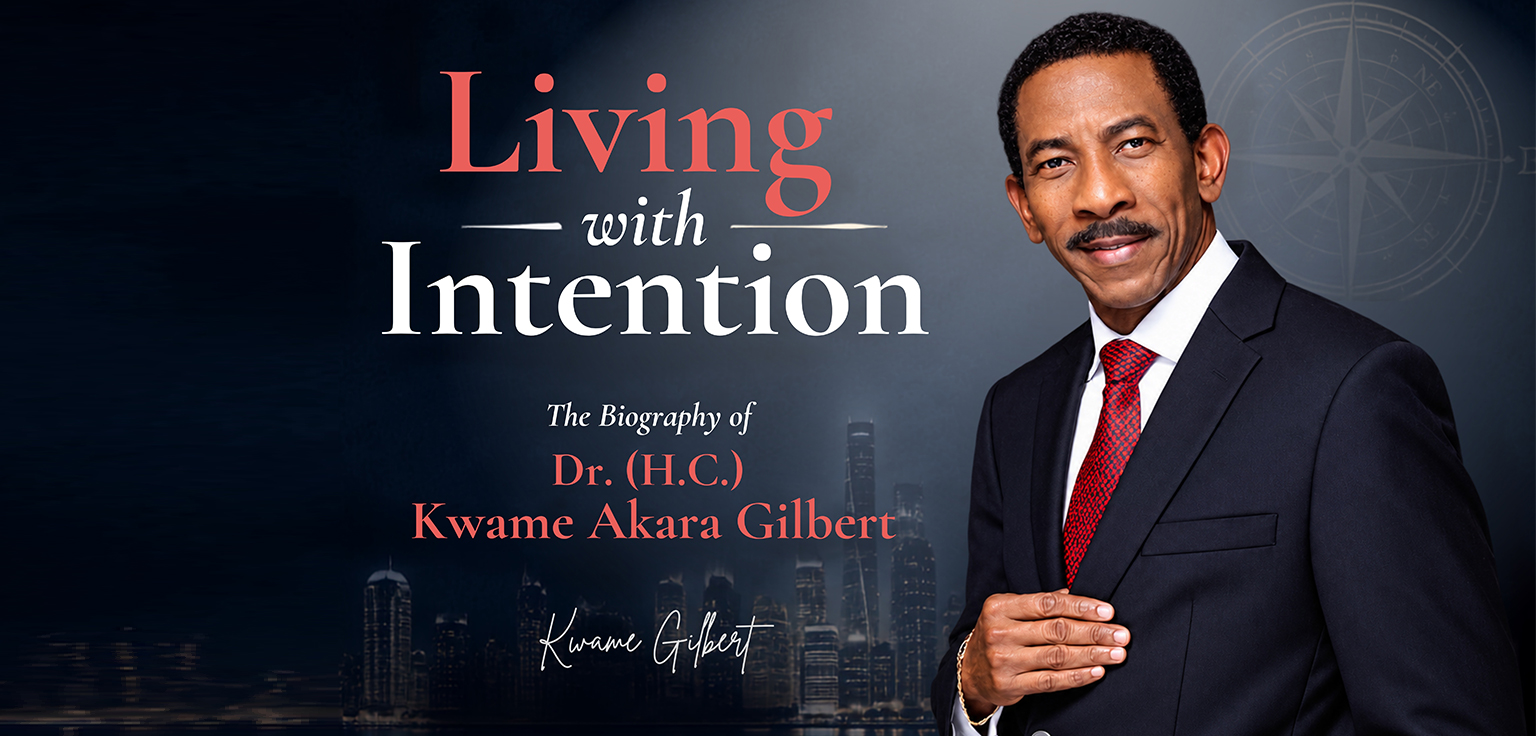
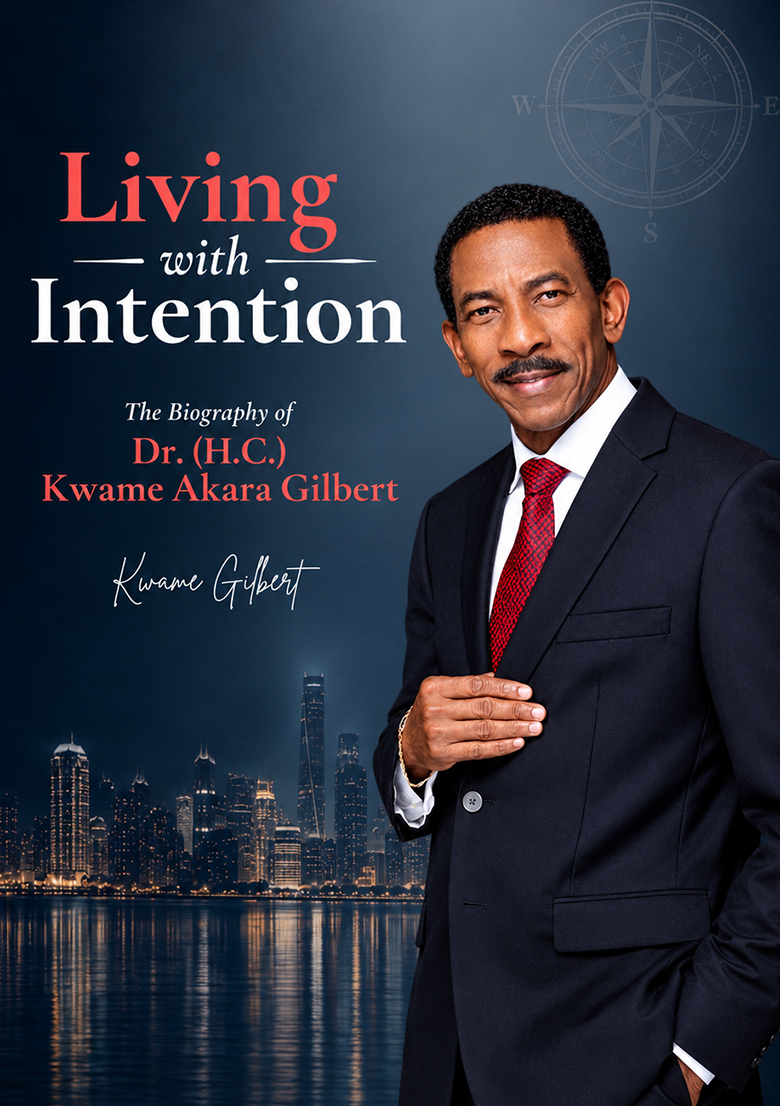
“Good intentions may reveal the heart, but intentional living gives purpose the discipline to change lives.”
Introduction
Dr. Kwame Akara Gilbert’s life is the quiet strength of a man shaped by discipline, faith, intellect and service. His journey began in Georgetown, Guyana, where childhood placed him within a large and deeply connected family and where the earliest lessons of his life came not through formal titles but through the daily example of people who lived with responsibility. His formative years were spent largely under the care of his grandparents, especially his grandmother, whose presence became one of the strongest influences on his heart, his values, and his understanding of selfless service.
From those early years, Dr. Kwame learnt that character is not built in a moment. It is shaped in the rhythm of home, in the discipline of family devotion, in the care of older siblings, in the correction of elders, and in the steady expectation that a child must grow with respect, faith, and purpose. His father, an educator, impressed upon him the value of education. His mother, who worked with the Guyana Police Force in earlier years, strengthened his understanding of discipline. His grandmother gave him a spiritual foundation that remained central to his identity. These influences did not remain separate in his life. Together, they became the inner framework from which he would later lead, teach, serve, and guide others.
Dr. Kwame had the support and protection of those older than him, and he learned to guide those younger than him. He loved reading from early on, and it quietly gave him a voice of guidance in the house. Books were more than a hobby. They became a doorway to reflection, thought, and expression. Even within a large family, he began to be considered someone others could approach for advice, wisdom, and direction.
Education formed another important part of his early path. Changing schools was hard, a test of patience and emotional stamina. Sometimes that meant leaving friends behind and having to re-establish himself with new teachers and new classmates. But he continued to do well academically, fuelled by his thirst for knowledge and often finding refuge in books. The library became a sanctuary, a place to thrive, especially when new environments bring social stress or harassment. Rather than being pulled into unnecessary conflict, he turned toward thought, knowledge, and discipline.
Sport also formed part of his younger years. He ran for his school and clubs, winning medals and bringing the discipline of athletics into his development. These early pursuits reflected a pattern that would continue through his life. Whether in study, sport, ministry, leadership, or public service, Dr. Kwame moved with seriousness of purpose.
His professional journey gradually widened from work into service and from service into national and community responsibility. His background in human development, human resource management, mentoring, coaching, and leadership placed him in spaces where people were not simply managed but developed.
This part of his journey was not only about position. It was about understanding how national decisions affect homes, families, vulnerable groups, and communities that need trust as much as they need resources. Dr. Kwame worked across social policy, community development, family empowerment, domestic violence intervention, men’s development, child protection, and community safety. His efforts helped create structures and programmes that sought to bring people closer to solutions, rather than leaving them distant from systems meant to serve them.
“Sometimes the first lesson in leadership is watching one person care for many without complaint. ”
Phase 1: Under His Grandmother’s Roof
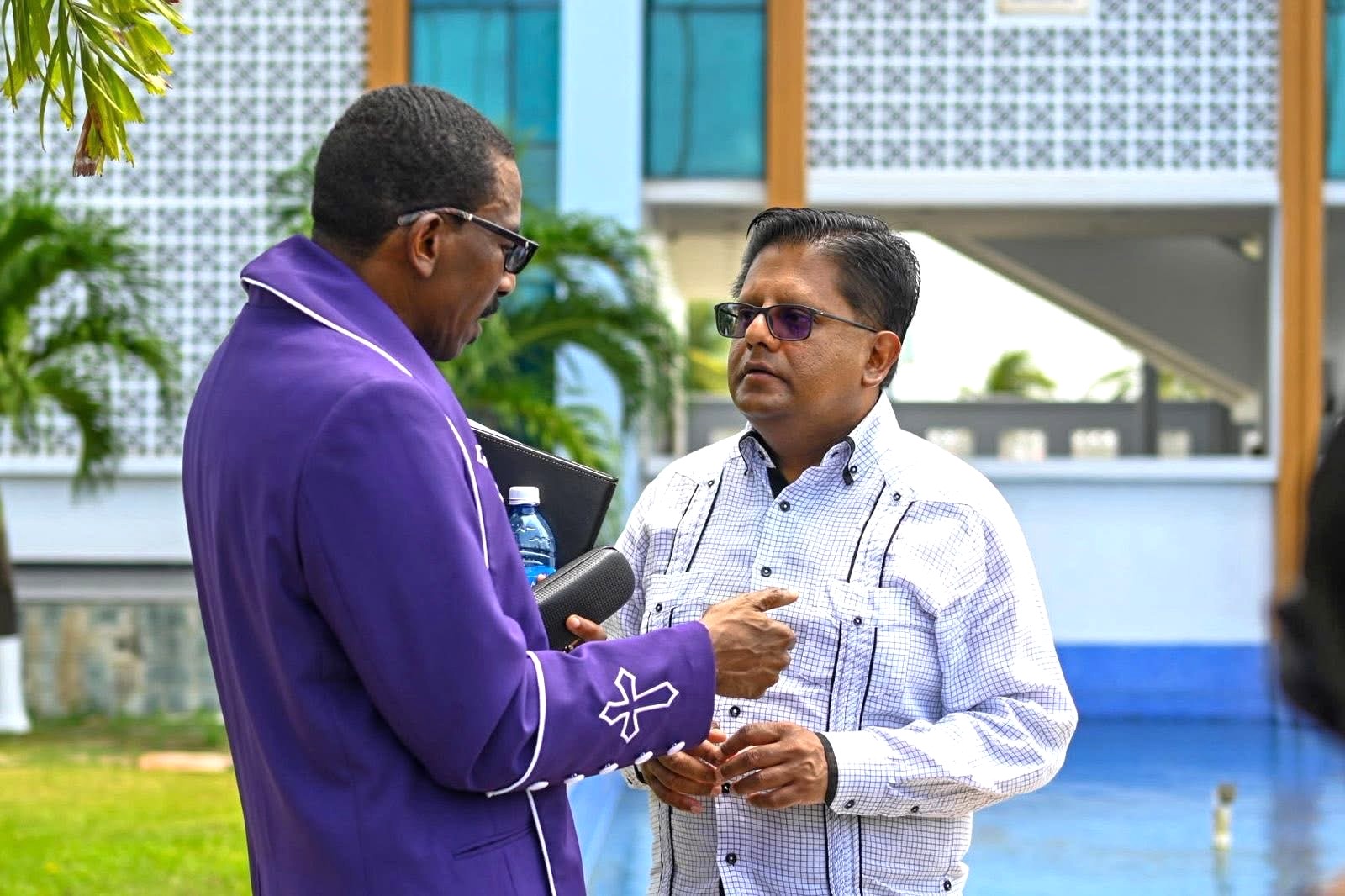
Dr. Kwame was born in Georgetown, Guyana, South America, and was taught the values of family and community at an early age. His childhood was characterised by movement, many siblings, strong elders, shared responsibility and a family environment in which children learnt to grow with respect. The beginning of his story carries the warmth of home but also the firmness of values that would later define his life.
Dr. Kwame spent most of his formative years living with his grandparents. His parents travelled often because of work, and because of that, his grandmother became one of the most important figures in his early world. In many families, the absence of parents due to work can create emptiness in the life of a child. In his case, that space was filled with care, protection, and the steady presence of a grandmother who embraced responsibility without complaint. He did not grow up feeling abandoned or emotionally distant from family life, because his grandmother and older siblings created a home where he felt held.
His grandmother’s home was not only a place where children lived. It was a place where values were practised every day. She cared for many children as though each one belonged directly to her. At one point in those early years, there were nine children under her care, and she carried that responsibility with a kind of selflessness that left a lasting mark on Dr. Kwame. As a child, he saw not only what she did but also the spirit in which she did it. She gave care without making it appear like sacrifice. She created order without making the home feel cold. She became, in many ways, a living lesson in service.
Long before he entered public service, leadership, ministry, coaching, or social development, he had already seen what it meant for one person to take responsibility for many. His grandmother did not teach selflessness as an idea. She lived it in front of him. Her care showed him that family was not only about blood, and responsibility was not only about obligation. It was about the willingness to stand in the gap when others needed support.
The environment around him also carried a strong sense of shared community. In the neighbourhood where he grew up, older men and women looked out for the younger generation. They corrected children when they were disrespectful, watched over them, and treated them with the concern of family even when they were not relatives. For Dr. Kwame, this became part of his earliest understanding of society. A child did not grow only under the eyes of parents. A child grew under the guidance of a community that believed it had a role in shaping conduct, respect, and character.
To that base, his grandmother added faith. The Christian faith was at the heart of his upbringing, and the church community became a big part of his early experience. The family tradition of rising before the sun for devotion and quiet time helped him to understand that each day could begin with reflection and spiritual grounding. Sunday was the Lord’s Day, a day for worship and rest, not play and outside activity. These practices gave rhythm to his childhood and formed his understanding of reverence, order, and inner discipline.
Books opened Dr. Kwame’s mind and gave him a quiet sense of direction. In a household full of children and movement, reading became a personal space where thought could grow. This love for books also allowed him to become, in some ways, a teacher within his own family. He helped younger siblings, and as the years passed, even older siblings, nieces, and nephews would come to see him as someone who could offer guidance. Though younger than many in the family, his manner, learning, and leadership experience later caused others to approach him with respect.
“A child may not always have everything, but love can fill the spaces that absence leaves behind.”
Phase 2 : Faith Before the Day Began

The second phase of Dr. Kwame’s life rests on the values that shaped his inner world before the wider world came to know his ability to lead, speak, guide, and serve. His childhood home did not teach him through long explanations. It taught him through rhythm, order, example, correction, worship, and responsibility. Every influence around him carried a different lesson, and together those lessons formed the moral foundation of the man he would become.
His father was an educator, and early on he learned to respect knowledge. Education was not a casual aspect of life but something of worth, necessary and dignifying. Under his father’s tutelage, Dr. Kwame learned that education could shape a person’s future, sharpen the mind, and prepare one to contribute in meaningful ways to others. This respect for education stayed with him throughout his journey, not only in his own academic growth but later in the way he taught, mentored, coached, and encouraged others to develop themselves.
His mother’s early years with the Guyana Police Force instilled in him a strong sense of discipline. She stood for order, seriousness, and responsibility. Together with his father, she helped foster a family atmosphere in which children learnt the value of hard work and good behaviour. Discipline in his childhood was not simply about correction. It was about preparing him to respect himself, respect others, and move through life with focus. It taught him that a person’s behaviour speaks before any title or position does.
Yet the most powerful spiritual influence in his early years came through his grandmother. Her faith became one of the strongest anchors in his life. She helped shape a home where Christianity was not limited to church attendance but carried into daily living. Faith was present in the way the family began the day, in the way Sundays were observed, in the way children were guided, and in the way service was understood. For Dr. Kwame, faith became more than belief. It became a framework for thought, conduct, patience, and service.
One of his strongest traditions of early years was to rise before the sun for family devotion. The day began in quiet, in prayer and reflection, before the busyness of life. For a child, waking before the sun could have seemed demanding, yet it created a discipline of spirit that remained meaningful. It taught him that life should not begin in haste. It should begin with grounding. This early practice helped form a sense of inward order, a habit of reflection, and a respect for the unseen strength that faith gives to daily life.
Sunday carried its own sacred meaning in that household. His grandmother taught the children that the Lord’s Day was meant for worship and rest. She would not allow what she called “fun and frolic” on that day. The phrase remained with Dr. Kwame because it captured the seriousness with which she protected the spiritual rhythm of the family. Sunday was not treated as an ordinary day. It was reserved for church, rest, and reverence. Even as an adult with children of his own, this teaching continued to influence the way he approached Sundays.
Together with his siblings, he grew up deeply involved in the life of the church, serving, participating, and growing up in that setting. The church was not separated from family or community. It was part of the world that taught him a sense of belonging, service, and responsibility. Through it, he saw how faith could gather people, how worship could strengthen families, and how service could become a natural part of one’s identity.
“Being the seventh child allowed me to receive support from the older ones and give leadership to the younger ones.”
Phase 3 : A Brother Who Learned to Guide
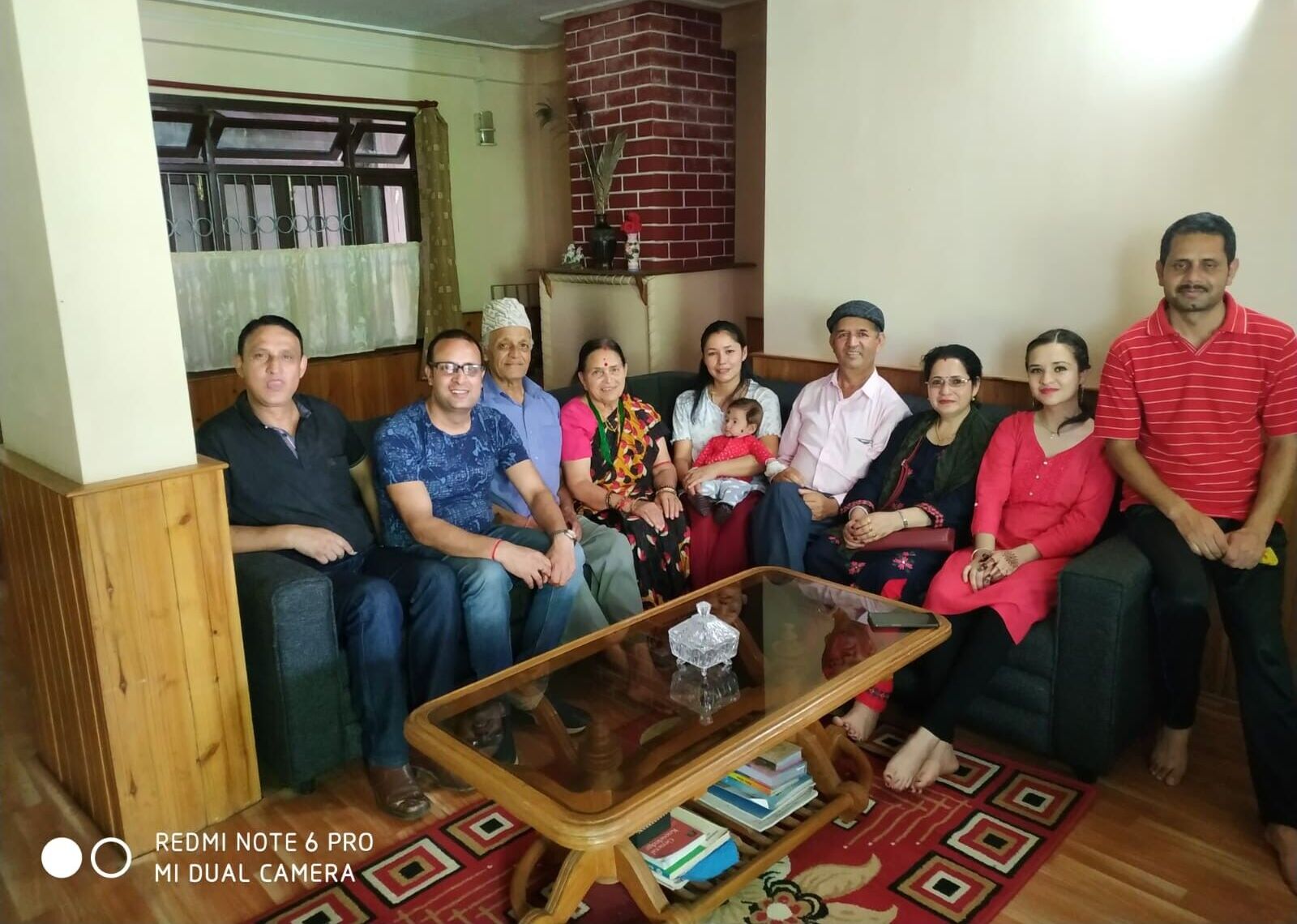
The family life of Dr. Kwame was marked by closeness, movement, many voices, and a strong sense of responsibility among siblings. He was the seventh of fourteen children, positioned in the middle of a large family where care moved in more than one direction. He was young enough to receive the guidance and protection of those who came before him, yet old enough to understand that others would also look to him. That place in the family did not leave him unnoticed. It quietly prepared him to become both a learner and a guide.
Being the seventh child gave Dr. Kwame a unique view of family life. He was surrounded by older siblings whose presence gave him security and younger siblings whose needs awakened in him an early sense of responsibility. He was not raised in isolation, and he did not grow up with the idea that life was only about individual progress. In a household of many children, one had to understand patience, sharing, listening, and compromise. These lessons were not formally taught. They were absorbed through daily living.
His connection to his siblings grew into one of the most solid parts of his personal foundation. They were close, supportive, and attached, although disagreements naturally came with family life. What counted wasn’t the absence of difference, but how they moved through it. They could disagree and still return to each other. They could have moments of tension and still reconcile quickly. That capacity to come back to love after conflict gave Dr. Kwame an early understanding of unity. It showed him that strong relationships are not built on perfection but on forgiveness, loyalty, and continuing care.
In such a large family, every child develops a role, sometimes without anyone naming it. For Dr. Kwame, that role grew out of his love of reading and his earnestness about learning. Books were a part of him from a very young age. They gave him knowledge, but they also gave him presence. As he read more, thought more, and carried himself with discipline, others began to recognise something steady in him. His younger siblings could turn to him for help and explanation. His words had the calmness of someone who had spent time thinking before speaking.
This early connection between reading and guidance became important in the way his family saw him. His love for books did not remain private. It became useful to others. In the family, he became somewhat of a teacher, not because he claimed that position, but because his conduct made room for it. He was willing to explain, to help, and to offer direction. Learning was not something he kept for himself. It became part of how he served those around him.
As the years passed, that role did not fade. In fact, it deepened. Even when he became an adult, members of his family continued to look to him for advice. Some of his older siblings, despite being senior to him in age, came to see him as someone who could offer wisdom. His younger siblings also carried that respect for him. Among nieces and nephews, he became an uncle whose guidance had weight. He was younger than some, older than others, yet his place in the family was shaped less by age and more by trust.
Note of Thanks
Dr. Kwame offers sincere thanks to all those who have walked with him through the many seasons of his life. His journey has been shaped by faith, family, ministry, service, leadership, and community, and he recognises that each chapter carried people whose support gave strength to his purpose.
He gives heartfelt thanks to the five congregations he pastored across thirty-two years of ministry. Their trust, prayers, fellowship and common commitment to faith became an important part of his life of service. Through them, he came to know the meaning of spiritual responsibility, community care, and the privilege of guiding people through different seasons of life.
Dr. Kwame also thanks his friends in ministry, who have encouraged and partnered with him through the years of service. Their presence bolstered his walk and reminded him that ministry is never done alone. He thanks friends who served with him in community programmes and outreach efforts, especially those who shared the burden of finding direction and support for families, men, children, young people and communities.
He is grateful to his family members and siblings for their love, closeness and ongoing support. Their bond has been one of the steady blessings of his life. He also appreciates the encouragement of his wife and sons, whose presence has added personal meaning to the responsibilities he has borne in public and private life.
This note of thanks is a tribute to everyone who has helped him on his journey, whether by praying, giving counsel, serving, being a friend, or quietly supporting him. In every significant step, Dr. Kwame recognises that his life has been strengthened by people who believed in him, stood with him, and helped him to continue with purpose.
thanks,
– Dr. (H.C.) Kwame Akara Gilbert

AIMLAY is a leading global education platform empowering ACADEMIC and EXPERIENTIAL learners, uniquely focused on recognizing knowledge gained through experience and building a diversified community of doctorates and aspiring researchers.