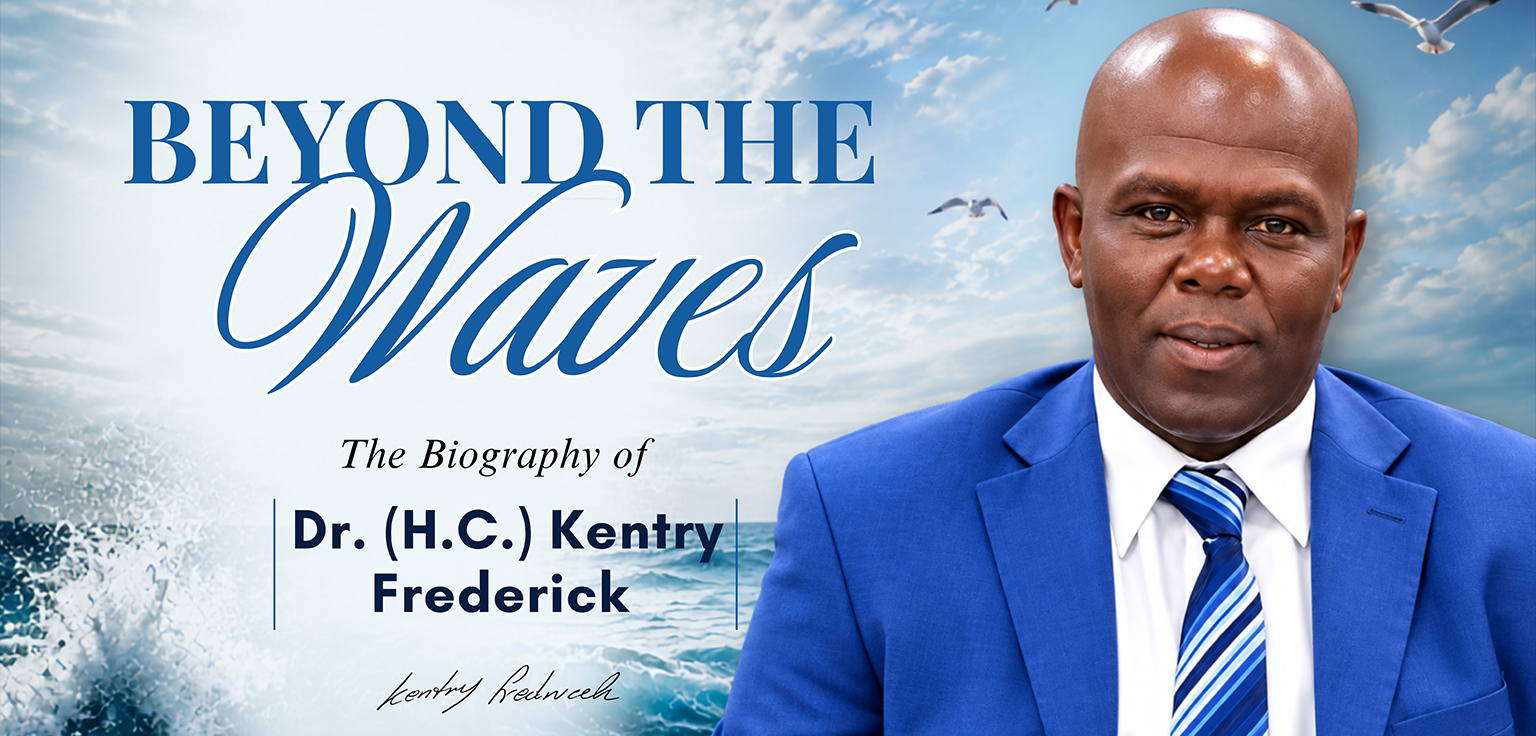
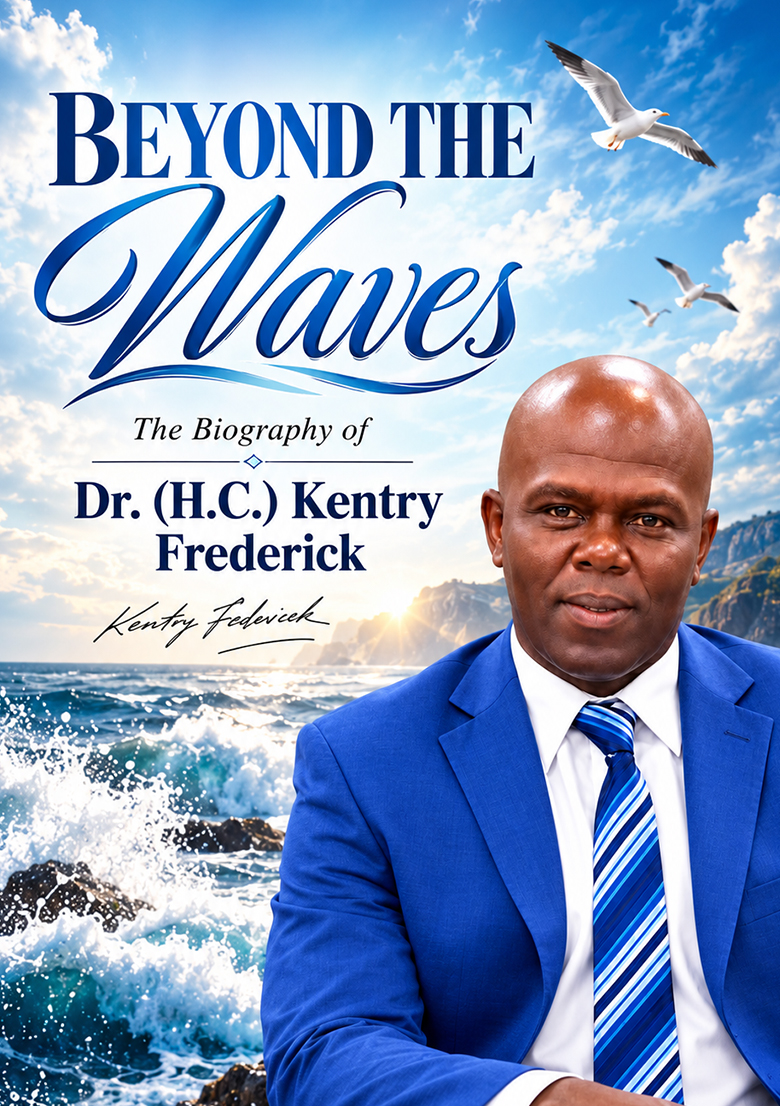
"The sea taught me that no journey is completed alone. Eeery mission requires trust, teamwork, preparation, and people who are willing to stand together when challenges arrive."
Introduction
Dr. Kentry Frederick’s journey began in Grace, Vieux Fort, Saint Lucia, where his early life experiences instilled in him a strong Sense of community, responsibility and collaboration. His education at Plain View Combined School, Vieux Fort Junior Secondary School, and Leon Hess Secondary School formed the early structure ofa life that would later become closely connected with discipline, national service, maritime safety, and leadership. What followed was not a path built through sudden Opportunity. It was shaped gradually through training, experience, patience, and a willingness to accept greater responsibility whenever it was placed before him.
On 15 June 1990, Dr. Kentry began his Career with the Royal Saint Lucia Police Force. His entry into the Police Marine Unit opened a demanding professional world where alertness, physical courage, technical knowledge, and sound judgement were all essential. The sea was not simply his place of work. That was the place where his character, leadership, and professional skills were tested time and again. Every assignment called for him to be in a constant state of readiness because decisions made on the water could mean the safety of officers, civilians, vessels and entire operations.
His progress through the ranks reflected years of consistent effort. After enlisting as a police constable, he was promoted to corporal in 2001 and served as a shift supervisor. He later carried out several acting appointments as sergeant before his confirmation in that rank in August 2012. Acting appointments as inspector followed, along with responsibility for managing the police marine unit in Vieux Fort. His confirmation as inspector came in November 2021, and in June 2022, he became superintendent of police within the Police Marine Unit. Each advancement brought a wider area of accountability and required him to move from performing duties himself to directing people, resources, plans, and operations.
The depth of his service can be understood through the variety of roles he performed. Dr. Kentry was a patrol craft commanding officer, patrol craft executive officer, navigator, rescue diver, rescue planner, and instructor. He led vessels on local and foreign deployments, oversaw personnel, helped prepare navigational chartwork, and ensured operations were safely conducted. His responsibilities also included search planning for vessels in distress, the recovery of drowning victims, the training of young officers, and the instruction and certification of civilian boat operators such as fishermen, water taxi operators, and private boat owners.
His operational work was supported by extensive training acquired across Saint Lucia, the Caribbean, and the United States. His professional development covered maritime law enforcement, patrol craft operations, damage control, rescue diving, leadership, instructional methods, quartermaster duties, port security, marine protected areas, search and rescue planning, incident command systems, maritime security, and strategic leadership. He often returned from these programmes and immediately applied what he had learned. Over time, knowledge became practice, practice became experience, and experience allowed him to guide others with greater confidence.
One of the most revealing aspects of Dr. Kentry’s journey is that he did not spend his career counting accomplishments. He remained focused on the work in front of him. Only later, when he paused to consider the full extent of his training and service, did he recognise how much had been completed. He had continued working, learning, travelling, and carrying out operations without treating each task as a personal achievement. natural commitment to the job became one of the defining qualities of his professional life.
"Before I learned about leadership, I learned about family. The lessons of patience, teamwork, and togetherness became the foundation of everything that followed."
Phase 1: The First Compass of His Life
Dr. Kentry Frederick was born on 18 June 1970 and raised in Grace, Vieux Fort, Saint Lucia. Long before professional duty became a defining part of his life, his first understanding of responsibility took shape within his family. Home was where he learned that people could hold different views and still remain united. It was also where he discovered that cooperation was not simply a good quality. It was necessary for living well with others.
He grew up as the sixth child in the family and the youngest son. Being surrounded by older siblings gave his childhood a shared rhythm. Daily life was not centred on one person. It required consideration, adjustment, and the willingness to make room for others. Dr. Kentry remembered growing up with his siblings as a good experience because of the quality of life their parents created for them.
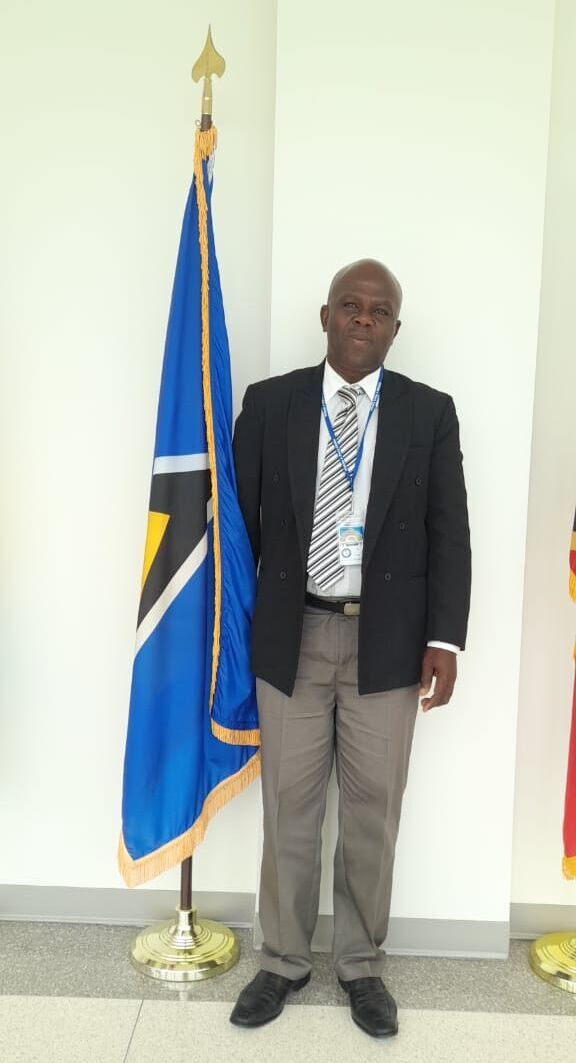
The expectation within the household was clear. Siblings might disagree, yet they still had to find a way to agree. Differences were not ignored, but they could not be allowed to weaken the family. This understanding became one of the earliest lessons he carried from childhood. It taught him that unity did not require Dr. Ken try Frederick standing proudly beside the flag of Saint everyone to think in the same way. It required people to remain committed to one another even when their opinions differed.
He and his siblings learned to share what they had. They also learned to work together and build things together. Through those ordinary experiences, Dr. Kentry began to recognise the value of combined effort. A task did not always belong to one person. Something could be created more effectively when each person contributed. As the children grew older, some relationships naturally became closer than others, and he remained especially close to three of his siblings. Even so, the broader sense of family togetherness remained important.
His mother was a housewife who devoted herself to the home. Her presence formed part of the steady environment in which the children were raised. His father carried several responsibilities. He worked as a farmer and also as a stevedore at the port in the south of the country. His duties involved loading cargo from vessels to the port and from the port to vessels for shipping.
It was practical and physically demanding work. Although Dr. Kentry’s own life would later develop a strong connection with the sea, his father’s work belonged to his earliest picture of labour, discipline, and responsibility. He saw someone who did more than one kind of work and continued carrying the obligations placed before him.
“The sea became more than a workplace. It became the place where I learned discipline, teamwork, and the importance of being prepared for every responsibility.”
Phase 2 : The Beginning of a Maritime Calling
Dr. Kentry Frederick joined the Royal Saint Lucia Police Force as a police constable in 1990. It was his first official foray into public service and the start of a professional career that would become inextricably linked to maritime safety and law enforcement. He undertook basic force training at the Saint Lucia Police Academy, where he was introduced to the discipline, structure, and expectations of police work.
At that time, he was not a senior officer or in charge. He entered as a young officer who needed to understand how the organisation functioned and what it required from those who wore its uniform. The beginning took patience, attention, and consistency. Before he could be given command of personnel, ships, or operations, he had to prove he could do the jobs set directly in front of him.
His association with the Police Marine Unit gave his career a certain direction. The work took policing away from the shore and into an environment where preparation, cooperation and technical understanding were essential. Dr. Kentry was entering an area of service that brought together national security, vessel operations, maritime law enforcement, and public safety.
The early lesson was clear. No officer could work alone. Marine duties depended on people understanding their roles and performing them in coordination with others. Instructions had to be followed carefully, communication had to remain clear, and each person’s conduct affected the wider assignment. For someone who already understood the importance of working with others, this environment presented a familiar principle in a far more demanding professional form.
Basic Force Training gave Dr. Kentry the formal grounding needed to begin. It marked the point at which responsibility became part of his daily professional life. The uniform represented more than employment. It carried the standards of the Royal Saint Lucia Police Force and required him to approach both his conduct and his duties with seriousness.
His earliest period of service was therefore centred on learning from the ground upward. He had to listen before giving direction, observe before making decisions, and understand procedure before assuming wider responsibility. These were not minor parts of his journey. They formed the groundwork that made later development possible.
"Training was never just about completing a course. It was about gaining knowledge that could be used when responsibility demanded action."
Phase 3 : Learning the Language of the Sea
Dr. Kentry Frederick discovered that to enter the maritime field was to enter a world of continuous learning and that every lesson learned had practical significance. The sea required more than just physical presence. It demanded awareness, preparation, discipline, and the ability to assess situations before taking action. As he continued to develop within the Police Marine Unit, he focused on acquiring the knowledge and skills to perform his duties with confidence.
His early experience had shown him that the maritime service was a blend of technical knowledge and team spirit. A ship could only operate efficiently if every player knew his or her role and carried out his or her duties assiduously. Personnel safety, operational success and the protection of others were the result of preparation well in advance of the commencement of an operation.
Armed with this information, Dr. Kentry was able to do further specialised training that honed his skills. His professional development included the basic duties of policing through specialised duties that required a more detailed knowledge of maritime operations. A variety of courses and hands-on experience gave him insights into vessel handling, navigation, rescue operations, enforcement of maritime law, and leadership.
A key part of his development was learning about vessels and what they needed. During his training, he was exposed to different types of boats and learned about how they were configured and the way they were handled. This experience helped him recognise that being on the water was an exercise in detail. Every movement, decision, and action had to be weighed up carefully, as maritime operations involved both the people involved and valuable resources.
Dr. Kentry returned from training and focused on implementing what he learned in his professional environment. Knowledge gained away from home became meaningful only when it improved the work being done at home. He carried those lessons back into his duties and continued developing through practical application.
His training in maritime law enforcement also added another important dimension to his role. Maritime work was not just about the operation of vessels and responding to situations but also about understanding the laws and responsibilities associated with activities at sea. This ability to combine operational knowledge with legal awareness made him more effective as an officer.
Note of Thanks
Dr. Kentry Frederick has come a long way in life, and he knows that no one gets there on their own. Every chapter of his Story has been written with the help of others who have taught him valuable lessons, guided him and been there to support him through the various stages of his growth.
He loves his family dearly, the principles that made up his character. Ihe lessons of responsibility, patience and togetherness learned during his formative years would continue to guide him through his personal and professional journey. The influence of his parents, grandmother and siblings would remain an important part of the person he became.
He also thanks the colleagues, mentors and people who were part of his years of service in the Royal Saint Lucia Police Force and the Police Marine Unit. Trust and common purpose throughout his career and their team effort. TIhe stories they created together became part of a path of service and commitment.
Special thanks to Crucita Descartes Pelius for her guidance and support, which went far beyond professional duties. His journey was made an important part by her encouragement, patience, and continued friendship.
Dr. Kentry also appreciates the communities and people he has had the privilege to serve. Whether it has been maritime duties, humanitarian missions, or community service, they have all given him a greater appreciation of what service really means.
thanks,
– Dr. Kentry Frederick