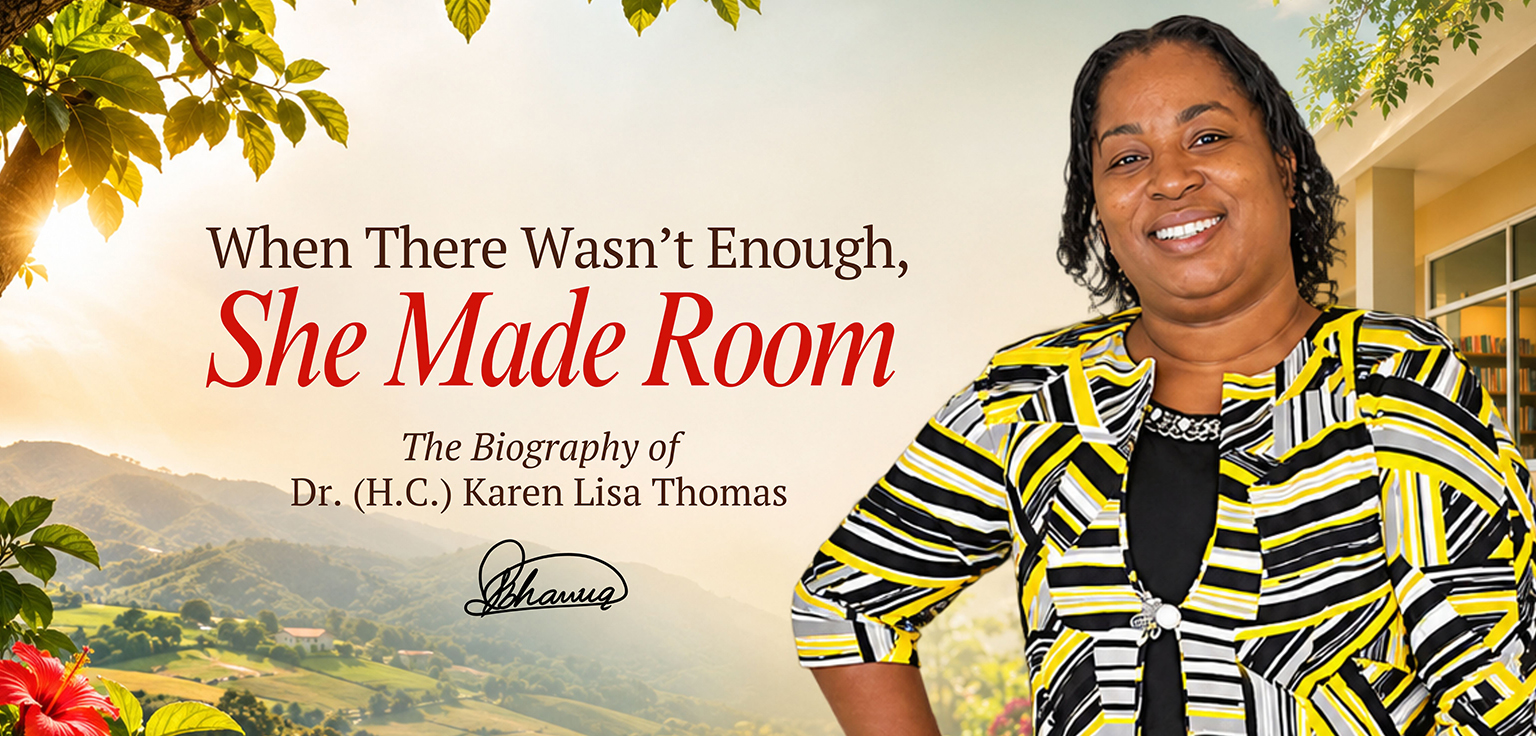
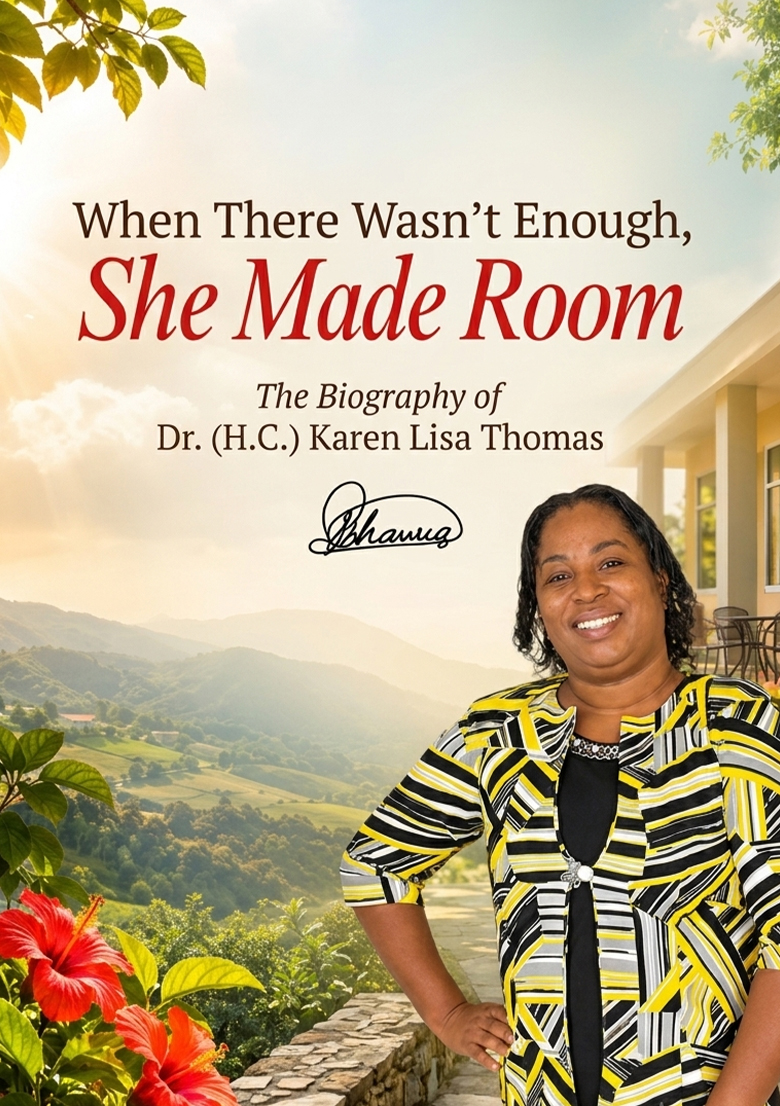
"If you are reading this and you have an idea that scares you, especially in a difficult time – do not be afraid.” Just do it
Introduction
At first glance, the different parts of Dr. Karen Thomas’s working life might appear to belong to several people. One part is concerned with nursing and the immediate needs of an individual. Another belongs to classrooms, students, lessons, and examinations. Another involves rent, staff, expenses, administration, and the uncertain decisions required to keep an institution operating. None of these responsibilities cancels out the others. Taken together, they show a woman who has repeatedly found herself moving between the care of people and the work of building something that can serve them.
Her story begins far from the professional positions she would eventually hold. In the Jamaican countryside of her childhood, education had to fit around the ordinary circumstances of family life. The people closest to her worked hard, and much of what she learned about responsibility came from what had to be done rather than what anyone formally taught her. She remembers the pleasure of childhood as clearly as its demands. That combination matters. It prevents her early years from being reduced to a story of hardship alone, while acknowledging that the duties placed on her were real.
There was no single straight line from childhood to the work for which she would later become known. Her interests changed. The courses available were not always the ones she initially wanted. She worked in settings that might seem unconnected when viewed only by job title, and she returned to formal education more than once. A qualification was not always obtained in the time originally expected. At other moments, a practical decision opened a possibility she could not have reached by waiting for ideal conditions. Her experience is therefore not simply about determination as an abstract personal quality. It is about specific actions: taking available training, earning what she could, enrolling in another institution when necessary, and using what she had already learned in circumstances that required it.
Teaching introduced a different kind of responsibility. It meant thinking not only about what she knew, but about whether another person had the opportunity to learn it. Her interests in nursing and education did not compete so much as meet in the training of practical nurses and other adult learners. She understood that acquiring a skill could make the difference between wanting employment and becoming qualified to seek it. The work required more than a wish to help. It required planning, instruction, administration, and the ability to continue when the number of learners, the funds available, or the response of the community could not be predicted.
The same practical concerns returned in a different form when her work extended into the care of older and unwell people. A person who needs assistance cannot be cared for only through good intentions. Someone must prepare food, maintain a safe environment, respond to illness, arrange help, communicate with relatives, and find ways to meet the costs of daily living. Dr. Karen’s experience places this reality at the centre of her work. The story of a care facility is also the story of the human beings inside it, whose needs do not stop when financial resources become scarce, or the wider community faces difficulties.
Faith has remained an important part of her life, providing reassurance during difficult periods while accompanying the practical decisions she has made. Raised within a Christian family, Dr. Karen approaches life’s uncertainties with prayer and a deep trust in God. These beliefs sit alongside an unmistakably practical approach to problems. Her convictions and her actions are both necessary to an accurate understanding of her life.
There is also a quieter personal story. The people she has supported, the family members who helped her, her marriage, and the painful loss she has chosen to acknowledge are not side notes to be inserted between professional milestones. They show that a person’s life continues beyond the moment when the classroom closes, or the workday ends. Some experiences have become meaningful parts of her life story, while others remain deeply personal, carrying a significance that cannot always be expressed in words. Her personal experiences carry their own emotional weight, revealing the quieter realities that exist alongside her public achievements.
Above all, this is the story of a woman whose experiences cannot be understood by counting what she has acquired. The lasting importance of an educational institution lies partly in what its students go on to do. The value of a place of care lies in the everyday wellbeing of those living there. Dr. Karen has made both kinds of work central to her life. The pages ahead follow the decisions, setbacks, relationships, and opportunities behind them, allowing the particular facts of her experience to speak without asking them to become something larger or simpler than they were.
"I learnt early that being the eldest did not mean being first in everything. Sometimes it meant making sure the other three were all right."
Phase 1: The Eldest Girl Had To Grow Up First
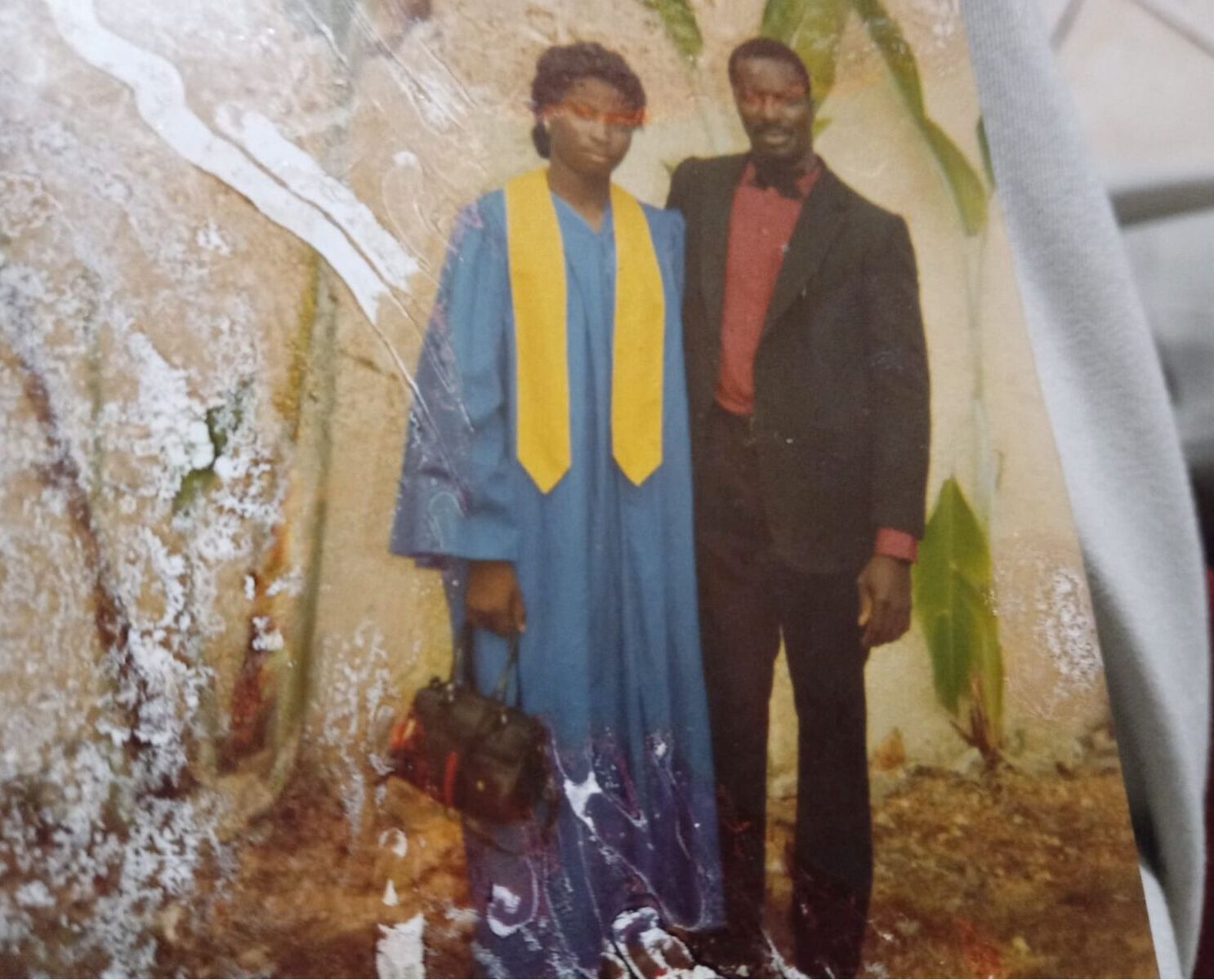
In the Jamaican countryside where Dr. Karen Thomas spent her childhood, getting to school was part of the day’s physical routine. She remembers walking there, sometimes without shoes, and making the journey back home for lunch before setting out again. There was no suggestion in her recollection that every such walk felt extraordinary. It was simply the way things were done. Children played, hurried to arrive at school on time, and returned to the ordinary activities of home and community. When Dr. Karen looks back, laughter belongs to those years. She remembers having fun and the freedom of a childhood lived without the constant presence of the internet that now shapes so much of children’s attention.
That memory of a happy country childhood exists alongside a different reality. Dr. Karen was the eldest of four girls, and being eldest carried responsibilities that arrived before she was grown. From approximately ten years of age, she carried the responsibility of ensuring that her three younger sisters were properly cared for. This was not a formal position given to her, nor a responsibility she could set aside after a certain hour. It was woven into the daily arrangement of family life. The needs of the younger children had to be considered, and there was work to be done even when she would otherwise have been occupied with the ordinary interests of a girl of that age.
Her mother worked in domestic service, doing household work for other people so that her children could be provided for and sent to school. Some of this was live-in employment. She stayed where she worked and returned home at weekends, which meant that the practical arrangements of the household had to continue throughout the week in her absence. Dr. Karen’s grandmother helped care for the girls. The grandmother’s presence was important, but it did not remove the additional role Dr. Karen assumed as the oldest child. During her mother’s absence, Dr. Karen assumed a role resembling that of a second mother, helping to care for her three younger sisters.
Her mother’s sacrifices have remained a source of profound gratitude throughout her life. The family circumstances required substantial effort from a woman raising children with little support from their father, whose absence Dr. Karen later identified plainly. Domestic work demanded her mother’s time and physical labour, yet the children’s schooling remained a priority. It would be easy to turn that into a simple story about sacrifice, but the arrangement was more concrete than the word alone suggests. Someone had to take a job. Someone had to remain with the children. Someone had to make sure they went to school and returned home safely. The household depended on many small acts carried out repeatedly rather than on a single moment of rescue.
For Dr. Karen, responsibility became familiar in that setting. She was both a child receiving care and a child expected to provide some of it. Her own education continued, but so did her concern for her sisters. The two experiences were not separate: an ordinary school day took place within the larger routine of a family managing with limited resources. She learned what it meant to be relied upon long before she held any professional title. Despite these responsibilities, the happiness and freedom of childhood were never entirely overshadowed. She still remembers the games, the fun, and the atmosphere of rural life. Those memories deserve their place beside the harder ones.
The distance between the younger Dr. Karen and the woman she later became can appear wide when measured by institutions or qualifications. Yet there is something continuous in her attention to the needs of others. The family years did not give her formal training in nursing or management, and it would be inaccurate to pretend that they did. They gave her experience of being present, noticing whether someone was all right, and taking responsibility when an adult was not available to do everything. These were everyday matters at home, not accomplishments that anyone would have put on a certificate.
Her grandmother and mother contributed in different ways to the life she remembers. Dr. Karen, meanwhile, stood between the two roles of daughter and older sister. The practical demands of that position did not make her an adult, but they required a degree of attention that many children are not asked to give. The details are important because they show how the family lived rather than merely describing the family as poor or hardworking.
Her rural childhood remained meaningful, filled with experiences and relationships whose importance extended well beyond those early years. A biography concerned only with later achievement might treat these years as something she escaped. That would miss what she actually remembers. Her early life included limitations, but it also included family bonds, a grandmother’s presence, a mother’s efforts, and the shared life of four sisters. None of those experiences should be made smaller simply because later chapters contain more public accomplishments.
“I did not want to choose between the nurse I admired and the teacher I pretended to be. Somewhere in my childhood, I had already begun dreaming of becoming both.”
Phase 2 : The Wall Was Her First Classroom
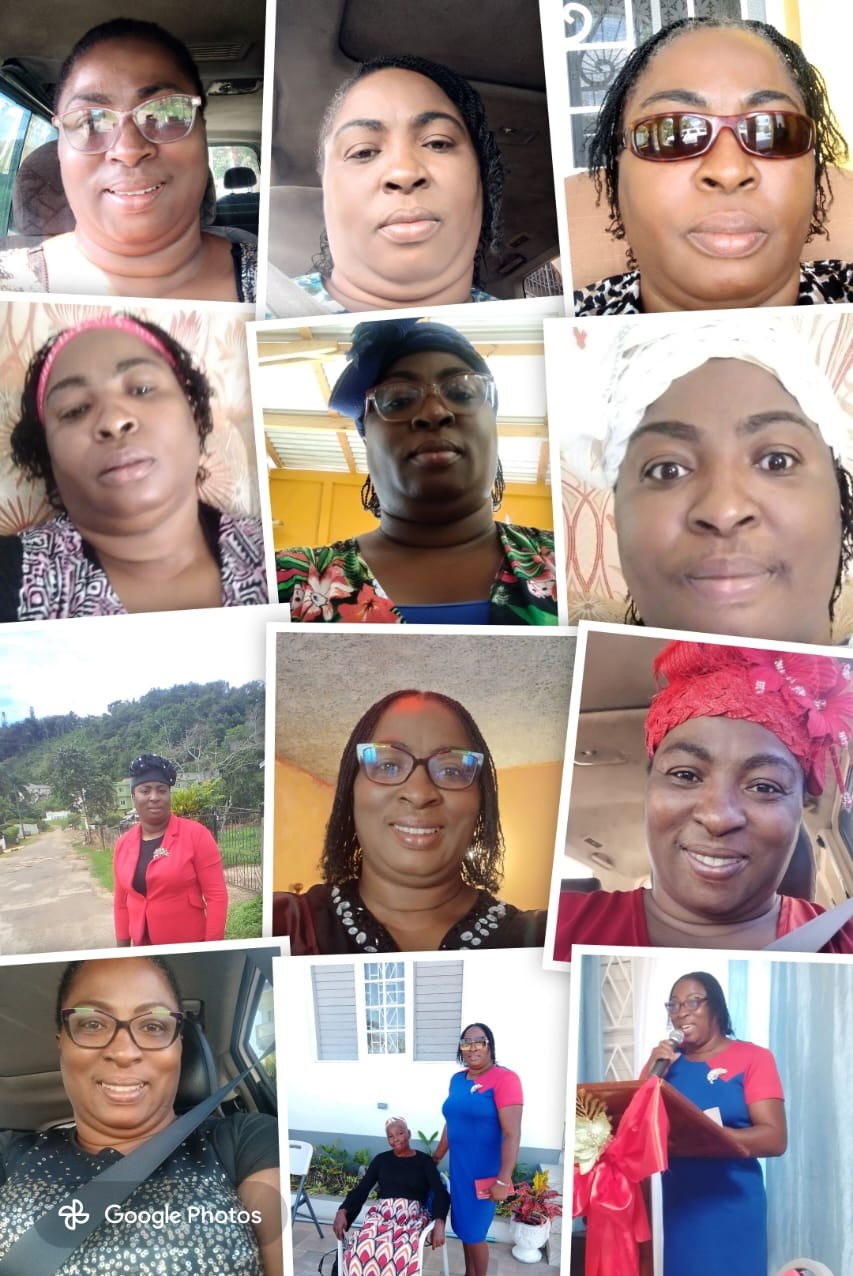
Before Dr. Karen Thomas entered a nursing school or stood in front of students, she was a girl observing the people who worked in her community. The community nurse attracted her attention whenever someone needed assistance, particularly when a woman was about to have a baby. Dr. Karen remembered seeing the nurse going to the person who needed her. She noticed the work, but she also noticed the white uniform. To a child imagining what adulthood might hold, that uniform represented a recognisable profession and a chance to help other people. She began to picture herself wearing one someday. Her interest grew from something close to home, not from a distant account of medical work.
At first, she was not entirely certain what she wanted to become. Nursing appealed to her, and the nurse’s presence in the community made the occupation easy to imagine, but childhood ambitions are rarely fixed. Dr. Karen’s interest moved in other directions before returning to care. At one point, she decided she wanted to be a dressmaker instead. That possibility mattered enough for her to mention it to an older person, whose response stayed with her. The person encouraged her to think higher, prompting her to reconsider the nursing ambition she had expressed earlier. The encouragement was simple, but it prompted her to reconsider her ambitions and return to the possibility of pursuing nursing.
There was another profession that held her attention, and it occupied a different part of her daily life. She went to school and watched teachers at work. Like many children, she imitated what she saw when playing with others. At home, a stick could become part of an imaginary classroom, and walls or trees could stand in for the pupils in the games they invented. She recalled copying the actions of teachers, including the methods of discipline familiar in that period. The games were not teaching practice in any formal sense. They were children playing at the adult roles they knew. Even so, she remembered them as part of how her interest in teaching began.
Schoolteachers offered her a model of another kind of influence. A nurse could attend to a person’s immediate physical needs, while a teacher could help someone gain knowledge that would remain useful after the lesson ended.
Her understanding of education would deepen considerably over the years, although her earliest attraction to teaching began with the familiar figures who stood before her in classrooms. She knew teachers and saw what they did. Their work could be imitated, understood, and gradually considered as a possible future. In those years, the professions were not competing paths with detailed training requirements laid out before her. They were possibilities she carried while still learning what life might permit.
The moment she wondered whether she could become both a nurse and a teacher is revealing precisely because it was so uncomplicated. Rather than deciding that one interest must exclude the other, she considered pursuing nursing and teaching. That thought did not guarantee she would find a direct route to either profession. She still had to finish school and encounter the qualifications available to her. But it showed that she did not instinctively understand service in only one form. Caring for a patient and instructing a student appealed to different parts of what she wanted to do. The practical connection between the two would become clearer much later.
Her childhood interests also show the importance of particular people rather than abstract ideas. Her teachers did not need to foresee that she might someday establish a college. What she saw in their classrooms gave her something she wanted to reproduce in play. And the older person who challenged her dressmaking ambition did not provide a programme for her future. The encouragement was brief, but Dr. Karen remembered it. These were small encounters, each carrying a different influence.
It is important not to turn the dressmaking episode into a rejection of useful work. The older person’s encouragement became a meaningful part of her early development, prompting her to reconsider the possibilities she had once imagined for herself. She was a child changing her mind, and the exchange helped redirect her attention toward an earlier ambition. The significance belongs to her decision to reconsider, rather than to any claim that one profession was inherently more worthy than another. In her adult life, she would work across several fields that did not fit the first picture she had formed of herself. The changing interests of childhood make that later flexibility easier to understand.
“I went to learn accounts because nursing and teaching were not available. I could not have known then how useful those lessons would become.”
Phase 3 : Bookkeeping Before The Bedside

Dr. Karen Thomas’s first formal vocational qualification was not in nursing or education. In 1993, she completed a certificate in Bookkeeping and Accounts at Stony Hill HEART Academy. After secondary school, she had been selected for a programme associated with Jamaica’s HEART vocational training system. Neither nursing nor teaching was available through the programme, leading her to pursue accounts and bookkeeping instead. The decision placed her on a different path at the outset of adult life, but she did not regard the subject as wasted effort. She found that she liked it and began recognising ways in which the knowledge could be useful.
Bookkeeping required attention to information that had to be recorded, organised, and checked. Dr. Karen would later manage staff, premises, student arrangements, and institutional expenses, but those responsibilities were not yet before her. At this stage, she was building a foundation in administrative work and learning that useful skills could come from a subject she had not first chosen for herself. She approached the training with a practical appreciation for the skills she was acquiring. She enjoyed learning about accounts and could see that the training might help her in life. It was a modest beginning with consequences that became clearer over the following years.
Her working life also included responsibilities in several fields beyond healthcare and education. She worked as a cashier at Tweeties Fried Chicken, an accounting clerk at Seows Super Center, and an administrator at Winners Wholesale of the Caribbean. These positions brought her into businesses with different routines and demands. Her positions involved cashier duties, accounting work, and administrative responsibilities across different business environments. Each role belonged to the practical need to work and gain experience, not to a neatly designed plan leading directly to an eventual career title.
The interest in nursing that she had carried from childhood continued. During 1996 to 1997, Dr. Karen trained through the St. Ann’s Bay School of First Aid and Basic Nursing, an extension of the St. John Ambulance Association. The qualification gave her formal preparation in first aid and basic nursing. She later pursued further certification in Practical Nursing Levels 1 and 2 through the National Council on Technical Vocational Education and Training during 2004 to 2005. Those dates also overlap with the beginning of her teaching institution, which is an important reminder that her studies and professional initiatives did not always unfold one after another.
Her practical nursing experience included work at Dr. Quarries’ Medical Practice. The professional experience matters nonetheless. Nursing placed her in a setting where technical knowledge had to be used in relation to real people. Patients could not be approached as examinations or exercises. The duties of care required an individual to attend to a person’s condition and needs. Dr. Karen’s later professional interests would remain closely connected to that direct relationship, even as her work broadened into teaching and management.
The different areas of her early work were not identical. Retail employment, accounts, office administration, and nursing each asked different things of her. Nor should they be presented as though every responsibility necessarily prepared her for a future business. What can be said is that she accumulated experience in more than one working environment. The knowledge did not disappear when she moved into another role. In her later recollection, accounting became particularly useful when the institution she established grew to a size where teaching alone was no longer enough.
She also participated in training and workshops beyond her principal qualifications. She participated in a National Youth Service programme in 1998 and later completed short courses covering table etiquette, massage skills, mental health, childcare, and first aid and CPR. The subjects varied, yet each added to her practical knowledge of work and everyday care. Their cumulative significance lies in her willingness to keep learning useful skills while working.
Note of Thanks
For Dr. Karen Thomas, gratitude begins with the people whose efforts made it possible for her to continue when circumstances were difficult. Her mother holds a particularly important place. Her mother’s efforts to provide for her and her sisters remain especially meaningful to her. She does not regard that work as a small contribution to be acknowledged in passing. It formed a substantial part of the family’s life and made the opportunities available to the children possible. In thanking her mother, Dr. Karen recognises the years of ordinary work and decisions that did not carry a public title but had lasting consequences.
She is grateful to her husband for standing beside her educational and entrepreneurial efforts. Dr. Karen also recognises the part played by people who offered assistance at important moments: relatives, friends, teachers, colleagues, former students, and others who contributed to her institutions or the care of those who depended on them. Some offered guidance or opportunity. Others contributed practical help or essential supplies when resources were limited.
Above all, she gives thanks to God, whom she credits with providing strength, courage, and determination throughout her experiences. She has continued to work, pray, learn, and accept help even when resources were uncertain. These acknowledgements therefore belong not only to success, but to the people and convictions that accompanied her through uncertainty. Her gratitude extends to those who trusted her with their education, their employment preparation, and their care. Their presence gave purpose to much of the work recorded in this biography.
thanks,
– Dr. (H.C.) Karen Lisa Thomas

AIMLAY is a leading global education platform empowering ACADEMIC and EXPERIENTIAL learners, uniquely focused on recognizing knowledge gained through experience and building a diversified community of doctorates and aspiring researchers.