“I have always wanted to be the best I could be. Whatever it was that I was doing, I liked to teach, and I wanted to give back for what I had been given the opportunity to do.”
Introduction
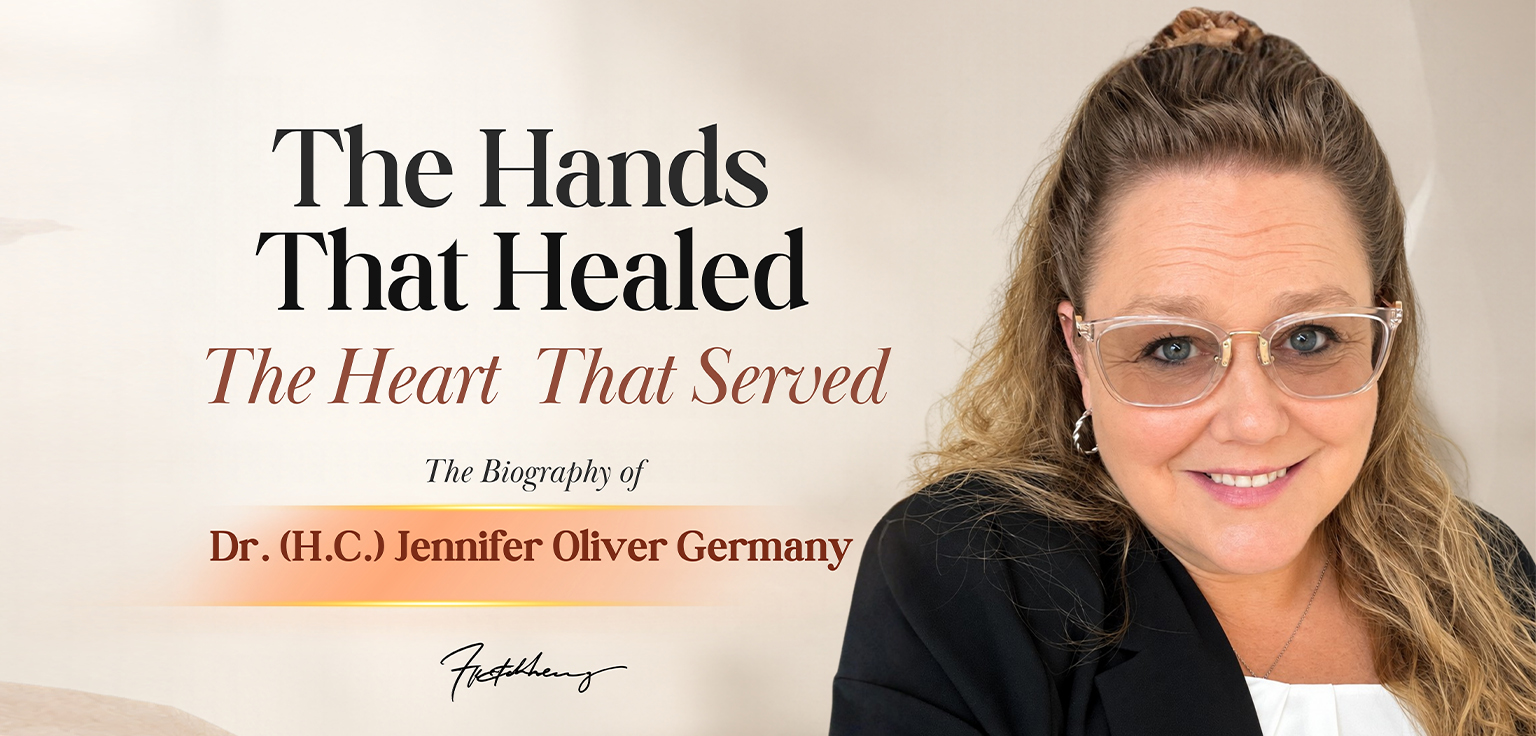
At Prestige Career College, Dr. Jennifer Oliver Germany serves as Vice President while remaining closely involved in the everyday work of education. She continues to run a campus, oversee two programmes and attend to the needs of more than two hundred students. Alongside those duties, she writes curricula and assists other schools. Her executive oversight extends across two campuses. The breadth of her work reflects a career that has moved from caring for patients to preparing others for that responsibility.
Her professional beginnings were in healthcare within the United States Navy. Born and raised in South Carolina, she enlisted at nineteen and trained as a dental assistant. A posting to Japan brought another responsibility into her life: motherhood. Raising her son far from family required an independence that was still new to her. She was learning her profession while learning how to care for a child, with both demanding her attention.
Working with children introduced her to the operating room during her early naval service. She wanted to train in surgery, although the route was not readily open to dental assistants. Repeated refusals led her to question the reasons behind them and continue applying. Eventually, she entered surgical training with two other dental technicians. An instructor’s support and the hours spent studying with a fellow trainee helped her through the demanding transition. The opportunity she had pursued required considerable work once it arrived.
Surgical practice became a substantial part of her military life. Her responsibilities extended into operating room management, staffing, logistics and compliance, including the oversight of 270 medical personnel. She also served on combat deployments in Iraq and Afghanistan, working alongside Marines and later taking responsibility for a trauma unit. Those assignments brought severely injured casualties, prolonged working hours and the strain of remaining alert in dangerous surroundings. Her service involved both the lives her team helped save and the personal demands of carrying out that work.
Teaching offered a different way to use what she had learned. As a surgical technology instructor in San Diego, she found work she wanted to continue beyond the military. After retiring following twenty years and six months of service, she returned to the East Coast and worked with a surgeon. Long days spent standing in the operating room eventually prompted her to seek a role that made greater use of her leadership experience. Educational management became that next step.
She went on to direct surgical technology programmes at Virginia College, Concorde Career College and Career Based Education. An accreditation audit just six weeks into her first programme directorship required her to become familiar with requirements she had never previously been responsible for meeting. The work brought curriculum development, faculty oversight, accreditation requirements and responsibility for students’ progress into her daily concerns. She also pursued her own education at Siena Heights University, earning a Bachelor of Applied Science in Surgical Technology and a Master of Arts in Higher Education Leadership. Leading programmes and continuing her studies became overlapping parts of her professional development.
Her understanding of curriculum and accreditation also created an opportunity to work beyond her own institution. Through Surgical Excellence Consulting, she began assisting other schools and developing curricula. What started with two contracts grew into work she continues alongside her educational responsibilities. At Prestige Career College, the scope of her leadership widened further. The school’s partnerships, which cover tuition costs for students who enter the field after graduation, particularly appealed to her desire to make education accessible.
That concern for access extends beyond a college campus. In Los Angeles, she established a nonprofit to assist veterans who needed help obtaining care and rebuilding stability. Her work includes responding to practical requests involving food, clothing, wheelchairs, veterans’ services and housing resources. Having served herself, she wanted to help people who had served their country but were struggling to obtain the support they needed.
"It’s funny how we end up just like them later in life, no matter how much we try to avoid it."
Phase 1: The Girl Who Fought the Rules
Long before responsibility became central to her working life, Dr. Jennifer was finding ways around the rules at home. Born and raised in South Carolina, she grew up in a family where military service and healthcare were familiar parts of life. Her father, Julius Oliver, had served in both the Army and the Air Force. Her mother, Jean Betts, worked as a veterinary assistant. Her elder sister also served in the Air Force as a nurse. Healthcare was something she grew up around, and she would later recognise how naturally an interest in caring for others had developed from that familiarity.
The family’s connection to service did not make her an obedient child throughout her school years. She was rebellious, prepared to challenge almost any rule or regulation placed before her. Skipping school and finding reasons to get away from her parents became part of that resistance. Yet she could later look back at those years with humour, recognising how children can spend so much energy trying to be different from their parents, only to discover familiar qualities in themselves as adults.
Her mother’s example was particularly clear in the way she gave to others. Loyalty and the ability to give without expecting anything in return were qualities her daughter associated with her. Those values existed alongside ordinary family traditions. Thanksgiving and Christmas were occasions for large gatherings, with relatives travelling from different parts of the United States. Dr. Jennifer and her mother would cook for days in preparation.
There was another kind of activity when she spent time with her father. During their downtime, he would take her outside and teach her something new. He had wanted a boy, and she grew up largely as a tomboy. Working with her hands became comfortable territory. Putting furniture together or working on a vehicle belonged to the practical abilities she developed through him. These memories gave her childhood a different texture from the rules she resisted: there were things to try, tasks to learn and time spent doing them together.
At Oakland Elementary, however, rebellion had not yet become the defining feature of her school life. At that stage of her childhood, she was still the good girl. That continued, for the most part, when she moved to C.E. Williams Middle School. It was during these years that her mother began teaching her to drive. The lessons took place in the school parking lot, adding a practical experience to a place otherwise associated with classes. Driving would later become part of a much more complicated episode, but it began with her mother beside her, teaching her how.
High school brought a change in the company she kept and the trouble she found. She became involved with a crowd she later recognised as the wrong one. Her parents were trying to teach her how to become an adult, while she resisted the responsibilities they wanted her to accept. Her sister was seven years older, and when the older girl got into trouble, the younger one felt the need to match her. One episode followed another, with that sibling example becoming part of her own behaviour.
Friendship was a substantial part of those years. She had good friends growing up, many of whom played soccer with her. They spent time together outside school as well as on the team. Her feelings about school were less straightforward than her attendance suggested. She considered herself interested in school, yet repeatedly stayed away. That contradiction eventually had a consequence she could not avoid: poor attendance cost her place on the soccer team. Losing that place did not end the friendships. They continued to meet, go out and, at times, drink while underage.
“I have always wanted to be the best I could be."
Phase 2 : From Young Sailor to Protector of Two Lives
At nineteen, Dr. Jennifer entered the United States Navy and began an education that reached beyond her professional training. Naval life required her to accept discipline, whether she welcomed it or not. She would later regard joining as the best decision she had made. At the beginning, however, she was a young recruit learning what service required and preparing for the work she would be expected to do.
Her recruit training began in February 1993 and continued through April. The programme introduced military and naval procedures alongside first aid, personal health, safety and physical fitness. Swimming, firefighting and water survival were also part of that preparation. These were practical requirements of entering the Navy, giving her an introduction to responsibilities outside the school and family settings she had known.
From recruit training, she moved into dental assisting. Between May and August 1993, she attended the Dental Assistant Basic course at the School of Dental Assisting and Technology in San Diego. Her studies covered basic dental sciences, chairside assistance, dental radiology, emergency medical care and office procedures. She was acquiring the knowledge needed to assist with treatment while understanding the clinical and administrative work surrounding it.
The role required attention to patients, instruments, equipment and records. Preparing someone for treatment, sterilising and arranging instruments, and recording dental care belonged to the responsibilities of a dental assistant. There was practical work to learn as well as information to study. This was her first professional place within military healthcare, before the later opportunities that would take her into a different area of medicine.
Her posting to Japan brought another change. She was already there when she discovered that she was pregnant. There had been no noticeable signs during the earlier months, and the pregnancy became apparent only when she was around seven months along. She had completed boot camp and her professional training without knowing she was expecting a child. She was still young and living far from home.
When her son, Jacob, was born, she had neither family nor friends around her in Japan. She had to learn how to look after him and herself. The independence required was immediate and personal. Having a child at such a young age required her to grow up quickly. Military service had already introduced responsibilities; becoming a mother gave those responsibilities another dimension.
Her love for being Jacob’s mother became central to that period of her life. That feeling was central to her experience, even with the demands of caring for him away from family. Caring for him also deepened her love of helping others, connecting something intensely personal with the healthcare work she was beginning to know.
Her professional confidence developed as she became better at her job. Recognition and promotions encouraged her. She liked the feeling of doing well and wanted to take the next step, so she sought further learning and additional opportunities to develop. Improvement became something she actively pursued. Her wish was to be the best she could be at whatever work she undertook.
“It had never been done before. That didn’t mean it couldn’t be done.”
Phase 3 : Five Petitions for a Place in Surgery
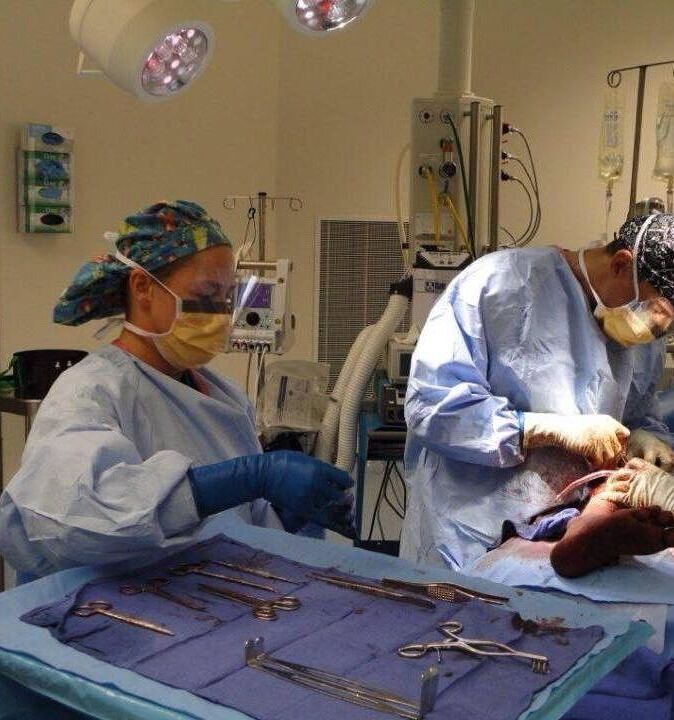
Within her first two years in the Navy, work with children introduced Dr. Jennifer to the operating room. She had entered healthcare as a dental assistant, but this experience drew her towards surgical work. She wanted to train for it. What followed was a prolonged effort to gain admission to a course that did not normally accept people from her professional background.
Surgical training was generally open to corpsmen rather than dental assistants. When her request was denied, she asked why. The explanation she received was that it had not been done before. Her answer was direct: that did not mean it could not happen now. She continued to seek a place, using letters to bring the same request back for consideration.
Over three years, she submitted five petitions, writing again at intervals of about six months. Eventually, the Navy approved a trial involving her and two other dental technicians.
Her military education during 1999 also included field medical service training at Camp Lejeune in North Carolina. The field course included emergency treatment, assessing injuries, triage and evacuation. It introduced medical responsibilities extending beyond the dental setting in which she had begun. She then attended the Dental Surgical Technologist Class C course at the School of Health Sciences in Portsmouth, Virginia, from August 1999 to March 2000. The programme covered anatomy, clinical practice, surgical duties and techniques, operating room safety and surgical equipment. Its purpose was to prepare trainees to maintain an appropriate surgical environment and assist with procedures.
That approval gave all three access to training previously unavailable to them. It also brought the academic demands of a different clinical discipline. Dental work had familiarised her with the head and neck. Surgical study required her to understand the rest of the body, its systems and the conditions that could affect them. Anatomy, physiology, microbiology and pathophysiology formed part of the learning she now faced.
The transition into surgical study was overwhelming. Having worked so hard to get accepted, she found herself wondering what she had taken on. Wanting to work in an operating room and studying the knowledge required for it were different experiences. Admission had answered one question. The next was how to master the subjects necessary to become competent in the role.
An instructor helped her meet that challenge.
At home, the effort continued with one of the other dental assistants, with whom she lived. They studied together day and night. Their shared determination was clear: neither was prepared to give up. The opportunity they had sought now occupied their time in a different way, through studying the subjects and working towards completing the course. Persistence had moved from writing applications to learning the work.
She and the other two dental technicians completed the training at the top of their class. The trial had produced a clear result. After their success, the training was opened to other dental technicians. The experience established her as a trendsetter, having gained entry and helped open that opportunity to others.
In April 2000, she began serving as a dental surgical technologist. Its responsibilities brought patient care before, during and after surgery, the preparation of instruments and materials, and the maintenance of surgical equipment and records. She had reached the work she had wanted to learn when first introduced to the operating room. The long effort to gain admission had become a qualification she could put to use.
Note of Thanks
Dr. Jennifer Oliver Germany offers her deepest thanks to her mother, Jean Betts, for always having her back. Her mother’s support holds a lasting place in her life. In acknowledging it, she expresses a daughter’s gratitude for the loyalty she has been able to count on and continues to value.
To her son, Jacob, she gives thanks with the affection behind a phrase she uses for him: her “ride or die.” Those familiar words carry the warmth of their relationship more naturally than a formal tribute could. He holds a place in her life that is entirely his own, and her appreciation for him is deeply personal.
Her granddaughter, Skylar Oliver, gives her strength to keep going. For that, she offers thanks filled with love. Skylar’s place in her heart is precious, and the encouragement she draws from their bond remains among the things she values most. Her gratitude recognises both the child she adores and the strength that love brings into her life.
She also extends her appreciation to her fellow sailors in the United States Navy and to the mentors and leaders who have been part of her journey. Their guidance and influence belong within her understanding of how she became the person she is. She remembers their part with respect and thanks, recognising that her experience of service was also shaped by the people around her.
Her colleagues since retirement receive the same warm acknowledgement. They have been part of the life and work that followed her military service, and she remains grateful for their place in that continuing journey. To each of these people, her thanks carry a simple recognition: everyone has played a part, and every contribution matters to her.
thanks,
– Dr. (H.C.) Jennifer Oliver Germany

AIMLAY is a leading global education platform empowering ACADEMIC and EXPERIENTIAL learners, uniquely focused on recognizing knowledge gained through experience and building a diversified community of doctorates and aspiring researchers.