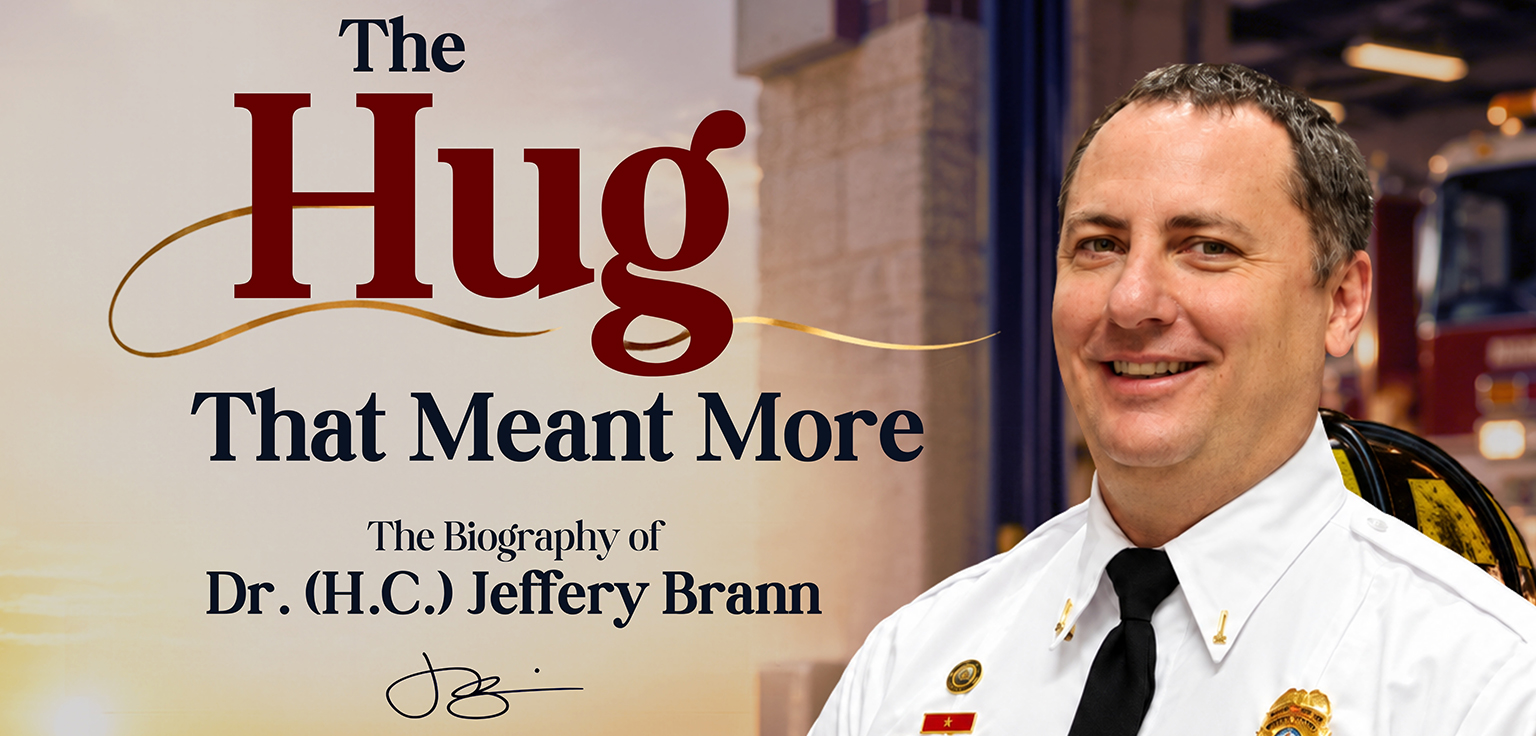
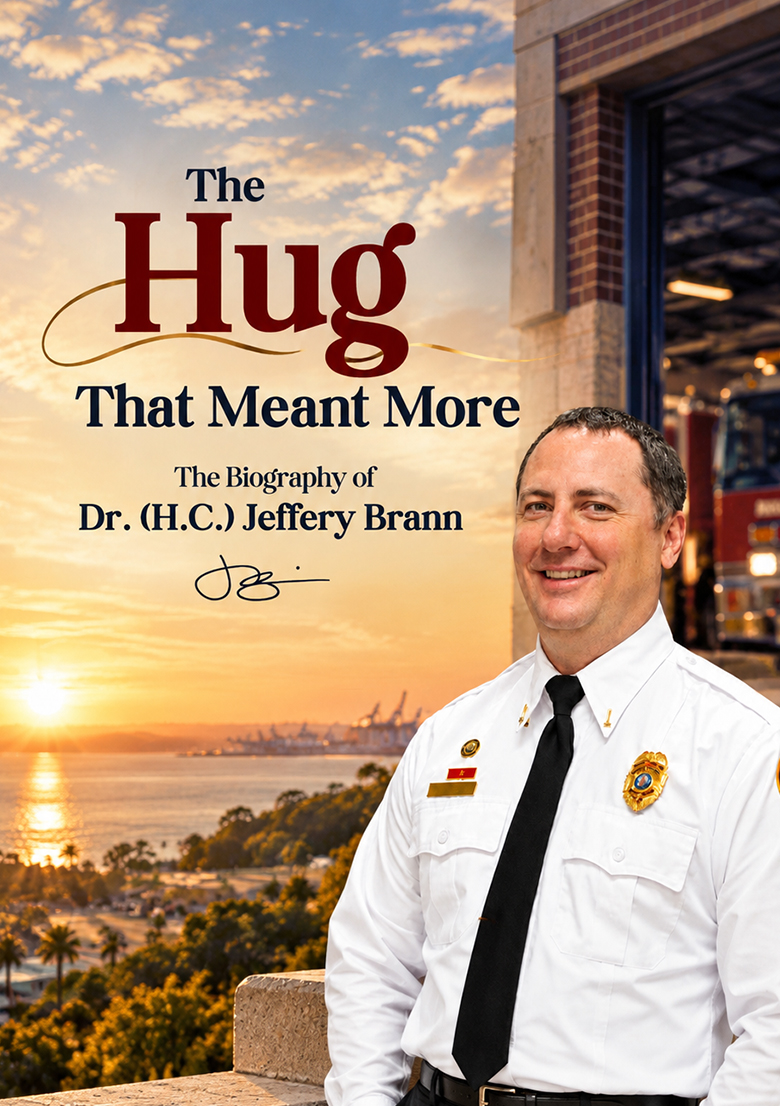
"It’s not really where you come from. It’s where you go in life. You can stumble and fall, but the question is whether you pick yourself up or stay down."
Introduction
The life of Dr. Jeffery did not begin with a carefully mapped professional plan. It began in Florida, in a childhood filled with open spaces, horses, motorcycles, sports, and close friendships. As a teenager, Dr. Jeffery did not have every answer about the future. A conversation with his father when he was around fifteen helped him think more seriously about direction. Life would eventually bring two of those interests into reality. Before that happened, he finished high school, spent some time at a junior college, and moved through a period of trying to understand what suited him. He even explored pest control as a possible business. The decisive turn came when a family connection introduced him to the fire academy.
Once he entered that world, hesitation gave way to certainty. Dr. Jeffery discovered work that felt right to him. His first position took him to Belle Glade Fire, where the realities of emergency work became far more tangible than training alone could communicate. Each move added experience, but none represented the final destination.
A chance encounter at a softball tournament brought Estero into the picture. Members of the growing department knew that Dr. Jeffery was a paramedic and told him about the opportunity. He decided to test. He did, and the move became important to the direction of his career. By his fifth year there, he had been promoted to lieutenant. Responsibility began expanding beyond responding to emergencies. Leadership, crew development, training, and teaching became increasingly important parts of the person he was becoming.
Education also returned to his life in a different way. That progression reflected something important about Dr. Jeffery. He returned to education when it had purpose. Psychology connected with an interest that had existed since his teenage years, while Fire Science strengthened a profession that had become central to his life.
Teaching developed naturally alongside that growth. Dr. Jeffery found satisfaction in helping others understand practical skills, professional expectations, and the realities behind emergency service. The same instinct appeared when he coached young people. His focus was not on making himself the center of their progress. It was on helping them become better. He carried a similar philosophy into education and careers. He believed young people should understand that a meaningful future does not have only one acceptable route. College could be valuable, but so could a trade, technical training, or another path pursued with commitment. What mattered was choosing with purpose and giving that choice everything possible.
Over time, his interests widened without losing their connection to service. Dr. Jeffery developed a strong love for history and remained drawn to reading the Bible. His faith became increasingly meaningful through experiences that changed how he understood family, growth, and what could be rebuilt in life. Rather than allowing difficult periods to become the whole story, he came to see them through what could be learned from them. The past could not be changed by dwelling on it, but it could still teach a person how to move forward differently.
Retirement from the fire service in 2020 did not become a retreat from responsibility. Dr. Jeffery continued working with young people, safety, training, administration, and organizational operations through roles connected with Florida Southwestern State College, a chiropractic office, Estero Church, and New Horizons of SWFL. The settings changed, but the underlying pattern remained familiar. He continued finding places where preparation, guidance, judgment, and a willingness to help mattered.
This biography follows more than a professional career. Dr. Jeffery’s journey is not a flawless rise from one achievement to another. Its value lies in the way experience kept teaching him and in the way he continued carrying those lessons into the lives of others.
"I grew up in the country with horses, motorcycles, cow pastures, and orange groves. It was just a great, peaceful way to grow up."
Phase 1: Before the Sirens
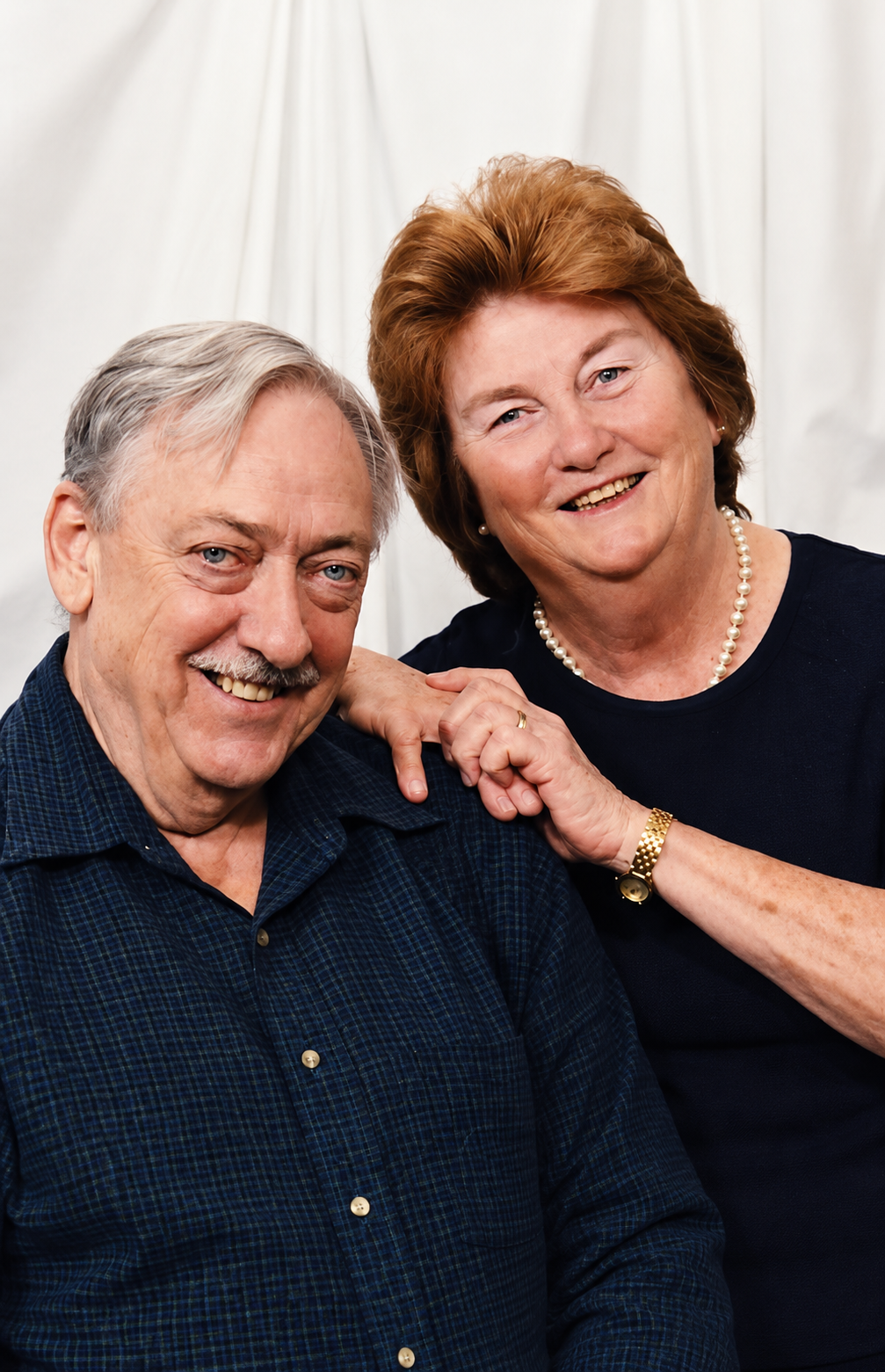
Long before responsibility became a defining feature of his life, Dr. Jeffery knew Florida as home. He was born in Fort Lauderdale at Holy Cross Hospital, the same hospital where both of his brothers were born. There was an unusual detail woven into the family story. Although the three brothers were separated in age, all three shared the same birthday. Dr. Jeffery, the middle child, grew up between an older brother who was three years ahead of him and a younger brother who was two years behind him. It gave childhood its own lively rhythm, with competition, closeness, arguments, laughter, and the ordinary negotiations that come with growing up between two brothers.
The surroundings in which those years unfolded were equally memorable. The Florida of his childhood was not the crowded environment that later developed around the area. His family lived in the country, surrounded by open land, cow pastures, and orange groves. There were cow pastures and orange groves, and even a simple trip to a store meant travelling several miles. For a young boy, however, distance did not make life feel empty. It made the outdoors part of everyday living. He had horses and motorcycles and spent much of his time outside, discovering enjoyment without needing much structure around it.
Horseback riding held a particular kind of appeal. Dr. Jeffery was interested for a time in learning roping because one of his friends was skilled at it, and there was even talk of possibly trying team roping together. The skill never quite came naturally enough for him to pursue it seriously. What remained was something simpler and perhaps more lasting. He loved being able to ride with almost nothing around him, enjoying the stillness of being alone with the horse. In later years, when the countryside had become far more developed, those memories preserved an image of Florida that remained personal to him.
Friendships grew naturally within that environment. The houses around them formed a small circle in which people knew one another closely, and some of those relationships survived the passage of time. Even after Dr. Jeffery eventually moved across the state, returning to the area meant visiting familiar people and sometimes driving past the house where so much of his early life had taken place. The landscape had changed, but memory had not changed with it. Behind the later development remained the quieter landscape that had shaped his childhood.
Home life had its own unmistakable character. As the middle brother, Dr. Jeffery joked that he often felt unable to win. If he bothered his younger brother, his older brother could respond on the younger one’s behalf. His advantage was athletic ability and speed, which occasionally meant that avoiding his older brother became easier than confronting him. Beneath those familiar sibling battles was genuine closeness, particularly with his younger brother. For years they shared a bedroom, only separating after the oldest brother left for college and Dr. Jeffery moved into the newly available room.
Those shared years produced memories that belonged to another era. There were no mobile phones waiting beside the bed. The brothers had corded telephones, late evenings, and enough youthful imagination to make prank calls. Television offered only a handful of channels, so a Saturday night could stretch into the early hours simply because they wanted to stay awake for a late movie. Eventually the programming would finish, the television would go blank, and the night would be over. They were ordinary moments, but their very simplicity gave them permanence.
"I looked across that bar, turned to my friend, and said, ‘I’m going to marry her.’ Everybody laughed, but I meant it."
Phase 2 : A Napkin Number and a Door He Never Walked Back Through
For a time, Dr. Jeffery was still working out what adulthood was supposed to look like. He was taking classes at junior college, but he had not reached the point where education felt connected to a clear destination. College was simply what many people seemed to do after high school, and he was following that path without being convinced that it belonged to him. At the same time, he worked different shifts at a gas station, adjusting his schedule around classes and meeting a steady stream of people who came through each day. What appeared to be an ordinary job would unexpectedly lead him toward his first attempt at building something of his own.
One of the regular customers operated a lawn service. Because the man frequently stopped for fuel and supplies, casual conversations gradually became familiar. Then one day he offered Dr. Jeffery a job. The offer had nothing to do with cutting grass, which immediately made it more interesting to him. The man had sold his lawn business and was preparing to start a pest control company. He explained that learning the business properly required working under someone before eventually becoming eligible to pursue a license. Rather than asking Dr. Jeffery to commit immediately, he invited him to ride along and see what the work actually involved.
The introduction to pest control was anything but routine. What began as a day of observing lawn treatments and learning about the work suddenly became far more eventful when an unexpected situation unfolded at one of the locations. In the confusion, Dr. Jeffery’s instincts from his wrestling years surfaced, and he found himself helping restrain one of the individuals involved until police arrived. By the end of the day, the supposedly ordinary ride-along had become one of the more unusual stories of that period. It certainly had not been boring.
He accepted the opportunity and began working in pest control. As he learned the business, he started developing accounts of his own and seriously considered pursuing that direction. At that point, there was still no certainty that the fire service would become the profession around which much of his adult life would eventually revolve. Pest control was practical and offered room to grow, and for a young man still deciding what suited him, it represented a legitimate possibility.
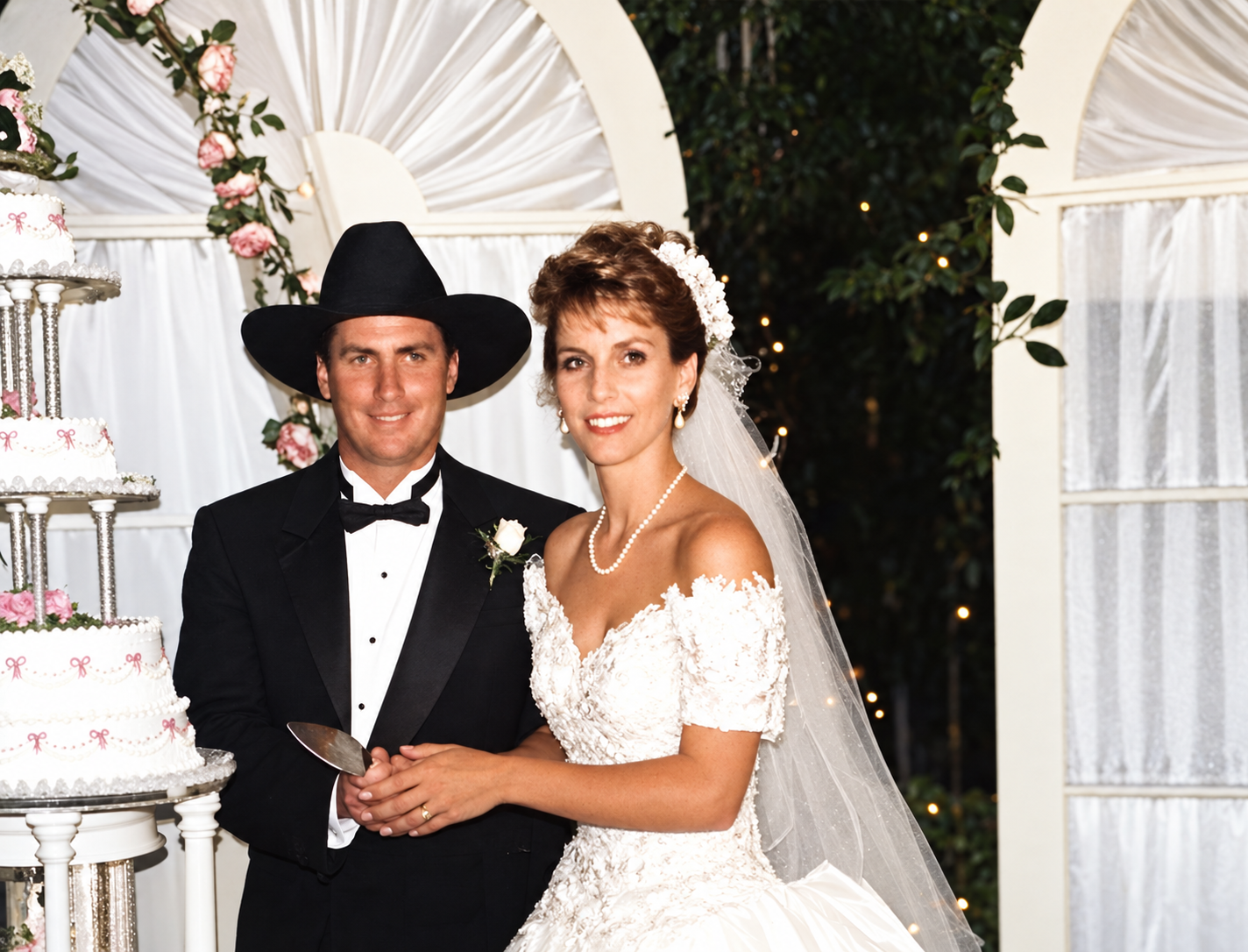
Life outside work was changing as well. Dr. Jeffery was single and enjoyed going out, particularly to a country bar where dancing, friends, and social evenings became part of his routine. It was there that he first noticed Tracee Brann. His reaction was immediate. Looking across the room at her, he told a friend that he was going to marry her. His friends laughed at the confidence of the prediction, but he remained certain about what he had said.
Certainty did not produce an immediate date. Tracee Brann was not easily persuaded, and their relationship developed gradually. The world in which they met also had a different pace from modern dating. There were no text messages to send within seconds of meeting someone. A telephone number could be written on a napkin and carried home with care. After receiving her number, Dr. Jeffery tried calling, only to repeatedly hear from her roommate that she was working. For roughly two weeks, the pattern continued until he began to assume she simply was not interested.
"I wanted to become a paramedic, so I went back to school, finished what I needed to finish, and kept moving forward."
Phase 3 : Learning the Weight of the Uniform
After the first shock of rookie life at Belle Glade Fire, Dr. Jeffery did not retreat from the profession. The reality of the work gave him a clearer sense of how much responsibility came with it. He spent a couple of years there, allowing training to become experience and learning that emergency service could change direction without warning. The young firefighter was beginning to build the steadiness that could only come from being present when people needed help.
Chief Tony Tuliano was his first fire chief and became an important early professional influence from whom Dr. Jeffery learned a great deal. At the beginning of a career, the people around a young professional can matter as much as formal training, and Dr. Jeffery was learning not only the work itself but also what responsibility looked like in practice.
A few years into that journey, he decided firefighting was not where he wanted his training to stop. He wanted to become a paramedic. That choice required another period of study, and he left Belle Glade Fire to complete paramedic school. While working toward the qualification, he worked for a private ambulance service. The arrangement kept him close to emergency medical work while his professional direction became more specialized.
Once he qualified as a paramedic, life shifted geographically as well. Dr. Jeffery moved to the west side of Florida and joined Collier County EMS. He remained there for a couple of years, working as a paramedic. By then, the career that had begun through an opportunity opened by a family connection had become something he was actively shaping for himself. He had entered the fire service, gained field experience, and then deliberately expanded his abilities through paramedic training.
The next step took him to East Naples Fire in the Naples area. He spent another couple of years there, continuing to build experience across fire and emergency medical responsibilities. These moves were not separate careers. They formed a steady progression in which each position added something to the one before it.
The move that would eventually become the longest chapter of his fire service career began in an unexpectedly ordinary setting. Fire service teams played softball against one another, and during one tournament Dr. Jeffery happened to meet people from Estero. They knew he was a paramedic and told him their department was growing. The possibility interested him enough to test, although he did not treat the decision as automatic. He told Tracee Brann that if he scored high enough, he would consider making the move.
The move to Estero became one of the most important professional decisions of his career. The department was growing, and with that growth came opportunities to take on greater responsibility. He received a promotion to lieutenant by his fifth year there.
Note of Thanks
As Dr. Jeffery looks across the many chapters of his life, his gratitude naturally extends to the people whose presence helped shape important moments along the way. Among them is his brother in law, Andy Berkowitz, whose encouragement and assistance helped create the opportunity for Dr. Jeffery to begin his career in the fire service. What started as an introduction to a new possibility became the beginning of a profession that would occupy decades of his life.
He also carries sincere appreciation for Chief Tony Tuliano, his first fire chief. The early years of any profession leave lasting lessons, and Dr. Jeffery learned a great deal while working under his leadership. Those lessons became part of the experience he continued carrying as his own responsibilities increased.
His gratitude also belongs to Richard Gonzalez, who gave him the opportunity to teach at the school that later became connected with a college. That opportunity allowed Dr. Jeffery to discover how meaningful it could be to share practical knowledge with people preparing to enter emergency service.
A special place in his thanks belongs to the crew associated with The Rock. Sean Hagan, Adam Rambo, Jerry Krohnfeld, and Dave Lundbohm were part of a professional brotherhood formed through years of shared responsibility and time together.
For Dr. Jeffery, these individuals represent different parts of one long journey. Some helped him begin, some helped him learn, and others stood beside him while the work was being done. His gratitude is therefore not simply for what they contributed professionally but for the place each of them continues to hold in the story of his life.
thanks,
– Dr. (H.C.) Jeffery Brann

AIMLAY is a leading global education platform empowering ACADEMIC and EXPERIENTIAL learners, uniquely focused on recognizing knowledge gained through experience and building a diversified community of doctorates and aspiring researchers.