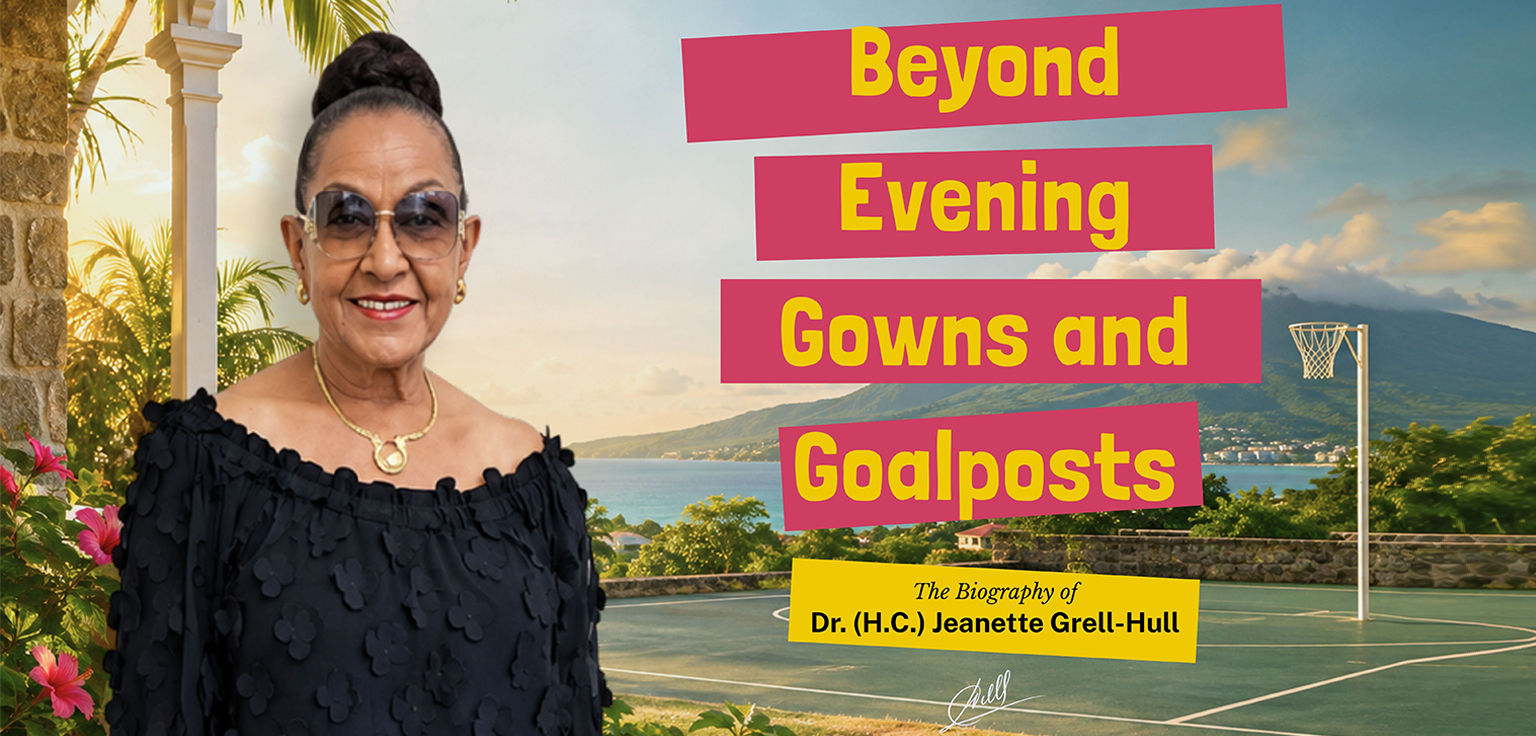
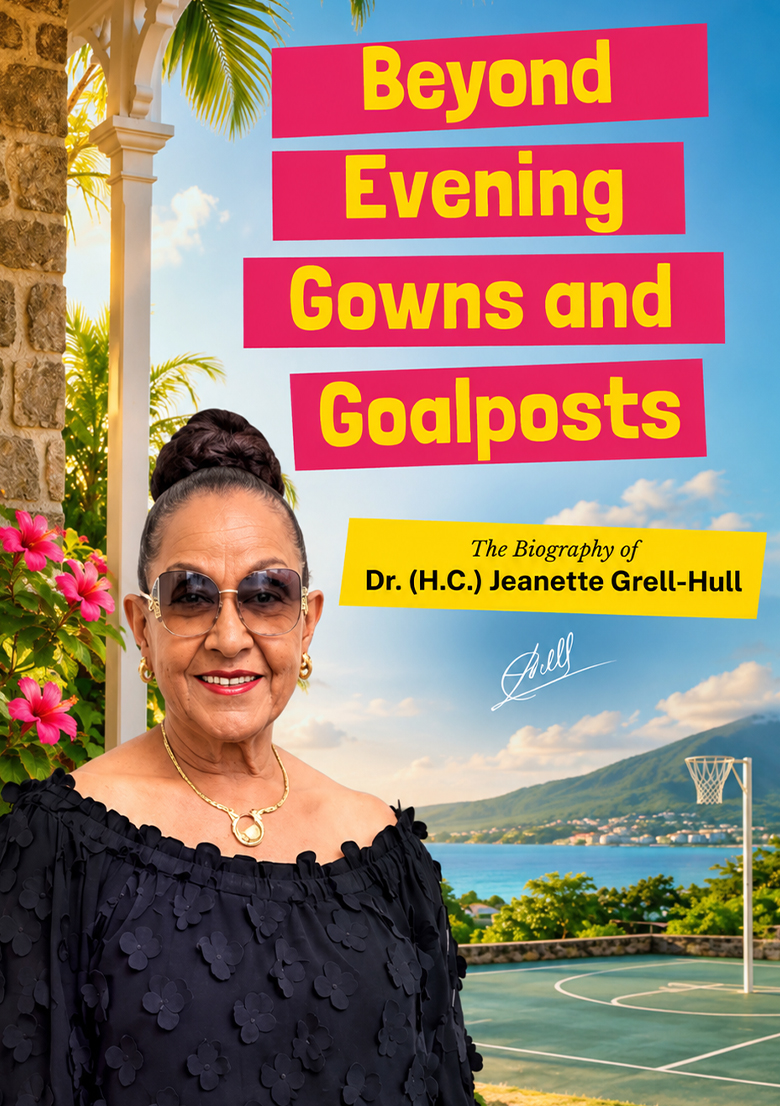
“I inherited my gift for loving and working with people.”
Introduction
The life of Dr. Jeanette Grell-Hull cannot be understood as a simple movement from one position to another. It is the story of a woman who allowed each stage of her life to enlarge the next. What began in the quiet surroundings of Nevis grew into a journey of leadership that reached sports fields, airport offices, travel counters, boardrooms, hotels, community centres, churches, and regional gatherings. At every point, her work was shaped by an instinct to serve people well and to show that obstacles could be met with courage, discipline, and practical action.
She came from a world in which family values were clear. Courtesy mattered. Faith mattered. Work had to be done properly. Children learned that their conduct reflected not only themselves but the people who raised them. The early discipline of that environment remained with her throughout her life. It gave her an orderliness that later appeared in the way she led teams, planned businesses, organised people, and faced personal challenges. It also gave her a softness of heart. Her achievements have never stood apart from the human relationships that made them meaningful.
Her journey unfolded during a time when women often had to prove their capabilities repeatedly before they were trusted with leadership. Dr. Jeanette Grell-Hull did not accept the idea that women should remain on the margins of public life. She believed that men and women were equal partners, and she made that conviction visible through her own choices. She entered business independently, built a travel agency, worked with women seeking to establish themselves, and encouraged young women to carry themselves with confidence, poise, and self-respect. Her example became part of her message.
Sport provided another powerful arena for her purpose. Netball was not merely a game in her life. It became a place where discipline, teamwork, leadership, resilience, and ambition could be taught and lived. She helped build the foundations of organised netball in Nevis, represented her country, captained teams, scored important goals, trained as an umpire, managed players, led associations, and carried the sport into broader regional spaces. Through those roles, she helped create opportunities for young women to see themselves as capable, disciplined, and worthy of recognition.
Her professional life reflected the same spirit of growth. The airline and travel industry taught her the value of precision, courtesy, and responsiveness. Her own travel agency showed her how vision could be joined with hard work. Later, hospitality and tourism gave her another opportunity to manage people, welcome visitors, solve problems, and uphold standards. She was never content to remain still simply because she had already achieved something. Each new responsibility became an invitation to learn.
There were also deeply personal moments that tested her strength. The loss of her father during her youth altered the security of her childhood. Early marriage, motherhood, divorce, and later the serious accident involving her son brought responsibilities that could not be met through determination alone. They required care, patience, and emotional endurance. Yet she did not allow hardship to close her life. Instead, it deepened her compassion for others and strengthened the resolve with which she approached every new demand.
Faith has remained central to her understanding of life. Her Methodist heritage, her long service as a church organist, and her belief in a sovereign God have given her a quiet confidence that circumstances can be faced without losing hope. She has often attributed her achievements to divine intervention, not as a way of diminishing her own effort, but as an acknowledgement that life is sustained by forces greater than individual ambition.
"Where there is love there is life."
Phase 1: Roots in Nevis, Faith, and the Estate Years
Born in April 1946, Dr. (H.C.) Jeanette Grell-Hull entered a family whose values were shaped by hard work, service, faith, and a strong sense of proper conduct. She was the eldest of four children, growing up with two brothers and one sister. Her earliest world was not one of crowded streets or neighbouring houses. It was the spacious and quieter setting of estates, where the rhythms of the land, animals, weather, and family life created the environment of her childhood.
Her father, Reginal Ashton Hull, was an agricultural officer and estate manager. His work took the family to three estates in Nevis, giving her an upbringing closely connected with agricultural life. The estate surroundings became an important part of her identity. She loved animals and was surrounded by them in a way that shaped both her independence and her tenderness. Horses, donkeys, dogs, cats, fowls, and other animals were familiar companions in her early years. She learned to appreciate life in its many forms, a feeling that later widened into an enduring concern for people and communities.
She was an energetic child, happiest when she was outdoors. She swam, ran long distances, cycled, played lawn tennis, and spent time at the beach. She described herself as something of a tomboy, not because she lacked refinement, but because she was full of movement, curiosity, and confidence in the open world around her. The estate life gave her space, but it also carried discipline. Her parents expected their children to behave respectfully and to understand that good manners were part of a person’s character.
A greeting was never a small matter in the household. If a child met someone and failed to say good morning or good afternoon, the news could reach home before the child did. Such moments became lessons in courtesy, accountability, and awareness of others. The discipline was firm, but it was rooted in the belief that a person should move through the world with respect. Dr. Jeanette Grell-Hull carried that lesson with her into adulthood, where professionalism, politeness, and consideration for people became hallmarks of her work.
Her mother, Helen Cicely Grell-Hull, was a civil servant who worked in several government offices. Her duties included service as a librarian, work in the Post Office, the Agriculture Department, and the Public Works Department. Through her, Dr. Jeanette Grell-Hull saw that a woman could be industrious, capable, organised, and committed to public responsibility. Her mother’s standards were high, and the children were expected to do things correctly. That firmness did not diminish affection. Rather, it established a foundation of care expressed through responsibility.
The family’s spiritual inheritance was equally important. Their roots reached back to Reverend John Henry Bridgewater, a Methodist preacher whose ministry extended through Dominica, Saint Vincent, Antigua, and other Eastern Caribbean islands. He was remembered as a man who believed in the dignity of life, the love of God for all humanity, and the duty of people to love one another. His message of faith and fellowship became part of the family’s moral inheritance.
Music was introduced to Dr. Jeanette Grell-Hull when she was only three years old. It was not treated as an occasional activity but as part of a disciplined upbringing shaped by the Methodist tradition. Music, sport, church life, and family expectations kept the children occupied and grounded. There was little room for carelessness or harmful company. The family sought to prepare its children not only for achievement but for responsible living.
“You may encounter many defeats, but you must not be defeated."
Phase 2 : Loss, Education, and the Search for Her Own Direction
The steadiness of childhood did not last unchanged. During her adolescent years, Dr. Jeanette Grell-Hull lost her father, Reginal Ashton Hull. The relationship between father and daughter had been especially close. As his firstborn, she had shared with him a bond that gave her a strong sense of safety and belonging. His death brought a grief that changed the emotional landscape of her young life.
The family moved from the estates into town, where a different world awaited her. The change was not merely geographical. Estate life had been open, familiar, and closely connected to the countryside. Town life required adjustment. The churches were different, the social environment was different, and the sense of community was shaped by a more formal setting. Dr. Jeanette Grell-Hull did not immediately feel at home in every new environment, but she gradually found ways to remain true to herself.
Her formal education continued through high school, where she studied until the age of seventeen and completed General Certificate of Education at the age of eighteen. English, mathematics, and geography were the subjects that held particular interest for her. At that time, she hoped to become an air hostess. The thought of travel appealed to her imagination. It seemed glamorous, connected to movement, people, and a wider world beyond the familiar boundaries of the island.
The life she had imagined did not unfold exactly in that form, but the interest itself was meaningful. It pointed toward the career that would later become one of the most important parts of her professional journey. Even before she entered the travel industry, she had begun to sense that she wanted a life with room to grow, learn, and engage with people beyond her immediate surroundings.
The loss of her father brought a period of deep sadness. She withdrew from some social activities and experienced loneliness during a stage of life when she was still trying to understand herself. Yet the grief did not erase the strength that had been planted in her early years. It remained present beneath the sorrow, waiting for the moment when she would begin to draw closer again to family, community, and purpose.
Her mother, who had already carried many responsibilities in public service, now had to continue caring for four children without her husband. Dr. Jeanette Grell-Hull came to understand the weight of that struggle. In time, she recognised that her own choices had affected her mother’s worries, and she made a deliberate effort to draw closer to her and take part in the social and community activities that had always mattered to the family.
“The world is a book, and those who do not travel read only one page.”
Phase 3 : A Gateway to Travel and Professional Confidence
Before travel became the centre of her professional life, Dr. Jeanette Grell-Hull gained early work experience at the Nevis Post Office. From 1963 to 1965, she worked as a sales clerk, handling stamps, envelopes, postal products, payments, money orders, letters, and parcels. The work required accuracy, trustworthiness, and patience with the public. It also brought her into regular contact with people from different walks of life, helping her develop the calm and courteous manner that later became one of her greatest professional strengths.
Her interest in becoming an air hostess remained strong for a time. She had selected subjects that she believed would support that ambition, and the idea of travel continued to appeal to her. Yet while waiting to be called for an interview, another opportunity came first. She entered the airline industry directly, and that decision opened a path that proved more suited to her abilities.
From 1967 to 1977, she worked in airline reservations, ticketing, passenger services, and cargo operations through Evelyn’s Travel Agency and LIAT. Her duties took her between the town office and the airport. In the city office, she worked as a ticket agent and handled reservations. At the airport, she served as a passenger and cargo agent, managing the practical details that make travel possible. She also worked with private charters and freight shipments, learning how many moving parts must come together for people and goods to reach their destinations safely and efficiently.
The work was demanding, but she enjoyed it. It offered more than glamour. It required careful attention, clear communication, and an ability to remain composed when people needed answers quickly. Passengers came with different needs, expectations, worries, and destinations. Some needed help with bookings, others with tickets, cargo, or travel arrangements. In every case, the work depended on accuracy and a willingness to listen.
These years helped her understand the travel industry from the inside. She learned how airlines functioned, how reservations were managed, how customers responded when they felt respected, and how trust could become the foundation of a professional relationship. She saw that people often returned not only because of the service they received but also because they remembered how they had been treated.
Her early hope of becoming an air hostess gradually gave way to a deeper appreciation for the work she was doing. She found the airline office and airport environment more interesting than the role she had first imagined. There, she could solve problems, make arrangements, respond to customers, and understand the broader systems behind travel. The experience widened her confidence and gave her a practical education that could not have been gained from aspiration alone.
By the end of the decade, she had spent ten years in the airline industry. She had developed experience in customer care, airline procedures, ticketing, freight, reservations, and travel planning. More importantly, she had begun to recognise the limits of working within someone else’s structure. She was grateful for what the industry had taught her, but she was not content to remain only where permission determined the boundaries of her growth.
Note of Thanks
At the centre of Dr. Jeanette Grell-Hull’s life is a deep and lasting gratitude for the people, values, and circumstances that gave her the strength to become who she is. Her journey carries the imprint of those who guided her early, stood beside her through difficulty, and gave meaning to the work she has continued to do.
Her gratitude begins with her parents, Reginal Ashton Hull and Helen Cicely Grell-Hull. From her father came a love for life, animals, the land, and the beauty of the natural world. From her mother came discipline, work ethic, social responsibility, and the determination to do things properly. Their influence remained present in the choices she made long after childhood.
She also carries gratitude for the Methodist tradition within her family and for the spiritual inheritance associated with Reverend John Henry Bridgewater. The values of faith, dignity, love, and care for others have remained living principles in her life. They have strengthened her through loss, guided her in service, and reminded her that achievement is most meaningful when it benefits others.
Her appreciation extends to her son, Glenville Howell, her siblings, teammates, co-workers, employees, church communities, community organisations, athletes, women in business, and the people with disabilities whose trust has added depth to her continuing work. Each relationship has been part of the larger human story behind her public achievements.
She remains thankful for every opportunity to learn, lead, teach, organise, and serve. The gratitude within her life is not passive. It is expressed through action, through the time she gives, the standards she upholds, and the encouragement she offers to people who need it. In that spirit, her life itself becomes a continuing thank you to the community that shaped her and the people she has been privileged to serve.
thanks,
– Dr. (H.C.) Jeanette Grell-Hull

AIMLAY is a leading global education platform empowering ACADEMIC and EXPERIENTIAL learners, uniquely focused on recognizing knowledge gained through experience and building a diversified community of doctorates and aspiring researchers.