"You never rely on the title or assumed authority. You earn leadership by earning people’s trust."
Introduction
At the centre of Dr. Jason’s journey lies a fascination that endured for more than three decades. It began with science, chemistry, and a curiosity about metals. Over time, it became a profession, an area of expertise, a platform for leadership, and eventually the foundation of an invention that could influence the future of aluminium manufacturing. Yet his story cannot be understood through engineering alone. The deeper narrative concerns how knowledge, character, and human experience gradually came together.
He entered the professional world with an analytical mind and a disciplined approach to work. He wanted to understand why materials behaved as they did, how industrial processes could be controlled, and how better technical decisions could improve products. The complexity of metals captivated him, but the scale of industrial manufacturing gave that interest a larger purpose. He did not want merely to observe industry. He wanted to participate in its improvement.
As his responsibilities grew, technical competence was no longer enough. He had to lead people who possessed more years of practical experience than he did. He had to make decisions in environments where production pressures, safety, quality, and human relationships existed together. The authority accompanying a position could not automatically create trust. Trust had to be earned through consistency, humility, and respect.
That lesson became one of the defining principles of his leadership. He learned that a promotion gives a person responsibility, but it does not instantly give that person the confidence of a team. People respond to leaders who listen, acknowledge experience, and treat them as participants in a shared effort. His preference was therefore to create working relationships built on partnership while retaining the courage to make difficult decisions when necessary.
Life outside work continually deepened this understanding. Early circumstances had taught him independence. Parenthood taught him vulnerability. Medical uncertainty surrounding someone he loved showed him how precious life was and how suddenly it could be threatened. That experience entered his professional consciousness, especially in industries where a single unsafe moment could carry irreversible consequences.
His view of industry consequently became broader. Technical performance mattered, but so did the physical and psychological condition of the people performing the work. Compliance could not be reduced to procedures written on paper. It depended upon culture, behaviour, clarity, and the willingness of leaders to accept responsibility. Quality could not be separated from integrity. Safety could not be treated as an administrative requirement. Environmental responsibility could not be postponed until a crisis occurred.
Dr. Jason also learned to look beyond the assumptions of his own country. International travel introduced him to different histories, traditions, and ways of conducting business. Instead of expecting colleagues from other cultures to conform automatically to an American perspective, he tried to understand how situations appeared from their side. This openness allowed him to adjust more thoughtfully when working with global organisations.
“Although the world is full of suffering, it is full also of the overcoming of it.”
Phase 1: A Childhood That Taught Him to Stand on His Own
Dr. Jason was born in Pennsylvania, in a part of the United States where industry was closely woven into ordinary life. Factories and steel mills were not distant institutions. They provided livelihoods to families throughout the region and shaped the working culture in which he was raised. Most of the people around him belonged to working class households, including members of his own family.
His father, Thomas Adams, worked in a factory. His mother, Emogene Adams, remained at home and devoted herself to raising Dr. Jason and his younger sister. The family did not live in extreme poverty, but there were periods when money became severely limited. His father’s income had to support the entire household, and the responsibility was not always easy to carry.
Financial pressure formed part of the family’s reality. Dr. Jason became aware of conversations about whether there would be enough money and whether the household could meet its obligations. These were not ideas he encountered later as an adult. They belonged to his earliest understanding of responsibility.
The family’s circumstances became more complicated after the birth of his sister, Rachel Adams, who was four years younger. During the pregnancy, their mother had faced the possibility of a miscarriage and was given medication intended to help her carry the child. Rachel was subsequently born with significant medical difficulties involving her internal organs, along with deformities affecting her feet.
For approximately the first twelve years of Dr. Jason’s life, her condition required repeated treatment and numerous surgical procedures. His parents regularly had to spend time in hospitals with her, leaving the household organised around medical appointments, surgeries, recovery, and concern for what she was experiencing.
Their attention naturally centred on the child whose health required immediate care. Dr. Jason understood why this was necessary. He felt deeply for Rachel and did not respond with resentment when his parents had less time available for him. Instead, he adjusted to circumstances that required him to become capable earlier than most children.
Whenever Rachel underwent surgery, he often stayed with his grandparents or in the homes of aunts and uncles. His extended family therefore became an active part of his upbringing. These relatives were not merely names within a family tree. They provided stability whenever his parents had to focus on Rachel’s treatment.
“An investment in knowledge pays the best interest.”
Phase 2 : The Family Legacy He Chose Before He Knew It
Dr. Jason grew up as a first generation American. His parents had been born in England and Ireland and came to the United States when they were very young. Both belonged to large families, and neither had been given the financial opportunity to pursue higher education.
Thomas came from a family of nine children, with only two boys among the siblings. He was one of the youngest. His own father died while he was still very young, leaving a family history that Dr. Jason knew only through relatives and information uncovered years later.
The absence of higher education within the family was not caused by a lack of ability or aspiration. Earlier generations had been occupied with immigration, work, large households, and the need to build financially sustainable lives. For them, education beyond school had not been a realistic possibility.
Factory labour therefore became part of the family’s economic identity. Dr. Jason saw his father, aunts, uncles, cousins, and other relatives connected with industrial work. Factories were where people earned a living, supported households, and often exhausted themselves through physically demanding responsibilities.
His parents wanted more opportunities for their children than they had received. Dr. Jason became the first person in the family to attend college. Their pride in that possibility came with an equally important expectation. He had to pursue higher education, but he would be responsible for paying for it himself.
The condition did not discourage him. It strengthened the financial discipline already taking shape through his childhood. He understood that there would be no extravagance and that money had to be handled responsibly. College could not be treated as an experience someone else was funding. It would represent his own work, sacrifice, and commitment.
Watching his parents struggle also influenced the kind of future he wanted to create. He made a personal vow to work hard enough to provide a more financially secure life for the family he might one day have. He did not want his children to grow up hearing discussions about insufficient money or wondering whether their parents could provide what was needed.
“Education is not preparation for life; education is life itself.”
Phase 3 : Music, Metallurgy, and a Relationship Taking Root
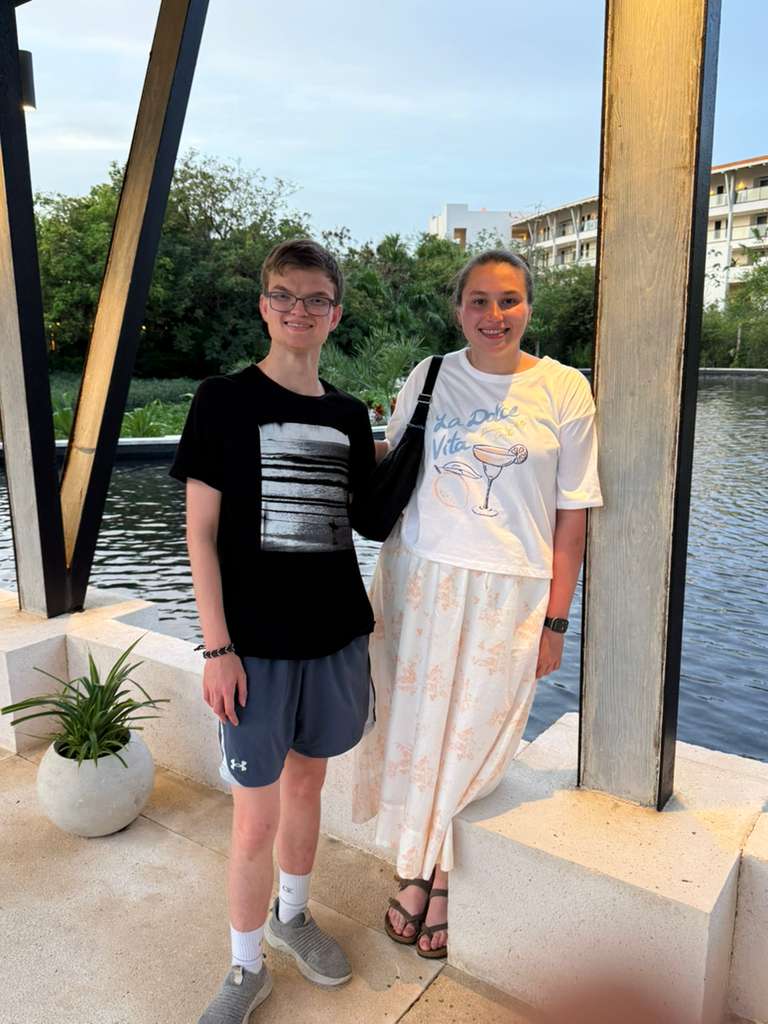
In 1990, Dr. Jason entered the University of Pittsburgh. It was a local institution near the community where he had grown up, and he arrived without a family history of university education to guide him. He did not know exactly what to expect, but he carried the discipline of a student who had ranked first in his high school class and understood that he was responsible for financing his education.
He entered the materials science and metallurgical engineering programme. The field brought together his interest in chemistry, his attraction to metals, and the industrial history surrounding Pittsburgh. The city had played a defining role in the development of the American steel industry, making the subject feel both technically challenging and closely connected with the world he knew.
His university life was intense, but it was not limited to engineering. Instrumental music had been an important part of his high school years, and he did not want to abandon it immediately. During his freshman and sophomore years, he joined the University of Pittsburgh marching band.
The band gave him a genuine social life within the university. He attended football games on Saturdays, practised every night of the week, and formed friendships beyond the demanding environment of engineering. Some of the people he met through that experience remained his friends many years later.
He also allowed himself some of the enjoyment associated with college life. Yet the disciplined nature formed during childhood remained at the centre of his behaviour. When his engineering studies became more difficult and required greater attention, he recognised that he could not continue giving equal commitment to both the band and his degree.
After his sophomore year, he left the marching band because he did not want his academic performance to suffer. Music still mattered to him, but engineering had become the responsibility that required priority. The choice was difficult because the band had given him friendship, expression, and a sense of belonging. Nevertheless, he understood that continuing both at the same intensity was no longer realistic.
Another relationship was quietly becoming central to his life. Viki Adams had grown up nearby, and their families possessed an unusual connection. Their parents had worked at the same factory before either family began having children. They knew one another during that earlier period but eventually lost contact.
Note of Thanks
Dr. Jason extends his deepest gratitude to Jack McClelland, the mentor who guided him during one of the most impressionable periods of his professional development. Although Jack is no longer living, the value of his influence remains present in the way Dr. Jason understands leadership and responsibility.
When Dr. Jason was given his first major operational leadership role, he was young and responsible for employees who were older and more experienced. The position could have encouraged him to depend upon rank, but Jack taught him that authority alone would never make him an effective leader.
He helped the young engineer understand that every position must be earned through conduct. Respect does not arrive automatically with a promotion. It develops when a leader listens, acts with humility, values experience, and accepts responsibility for difficult decisions.
Those lessons helped Dr. Jason succeed as the youngest superintendent in the plant’s history. More importantly, they continued to influence him long after that position ended. Whenever he tried to build partnership within a team, develop employees, protect a positive culture, or resist management practices that treated people unfairly, something of Jack’s guidance remained within his decisions.
A mentor’s contribution is not always visible in an organisation chart or professional record. It is carried through the principles that survive after the conversations themselves have ended. Jack’s advice became part of the leader Dr. Jason grew to be and, through the people he later guided, part of a much wider legacy.
His thanks therefore reach beyond memory. They acknowledge a man whose wisdom arrived at the right moment and gave a young leader the foundation upon which decades of responsibility could be built.
thanks,
– Dr. (H.C.) Jason Thomas Adams