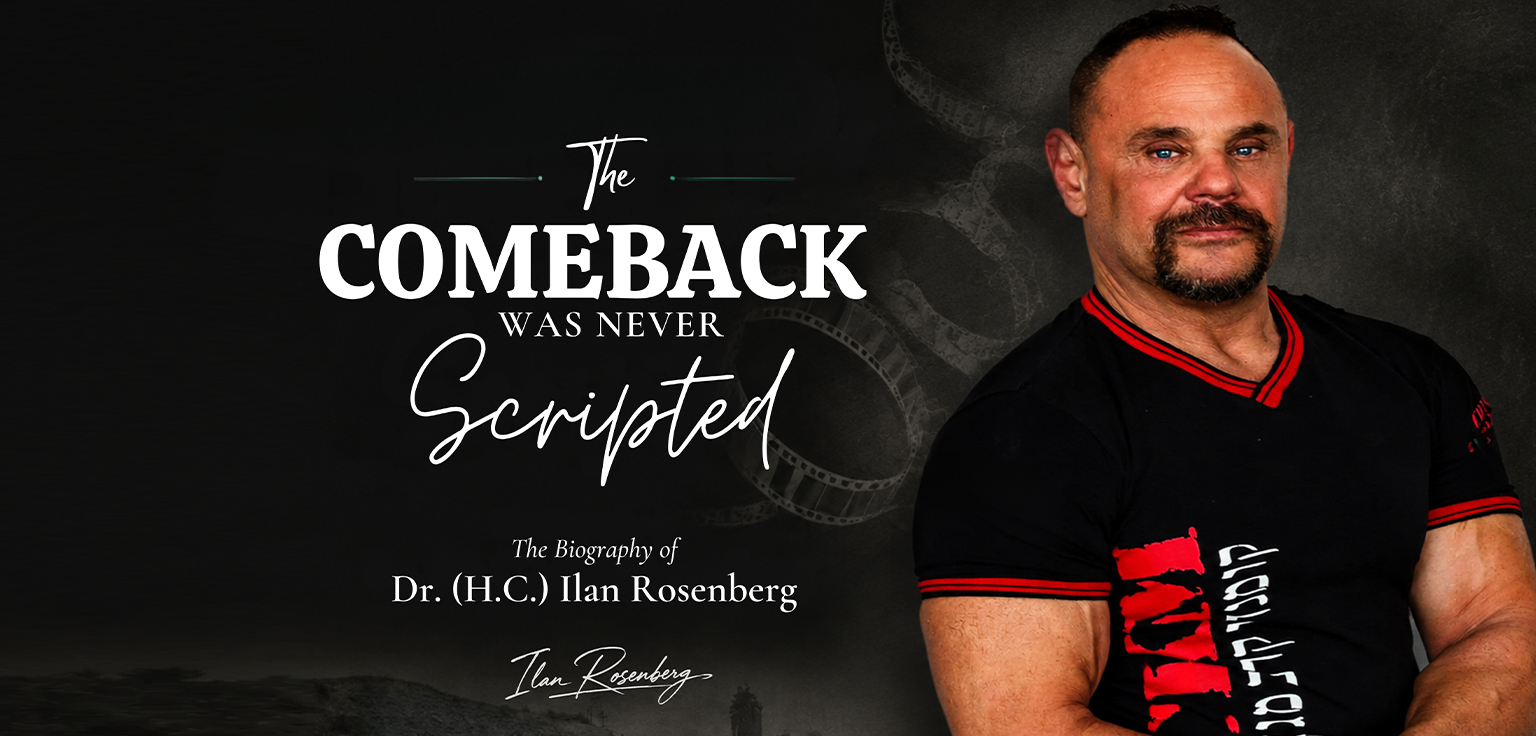
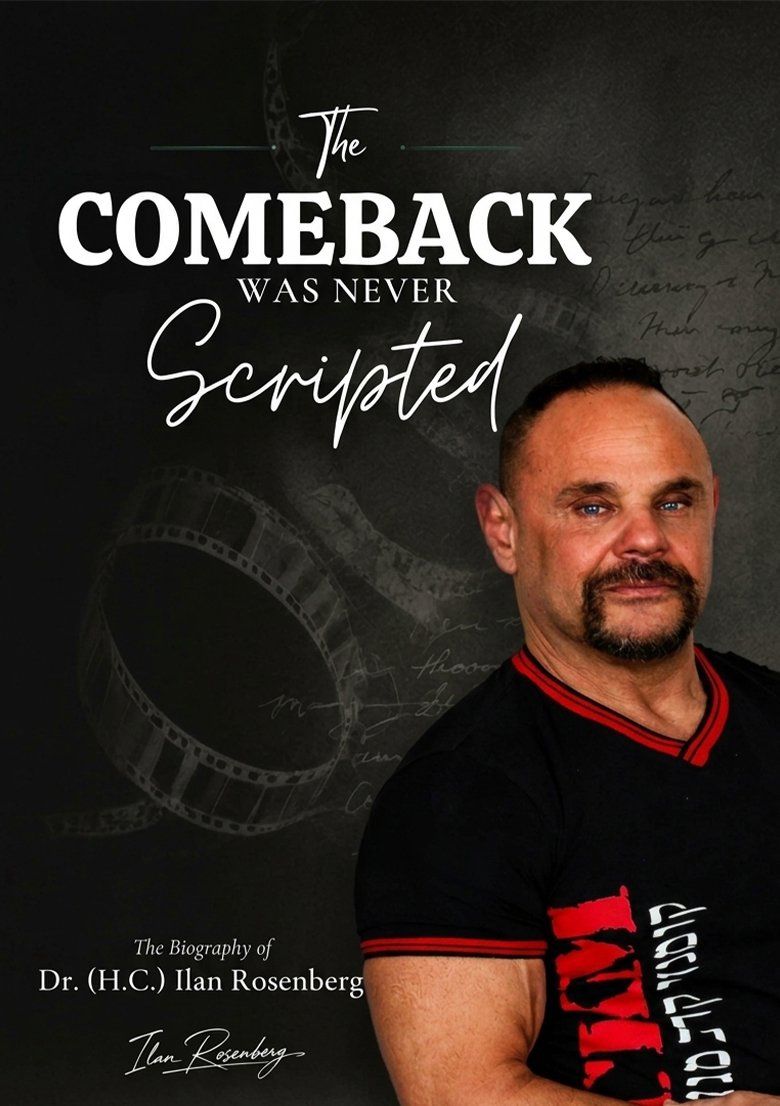
“Life will test the body, the mind, and the heart, but the person who keeps moving can turn every challenge into a new direction.”
Introduction
The story of Dr. Ilan Rosenberg begins with movement, but it certainly does not end there. Movement was simply the first outward sign of a life that would later grow into discipline, performance, leadership, teaching, reinvention, and service. From childhood, he carried an energy that was not easily contained. He was active, athletic, curious, and naturally drawn toward anything that demanded physical courage. He wanted to keep up with his older brothers, test his own limits, and find his place through action. Even in his earliest years, he was never the sort of person who quietly watched life happen around him. He stepped into it with force, instinct, and a very strong mind of his own.
That early physical nature became the foundation of a much larger journey. As a young boy, he was fascinated by performance, superheroes, kung fu films, and the physical expression of strength. He watched action heroes, imagined himself inside those worlds, and found genuine joy in movement long before it ever became a profession. Walking on his hands at school, doing flips, and trying to perform wherever he could were not separate childhood moments. They were early signs of the man he would eventually become. The body became his first language, but over time, discipline gave that language true purpose.
His path into martial arts began young and gradually expanded across combat training, fitness, and physical development. From boxing to multiple martial arts disciplines, each system shaped his discipline, sharpened his understanding of the body, and helped him build a life around skill, survival, and constant improvement. His achievements as an Ontario Judo Champion, Wushu Gold Champion, and bodybuilding competitor reflected not only physical strength but deep and sustained commitment.
Yet Dr. Rosenberg was never limited to one arena. His teenage years opened another side of his personality through break dancing, performance, acting, commercials, television, and eventually film. He loved being in front of people. He enjoyed the stage, the camera, and the rush of physical expression. This natural comfort with performance gradually connected with his martial arts background, leading him toward a professional world where movement, courage, timing, and creativity could exist together.
His journey, however, was not without interruption. A motorcycle accident caused significant injury and kept him away from the business for many years. That period could have closed one path permanently, but instead, it opened another. He returned to education and entered the world of computers with the same determination he had always shown in physical training. At Seneca College, he studied as a Computer Programmer Analyst and achieved a 4.0 GPA. He honed technical skills in software development, programming, backend systems, databases, and project management, demonstrating that his strength was not solely physical. The same discipline that guided his body also guided his mind.
He also worked in structured technology environments, including public sector, healthcare, corporate, and consulting spaces. His responsibilities covered system development, database work, project coordination, documentation, testing, and technical troubleshooting. This part of his life reveals an important truth about him: he could build action sequences, but he could also build systems. He could understand movement, but he could also understand structure.
During the early 2000s, he also entered car sales and later operated a used car lot, an experience that strengthened his communication and sales skills before he opened his martial arts school in 2006.
The next defining chapter came through Moni Aizik and Commando Krav Maga. Through this system, Dr. Rosenberg found a discipline that matched his belief in evolution, simplicity, survival, and practical application. His leadership grew within the system, and his teaching reached civilians, instructors, police, military, and security professionals. To him, training was never only about fighting. It was about awareness, confidence, survival, and helping people understand what they could do when fear, pressure, and danger entered the room.
"The fire was there before the direction arrived."
Phase 1: The Child Who Moved Before He Settled
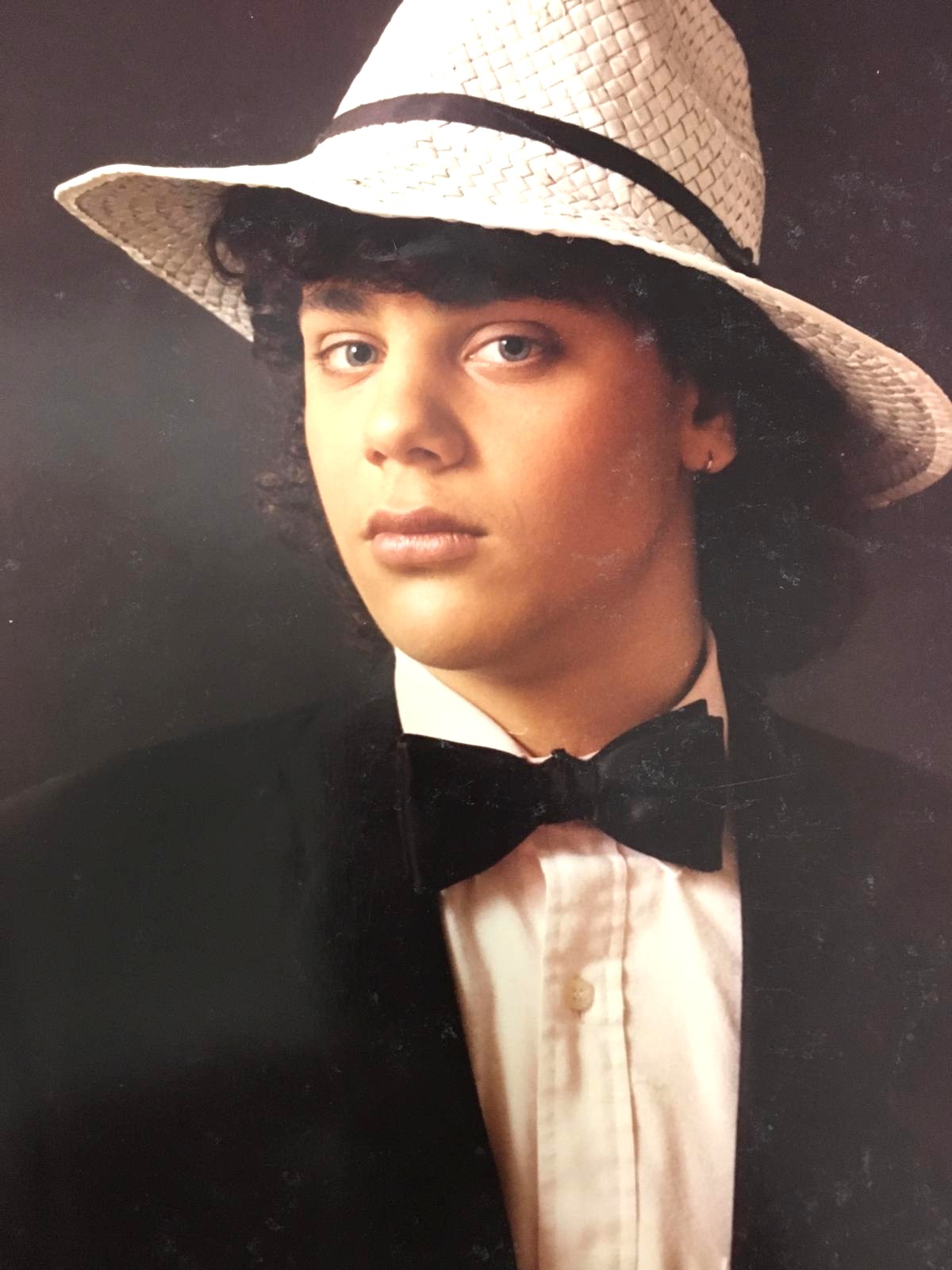
The early life of Dr. Rosenberg was shaped by movement long before it found any clear direction. Years before titles, professional credits, martial arts systems, film sets, teaching duties, or public recognition became part of his story, there was simply a child who could not stay still. His childhood carried a force all its own. It was active, intense, expressive, and filled with a restless kind of energy. From the very beginning, he was never a quiet observer of the world around him. He was the sort of child who walked into every space with presence, curiosity, and instinct.
He was born the third child and the third boy in his family. Later, the family welcomed a fourth child, a girl. Growing up with older brothers lit a certain fire inside him. He wanted to be with them, to follow them, to match whatever they did, and to prove he could stand right beside them. Whether it was sports, play, or the simple competitions of childhood, he felt drawn toward their world and wanted very much to be included in it. That early desire to keep up became one of the first real signs of the determination that would follow him through life.
Like many younger siblings, he also endured his share of teasing from his older brothers. They knew exactly how to trigger him, and they knew his reactions could be strong. He was never a child who easily accepted being pushed around. He had a mind of his own, and once something settled in that mind, he acted on it. Looking back, he has described himself as someone who did not simply accept what everyone said. If he wanted to do something, he would find a way to do it. That independent streak did not always make childhood smooth, but it revealed a quality that would later become central to his strength. He had willpower before he had discipline, and life would gradually teach him how to shape the one into the other.
His early years also carried the sting of being judged by appearance. He was teased because of his height and bullied in school for being short. For many children, experiences like these lead to silence or withdrawal, but for Dr. Rosenberg, they brought out a far more forceful response.
He fought back. He got into trouble. He refused to accept humiliation quietly. At that age, he did not yet possess the training, the control, or the philosophy that would later define his life. What he had was raw reaction, real courage, and a stubborn refusal to let others decide his worth.
One childhood memory captures both his fearlessness and the unpredictable texture of his early years. He had been told not to take his bike onto the road, but he went ahead and did it anyway. The result was an accident in which he was hit by a car and received a cut on his head. Yet even in that moment, the story did not unfold in any ordinary way. The man who struck him was so badly shaken that young Ilan Rosenberg ended up bringing him home because the man was frightened and trembling. It was a striking moment in a childhood already full of movement and consequence, revealing not only his boldness but also an unexpected human instinct, even at that young age.
School became another setting where his energy made him stand out. By grade one, the principal was already concerned because he and another boy named Evo would walk on their hands throughout the school. They did it up the stairs, down the stairs, and across the building with the ease of children more interested in testing their bodies than following ordinary limits. Evo later went on to become a Canadian national gymnast, and the memory stayed with those who witnessed it as a clear sign of the physical environment that surrounded Dr. Rosenberg from early on. He was not simply active. He was physically expressive in a way that made adults worry and made other children take notice.
“A person does not always know the future they are building; sometimes they simply follow what makes them feel alive."
Phase 2 : A Young Life Drawn to Action and Performance
For Dr. Rosenberg, childhood movement was never limited to play. It carried imagination, performance, and a deep need to express something that words alone could not hold. As he grew, the energy that had made him noticeable in school and at home began to find another kind of direction. He was not merely a child who liked to run, climb, flip, or test physical limits. He was a child who wanted to become the figures he admired, to step into the worlds he watched, and to turn action into a form of identity.
In his younger years, the screen became a powerful influence. He grew up watching the old kung fu films with his family, the kind of films that left a mark on a young mind already drawn to motion and courage. He remembered titles such as Master Killer, Kid with the Golden Arm, and the films of Bruce Lee. These were not just passing entertainments for him. They gave shape to his imagination. They showed him bodies moving with discipline, purpose, strength, and timing. In those films, action was not random. Every move had intention. Every fight carried rhythm. Every character seemed to carry an inner force that was expressed through the body.
That visual world spoke to him naturally. He did not simply watch those characters from a distance. He tried to imitate them. He and others would put together pretend fights, acting as if they were the kung fu heroes who had captured their attention. Long before formal choreography, film sets, stunt coordination, or fight design became part of his life, he was already exploring the basic instinct behind them. He was learning, in his own childhood way, that movement could tell a story. A punch, a stance, a fall, a jump, or a look could say something without a long explanation.
This was also the age when superheroes lived in his imagination. He remembered pretending to be Superman, placing paper inside his shirt as if it were muscle, and running around with friends as though he could fly. It was a simple childhood image, yet it revealed much about the way he saw himself and the world. He was drawn to strength, but not only the kind that defeated others. He was drawn to the idea of becoming larger than ordinary limitations. In those moments, the line between play and possibility felt thin. He was not thinking in terms of profession or future achievement. He was simply feeling the joy of becoming someone powerful, capable, and free.
That desire to perform was always close to the surface. He described himself as a ham, someone who liked to show off and liked to do things in front of others. There was a natural theatrical quality in him, not in an artificial way but in the sense that he enjoyed being seen through action. Some children hide from attention. He moved toward it. If there was a space where he could flip, perform, play a role, or create a moment, he was drawn to it. The stage did not have to be formal. A school hallway, a playground, a room full of family, or a group of friends could become enough.
This early love of action slowly began to meet his interest in physical training. Before martial arts became a central discipline in his life, boxing gave him one of his first direct experiences with combat sport. He went down to Cabbage Town in Toronto, a place he described as well known, and took part in fights when he was still very young. He was around eleven or twelve years old. At that age, many children are still discovering basic confidence, but he was already stepping into environments where courage, reflex, and composure mattered. It was not yet the mature philosophy he would later develop, but it was an early doorway into the world of trained movement.
“Every system has something to teach when the student remains humble enough to listen and strong enough to continue.”
Phase 3 : Making of a Martial Athlete
As the early energy of Dr. Rosenberg began to mature, it did not simply fade away. It found structure. The same restless force that had once driven him to move, to perform, to react, and to push against every boundary slowly entered the world of discipline. For him, physical training was never just another activity added to his life. It became one of the central ways through which he came to understand himself. Every system he stepped into, every class he attended, every challenge he accepted, and every competition he faced gave shape to something that had always been present within him.
His journey into combat and strength was never narrow. It did not belong to one style, one method, or one tradition. He explored widely, learned intensely, and kept adding to his understanding of movement, timing, power, control, and survival. From the beginning, he seemed drawn to anything that tested both the body and the mind. What mattered to him was not simply looking strong. It was learning how strength actually worked, how the body responded under real pressure, how discipline could reshape instinct, and how training could turn raw energy into genuine skill.
Boxing gave him an early doorway into the combat world. It taught him contact, reaction, distance, and the first real lessons of composure under pressure. From there, his interests continued to widen. He trained in Kung Fu, Karate, Taekwondo, Wushu, Judo, Jiu Jitsu, Kickboxing, Muay Thai, MMA, Kali, and Systema. Each discipline carried its own rhythm, philosophy, and demand. Some sharpened balance and form. Others built power and endurance. Some taught striking, while others taught grappling, movement, or awareness. Together, they provided him with a broader physical education than any single system could have ever provided him.
What is striking in his journey is not just the number of disciplines he tried, but the seriousness with which he did so. He was not collecting names or gathering experiences for appearance. He trained because he wanted to understand. He trained because he genuinely loved the work. He trained because the physical world made sense to him when it was honest, demanding, and alive. If something challenged him, it did not push him away. It pulled him closer.
This willingness to enter difficult spaces became visible in his achievements. In 1994, he became an Ontario Judo Champion, a recognition that reflected far more than athletic ability. Judo requires timing, balance, leverage, control, and the patience to read another person’s movement. For Dr. Rosenberg, it gave another kind of shape to his physical intelligence. It was not only about strength meeting strength. It was about using position, awareness, and technique with real discipline.
His achievements in Wushu also became an important part of this chapter. He earned recognition as a Wushu Gold Champion, adding yet another layer to his martial development. Wushu carried the performance quality, speed, athleticism, and visual precision that naturally connected with his personality. It allowed discipline and expression to meet. In that sense, it reflected something important about who he was becoming. He was not only a fighter. He was also a performer through movement, someone who understood that physical skill could be powerful, artistic, and deeply expressive all at once.
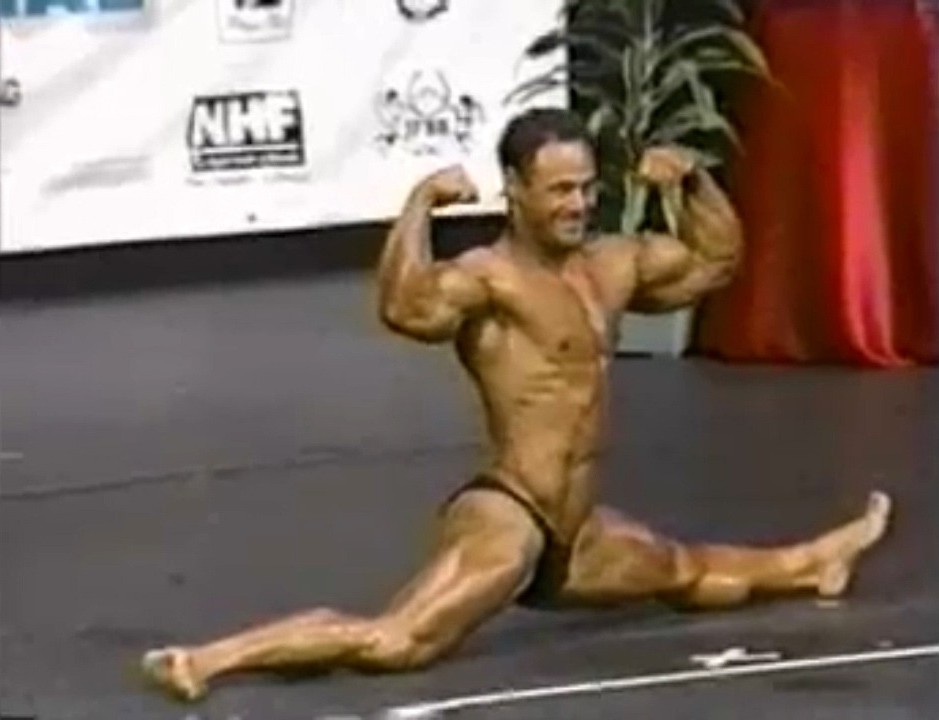
Alongside martial arts, bodybuilding became another major part of his physical journey. From a young age, he had imagined strength through the figures he admired, and over time that imagination turned into training. Bodybuilding required a different kind of commitment altogether. It required consistency, patience, repetition, careful diet, focus, and the ability to keep going when progress felt slow. He became a Canadian Cup Bodybuilding Champion in 1998, and he later continued competing, including his achievement connected to the Ontario Natural Great Lakes Open Classic Qualifiers and the People’s Choice Award in 2019. These milestones showed that his dedication to the body did not belong only to youth. It continued steadily across time.
Note of Thanks
This biography carries the sincere gratitude of Dr. (H.C.) Ilan Rosenberg toward the people who have shaped, supported, challenged, and strengthened his journey. His life has moved through many demanding worlds, including martial arts, film, stunt work, technology, teaching, and personal reinvention. At every single step, there have been people whose presence helped him continue, helped him grow, and helped him become who he is today.
Dr. Rosenberg would like to thank, first and foremost, his wife, Flora, whose strength, understanding, and firm support have always been at the very center of his life. Her presence brought calmness and steadiness to a journey filled with risk, movement, uncertainty, and heavy responsibility. He also thanks his children, Ilora and Ian, whose lives and achievements continue to inspire him and give him a profound sense of purpose.
Dr. Rosenberg would also like to express his sincere gratitude to his stunt colleague and best friend Hubert Boorder, who has provided a constant source of motivation and encouragement, pushing him to grow, improve and achieve higher standards in his work. He has been a meaningful source of support throughout a demanding professional journey.
He wants to thank Moni Aizik, who mentored him and created Commando Krav Maga, which has been a defining part of his journey. Through that connection, Dr. Ilan Rosenberg found not only a system of survival and discipline but also a lifelong responsibility to keep learning, keep evolving, and keep teaching with genuine purpose.
Gratitude is also offered to everyone who trained with him, worked beside him, trusted his leadership, or helped shape his journey in meaningful ways. Each of them has left an indelible mark on his life.
This note of thanks is not simply a closing gesture. It is a reflection of the truth that sits behind his entire story. Dr. Ilan Rosenberg’s journey was built through effort, resilience, and discipline, but it was also carried by support, trust, and human connection. For every lesson learned, every opportunity given, every challenge faced, and every person who helped shape the way, he is sincerely and deeply grateful.
thanks,
– Dr. (H.C.) Ilan Rosenberg

AIMLAY is a leading global education platform empowering ACADEMIC and EXPERIENTIAL learners, uniquely focused on recognizing knowledge gained through experience and building a diversified community of doctorates and aspiring researchers.