"There is more to do, more to achieve, more to think, more to contribute. "
Introduction
The story of Dr. Harish Vembu begins in Madurai, in the southern Indian state of Tamil Nadu, and unfolds across changing cities, professions, countries, and technologies. At its centre is a habit that appeared early and never quite left him: the habit of paying attention. He listened to the music that filled his home, watched how people worked, noticed how systems functioned, and absorbed lessons from people who cared enough to guide him. That way of learning, part observation and part inquiry, later became one of the quiet strengths behind his professional growth.
He was born into a lower-middle-class family in which his father worked for the Tamil Nadu Electricity Board. The transferable nature of that work meant the family’s early years included movement within the state. After his earliest childhood in Madurai, he grew up mainly in Chennai, then known as Madras. There, education, family life, cultural practice, and everyday discipline unfolded side by side. The household was closely knit and conservative in its outlook, with spiritual practices, vegetarian traditions, and a deep respect for learning forming part of its rhythm.
lhere was no need for grand declarations in such a home. Ihe most formative lessons were carried in ordinary gestures. His father, a calm presence, did not rule through fear. When he acted, his actions were remembered: a well-chosen book, a timely word, an act of support at an important moment. His mother brought both affection and standards. She was trained in Indian classical music and could play the veena, and the sounds of classical music remained part of the family atmosphere. His elder brother, a postgraduate in mathematics, became an important intellectual influence, teaching him in his younger years and encouraging an analytical way of thinking.
Dr. Harish was a lively and much-loved child, interested in cricket, badminton, sports, trivia, and studies. He performed strongly in school and developed a natural attraction to physics, chemistry, biology, and mathematics. A general-knowledge book his father bought when he was young became a small but meaningful spark, feeding an enjoyment of questions, facts, and discovery. At the same time, the family’s faith in him helped create a confidence that would later matter as much as academic ability. They did not place him under harsh pressure, but they made him feel that he was capable of doing well.
That confidence did not remove uncertainty from his future. Like many young people standing at the threshold of higher education, he had to choose a direction in a changing world. At one stage, medicine seemed possible because biology came naturally to him. Engineering also appealed to his grounding in science and mathematics. He ewentually chose Mechanical Engineering and completed his bachelor’s degree at the University of Madras.
“lhe decision was practical, yet it did not narrow his interests. It gave him a disciplined foundation in problem-solving and placed him on the first step of a career that would later move far beyond the field in which he initially trained.
His first years of work were Spent in manufacturing, where he learned from the distance between theory and the shop floor. He then pursued an MBA through IGNOU while employed, signalling a desire to keep his education open rather than accept the first professional identity available to him. When India’s technology sector began to gather momentum, he recognised a new possibility. Moving into software was a bold change, particularly because computing had seemed uncertain when he first entered college. But his outlook had always made room for learning. He took the opportunity seriously and began building experience in software development, web applications, enterprise systems, and technical design.
“It is not what we get. But who we become, what we contribute... that gives meaning to our lives.”
Phase 1: Roots of Belief, Learning, and Belonging
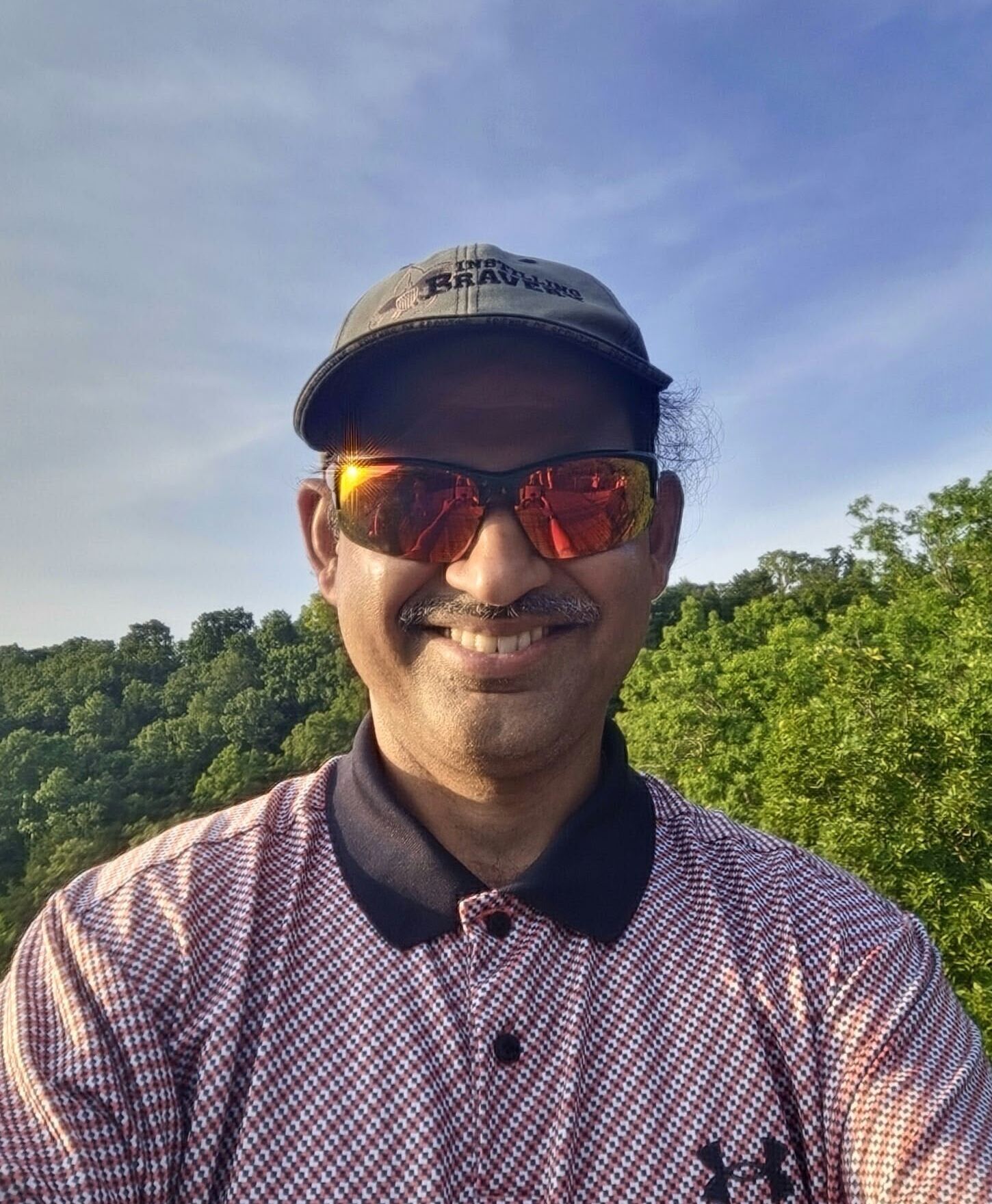
Before there were professional titles, international assignments, Or complex software systems, there was a small family world built around affection, learning, and tradition. Dr. Harish Vembu was born in Madurai, Tamil Nadu, a city that remained meaningful to his family’s memories even after his childhood moved elsewhere. His father’s work with the Tamil Nadu Electricity Board involved transfers every few years, and the family later settled in Chennai. It was there that Dr. Harish spent the greater part of his formative years, moving through school, college, and the beginning of his working life.
The circumstances were modest. His father was the household’s single earner, and the family did not live with the excesses that later generations might take for granted. Yet Dr. Harish remembers abundance of another kind. lhere was care, structure, and a sense that home was a place where one belonged completely. His parents and elder brother created a secure circle around him. He was the younger child, seven years behind his brother, and he was looked after with special affection. That age gap made his brother seem, in some ways, like an older guide as well as a sibling.
His father, Venkatesan, was calm by nature. He did not rely on shouting or harsh discipline, and his expectations were not imposed through fear. Instead, his influence appeared in quiet and memorable ways. Dr. Harish recalls the importance of seemingly simple moments, particularly his father buying him a general- knowledge book when he was around seven or eight. Ihe book strengthened an existing interest in trivia and questions, turning a childhood pleasure into a habit of curiosity. It was one of those ordinary gestures whose value becomes clearer only much later. His father’s patience and selective guidance gave him room to develop confidence without losing a sense of responsibility.
His mother, Padmavati, brought another dimension to the household. She was more exacting, but her standards were tied to care. She also carried the family’s musical inheritance. Trained in Indian classical music and able to play the veena, she created an environment in which music was not an occasional entertainment but part of daily life. South Indian classical music played in the home, alongside film music and family stories. Dr. Harish began learning the veena with her but did not continue formal training. Still, the listening stayed with him. As an adult, he found himself returning to songs with a deeper curiosity, listening for their ragas, patterns, and structure, and appreciating what he had absorbed without fully realising it as a child.
This musical inheritance was not limited to formal instruction. His mother spoke of earlier family members and of homes where singing, listening, and discussing music were common pastimes. In an era with fewer distractions, music had filled spaces that later generations might fill with screens and constant activity. Dr. Harish learned to value that atmosphere. He became interested in artists across Indian classical, film, and other musical traditions, and he remained open to discovering different genres. Music continued to accompany him, not as a public accomplishment but as a personal source of thought, memory, and enjoyment.
The family’s cultural and spiritual practices also shaped the order of his childhood. He grew up in a traditional South Indian Tamil Brahmin household, with close family bonds, vegetarian practices, and a conservative way Of living. His sacred-thread ceremony in early adolescence introduced him to religious Observances and daily practices that formed part of his background. He did not describe himself as a priestly figure, but the experience gave him a sense of cultural continuity. In later years, he remained a firm believer in God and divine interwention, while also approaching some inherited ideas with the questioning mind that would become central to him.
“Education is the most powerful weapon which you can use to change the world.”
Phase 2 : A Curious Mind Finds Its Direction
Dr. Harish’s school years were marked by a growing ease with subjects that asked him to think, observe, and connect ideas. Science did not arrive as an imposed ambition. It drew him naturally. Physics, chemistry, biology, and mathematics all held his attention, and he found that he could grasp them without the feeling of constant struggle. The influence of his older brother had already made the world of mathematics and inquiry familiar at home. By middle school and high school, that influence had become his Own curiosity.
He was especially interested in the questions behind things. How did a process work? Why did a pattern appear? What lay beneath an outcome that others simply accepted? Such questions suited the scientific subjects he studied. Biology came particularly easily to him, and for a time medicine seemed like a genuine possibility. He did not merely admire the profession from a distance. He prepared seriously for the medical entrance route available at that time and took the national-level examination then associated with that goal. The path, however, was highly competitive, and his future eventually turned in another direction.
That period of choice was not defined by disappointment alone. It showed the breadth of his interest. He was not limited to a single field. Mathematics provided a core discipline; physics appealed to his interest in how systems and forces worked; chemistry fascinated him through processes and transformation; biology gave him a separate understanding of the natural world. At higher-secondary level, he took a combination that allowed him to consider both medicine and engineering. The decision that followed had to account for Opportunity as well as interest.
When Dr. Harish entered college in 1991, the range of engineering choices available to him was more limited than it would become in later years. Computer science was still in an early Stage, while civil engineering did not attract him. Mechanical engineering felt like a practical and intellectually suitable choice. It extended the physics-based thinking he enjoyed and offered a solid technical foundation. He was also aware of the uncertainty surrounding the early computer field. His brother had undertaken further study related to technology but had faced difficulty finding work at a time when programming languages and systems were far less visible in everyday professional life. For a young student considering employability, mechanical engineering offered greater assurance.
He studied Mechanical Engineering at the University of Madras from 1991 to 1995. The college years brought academic confidence, but they were not spent chasing grand personal narratives. His immediate aim was simple: to complete his studies well and secure employment. His father retired around the time he entered college, and although the family had the support Of a pension, Dr. Harish was conscious of the practical importance of work. He remained close to home, going to college and returning, continuing the rhythm of life he had known in Chennai.
Within his academic group, he regularly placed among the top students. He was particularly strong in certain automobile-engineering courses and stood among the leading students in his class. Yet he did not view those achievements as a reason to become complacent. He saw them as evidence that he could handle the work before him. His ambitions at the time were grounded. Rather than constructing a distant image of what he might become many years later, he wanted to enter the professional world and understand it directly.
“The secret of getting ahead is getting started.”
Phase 3 : The Shop Floor and the Desire to Grow Further
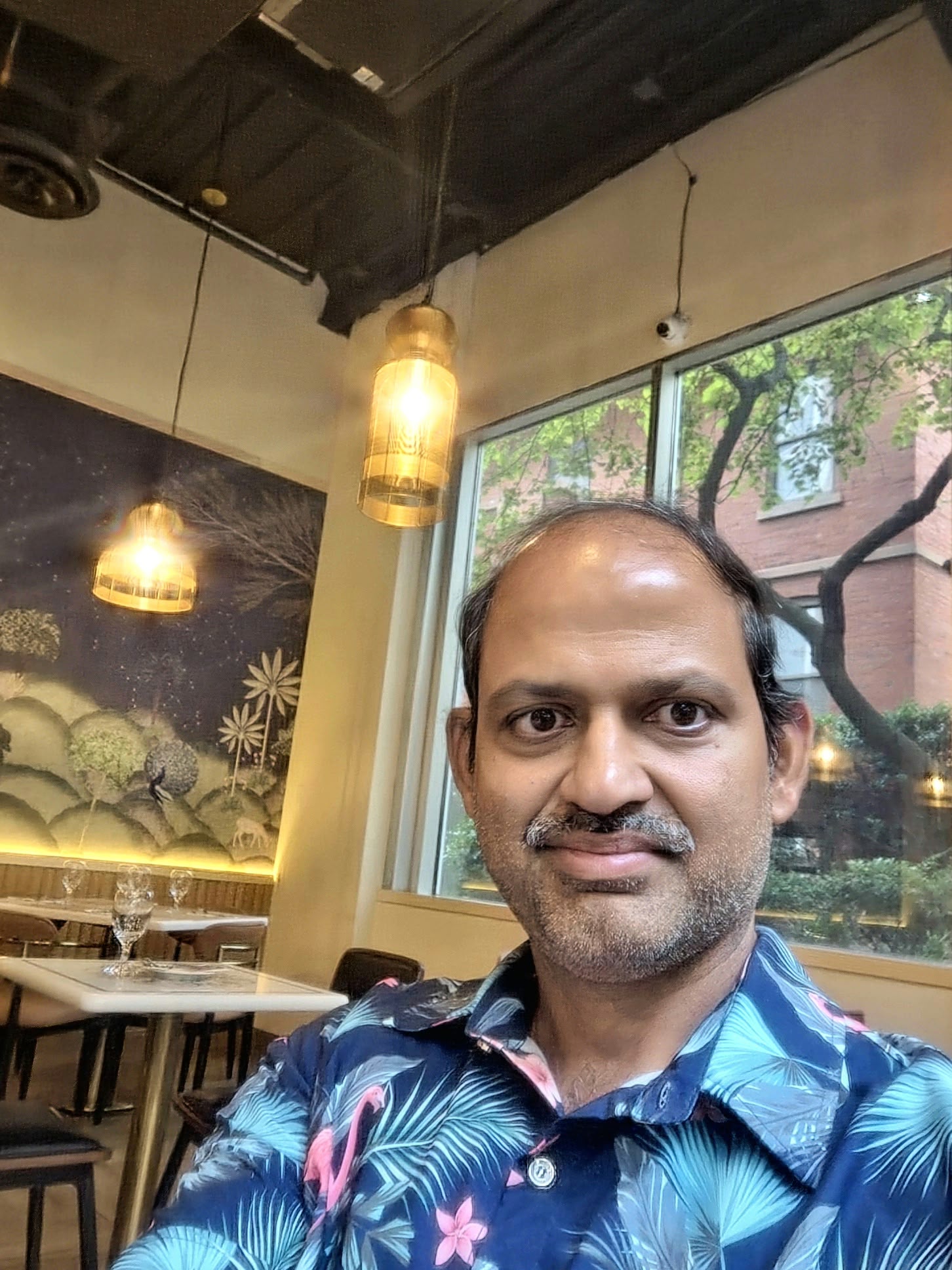
Graduation in 1995 brought Dr. Harish to the practical question that had occupied him throughout college: finding work. His goal was not initially tied to status or salary. He wanted a place to begin, a professional setting in which he could learn, contribute, and gain the experience that would make future choices possible. That intention led him to a government apprenticeship programme and to the manufacturing environment of the Greaves Cotton Group, associated with the well-known Crompton Greaves industrial group.
The opportunity came in the same year he completed his degree. He entered first as an apprentice and then as a trainee, working in the electrical and manufacturing side of the organisation, where engines and related equipment were produced. The path was competitive, and being selected gave him a genuine sense of accomplishment. stipend prescribed for apprentices was modest, around one thousand to fifteen hundred Indian rupees. The company supplemented it, bringing his first monthly pay to about three thousand rupees. For Dr. Harish, the amount mattered less than what it represented. It was his first entry into working life.
He did not spend that first salary on a personal purchase. He brought the cash home to his parents. In a household shaped by careful saving and an emphasis on essentials, that act felt natural. His parents encouraged him to keep it for the future rather than spend it freely. He remembers buying sweets, but the larger memory is of taking the money home and sharing the moment with the people who had supported him. He travelled by the company bus and by bicycle, living with the same restraint that had marked his upbringing.
The manufacturing floor taught lessons that a classroom could not provide. Dr. Harish worked among highly qualified technical and research personnel, but he also encountered the knowledge of the workforce, including people whose formal education did not reflect the skill they brought to their work.
The experience enlarged his view ofcompetence. It showed him that practical skill, discipline, and understanding of a process can be deeply valuable whether or not they are accompanied by formal credentials. He learned by watching people carry out their responsibilities and by understanding the movement from design and technical planning to actual production.
The early years were enjoyable in their own way. He was young, unmarried, and free from the responsibilities that would come later. Yet he was not fully satisfied with the idea of remaining where he was. The work was connected to his degree and offered a legitimate foundation, but he sensed that he wanted to expand beyond it. feeling was not a rejection of manufacturing. It was an awareness that he had more interests to pursue and more learning to do.
Note of Thanks
Dr. Harish offers his deepest gratitude to his parents, Venkatesan and Padmavati, whose love, principles, patience, and faith in him formed the basis Of all that followed. He remains grateful to his elder brother, Raghavan, whose guidance encouraged his interest in mathematics, science, ethics, and thoughtful inquiry. Their influence has remained a source of strength throughout his personal and professional life.
He also acknowledges Vijaylakshmi, his companion in marriage and family life, for her support, perspective, and ability to encourage him to examine himself honestly and continue striving. His thanks extend to Rishikesh and Hansini, whose presence has made family life a continual source of meaning, hope, and responsibility.
He is grateful to the teachers, mentors, colleagues, friends, and well-wishers who contributed to his growth at different points. Some shared knowledge, some created professional opportunities, and some offered support when a new country or a difficult moment seemed overwhelming. Their guidance, whether direct or quiet, became part Of his progress.
Dr. Harish also gives thanks to God, whose ble+ing and guidance he beliewes have been present through every turn ofhis path. From the home in which he was raised to the work he has undertaken across countries and industries, he sees many reasons for humility and gratitude. He remains thankful for every person and experience that helped him learn, adapt, and keep moving forward.
He further acknowledges the many professional communities that welcomed him across different organisations, projects, and countries. Each environment offered a chance to learn from capable people, take on unfamiliar work, and contribute to a shared goal. Their trust and collaboration have remained an important part of his professional growth.
thanks,
– Dr. (H. C.) Harish Vembu