“Understanding is not about memorising answers; it is about learning how the world truly works and having the courage to question it.”
Introduction
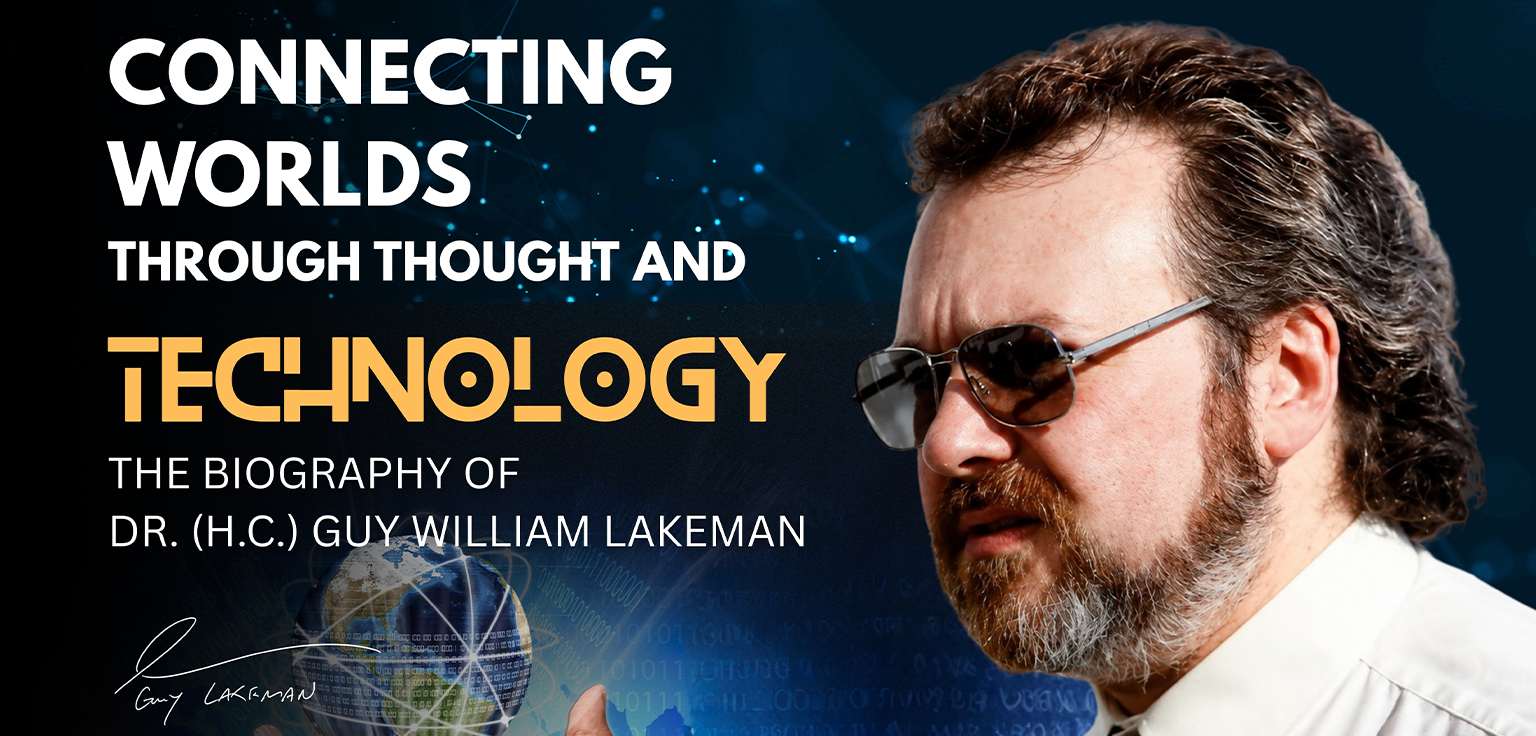
The life of Dr. Guy William Lakeman is not a linear account of professional advancement, nor is it a story defined by titles or recognition alone. It is, instead, the journey of a mind that refused to accept surface explanations and consistently sought depth, meaning, and structure beneath complexity. Across decades of rapid technological change and global transformation, Dr. Lakeman remained guided by one principle: that true progress comes from understanding systems in their entirety, not merely operating within them.
Born on 18 December 1952 in Jersey, Channel Islands, Dr. Guy William Lakeman entered a world still shaped by the aftermath of war, social restraint, and reconstruction. His early life was marked by vulnerability and resilience, experiences that shaped his capacity to observe quietly, think independently, and adapt when circumstances demanded it. From a young age, he demonstrated a natural inclination toward exploration, whether through hands-on experimentation, curiosity about machines, or deep engagement with the physical world around him. These early tendencies were not encouraged through ease or comfort but rather sharpened through responsibility, challenge, and reflection.
Education became a formative arena where his individuality emerged more clearly. At Victoria College, Jersey, Dr. Lakeman encountered a rigid academic environment that valued discipline over discovery. While the structure instilled endurance, it was his dissatisfaction with rote learning that propelled him forward. He sought understanding rather than instruction, questioning not only what he was taught but also how knowledge itself was framed. This approach, often unconventional, became a defining feature of his intellectual identity. He was successful at competition level in swimming, sailing, surfing, rock climbing, shooting, and flying, exhibiting a high level of dedication in practical application.
His transition into professional life began in broadcast engineering, where theory met reality in its most demanding form. Working with early videotape systems and timecode technologies required precision, patience, and accountability, qualities that aligned naturally with his mindset. Yet even as he mastered complex machinery, he recognised the limitations of technical skill without deeper scientific grounding. This realisation led him to pursue higher education at London University – Chelsea College, a subsidiary of King’s College, where he earned a Bachelor of Science in Applied Physics and Electronics in 1978.
At university, Dr. Lakeman found an intellectual home that rewarded depth over conformity. His studies spanned applied nuclear physics, astrophysics, communications, and information theory, reinforcing his belief that understanding emerges from connections across disciplines rather than isolated expertise. He was not driven by academic accolades but by comprehension and by the ability to discuss, challenge, and apply ideas meaningfully. This period cemented his reputation as a thinker who valued clarity over complexity and insight over convention.
Professionally, Dr. Guy William Lakeman built a career that mirrored his philosophy. From studios in the United Kingdom to major broadcast and infrastructure projects across Hong Kong, Singapore, Malaysia, and beyond, his work consistently involved systems at moments of transition. He became known not only as a broadcast and multimedia consultant but also as a systems thinker capable of guiding organisations through the shift from analogue to digital, from isolated operations to integrated networks. His roles as a consultant, advisor, analyst, interim project manager, and executive leader reflected both trust and responsibility at the highest levels.
Yet this biography does not focus solely on professional accomplishment. At its core, it is a reflection on the balance between intellect and humanity, independence and collaboration, and innovation and ethics. Dr. Lakeman approached leadership without hierarchy, valuing teams as collective intelligence rather than chains of command. He remained sceptical of systems that discouraged questioning and consistently aligned himself with environments that rewarded thought, integrity, and competence.
“Some lives begin gently; others begin by teaching resilience first. The lessons learned early often become the strongest foundations.”
Phase 1: Beginnings Shaped by Survival, Curiosity, and Quiet Strength
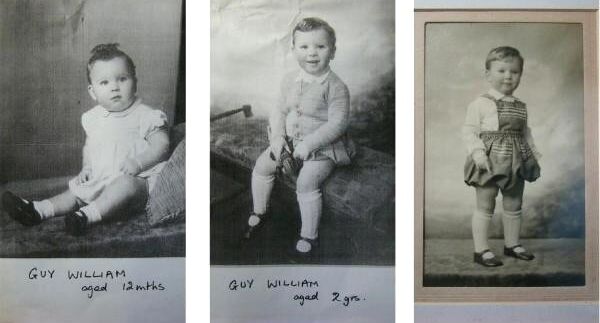
Dr. Guy William Lakeman was born on 18 December 1952 in Jersey, Channel Islands, into a world still bearing the visible and invisible scars of war. His entry into life was fragile from the very beginning. Born six weeks premature, following an accident in which his mother fell down the stairs, his survival itself marked the first of many moments where endurance quietly preceded achievement. From those earliest days, life did not unfold in comfort or predictability but in a way that demanded awareness, adaptability, and inner strength.
Much of Dr. Lakeman’s childhood was spent not in the centre of a traditional family structure, but under the care of his grandparents, Bill Guy and Mary Guy. They provided what circumstances elsewhere could not: stability, routine, and a sense of belonging rooted in daily life rather than words.
His grandfather, Bill Guy, was a clockmaker and clock repairman, a man whose work demanded patience, precision, and respect for intricate systems. Long Sunday afternoons were spent dismantling grandfather clocks, examining gears, springs, and movements, then restoring them carefully. These moments planted an early, unspoken understanding in Dr. Lakeman that complex systems only function when every part is understood and respected.
His grandmother, Mary Guy, balanced this technical exposure with warmth and practicality. She taught him how to cook, how to manage household tasks, and how to become self-sufficient without losing compassion. Through her, he learned that discipline did not need harshness to be effective, and that knowledge, when shared kindly, becomes a form of empowerment. Together, his grandparents shaped the rhythm of his early years, offering consistency in a world that often felt uncertain.
The broader backdrop of his childhood was inseparable from the lingering trauma of the Second World War. Jersey had been occupied, and the island still carried physical reminders of that time. Coastal bunkers remained scattered across the landscape, many of them sealed but dangerously unstable. Children, driven by curiosity, often found their way into these forbidden spaces, and Dr. Lakeman grew up witnessing the consequences. Classmates lost their lives to accidents involving toxic remnants left behind from wartime defences. These events were not distant history; they were part of daily reality, shaping an early awareness that the past, if not properly understood, could continue to harm the present.
His family history carried war stories that were deeply personal. His father had left Jersey at a young age to work as a mechanic on RAF engines and airframes, later ending up in Canada and participating in post-war military operations. On his mother’s side, the experience was even more harrowing. Hazel Lakeman, Dr. Lakeman’s mother, was one of the many civilians from Jersey who was interned by the Germans during the Second World War. She was taken off the island and held in an internment camp in Bavaria under harsh conditions. After the war, she returned to Jersey, obtained qualifications, and worked for the Women’s Royal Naval Service (WRENS) in the army in the pathology lab in Egypt. Afterward, she worked in the States of Jersey pathology lab, where Dr. Lakeman was introduced at a young age to a laboratory full of glass tubes, bottles, and titration stands. For him, it was like a living sci-fi world – an experience that sparked his lifelong curiosity about science.
Hazel Lakeman, Dr. Lakeman’s mother, was one of the many civilians from Jersey who was interned by the Germans during the Second World War. She was taken off the island and held in an internment camp in Bavaria under harsh conditions. She later appeared on the BBC Radio 4 programme The Reunion, discussing her wartime experiences and internment, shedding light on a personal chapter of history. Hazel’s deportation was part of the German policy to remove British connected civilians from Jersey during their occupation in 1940. These civilians were often targeted due to their political profiles or potential to oppose the occupying forces. Hazel’s outspoken criticism of the treatment of forced laborers likely made her a target for deportation. Additionally, she was fined for not getting off her bicycle to allow a Nazi soldier to pass, an act that further marked her resistance.
“Learning does not begin with answers; it begins when a person refuses to accept what is handed to them without understanding why.”
Phase 2 : Education, Independence, and the Formation of an Unconventional Mind
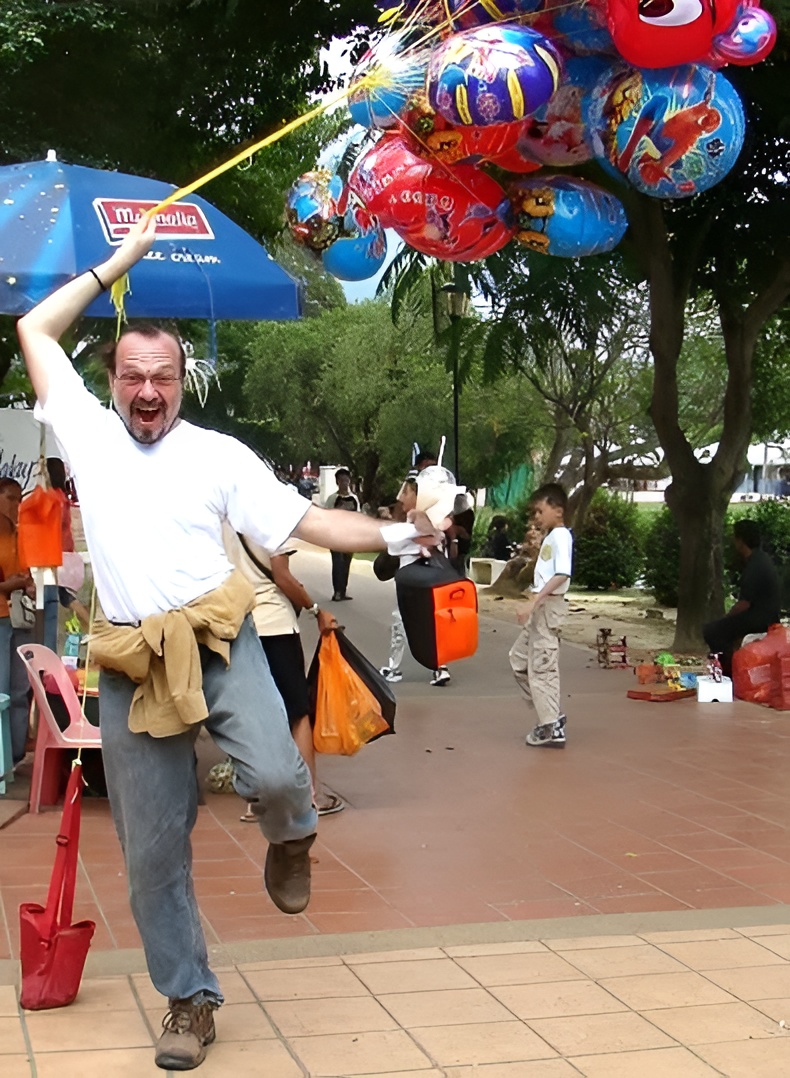
As Dr. Guy William Lakeman moved from childhood into adolescence, the world around him demanded discipline, conformity, and obedience. Yet his inner world moved in the opposite direction toward questioning, exploration, and independence of thought. This phase of his life was not defined by academic ease or emotional comfort, but by a growing determination to understand life on his own terms, even when that path placed him at odds with established systems.
His formal education took shape at Victoria College, Jersey, one of the island’s most prominent public-rated schools. Architecturally imposing and socially hierarchical, the institution reflected a traditional British model of discipline, authority, and structure. Many of the teachers were former military officers, and the school culture echoed rigidity rather than curiosity. For Dr. Lakeman, this environment was challenging. While it cultivated endurance and resilience, it offered little space for the kind of exploratory learning he instinctively sought.
What frustrated him most was not the difficulty of the subjects but the method of teaching itself. Knowledge was presented as something to be memorised and repeated, rather than questioned or applied. Dr. Lakeman resisted this approach. He wanted to know how ideas connected, how numbers related to systems, and how abstract concepts translated into real-world function. This resistance often placed him in conflict with authority, but it also sharpened his ability to think independently and argue with clarity, skills that would later define his professional life.
Despite its limitations, Victoria College provided opportunities beyond the classroom. He became involved in sailing, rock climbing, and outdoor activities that nurtured physical confidence and mental focus. The school’s cadet force was compulsory, introducing him to early leadership structures, discipline under pressure, and the realities of responsibility. Although he did not pursue a military path, the experience reinforced self-reliance and situational awareness traits that later proved essential in high-stakes technical environments. It was here he honed his responsibility in shooting and flying skills.
Swimming played a significant role during these years, shaped by strong family influence. Members of his extended family were deeply involved in English Channel swimming, and stories of endurance, training, and resilience surrounded him from an early age. Dr. Lakeman grew into a confident swimmer through surfing and open-water exposure in sailing, finding freedom and solitude in the sea. The ocean became both a place of challenge and calm, reinforcing his preference for environments where effort and awareness determined outcomes.
Outside school, his exposure to adult realities arrived early. He worked in his father’s bookmaking business, an environment far removed from the sheltered ideals of formal education. The bookies were loud, intense spaces filled with smoke, alcohol, and emotional volatility. Standing at the odds board on busy afternoons, he learned to endure heckling, pressure, and confrontation. This was not academic learning but human learning: how crowds behave, how confidence is tested, and how composure must be maintained even when the atmosphere turns hostile, creates the confidence for a performer. Although Dr. Lakeman was already used to performing every term in the great hall of the college, playing violin in the school orchestra and singing in the school choir from the age of eleven, performing in an environment connected with gambling was far more challenging.
This experience proved unexpectedly formative. It taught Dr. Lakeman how to speak under pressure, how to remain steady in chaotic environments, and how to assert himself without aggression. These lessons stayed with him long after he left that world, resurfacing later in boardrooms, studios, and international project environments where calm authority in presentations mattered more than hierarchy.
“Education becomes meaningful when knowledge stops being memorised and starts being understood.”
Phase 3 : University, Science, and the Discipline of Understanding
Phase 3 marks the point at which Dr. Guy William Lakeman consciously stepped away from fragmented learning and entered a period of intellectual consolidation. Having already tasted the realities of professional engineering through his early work at RCA, he recognised that practical skill alone was not enough to satisfy his curiosity or sustain the kind of work he envisioned for himself. What he sought was not qualification for its own sake, but clarity and an understanding of why systems behaved the way they did and how theory could illuminate practice.
This conviction led him to London University – Chelsea College, where he enrolled in a Bachelor of Science in Applied Physics and Electronics, a degree he completed in 1978. From the outset, his approach to university life differed from many of his peers. While others arrived directly from school and focused narrowly on examination outcomes, Dr. Lakeman brought with him lived experience.
He had already worked inside complex electromechanical systems, tested components, installed equipment, and witnessed the consequences of technical failure in real environments. University, for him, was not an abstract pursuit; it was a place to connect fragments into a coherent whole.
His academic studies were deliberately broad. The programme encompassed applied physics, electronics, communications, information theory, control theory, materials science, physics of solids, thermodynamics, quantum physics, nuclear physics, and astrophysics, exposing him to the full spectrum of scientific thought from classical mechanics to quantum behaviour and relativistic models. Rather than specialising narrowly, Dr. Lakeman chose to understand how disciplines intersected. He believed that systems, whether physical or technological, could not be understood in isolation, and this philosophy guided both his studies and later professional decisions.
Electronics, particularly digital logic and computing, felt familiar to him. His prior hands-on experience meant that much of the circuitry and system logic came naturally. The greater challenge lay in advanced mathematics and theoretical physics, where abstraction demanded sustained mental discipline. Instead of retreating from difficulty, he immersed himself further. He studied beyond the syllabus, reading widely and engaging deeply with concepts until they could be visualised, explained, and debated.
Among the intellectual influences that shaped him most profoundly during this period was Richard Feynman. Through the Feynman Lectures on Physics, Dr. Lakeman encountered a way of thinking that validated his instincts: physics as understanding, not performance; explanation as clarity, not complexity. Feynman’s rejection of pretence and prejudice and emphasis on genuine comprehension resonated deeply, reinforcing Dr. Lakeman’s belief that knowledge must be internalised before it can be applied responsibly. He also followed the lectures, influences, and ways of thinking of Professor Eric Laithwaite at Imperial College, whose pioneering work on the linear motor and discussions on the evolution of insect flight opened another dimension of scientific curiosity for him. These influences encouraged Dr. Lakeman to look at science not merely as theory, but as a living field of observation, invention, and meaningful application.
He was also influenced by the academic environment itself, particularly mentors who recognised his ability to visualise complex systems. In advanced electromagnetics, he distinguished himself not by rote calculation but by his capacity to conceptualise vector fields, draw relationships, and explain what was happening beyond equations. One professor, with experience in wartime radar systems, identified this strength early and took him under his wing. This mentorship affirmed Dr. Lakeman’s confidence that understanding, rather than conformity, was his true academic strength.
Another formative challenge came through applied nuclear physics, a field that demanded both theoretical mastery and ethical awareness. Entering this area required him to independently learn an entire year’s prerequisite material during a single summer. He did so without complaint, driven by curiosity rather than obligation. His exposure extended beyond textbooks into real-world applications, including visits to nuclear research facilities such as Dounreay, Calder Hall, Harwell, and Aldermaston, as well as Porton Down, where nuclear and particle techniques were used in tracing chemical and biological phenomena. These visits to active sites were tested with experiments in the London University reactor in Ascot.
These experiences deepened his respect for the power of science and the responsibility that comes with it. Nuclear physics, for Dr. Lakeman, was not merely about energy or weaponry but about understanding matter, systems, and consequences at the most fundamental level. It reinforced his belief that engineering and science must be grounded in ethics, restraint, and awareness of impact.
Note of Thanks
The journey of Dr. Guy William Lakeman has been shaped not only by individual effort and curiosity but also by the quiet presence of people who offered guidance, stability, and example at critical moments. This life story would be incomplete without acknowledging those whose influence helped form his character, values, and direction.
Foremost among them are his grandparents, Bill Guy and Mary Guy, whose steady presence during his early years provided a sense of security and belonging. Through their everyday actions, they imparted lessons of responsibility, resilience, and practical wisdom that remained with him throughout life. Their influence extended beyond words, shaping his respect for craftsmanship, learning, and self-reliance.
Deep gratitude is also owed to his great-uncle John Orchard and great-aunt Grace Orchard, whose lives embodied independence of thought and engagement with the wider world. Their stories, travels, and intellectual curiosity expanded his horizons and reinforced the belief that learning does not end with formal education but continues through lived experience and exploration.
His uncle Major Colin Guy and aunt Margaret are remembered with appreciation for their consistent encouragement and support. Their presence during formative and transitional phases of his life offered reassurance and continuity, particularly during moments of change and uncertainty.
In later years, Dr. Lakeman acknowledges with heartfelt thanks the medical professionals and institutions that supported him through significant health challenges. Their care, professionalism, and commitment restored not only physical stability but also the perspective necessary to move forward with balance and gratitude.
Finally, he extends his thanks to colleagues, collaborators, and teams across continents who shared responsibility, trusted judgment, and worked with integrity. Each contribution, visible or unseen, formed part of a collective effort that made lasting achievements possible.
This note stands as an expression of sincere appreciation for the human connections that quietly sustained a life devoted to understanding, service, and thoughtful progress.
thanks,
– Dr. (H.C.) Guy William Lakeman

AIMLAY is a leading global education platform empowering ACADEMIC and EXPERIENTIAL learners, uniquely focused on recognizing knowledge gained through experience and building a diversified community of doctorates and aspiring researchers.