“Every person is born with a responsibility to serve something greater than themselves. When we use our abilities to help others, treat people with respect, and give back to our communities, we make the world a better place.”
Introduction
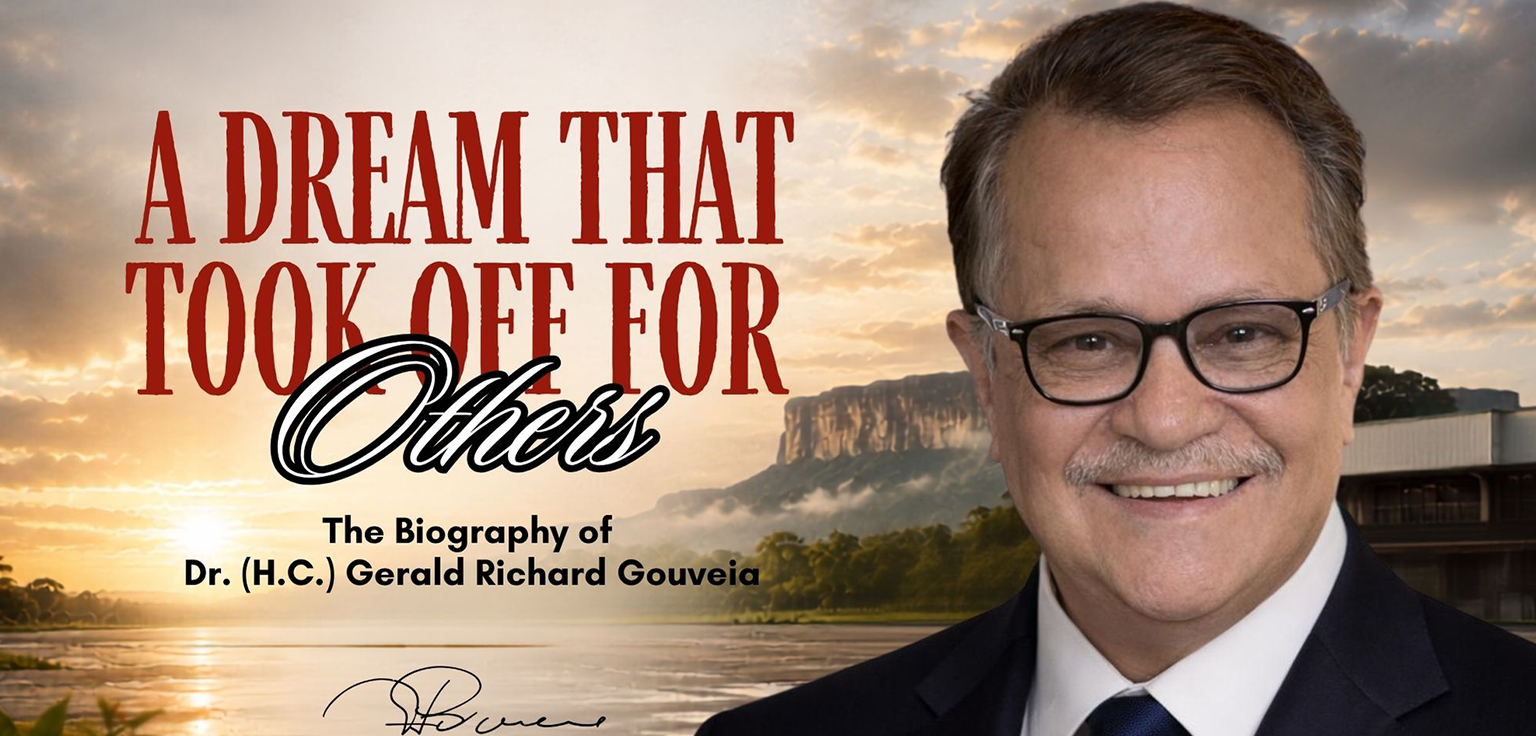
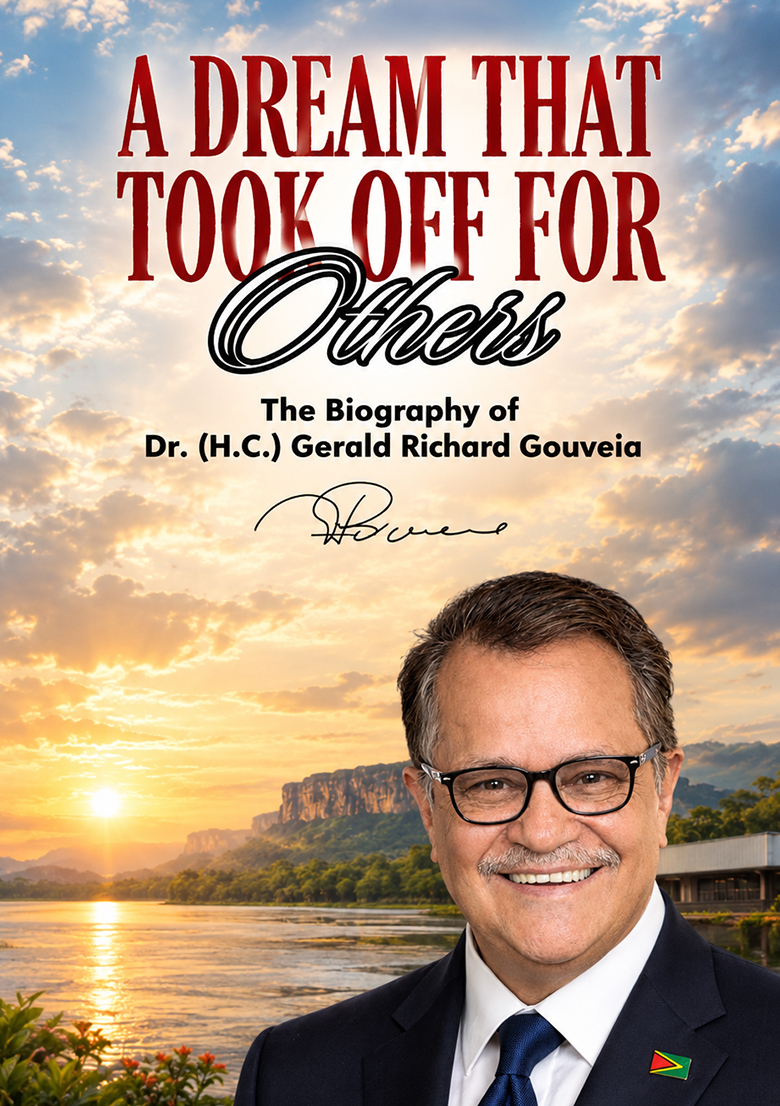
There are lives that are best understood not by counting achievements, but by listening for the one value that keeps returning through every season. In the life of Dr. Gerald Richard Gouveia, that value is service. It appears in his childhood memories, in his decision to wear the military uniform, in the skies he flew, in the company he built, in the communities he reached, in the leadership roles he accepted, and in the national responsibilities he continues to carry.
Captain Gerald was born and raised in Guyana, in a modest family in Georgetown. As the youngest of eight children, he grew up in a household that did not place wealth at the centre of life. His upbringing was Roman Catholic, yet when he speaks about goodness, duty, and giving back, he does not place the source of those values only in religion. He believes in God, but he also believes that every person should try to do good because it is the right thing to do. This belief became part of his way of living. It shaped his idea of humanity, respect, and responsibility.
His early ambition was not aviation. He once wanted to become a psychiatrist. That dream changed because he did not have the money to pursue that course of study. Life redirected him through a government scholarship that allowed him to train as a pilot. What began as an opportunity became a calling. Once he entered aviation, he understood that flying carried a sense of freedom, purpose, and responsibility. It did not merely give him a career. It opened the path through which he would serve his country.
His military years deepened that sense of duty. He joined the military because he had a strong passion to serve Guyana. Wearing the uniform was, for him, an honour and a privilege. Through the Guyana Defence Force Air Corps, he found a way to contribute to national service in a practical and meaningful way. Captain Gouveia’s aviation career would eventually span nearly five decades, with more than 15,000 flight hours. His work took him across the length and breadth of Guyana, including remote hinterland communities where aviation was not a luxury but a lifeline. Over the years, his flying included thousands of medevac, humanitarian, operational, and community support flights, making aviation a direct instrument of service to the Guyanese people. Aviation was not only about movement through the air. It became a means of reaching people, saving lives, and supporting a country whose distant communities often depended on courage, skill, and commitment.
That same spirit later travelled with him into business. As a pilot who understood aircraft, operations, and the needs of a developing nation, he saw the possibility of building an aviation and tourism enterprise at a time when Guyana was still emerging. Through Roraima Airways Group, his aviation experience grew into a wider platform for enterprise, access, tourism, and service. His work was not limited to commerce. It became part of a wider national contribution, especially in supporting far flung communities in the jungle and developing tourism services across Guyana.
His leadership did not arrive through self promotion. He has described it as something he graduated into. He believes in working hard, setting the example through daily conduct, and remaining dedicated to the task before him. Because of that consistency, people around him respected his effort, and leadership responsibilities naturally followed. Over the years, he served in major private sector, tourism, travel, and aviation organizations, including the Private Sector Commission, the Georgetown Chamber of Commerce and Industry, the Tourism and Hospitality Association of Guyana, the Travel Agents Association of Guyana, the Caribbean Travel Agents Association, and the Air Transport Association of Guyana.
Recognition came from many directions. He received the Golden Arrow of Achievement, a national honour of Guyana, and numerous awards from aviation, tourism, private sector, humanitarian, and national institutions. These honours reflect different parts of his journey, but they all point toward one larger picture. He has been active in a number of fields but his purpose has been constant.
“A modest beginning can still hold the quiet strength of a remarkable life.”
Phase 1: The Youngest Son of a Modest Georgetown Home
Dr. Gerald Richard Gouveia began life far from the public titles, national responsibilities, aviation leadership, and recognitions that would later become part of his name. His life begins in Georgetown, Guyana, in a modest family home where life was simple, grounded, and shaped by the close rhythm of a large household. He was the youngest among eight children, growing up in a family where wealth was not placed at the centre of life. What surrounded him instead were ordinary values, daily discipline, and the quiet understanding that one had to make something of life with what was available.
In those early years, Dr. Gerald was not thinking of himself as a future pilot, businessman, national adviser, or public figure. His childhood was not built around grand expectations or the certainty of public achievement. It was shaped by family, faith, community, and the natural lessons that come from growing up in a home where life was modest. He saw people working, living with limitations, and carrying responsibilities without making noise about them. That environment became part of the foundation on which his later life would stand.
His father, Stanislaus Gouveia, and his mother, Lucille Gouveia, belonged to the earliest frame of his journey. Their home was not one of abundance, but it gave him a beginning rooted in simplicity. It was the kind of beginning that does not announce greatness, but slowly forms character. Within that household, he learned the ordinary strength of family life. He grew among brothers and sisters, yet his own path would gradually become shaped by the values he carried within himself.
He was raised in a Roman Catholic family, and faith formed part of the atmosphere around him. Yet as he grew, his understanding of goodness became deeply personal. Dr. Gerald believed in God, but he did not see doing good only as something required by religion. To him, goodness was right in itself. Service was not merely an instruction from faith. It was a human duty. He believed that people should live their lives trying to do good, treating others with respect, and giving back wherever they could.
That belief would remain with him throughout his life. It did not appear only when he became known or respected. It began quietly, long before his public journey unfolded. From a young age, the idea of responsibility seemed to settle somewhere within him. He would later speak of duty to Guyana, responsibility as a citizen, and the need to live with a social conscience. These were not passing thoughts. They became part of his way of seeing the world.
Growing up as the youngest child did not define him in a dramatic way. He did not present it as a burden or a special advantage. His place in the family was simply part of his life. What mattered more was the environment that surrounded him and the values that slowly took root. In a large family, a child learns by watching. He sees others move through life before him. He observes habits, responsibilities, strengths, and limitations. For Dr. Gerald, those early observations became part of a quiet education.
“The sky was not his first dream, but it became the place where purpose found him.”
Phase 2 : When a Lost Dream Opened the Sky
Before aviation became the defining language of his life, Dr. Gerald had imagined a different future. He wanted to become a psychiatrist. That early dream showed an interest in people, in the mind, and in the possibility of helping others in a deeply personal way. It was not a dream connected to aircraft, uniforms, tourism, or national service. It belonged to another kind of calling, one that might have led him toward understanding human lives from within.
Yet life did not give him that path easily. Dr. Gerald did not have the financial means to pursue psychiatry. He has spoken plainly about that reality. There was no self pity in the way he viewed it. It was simply the truth of his circumstances. The dream he first held could not move forward in the way he had hoped. For many people, such a moment can feel like the closing of a door. For him, it became the beginning of an unexpected direction.
A government scholarship opened the path to aviation. It was not the dream he had carried from the beginning, but it became the opportunity that changed his life. Through that scholarship, he became a pilot. What first appeared as a redirection soon became something much deeper. Once he entered aviation, he discovered that it suited him. It matched his discipline, his courage, his love of freedom, and his desire to be of use. What had not been his first dream became his true calling.
There is something deeply human in that turn. Dr. Gerald did not grow up dreaming of aircraft. When asked what had fascinated him about flying, his answer was simple. Nothing. He had never wanted to be a pilot. That honesty gives his story its strength. His journey was not a romantic tale of a child staring at the sky and wishing to fly. It was the story of a young man whose first ambition was blocked by financial limitation, and whose life then opened in a direction he had not expected.
Once he entered aviation, however, he never looked back. He found purpose in it. Flying gave him a sense of freedom, but for him, freedom was never only personal. It came with responsibility. An aircraft could cross distance. It could reach people. It could connect communities. It could serve a country where access was not always simple. In his hands, aviation became more than movement through the air. It became a way to serve.
The scholarship that led him to flying therefore changed more than his profession. It changed the shape of his service. Psychiatry might have allowed him to help people one life at a time. Aviation gave him another form of human contribution. It would allow him to serve Guyana, support communities, enter the military, save lives, develop enterprise, and eventually contribute to national responsibility. The desire to be useful did not disappear when his first dream ended. It found another form.
“A calling is not always chosen at first. Sometimes it is discovered through duty.”
Phase 3 : A Pilot’s Path into Purpose
When Dr. Gerald became a pilot, he stepped into a life that would eventually define much more than his career. Aviation was not the dream with which he had begun, yet once he entered that world, it opened something within him that felt natural, purposeful, and deeply connected to his sense of duty. He had not grown up imagining himself in the cockpit, but life had placed him there, and in time he came to understand that flying was not merely something he could do. It was something through which he could serve.
For Dr. Gerald, aviation carried a meaning that went beyond movement through the air. It gave him reach. It allowed him to cross distance, connect places, and respond to needs that could not always wait for ordinary routes. In a country like Guyana, where communities could be separated by geography and access could be difficult, the ability to fly held a special kind of importance. The aircraft became more than a machine. It became a bridge between people, places, and possibility.
His life as a pilot brought together freedom and responsibility. He understood the freedom that came with flying, but he never treated that freedom as something purely personal. The sky gave him space, but service gave that space meaning. Every flight demanded discipline, judgment, and a steady mind. A pilot could not be careless. A pilot had to carry trust. For Dr. Gerald, those demands suited the person he was becoming. He learned to move through responsibility with calmness and purpose.
Aviation also strengthened his relationship with Guyana. He had always felt a deep connection to the land of his birth, not because of outward beauty or convenience, but because the people of Guyana were his own. He saw them as brothers and sisters. That belief shaped the way he understood his work. Flying was not only a profession. It was one way of responding to the needs of the country and its people.
His path as a pilot naturally led him toward military service. He joined the military because he had a strong desire to serve Guyana. The move was not about status or appearance. It was about duty. The Guyana Defence Force Air Corps became the place where his aviation skill met national responsibility. There, flying became part of formal service to the country, and his personal calling found a disciplined national purpose.
As his experience grew, Dr. Gerald rose to become Chief Pilot of the Air Corps. In the role of Chief Pilot of the Guyana Defence Force Air Corps, he held significant operational and leadership responsibilities. His work was not limited to flying aircraft. It involved operational decision making, aviation safety, disciplined leadership, and helping strengthen the role of military aviation in serving national needs. He flew across Guyana in conditions that required courage, skill, and deep knowledge of the country’s terrain, weather, and communities. That role reflected trust, dedication, and professional ability. It also carried the weight of responsibility within a field where lives, operations, and national service required seriousness at every level. He did not treat the role as a title to be displayed. It was part of the duty he had accepted when he chose to serve in uniform.
Note of Thanks
The journey of Dr. Gerald Richard Gouveia has been shaped by service, discipline, responsibility, and the people who stood beside him through the many seasons of his life. As his journey is honoured, the deepest note of thanks belongs to Debbie, his wife, life partner, and the greatest partner he has known after his military years.
Her presence has been woven into the heart of his journey. She stood with him in the building of Roraima Airways, shared the responsibilities of family and enterprise, and understood the spirit of service that guided his life. As a pilot herself, she was not simply watching from the side. She was part of the work, part of the strength, and part of the purpose that helped carry the company forward.
His gratitude also extends to his sons, Kevin and Gerry, who continued the work of the company with their mother when he accepted the responsibility of serving as National Security Advisor to the President of Guyana. Their readiness gave him the space to serve his country with complete focus and dedication. In them, he saw not only family pride but also the continuation of values built over many years.
This note of thanks also belongs to Guyana, the land of his birth, and to the Guyanese people whom he has always regarded as his brothers and sisters. His life has been shaped by the belief that one must serve the land and people to whom one belongs.
With sincere gratitude, he honours all those who walked with him, trusted him, supported his service, recognized his contribution, and helped him continue a life guided by duty, family, country, and conscience.
thanks,
– Dr. Gerald Richard Gouveia