“Even a child who appears disadvantaged today may grow into someone capable of changing lives tomorrow.”
Introduction
There is a particular kind of confidence that does not need noise. It is visible in the person who can stand before a complicated responsibility, examine what must be done, and remain steady enough to complete it. Dr. Gavin developed that steadiness over many years. It was not given to him by comfort, wealth, or an effortless education. It grew through circumstances that repeatedly required him to decide whether limitation would define him or discipline would carry him beyond it.
His life has brought together professions that may appear separate at first glance. He has been an educator, a civil engineer, a public administrator, a project leader, and a pastor. Each role demanded a different form of service, yet all of them required the same underlying qualities: preparation, patience, responsibility, communication, and concern for people. The teacher had to understand the student behind the behaviour. The engineer had to respect measurements, materials, and consequences. The administrator had to protect public resources. The pastor had to remain attentive to human need. Rather than existing as unrelated careers, these responsibilities gradually became expressions of the same character.
Long before professional titles entered his life, he understood what it meant to live without what others considered ordinary. He knew the strain of a household in which resources were uncertain and the embarrassment a child could feel when his appearance reflected hardship. He knew what it was to study under conditions that did not naturally encourage concentration. He also knew the freedom of play, the consequences of neglecting schoolwork, and the sobering experience of failing an examination that seemed to determine a child’s next direction. Those early realities prevented his later achievements from becoming abstract. Poverty was never an idea to him. It was something he had seen, felt, and consciously refused to pass unchanged to the next generation.
The people around him mattered deeply. His mother established the clearest standard. She had created with her hands, found ways to earn, insist on better performance, and remain present at the important thresholds of his education. Her sternness was joined to devotion, and her expectations taught him that potential should not be wasted. Other individuals later strengthened what she had begun. One man saw an engineer in an adolescent who was learning electrical repair. A pastor’s guidance kept a young man on track, who unconsciously was learning to lead and become a musician. A grandfather reminded him not to surrender the dream when adulthood had made it seem distant. A wife agreed to a decision that would place the family under pressure. A cousin remembered an earlier need and responded when support became essential. Supervisors introduced new tools, larger responsibilities, and a more exact understanding of professional work.
None of those interventions made the journey easy. Dr. Gavin still had to leave a secure profession, live in uncomfortable conditions near the university, accept reduced income during training, and keep his attention on examinations while family responsibilities remained real. He had to begin again as an adult after already establishing himself as a teacher. He had to endure the difference between being respected in one field and being a learner in another. He also had to carry the quiet awareness that failure would affect more than himself.
What emerged from that period was not only an engineer. It was a person who had tested his own capacity for sacrifice. Once he entered professional engineering, he brought with him the habits formed in the classroom and the workshop. He knew how to explain, observe, report, and correct. He understood that technical work was never merely about lines on paper. Roads, drainage, water systems, public buildings, bridges, and other infrastructure affected the daily lives of communities. Accuracy therefore had a human consequence.
“If there is no struggle, there is no progress.”
Phase 1: Where His Strength Was First Formed
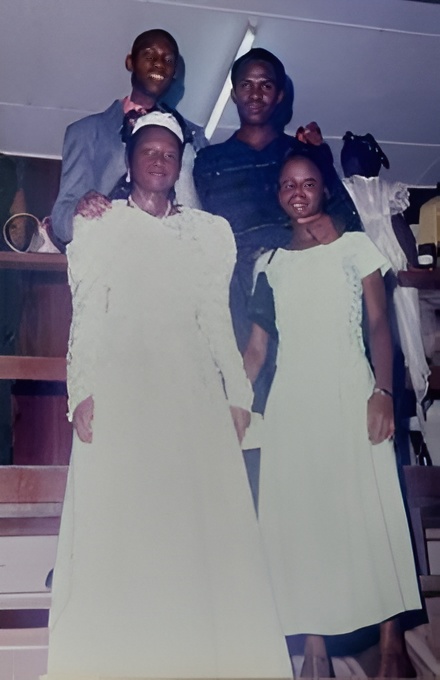
Dr. Gavin was born on 21 October 1979 in Linden, the central town of Region 10, Guyana. The place was not merely a point on a birth record. It became the landscape of his childhood, his work, his faith, and much of his adult service. Even when education and employment carried him elsewhere, Linden remained the community to which his responsibilities repeatedly returned.
He was the youngest in a family with three older brothers. Two shared both his mother and father and grew up in the same household with him. The eldest of those two often stood up for the smallest child in the family. The other relationship carried more friction, the kind of antagonism that can develop when an older sibling tests the youngest and the youngest feels that his size is being used against him. There was also an older maternal brother who had grown up in Georgetown and visited during holidays. The age difference and separate upbringing meant that their relationship did not have the closeness created by daily childhood life, though family responsibility remained understood between them.
His father worked for many years in the bauxite industry. He came from a pastoral family, since Dr. Gavin’s grandfather was a pastor, yet his own connection with church was distant during much of his sons’ childhood. He nonetheless made sure the children attended. The emotional closeness between father and youngest son developed slowly. Work occupied 03 much of his time, and his attention did not always centre on creating the kind of settled family life his children needed. The household could therefore appear stable from the outside while carrying strain within it.
His mother responded to that strain with extraordinary resourcefulness. She had learned several practical and creative skills. She knitted, sewed as a seamstress, decorated cakes, made wreaths, baked, and worked with arts and crafts. When one form of work was unavailable, she searched for another. At one period she sold fish connected with the People’s National Congress, and her son would sometimes stop where she worked on his way home from school. She used whatever honest skill was available to generate income and keep the household moving.
The family lived for years in an old house. Electricity did not arrive until Dr. Gavin was already in secondary school, even though all the surrounding homes were electrified. Homework had to be approached under the limitations of lamplight, and the ordinary conveniences visible in neighbouring households were not always present in his own. Clothing could become worn or stained without an immediate replacement. School supplies could not be taken for granted. These realities shaped the sensitivity he later carried toward children who appeared unprepared or neglected.
Hardship did not erase warmth. His memories of his mother include the quiet intimacy of watching her create. When pain in her wrist made the preparation of cake icing difficult, he was given the task of rubbing the sugar until the mixture became smooth enough to use. As he grew older and his drawing ability developed, Remembering the Father Who Shaped His Early Years she asked him to sketch butterflies, roses, and other designs for her decorative work. He learned by remaining close to her, observing how patient hands could turn simple materials into something beautiful.
“Ever tried. Ever failed. No matter. Try again. Fail again. Fail better.”
Phase 2 : When a Second Chance Changed His Direction
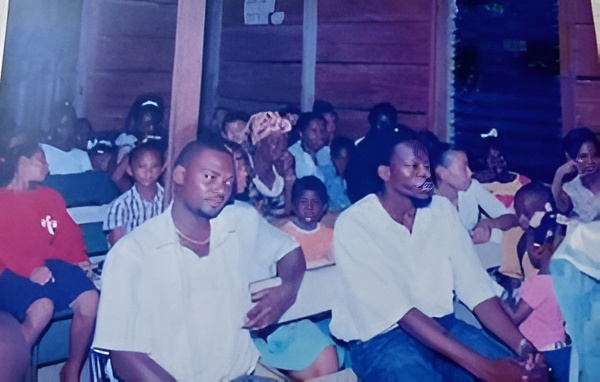
The earliest years of school gave Dr. Gavin companionship as well as education. At nursery level, one of the friends he remembered most clearly was Rylan Ferrier. Their lives later moved into adulthood and the closeness changed, but the friendship remained part of his earliest sense of belonging. He also remembered his older brothers arriving to collect him and searching his bag to see whether any snack remained. His mother would sometimes appear during the school break and buy candy for him from a nearby shop, a small gesture that stood out because nothing in the household was treated as limitless.
At Christenburg Primary School, two friends became central to his school days: Norman Narain and Jimmy Smith. The three shared the kind of curiosity that can quickly became danger when children decide to test something unfamiliar. Norman travelled from a river community by canoe. One afternoon, Dr. Gavin and Jimmy pressed him to let them experience the boat. Without the teacher’s knowledge, they entered it and paddled away from the shore.
Once the canoe reached deeper water, excitement gave way to fear. Norman, who understood the boat, began rocking it for amusement. Dr. Gavin and Jimmy saw only the narrow space between the water and the edge of the canoe and imagined how quickly the situation could become fatal. They screamed until Norman began returning toward land. When he threatened to turn back because of their complaints, they jumped into the shallow water and reached safety with wet clothing and schoolbooks. Dr. Gavin never entered a canoe again. The incident remained one of the most frightening memories of his childhood.
Schoolwork presented another kind of danger, slower and less visible. In the early primary grades, he performed reasonably well. By approximately Grade Four, however, play had become his strongest interest. Home offered limited supervision in the afternoons. Once the basic responsibilities were completed, he could leave and remain outdoors until evening. Lessons were neglected, examination results fell, and the condition of his clothing sometimes reflected the difficulties at home. He became the child who failed tests, appeared untidy, and could easily be dismissed by people who judged only what they saw.
The major Common Entrance examination, later known as the National Grade Six Assessment, determined the secondary school a child could enter. Failure carried embarrassment because it could mean remaining in the upper section of primary school while classmates moved ahead. Dr. Gavin wrote the examination the first time while still very young and failed. The result matched the direction in which his habits had been moving, but it did not become the final judgment on his ability.
He received another opportunity. Around that period, he had begun returning to church after a time when play, distraction, and the language of the streets had taken priority. During a service, the pastor encouraged the children to tell God which school they hoped to attend. Dr. Gavin had recently visited a secondary school on an errand for a teacher and had seen students playing basketball, football, cricket, and other sports. To him, it looked like a place built for the life he enjoyed. Its academic reputation did not attract him. The sight of constant activity did.
“Nothing great was ever achieved without enthusiasm.”
Phase 3 : The Mentor Who Saw an Engineer in Him

Secondary school gave Dr. Gavin a new seriousness, but ambition still needed a direction. That direction began to emerge through an electrical workshop near his home. An older friend worked there, and the young student often visited, talked with the workers, who were boys his older brothers age and assisted where he could. He initially treated the place as somewhere interesting to spend time, although the workshop owner’s wife regarded his presence with suspicion. Every child in that neighborhood was terrified of her. Whenever he heard her approaching, he would leave quickly rather than face her displeasure.
One afternoon she approached from behind and stopped him before he could run. She warned that if he left again, he would not be allowed to return ever again in their compound. The owner, Mr. Matheson, came outside and saw something different from an idle, terrified boy. He asked whether Dr. Gavin was genuinely interested in the work. When the answer was yes, he gave him permission to come after school to learn the trade.
The arrangement changed the young man’s life. Mr. Matheson paid him for his assistance, but money was not the strongest attraction. Dr. Gavin wanted to understand the trade. He watched closely, accepted instruction, and gradually learned to repair electrical motors and generators. The income eased some of the pressure on his mother because he was now in a position to buy school materials and obtain clothing for church. Even when the workshop had little work, his mentor remained someone he could approach in a moment of need.
Mr. Matheson also took an interest in his education. Apart from his mother, he was the only adult who regularly asked to see every school report. He studied the results, pointed out weaknesses, and insisted that mathematics had to improve. The attention communicated that the boy’s future mattered. It also linked schoolwork to a practical possibility beyond the classroom.
The decisive sentence came when Mr. Matheson suggested that he should consider becoming an engineer. No one had previously placed that identity before him with such confidence. The words took root. From then on, Dr. Gavin understood which subjects and choices could move him toward that profession. A dream that might otherwise have remained vague acquired a name.
When the school placed its strongest students into the science stream, he asked to be transferred to the technical stream. The request surprised the teacher because the technical class was known for difficult behaviour and was often regarded as the weakest group. Dr. Gavin was certain. He explained that technical studies would prepare him for engineering. The teacher allowed the move, and he entered the class without adopting the habits for which it was known. He remained focused because he knew what he wanted and knew that someone would examine his performance.
Note of Thanks
Dr. Gavin’s gratitude begins with the people whose faith in him appeared before achievement made that faith easy. He honours his mother as his champion, the constant presence who insisted that he learn, used every available skill to sustain the family, and refused to let hardship lower her expectations for his life. He remembers his father with appreciation for the later closeness they found and for the spiritual renewal that became part of their relationship.
He gives enduring thanks to Yusande Allana Clarke, whose partnership made years of education and service possible. Her patience protected the home through difficult transitions, and her support gave him freedom to pursue responsibilities that demanded time away from the family. Their children also remain part of that shared sacrifice and of the future he worked to strengthen.
Dr. Gavin remembers Mr. Matheson with particular affection. The workshop owner did more than teach a trade. He recognized potential, examined school reports, and gave a young man language for his future. He thanks his senior pastor Mr. Renis Morian for his early recognition of his capabilities and provided the silent preparation for the work of the ministry and paved the way for his entry in the public service. He 55 also thanks Rawle Watson, whose instruction introduced a more efficient technical world and expanded his understanding of engineering management, and Krishna Naraine, whose professional confidence encouraged him to consider responsibilities beyond the construction site.
His cousin, Reon Clarke, holds a special place in this gratitude. At the moment when university placed the family under severe pressure, he remembered an earlier disappointment and chose to respond differently. His support continued faithfully until the programme ended. Dr. Gavin also acknowledges every student, colleague, supervisor, church member, friend, and family member whose presence added instruction, correction, encouragement, or trust. Their contributions did not remove the work he had to do, but they helped him continue doing it.
thanks,
– Dr. (H.C.) Gavin Rondelle Clarke