“Opportunity is an orchard, and progress belongs to those who reach for the fruit instead of waiting for it to fall.”
Introduction
Dr. Don Ray Francis Fontenelle’s life has been shaped by movement, responsibility and an enduring willingness to learn. His story cannot be told by one profession alone. It stretches across public service, maritime operations, security management, private investigation, emergency preparedness, training, and community leadership. Each experience added something different to his character, yet the person at the centre remained steady, observant, and deeply aware of the value of preparation.
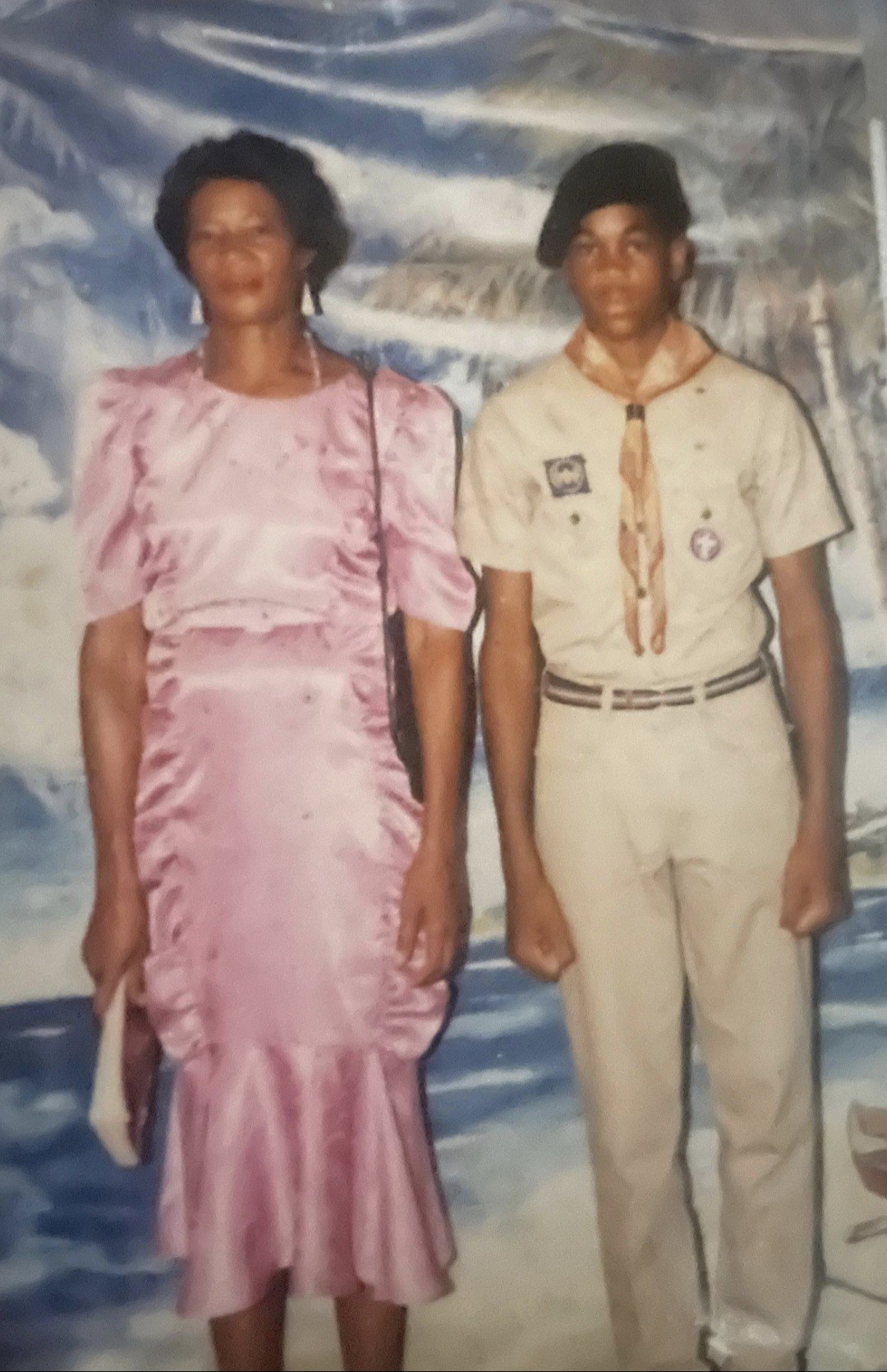
Long before professional titles entered his life, he understood what it meant to earn respect through conduct. Growing up in a large family, he sometimes felt that his household was viewed as less important within the wider family circle. Rather than allowing that feeling to define him negatively, he pushed himself towards activities that carried discipline and purpose. His involvement with the Saint Lucia Scouts Association, the Interact Club, and cadet related activities gave him opportunities to serve, participate, and make his family proud.
Among these influences, his mother, Mary Anna Francis, remained one of the strongest figures in his life.
His early commitment to organised service gradually prepared him for the demands of the Royal Saint Lucia Police Force. Policing brought him into environments where discipline had to become practical. His responsibilities included general police duties, immigration work, marine operations, small craft handling, swimming instruction, customs related functions, and inventory control. These were not disconnected tasks. Together, they trained him to observe carefully, follow procedure, manage risk, and respond when lives or public safety depended on sound judgement.
His service at sea reinforced traits that would shape his career. Seamanship demanded patience, confidence, physical fitness, and respect for changing circumstances. Swimming and life saving demanded the ability to remain composed while guiding others. Customs work required accuracy and an understanding of systems. Through the Marine Police Unit, the Coast Guard, and regional training, he developed a broad professional foundation that later allowed him to move comfortably into leadership positions beyond conventional policing.
When his career entered the hospitality and private security sectors, he carried this foundation with him. His attention was not limited to guarding a property. He considered how people would respond during a crisis, how procedures could be improved, and how preparation could reduce confusion when conditions became dangerous. His contribution to hurricane preparedness demonstrated that written procedures become meaningful only when they can guide people successfully through a real emergency.
His years with Guardsman opened another demanding chapter. He entered supervisory and managerial roles that placed people, schedules, standards, training, cash transit services, canine operations, and other security responsibilities under his direction. He encountered operational weaknesses and worked to correct them. His progress within the organisation reflected his ability to understand problems quickly and introduce practical changes rather than accept poor performance as normal.
“My mother taught me that a calm mind can find the answer that pressure often hides.”
Phase 1: The Boy Who Wanted His Mother to Be Proud
Dr. Don Ray’s roots were well established in a large family where love, responsibility and struggle were all part of the same package. His childhood was not shaped by ease or equal treatment. Within the wider family circle, he often felt that his immediate household was regarded as being on the lower end of importance. It was a feeling shared by those closest to him, a quiet awareness that some relatives appeared to receive greater consideration than others.
For a young person, such experiences could easily have created resentment. In his case, they produced a different response. He began looking for ways to distinguish himself through positive action. Rather than allowing the judgement of others to determine the value of his family, he pushed himself towards activities that carried discipline, responsibility, and public respect. He wanted his conduct to say something meaningful about the home from which he came.
At the centre of that home stood his mother, Mary Anna Francis. Her presence gave stability to a household that demanded extraordinary patience. Raising a large number of children was never a simple responsibility, especially when most of them were boys. She carried those duties with strength, often managing the children for much of the week while their father was away at work.
His father, Robert Fontenelle, sometimes left home at the beginning of the working week and returned near its end. His absence was connected to the responsibility of providing for the family, yet it meant that much of the daily care rested upon their mother. She became the person who kept the household steady, guided the children, and remained aware of the direction in which each of them was moving.
Financial support was not always readily available. There were moments when she could not provide everything her children may have wanted or needed. Yet Dr. Don Ray never measured her support only through money. What stayed with him was her willingness to be present. When he took part in ceremonies or became involved in something constructive, she made the effort to stand beside him. Her attendance carried a message greater than anything material. It told him that his efforts mattered.
“You do not learn leadership by standing aside. You learn it by becoming involved, serving, and accepting responsibility.”
Phase 2 : Learning to Lead Before Wearing a Uniform
Long before Dr. Don Ray entered a career in policing or security management, he was learning about the impact of responsibility on a person. The first pillar of his leadership journey was his relationship with the Saint Lucia Scouts Association, a place where discipline, service and accountability were lived out. But beyond the organisation itself, his early development was heavily influenced by the mentorship of someone who saw his potential and encouraged him to grow. It was not merely an activity added to his younger years. It was one of the first places where he could try out his character, build his confidence and find out what it meant to be trusted.
This was a very important stage of his life, and one person who must not be overlooked is Monsignor Fr. Theophilus Anthony Joseph, Scouts Commissioner and Cathedral Administrator of Castries, Saint Lucia. He was Dr. Don Ray’s mentor, trusted guide, and one of the most influential figures in his early development as a leader. At a time when others questioned his abilities, Monsignor Joseph recognised his potential and deliberately entrusted him with difficult responsibilities, believing that growth came through challenge and that leadership was developed by accepting responsibility.
When he was looking for positive outlets to develop himself, the Scout movement provided him with the structure he needed. Its focus on service, participation and personal conduct aligned with the direction he was wanting to take his life. He wasn’t interested in attention for attention’s sake. He appreciated activities that allowed him to contribute, learn practical skills and be part of something bigger than himself.
Monsignor Joseph’s approach was based on discipline and excellence. He never accepted mediocrity from the young people he trained. Mistakes were not to be tolerated; responsibilities had to be fulfilled to the highest standard. Dr. Don Ray remembers that even a simple and poorly written hiking report could be a lesson in accountability. If the report was substandard, then Monsignor Joseph would have the Scouts hike the same trail again and write a report that was more accurate and dedicated. These experiences instilled in him habits of precision, perseverance and responsibility that he carried with him his whole life.
Through Scouting and Monsignor Joseph’s guidance, Dr. Don Ray began to understand that leadership did not always begin with speaking first or standing at the centre. Often, it began with being prepared, following through on a responsibility, and remaining available when others needed guidance. A person could not expect others to trust him unless he showed consistency in the small duties placed before him. This understanding became increasingly important as his involvement deepened.
Another area of his development was joining the Interact Club, which introduced him to youth leadership in an environment that encouraged participation and positive engagement. He was also associated with efforts to assist cadets. These experiences gave him opportunities to work around young people who were themselves learning discipline, teamwork, and responsibility.
“When you accept the responsibility to serve, your actions no longer affect only you.”
Phase 3 : The Uniform That Deepened His Purpose
Dr. Don Ray joined the Royal Saint Lucia Police Force, he entered a profession demanding far more than physical fitness or respect for authority. It demanded judgement, restraint, courage and the ability to remain responsible even when the situation became uncertain. The decision placed him in a system where individual behaviour had public consequences and where every action reflected not only on the officer but also on the institution being represented.
His first posting to Central Police Station brought him face to face with the realities of law enforcement. It was an environment in which alertness and accuracy were essential and in which it was necessary to appreciate that no two situations could be dealt with in the same way. Police work put him on the front line of the responsibilities of keeping order in public places and responding to the needs of the community. It was a world in which instructions had to be understood and duties performed with care.
The transition into policing also required him to develop a professional identity. He was no longer participating in an organisation by choice alone. He had accepted a formal obligation to serve. The uniform brought authority, yet it also imposed limits, expectations, and accountability. It demanded that personal feelings remain separate from official responsibility and that every decision be guided by procedure, evidence, and fairness.
His police preparation covered duties, criminal law, procedures and evidence, traffic laws, weapons training, musketry, self defence, swimming, life saving, and human dignity in policing. This combination of subjects reflected the wide demands placed upon an officer. The work could require physical readiness in one moment and careful legal understanding in the next. It could mean enforcing regulations and still recognising the dignity of the person involved.
The training for Dr. Don Ray became a foundation that would later support many areas of his professional life. Criminal law and evidence required attention to facts. Procedures required discipline and consistency. Traffic laws required practical application of rules within everyday public life. Weapons instruction demanded control, responsibility and respect for the consequences of every action. Self defence and life saving developed physical preparedness, while the emphasis on human dignity reminded officers that authority should never take humanity from service.
His time at Central Police Station offered the opportunity to apply these lessons outside the classroom. Training knowledge had to be put to use in a real working environment. The station was a place of constant responsibility, where officers had to be prepared for things that could change in an instant. The ability to listen, observe, and respond became as important as the ability to act.
Note of Thanks
Dr. Don Ray thanks his family for the meaning they brought to the responsibilities he assumed during his life. He is especially grateful to his mother, Mary Anna Francis, for her encouragement, patience and calm advice that influenced the way he faced uncertainty. Her support was never measured by just what she could offer materially. It was found in her presence, her faith in his abilities, and her steady reminder that clarity often comes when one remains composed.
He also acknowledges his father, Robert Fontenelle, whose work and commitment formed part of the foundation upon which the family stood. Heartfelt appreciation is extended to his wife, Marcella Smith Fontenelle, and to his children, whose importance influenced the personal choices that brought greater balance and meaning to his journey.
He thanks Anthony Bristol for the guidance that helped him develop his practical shooting skills and for believing in him and opening up more opportunities professionally. He also thanks Timothy Augustine for recognising his performances and guiding him toward a big move to Guardsman.
Dr. Don Ray still feels grateful to the Royal Saint Lucia Police Force, the Saint Lucia Scouts Association, the Regional Security System, the Guardsman Group and many institutions and other individuals that contributed to his academic and professional development. Each organisation provided a space in which he could learn, serve, train others and accept greater responsibility.
Dr. Don Ray wishes to recognise and extend a special thanks to Monsignor Fr. Theophilus Anthony Joseph, who mentored him, disciplined him, and believed in his potential, shaping his early understanding of leadership and responsibility. His guidance during Dr. Don Ray’s formative years has created lessons that continue to influence his approach to service, learning and leadership.
He also acknowledges the colleagues, instructors, officers, security personnel and team members who worked with him on different assignments, their cooperation, trust and shared commitment strengthened the work they carried out together.
Most of all, this note is his way of thanking each person who provided guidance, opportunity, encouragement or honest support. Their contributions became part of a journey built on service, learning, family and the willingness to move forward with purpose.
thanks,
– Dr. (H.C.) Don Ray Francis Fontenelle