"The greatest success is not in how much we achieve, but in how many lives we help change along the way"
Introduction
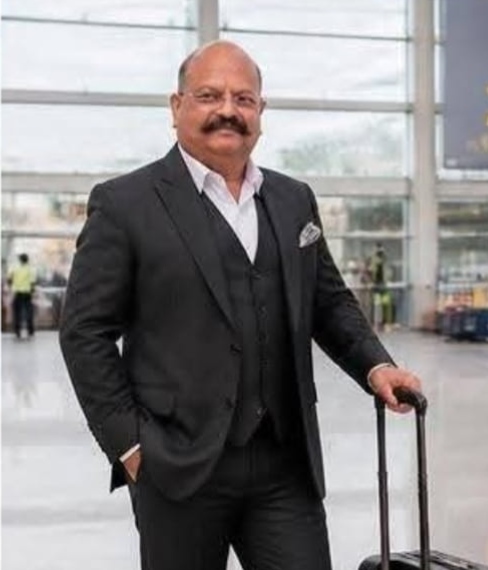
What does it take to change an organisation? A new strategy, better technology, greater investment, or stronger leadership? For Dr. Dilip Kumar Sinha, the answer has always required a closer examination of the people who make an organisation function. Across more than twenty-nine years in human resource management, he has worked with businesses of different sizes, industries and cultures, discovering that organisational improvement cannot be achieved through policies alone. It requires an understanding of how people work, what prevents them from performing and what they can accomplish when given the right opportunities.
His professional life has been anything but confined to familiar surroundings. Beginning in heavy engineering and defence manufacturing, he went on to manage human resources across African countries before entering India’s expanding retail sector. Later came assignments involving specialised manufacturing, diversified business groups, entrepreneurship, retail operations and steel production. Each transition required him to understand an unfamiliar industry while carrying forward the knowledge gained from earlier responsibilities. This willingness to enter different business environments became a defining feature of his career.
A graduate in History from the University of Delhi, he subsequently pursued postgraduate studies in Personnel Management at the Xavier Institute of Social Service, Ranchi. His education preceded a professional career in which understanding people became inseparable from understanding business. His approach was influenced by an upbringing that placed importance on personal conduct and responsibility, but his working methods developed through direct exposure to industrial operations, multicultural teams and increasingly complex management responsibilities.
His years with Bharat Earth Movers Limited introduced him to the scale and demands of manufacturing. International responsibilities in Africa broadened his understanding of cultural differences, while his association with Kishore Biyani at Future Group brought him into the rapidly expanding world of organised retail. Subsequent assignments at Astarc Group and Rajan Raheja Group placed him within businesses requiring both specialised industry knowledge and senior corporate management. These experiences contributed to a professional outlook that refused to separate human resource decisions from the commercial realities of an organisation.
Not every decision produced the outcome he wanted. At one point, he stepped away from corporate employment to establish a supply chain technology venture. The business secured an opportunity with Unilever but eventually brought financial losses. It also exposed him to the responsibilities of entrepreneurship, including the practical difficulties of managing costs and profitability. His return to salaried employment was not without disappointment, particularly when that experience was treated as a break in his career. Nevertheless, he continued, later accepting responsibilities that would test his capabilities in entirely new ways.
At JSW Steel, his work became closely associated with industrial productivity and workforce transformation. Rather than approaching manpower requirements as an isolated numerical exercise, he studied operational responsibilities, examined international benchmarks and worked with departmental leaders to determine what could realistically be changed. During COVID, those responsibilities acquired a different urgency. Maintaining industrial operations meant confronting unfamiliar restrictions, transport disruptions, legal concerns and the possibility of thousands of employees losing their livelihoods. His decisions during that period demonstrated the practical difficulties of balancing business continuity with responsibility towards workers.
A different dimension of his work emerged at Vedanta, where he contributed to initiatives intended to make industrial employment accessible to people who had traditionally remained outside such opportunities. Programmes including Project Panchi and Sri Shakti expanded possibilities for women from disadvantaged backgrounds and encouraged their participation in manufacturing roles. His efforts also extended to transgender inclusion and greater geographical representation within the workforce. Such initiatives required more than recruitment targets. They involved preparing individuals, addressing social barriers and persuading others to reconsider established assumptions.
“The lessons received early in life often become the principles by which difficult decisions are made."
Phase 1: The Discipline He Inherited, the Compassion He Learned
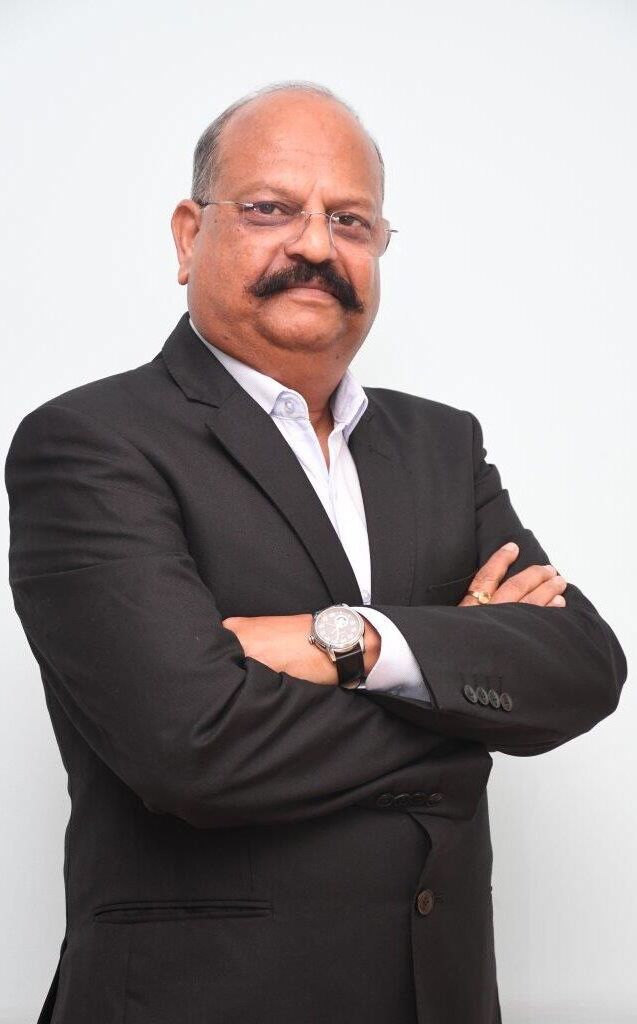
Long before Dr. Dilip Kumar Sinha entered the corporate world, his understanding of responsibility had begun taking shape at home. Born on 21 September 1968, he grew up in a family where discipline was not merely an expectation but an established way of living. His father, Aditya Narayan Sinha, served in the police and maintained strict standards of personal conduct. His mother, Kamal Sinha, brought another important influence into his upbringing through her compassionate nature. Together, they introduced him to two qualities that would remain important throughout his life: the courage to stand by a decision and the ability to understand the people affected by it.
His father’s profession had a considerable influence on the household. Rules were meant to be followed, responsibilities were to be taken seriously, and discipline was expected in everyday conduct. Growing up under such expectations, Dr. Dilip became accustomed to an environment in which personal behaviour mattered. He would later recognise his father as the source of much of his courage and willingness to face difficult circumstances. The connection was particularly meaningful because his professional responsibilities would eventually require him to make decisions that others questioned or resisted.
Yet his upbringing was not defined by strictness alone. His mother’s influence introduced a different understanding of how people should be treated. She believed in empathy and taught him to consider the circumstances and difficulties of others. Where his father reinforced the importance of discipline, she encouraged sensitivity towards human concerns. These were not opposing lessons. They gave him different ways of approaching responsibility, one concerned with the firmness required to act and the other with the understanding necessary when dealing with people. Years later, when explaining his own character, he continued to distinguish between the courage inherited from his father and the compassion learned from his mother.
The educational institutions he attended reinforced the standards established at home. From his earliest schooling through his postgraduate studies, he encountered environments where discipline was taken seriously. He remembered that these institutions differed considerably from ordinary public schools in their expectations of students. Rules were clearly established, and violations could lead to substantial consequences. Such surroundings required students to pay attention not only to their academic responsibilities but also to their behaviour.
One detail remained particularly clear in his recollection. Students were not permitted to chew gum, even during their later education. At St. Xavier’s College, Ranchi, he remembered strict restrictions concerning tobacco, gutka and smoking. Students found violating the rules could face rustication for three weeks. The seriousness with which these regulations were enforced made an impression on him. There was little room for negotiation once a rule had been broken. For someone already accustomed to discipline at home, these educational environments provided a continuation of familiar expectations while introducing him to institutional standards outside the family.
As his education progressed, History became an important part of his academic development. He studied at St. Stephen’s College, University of Delhi, and pursued higher education in the subject. His academic record includes a Master of Arts in History from the University of Delhi, for which he appeared in the 1989 examination and qualified in the Second Division. The degree was formally conferred at the university’s convocation in 1990. This achievement marked the completion of an important stage of his education, although his eventual professional direction would take him beyond the field in which he had studied.
“To understand the people who run a business, one must first understand the work they do.”
Phase 2 : Twenty-Six Thousand People, One Industrial Classroom
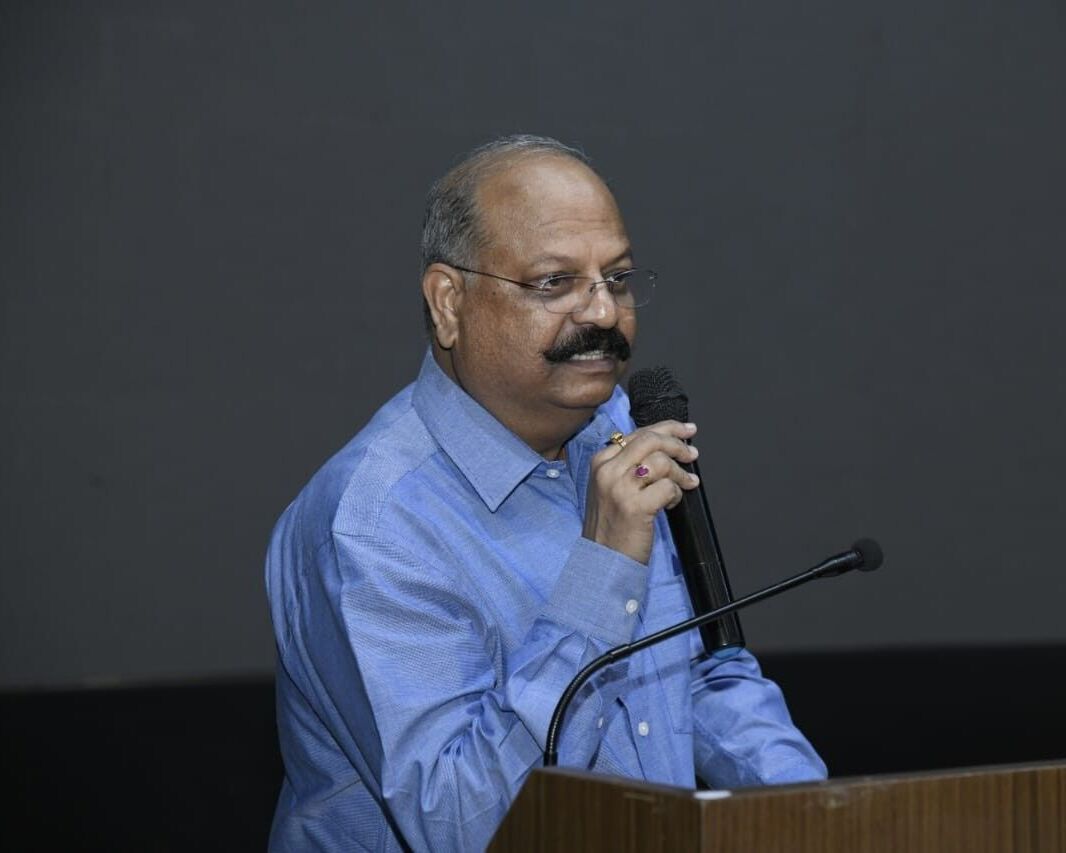
Among the newly recruited professionals joining Bharat Earth Movers Limited (BEML), one decision set Dr. Dilip Kumar Sinha apart from his group. While others were considering their placements, he specifically requested an assignment at the company’s largest manufacturing plant. He was the only person in his group who volunteered for such a posting. Having completed his postgraduate education in Personnel Management, he wanted to understand the industrial environment in which human resource decisions would actually be implemented. That choice brought him to Kolar Gold Fields (KGF), where approximately 26,000 people were employed at the time.
His association with BEML began in 1996, following his selection through campus recruitment. The organisation was a government enterprise engaged in manufacturing defence equipment, earthmoving machinery and other specialised industrial products. Yet its working culture differed from what might ordinarily be expected of a public-sector institution. Dr. Dilip found that it operated in many respects with the efficiency and commercial outlook associated with private companies. For someone entering corporate employment after studying personnel management, this environment offered an opportunity to understand how a large government organisation balanced industrial responsibilities with business requirements.
The scale of the KGF facility was particularly significant. With thousands of employees working across different manufacturing activities, it represented an industrial operation far larger than the environments he had previously encountered. The company’s products served sectors where equipment reliability and technical performance were essential. Its manufacturing responsibilities included defence equipment, some of which could be seen during India’s Republic Day celebrations on 26 January. Alongside these products, BEML manufactured machinery used in construction, mining and other heavy industrial operations.
Among the equipment produced were bulldozers, dumpers and enormous mining machines. One particularly distinctive example was the walking dragline, a machine used in large-scale mining operations. Dr. Dilip recalled that an individual dragline could cost approximately ₹410 crore. Such equipment illustrated the financial and technical scale of the company’s manufacturing activities. BEML operated in specialised markets where comparatively few manufacturers possessed the capabilities required to produce machines of this size. He remembered the organisation enjoying a near-monopoly in certain categories of earthmoving equipment, with the American manufacturer Caterpillar among its notable international competitors.
For an HR professional, working within such an organisation meant being exposed to far more than recruitment, employee records or routine administrative responsibilities. Manufacturing depended on people performing different functions within a connected operational system. The workforce included employees whose responsibilities contributed directly to production, alongside those involved in technical support, management and other essential activities. Understanding such an environment required familiarity with the nature of the business itself. His decision to begin at the plant therefore gave him direct exposure to the industrial setting in which personnel policies and organisational decisions had practical consequences.
The size of the workforce also brought the importance of manpower management into clearer view. An organisation employing approximately 26,000 people could not function through individual effort alone. Different departments had to operate within established structures, and employees needed to understand the responsibilities attached to their positions. The requirements of a manufacturing plant were closely connected to production schedules, equipment availability and operational continuity. These realities gave Dr. Dilip an early understanding of why human resource management within an industrial organisation needed to remain connected to the work being performed.
His initial assignment was particularly valuable because it allowed him to encounter manufacturing from within the plant rather than through information received at a distant corporate office. He had deliberately asked for that exposure, and KGF provided it on a substantial scale. The experience introduced him to a business where machines could be extraordinarily expensive, operations were technically specialised and a large workforce was responsible for maintaining the organisation’s activities. It was a practical beginning to a profession that would later take him into many other industrial sectors.
“Understanding people begins with recognising that the world does not work in only one way.”
Phase 3 : Across African Borders, Beyond Familiar Ways of Working
A professional who had spent his early career within the structured environment of an Indian engineering enterprise was now preparing to work across countries where even everyday communication could require learning an unfamiliar language. For Dr. Dilip Kumar Sinha, moving to Africa meant entering a business environment that differed considerably from the one he had known. The organisations, industries, nationalities and working practices were diverse, and the responsibilities extended far beyond a single office or manufacturing facility. It was an opportunity to understand human resource management across cultures while becoming familiar with the demands of international business.
His association with Sumaria Group in Tanzania placed him in a senior human resources role covering African operations. The business had interests in fast-moving consumer goods as well as copper, cobalt and gold mining, with activities extending across approximately ten countries. As Head of HR for Africa, he was responsible for working with people operating in different national and cultural environments. His professional exposure included Tanzania, Uganda, Kenya, the Democratic Republic of the Congo, Angola and Mozambique. Locations such as Nairobi and Mombasa formed part of the wider geographical landscape in which he worked.
The difference from his previous employment was substantial. Instead of operating primarily within an Indian industrial organisation, he was now involved with businesses spread across national boundaries. Each location brought its own language and established working practices. Employees who belonged to different communities could not necessarily be approached through identical methods of communication.
For someone responsible for human resources across these operations, understanding such differences became part of the work itself. The assignment required him to engage with a broader range of people while maintaining his responsibilities within the organisation.
Language was among the most immediate challenges. English, French and Portuguese were used across the company’s business locations, and Portuguese became particularly important because of operations in Mozambique and Angola. Dr. Dilip had not previously needed to use Portuguese in the way these assignments required. The language was not merely useful for occasional communication. In certain locations, it was part of the everyday environment, making it difficult to function comfortably without understanding it.
One detail from his experience illustrates this particularly well. Even the domestic help working in his household spoke Portuguese. There was little opportunity to avoid the language when it was used both at work and in daily life. He therefore began learning it out of practical necessity. With time, he developed the ability to read, write and speak Portuguese. What began as a requirement of his overseas assignment became an additional skill acquired through living and working among people whose language differed from his own.
This experience gave his international responsibilities a distinctly personal dimension. Managing a workforce across countries was not only a matter of understanding organisational structures or reporting arrangements. Communication itself could demand adjustment. Learning Portuguese helped him operate more effectively within Portuguese-speaking environments and gave him a practical understanding of what it meant to adapt to circumstances rather than expect the circumstances to accommodate him. The experience also distinguished his years in Africa from the domestic responsibilities he had handled earlier.
Note of Thanks
Across a professional life spanning more than twenty-nine years, Dr. Dilip Kumar Sinha has encountered people whose guidance, encouragement, and trust have contributed to his personal and professional growth. He remains grateful to those who have supported him through difficult decisions, offered opportunities to learn, and encouraged him to take on responsibilities beyond familiar boundaries.
His deepest appreciation goes to his mentor, Mr. Antesh Kumar, whose guidance has remained a constant source of learning since 2004. Even after more than two decades, their association continues with the same openness to questioning and correction. Dr. Dilip particularly values his mentor’s willingness to challenge his thinking rather than simply agree with him. Whenever uncertainty arises, he knows he can turn to Mr. Antesh for advice and a perspective shaped by experience.
He also extends heartfelt thanks to his childhood friend, Sandeep Ralhan, whose friendship has endured since their nursery school days. Through the years, Sandeep has remained a valued supporter and source of encouragement. Their longstanding association holds a special place in his life, representing a friendship that has continued alongside changing personal and professional circumstances.
In his professional life, he expresses sincere gratitude to Mr. Anil Agarwal, whose vision of giving back to society deeply resonated with him. He remains thankful for the guidance and blessings of the Chairman and Vice Chairman during his association with Vedanta. He also acknowledges Madhu Srivastava and Rahul Sharma for their continuous support.
His appreciation extends to the colleagues, teams and professionals with whom he has worked across different organisations. Their cooperation, trust and contributions have been important in undertaking responsibilities that no individual could accomplish alone.
thanks,
– Dr. (H.C.) Dilip Kumar Sinha

AIMLAY is a leading global education platform empowering ACADEMIC and EXPERIENTIAL learners, uniquely focused on recognizing knowledge gained through experience and building a diversified community of doctorates and aspiring researchers.