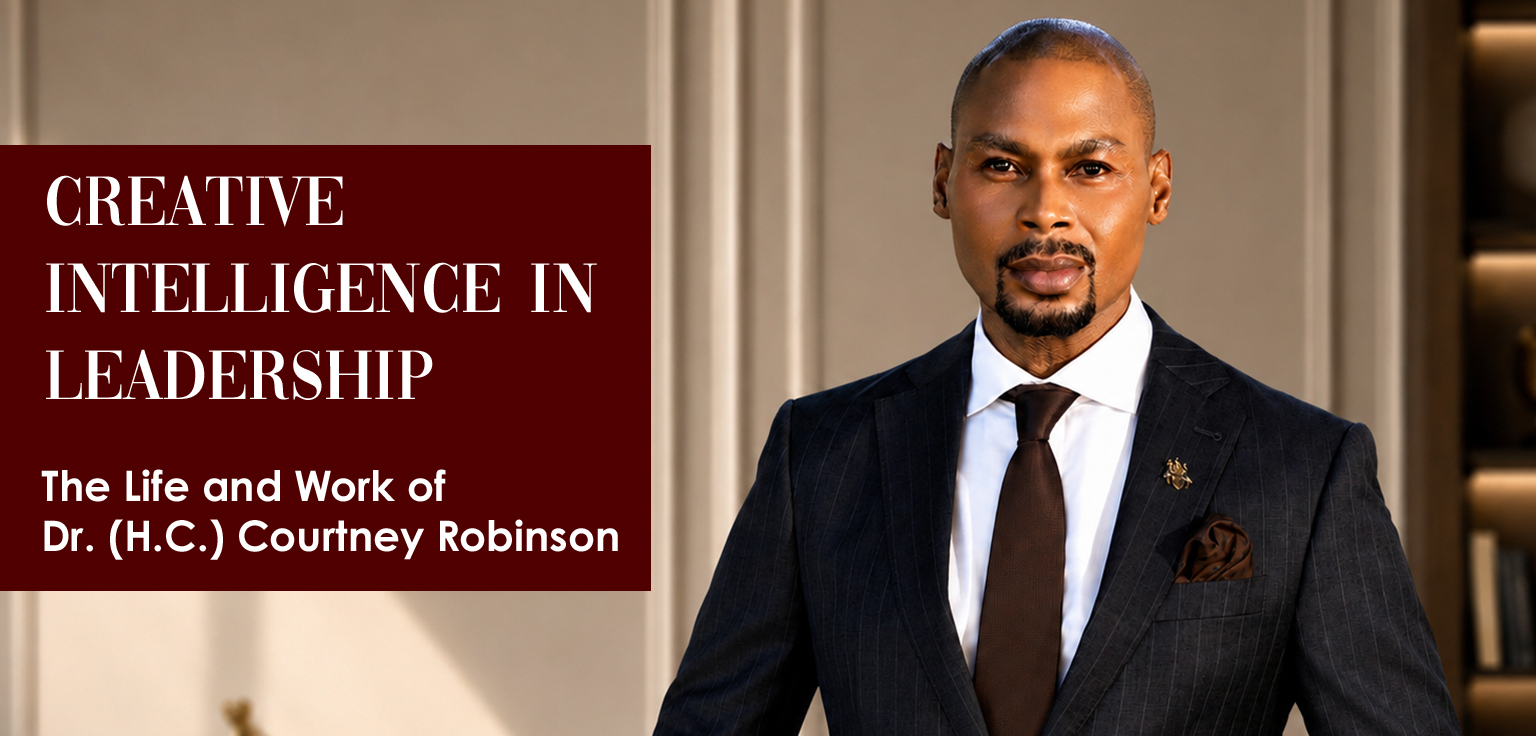
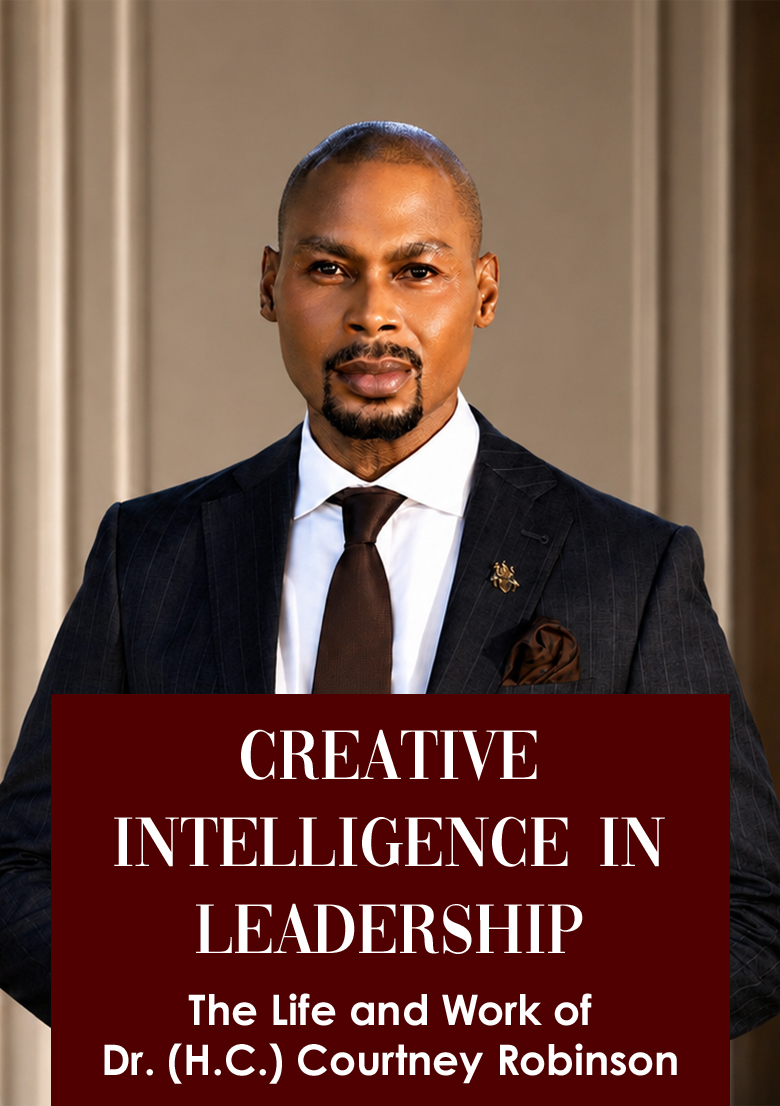
“Creativity is intelligence having fun.”
Dedication
his biography is dedicated to the enduring power of purposeful communication and its capacity to shape lives, institutions, and societies. It honors the quiet strength of cultural heritage, how rootedness in place can inform ethical practice, resilience, and imaginative endeavor, and celebrates the courage required to remain authentic while navigating shifting public and professional landscapes. It pays tribute to those who choose service over spectacle, integrity over expedience, and stewardship over notoriety. It is for practitioners and citizens who believe that words, images, and actions, when guided by principle, build trust and foster collective flourishing.
“The most powerful stories are the ones that teach us who we are before we know who we want to become.”
Phase 1: Foundations of Identity, Voice, and Cultural Awareness
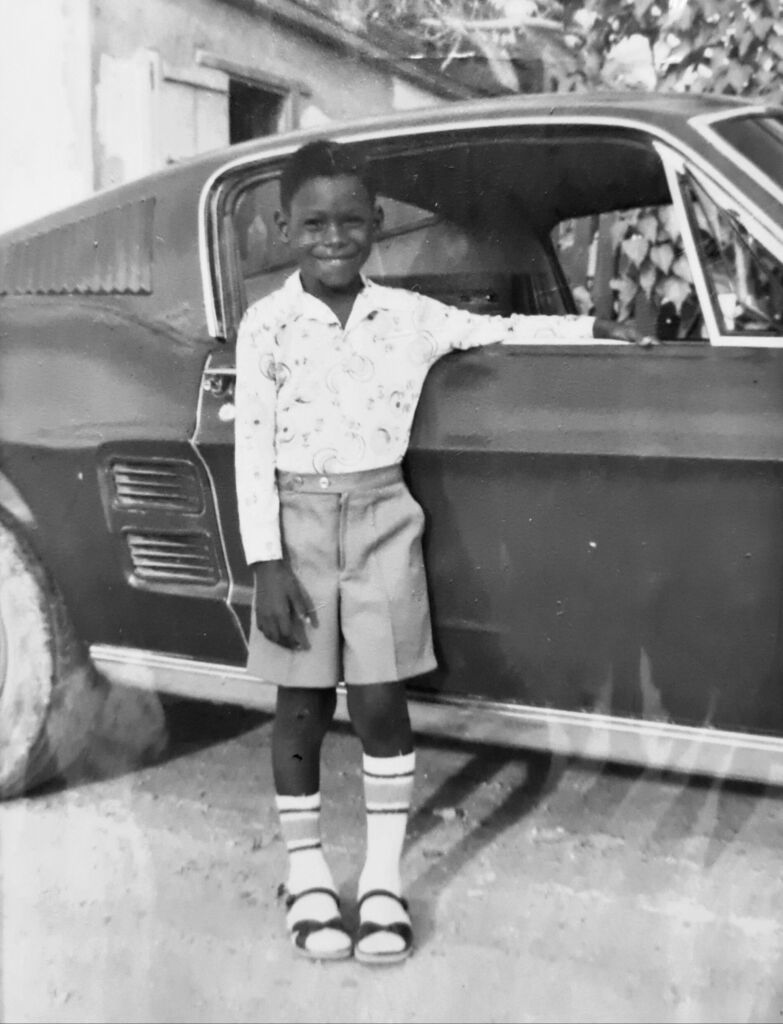
Dr. Courtney S. Robinson’s early years were far more than a conventional childhood; they constituted the bedrock of a vocation built on communication, disciplined leadership, and cultural stewardship. Growing up in North Backsalina, Grand Turk, he was raised in a tightly knit environment where family ties and community life shaped everyday rhythms. From his earliest memories, he was noticeably expressive and observant—attracted to moments where language, performance, and shared meaning converged. That early sensitivity made him attentive to tone and texture in speech, movement, and visual detail, and it seeded an intuitive understanding that stories and symbols carry power across households, stages, and public squares.
His immersion in the arts began young, and private moments reading aloud at family gatherings and listening to elders recount island histories soon expanded into public roles. At school and in church he regularly read lessons, recited Scripture, and sang, learning the craft of presence: how to pace a line, use breath to convey feeling, and sustain eye contact that invites trust. Those formative performances did more than build stagecraft; they trained memory, emotional resonance, and the calm that comes from repeated public exposure. He discovered early that communication is not merely information exchange but an act of shaping how others see themselves and their place in a shared narrative.
Sport had a place in his school life, but he admitted, with gentle humor, that he “was not athletic.” Still, participating in games and team activities taught him discipline, the humility to accept roles that did not always spotlight him, and the collaborative instincts necessary in any group endeavor. It was in theater, music, and cultural presentation, where voice, costume, and movement combined, that he felt a profound sense of belonging. Those spaces enabled him to embody stories larger than himself and to practice the care required to represent community values on stage and beyond.
“The function of education is to teach one to think intensively and to think critically.”
Phase 2 : Higher Education, Temperament, and the Discipline of Passion
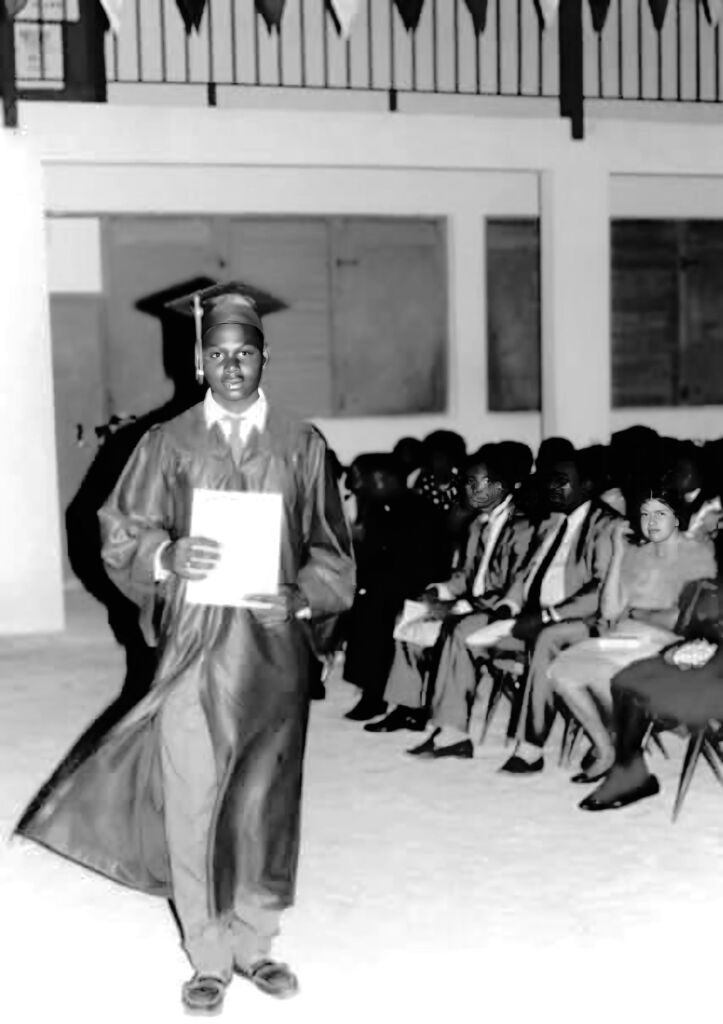
His formal tertiary journey began at Queensborough Community College in New York City in 1992 to 1994, where he pursued an Associate Degree in Fine Arts and Photography. The program demanded a rigorous engagement with both the aesthetics and mechanics of visual art. He learned the fundamentals of composition and design, traced the evolution of visual language through art history, and mastered the darkroom techniques necessary for film development and printmaking. These technical practices, meticulous exposure control, precise timing in chemical baths, and careful dodging and burning taught him an ethic of patience and exactitude. Photography sharpened his observational eye: framing a subject, anticipating decisive moments, and constructing narratives through light, texture, and context. Simultaneously, exposure to courses in psychology and sociology encouraged him to think about audiences not as abstract masses but as sets of individuals shaped by culture, motivation, and perception. That combination, image-making skill paired with an emergent social imagination, began to form the methodological backbone of his later work in strategic communication.
After Queensborough, returning to the Turks and Caicos Islands proved both stabilizing and clarifying. Re-immersed in community life and working in aviation, he encountered the familiar skepticism that greets many creative ambitions: doubts about the economic viability and social value of fashion design and photography. Rather than be deterred, he entered a period of deliberate reflection and redirection.
“Experience is not what happens to you; it is what you do with what happens to you.”
Phase 3 : From Preparation to Practice: Early Career, Responsibility, and Learning
Dr. Courtney S. Robinson’s early career unfolded as a series of deliberate detours and practical experiments that together shaped a distinctive professional identity, one grounded in adaptability, public presence, and a deepening commitment to communicating on behalf of communities and institutions. The path was not linear: each role, whether clerical, technical, creative, or public-facing, contributed a discrete set of skills and a richer understanding of how messages are made, received, and trusted.
His first post-high school employment as an accounts clerk introduced him to organizational routine, record keeping, and the quiet discipline of administrative accuracy. The job taught him how systems operate at the ground level: the importance of paperwork, timelines, and the often unseen processes that keep institutions functioning. That early exposure to operational detail would later inform his insistence on clear workflows and professional standards in communications work.
He moved from accounts into aviation support as an assistant air traffic controller and aeronautical information officer. In that environment he learned to work within high-stakes systems where precision, calm under pressure, and an acute attention to procedure are non-negotiable. The aviation role reinforced habits of clarity and reliability skills that translate directly to public communication, where errors and ambiguity can have outsized consequences. Even though his desire to be a pilot never fully materialized because of childhood health constraints, his drawn-to-aviation sensibility, an appreciation for structure, timing, and the choreography of complex systems, remained a formative influence on how he approached professional tasks.
A period in the United States brought an altogether different set of lessons. Working in modeling and acting in Los Angeles and later New York placed him in industries defined by rapid turnover, tight deadlines, and exacting client demands. Signing with an agency and participating in high-profile campaigns required swift adaptation: physical styling and wardrobe changes, precise timing for shoots and runway shows, and instantaneous performance for cameras and live audiences.
Note of Thanks
Dr. Courtney S. Robinson extends his deepest and most sincere gratitude to all whose presence, guidance, and trust have shaped his life and work. This story is not solely his; it is a shared testament to the teachers, family members, colleagues, community leaders, and institutions that opened doors, offered counsel, and bore witness to his efforts.
To his family he owes particular thanks: for the steadying presence that made risk possible, for patience during transitions, and for the quiet encouragement that sustained him in moments of doubt. Their support was the foundation upon which he could pursue purpose with confidence and resilience.
He is profoundly grateful to the educators and mentors who recognized potential and invested time, insight, and challenge. Their tutelage transformed youthful curiosity into disciplined craft, instilled ethical standards, and modeled a seriousness of purpose that continues to inform his professional judgments. Those lessons, both practical and moral, remain central to his approach to communication and leadership.
To the colleagues, partners, and institutions that entrusted him with responsibility, he offers appreciation for the collaborative spirit and shared commitment to excellence. Working alongside dedicated professionals broadened his perspective, sharpened his practice, and reinforced his conviction that durable outcomes are achieved through collective effort rather than solitary endeavor.
Finally, he honors the communities that have shaped his identity and informed his work: the cultural groups, civic organizations, and everyday citizens whose stories he sought to represent with care. Their lived experience has been both inspiration and obligation, reminding him that public work must be accountable to those it serves.
For every gesture of support, every candid critique, and every opportunity afforded, Dr. Courtney S. Robinson is deeply thankful. He receives these debts not as trophies but as responsibilities to mentor others, to steward institutions with integrity, and to continue serving the public with humility and purpose.
Thanks,
– Dr. (H. C.) Courtney Robinson