“Adversity can either destroy a person or make a person stronger. I chose to let it build me for resilience, faith, hope and love.”
Introduction
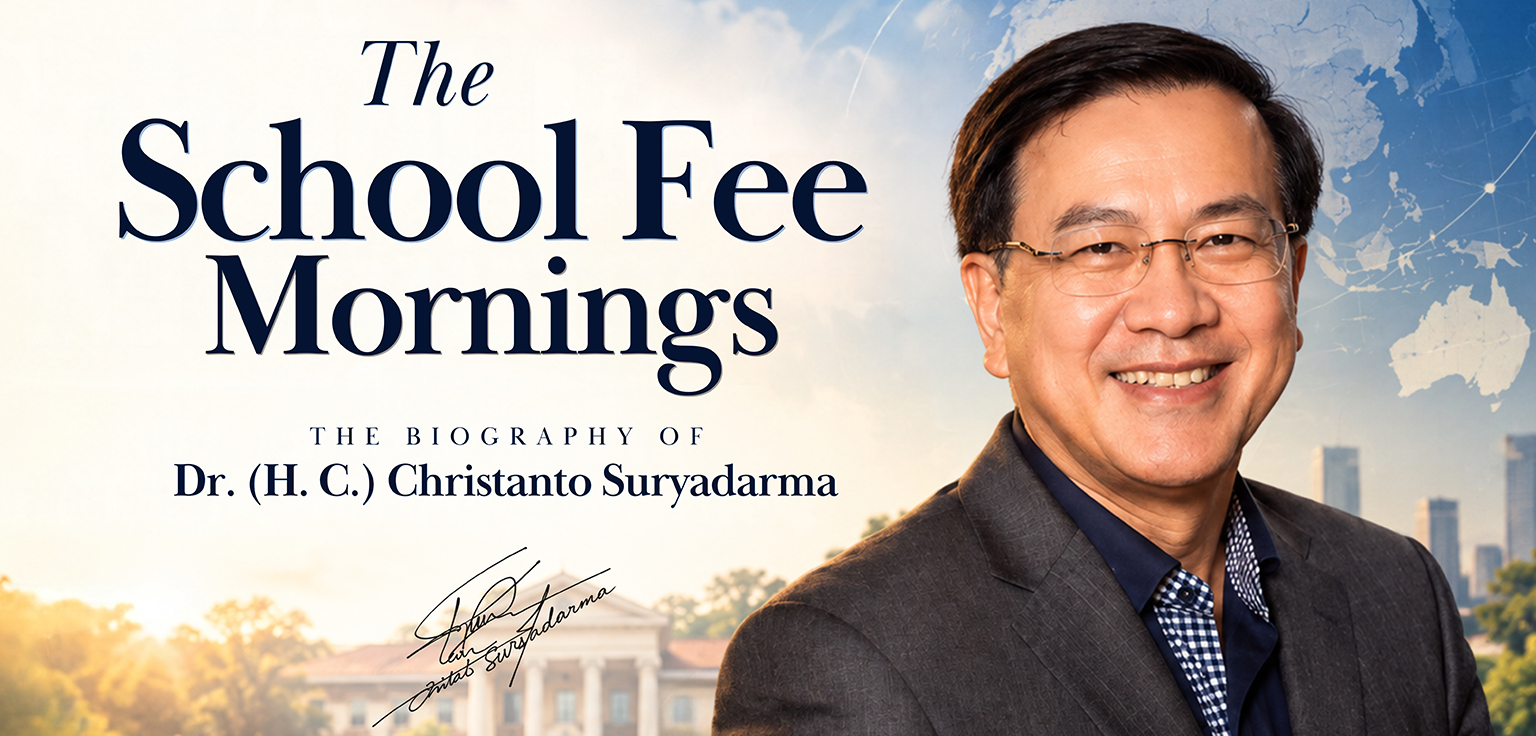
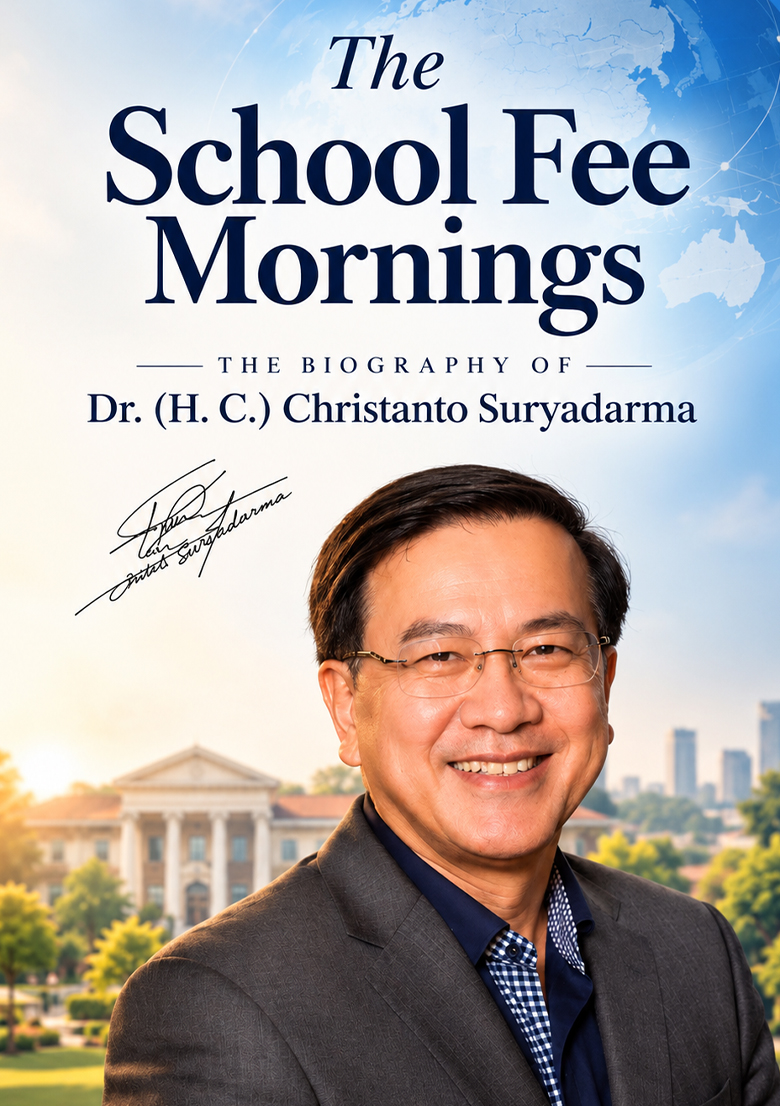
There are lives that impress through titles, achievements, and recognition. Then there are lives that inspire because of what lies beneath those visible accomplishments. The life of Dr. Christanto belongs to the second kind. His journey carries the strength of a child who had to understand hardship early, the patience of a student who grew through limitations, the courage of a professional who began from the bottom, the wisdom of a family man who chose love over ambition, and the responsibility of a leader who now uses experience to help others grow.
He has served in major roles across Intel Corporation, Microsoft Corporation, Hewlett Packard Enterprise, and Zebra Technologies. His work has covered strategic partnerships, channel transformation, digital innovation, revenue growth, enterprise technology solutions, cloud computing, AI, intelligent automation, manufacturing, retail, healthcare, logistics, and public sector engagement. He is currently serving as Head of APAC Partnerships at Zebra Technologies, leading partnership strategy, ecosystem expansion, and partner led growth initiatives across Asia Pacific.
But this book does not begin there. This story begins in a small city in Eastern Java, in a family whose life was shaped by entrepreneurship, responsibility, and sudden financial struggle. His early world was linked to a family gold jewellery shop first built by his grandfather and later carried forward by his father. The business was more than a shop. It was a legacy, a responsibility, and a source of identity for the family.
That world changed when the family faced a severe financial crisis. A bank loan could not be repaid, the home was lost, and his parents had to relocate to another city to begin again. At around eight years old, while still in primary school, he remained in the city of his birth because his father believed that education was too important to interrupt. This decision placed him in the care of his uncle and aunt, away from his parents and siblings, during the years when a child normally needs the comfort of home. Yet those years became the earliest classroom of resilience.
He did not only survive those circumstances. He studied with focus and became the top student. His later journey carried the same pattern. In school, university, early work, and multinational leadership, he continued to make steady progress. When he did not have what others had, he learned to take care of what was available. When friends had bicycles, motorbikes, or cars before him, he learned patience. In Jakarta, when he began work, he lived simply, used public transport, and started from the bottom. He believed that if he learned, worked well, and stayed faithful to growth, opportunities would come.
They did come, but never as mere luck. At Intel Corporation, he entered the multinational technology world and began to grow across regions. At Microsoft Corporation, he moved into software and achieved the goal of becoming a director and then senior director. At Hewlett Packard Enterprise, he rose into general management and led large scale transformation. At Zebra Technologies, he entered a new chapter of sales, partnerships, ecosystem leadership, and AI innovation. His career became a testimony of curiosity, adaptability, and disciplined ambition.
Still, the centre of his life was never only professional. His decisions were shaped by faith and family. When an opportunity came to move to Microsoft headquarters in Redmond, he considered the honour and possibility of that role. Yet after his mother advised him not to move far away if he could avoid it, he chose to stay in Asia. Later, when she was diagnosed with cancer and passed away, he understood the deep value of those years he had been able to spend near her. He did not regret the decision. For him, family was not a slogan. It was a principle lived at personal cost.
"Try not to become a man of success, but rather try to become a man of value."
Phase 1: The City That Made Him
The earliest part of Dr. Christanto’s life belongs to Mojokerto, a small city in Eastern Java, Indonesia. It was not a capital city and not a large urban centre, yet in his memory it remained a pleasant town with a good school and the quiet familiarity of childhood. This place gave him his first identity, his first classroom, and the first surroundings in which family, education, business, and responsibility became connected. Long before he became known in the technology world, he was a child growing up in a city where life seemed ordinary but where the foundations of his character were already being formed.
His family background carried an entrepreneurial spirit. His grandfather had opened and run the first gold shop in the city, creating a business that became part of the family’s identity. Later, his father inherited and managed that gold jewellery shop. The business was not merely a source of income. It represented continuity between generations. It also reflected the trust placed upon his father as the eldest child in the family. When the grandfather passed away, his father had to carry wider responsibilities, not only for the business, but also for his mother and many siblings.
For a young child, these matters may not have been fully understood at first. Yet the atmosphere of responsibility around him was real. He was born into a family where duty was not theoretical. His father had to work, provide, support, and hold together what had been passed down. There was a strong sense that family life was not about the individual alone. It involved care for parents, siblings, children, and the future of the next generation. In that environment, Dr. Christanto began life as the fifth child in a family with six siblings, surrounded by the practical realities of a large household.
His early schooling also began in Mojokerto. The city had a good school, and education quickly became an important part of his life. He was not described as an average student who found his direction late. From primary one, he was already doing very well. His academic strength was visible early, and this became an important factor in a decision that would later change his childhood deeply. His father saw his performance and understood that education could become the bridge between difficulty and future possibility.
The family’s life, however, was shaken when the gold shop began facing serious financial problems. His father had taken a bank loan for the business, but the revenue was not enough to repay it. Eventually, the bank stopped the loan and required full repayment. His father could not meet that demand. The situation led to the family losing their home, a painful event that marked the beginning of a financial crisis. At an age when many children are protected from the harsher realities of life, he saw the instability that can come when a family business collapses.
This was not only an economic setback. It changed the structure of family life. His parents had to relocate to another city to start a new life and a new business. With many children and limited resources, the family had to make decisions that were not easy, but were necessary. His father, holding firmly to the belief that education mattered above immediate comfort, chose not to move him away from his school. The reason was clear. The young boy was already excelling, and moving him might disrupt the path that seemed promising.
“The wound is the place where the Light enters you."
Phase 2 : A Boy Who Learned to Ask
Primary school years away from his parents taught Dr. Christanto lessons no classroom could have. He continued his education in Mojokerto, but the emotional and practical reality of living with his uncle and aunt shaped him just as much as school did. He was still a very young child, yet life had placed him in a position where he had to speak for himself, manage his own anxieties, and continue performing well even when his inner world was not easy.
His life in his uncle’s house was simple and financially limited. He did not describe it as absolute poverty because he lived in a good house, but he had no pocket money and very little personal freedom in material matters. His uncle paid for his school, but the payment of school fees was not always disciplined or timely. This created a recurring problem that became one of the most memorable struggles of his childhood.
The school would call him and remind him that the fees had not been paid. At times, he had to face the embarrassment of being asked by the principal or school office about something he could not control. For a child, such moments can be deeply painful. He knew he was not responsible for paying the fees, yet he was the one who had to carry the shame in front of the school. His parents were not in the city. His uncle and aunt were the ones who had to arrange the payment. So he learned to wake up early and approach his aunt in the morning. She was a dressmaker and would rise early to cut fabrics and begin preparing the work for the day. He understood that morning was the best time to ask her because she was already awake and busy.
He would ask whether the school fee could be paid. Often, the answer was simply tomorrow. Then the next morning, he would ask again. The same hope, the same hesitation, the same need to gather courage would repeat. At that age, asking once would have been difficult enough. Asking repeatedly required something deeper. He had to overcome fear, embarrassment, and disappointment. He had to face the possibility of delay again and again. He had to learn that a no, or even a not yet, did not mean the end of the road.
At first, he felt upset with his aunt. The situation made him ashamed, especially when the school reminded him in front of authority figures that the fees remained unpaid. But later in life, he understood the lesson differently. What felt painful at the time had trained him in a skill he would later use throughout his life. He learned not to be afraid to ask. He learned that if the answer was no, it was not final. He could ask again, perhaps with a different approach, and continue until a way opened. This lesson became part of his resilience.
Those mornings were not dramatic in the eyes of the world. There was no applause, no certificate, and no public recognition. Yet they shaped the future leader far more deeply than many visible achievements. The child who approached his aunt for school fees was learning persistence in its rawest form. He was learning to deal with uncomfortable conversations. He was learning to stand through embarrassment without allowing it to destroy his focus. These are qualities that later became essential in business leadership, negotiation, transformation, partnership building, and mentoring.
“Education is the most powerful weapon which you can use to change the world.”
Phase 3 : Notebooks, Bicycles, and Patience
While childhood adversity shaped the emotional strength of Dr. Christanto, education gave him direction. During his primary school years in Mojokerto, he did not merely attend school. He excelled. From primary one onward, he remained at the top of his class. Every quarter, he was recognised as the number one student for his level. The school would call him forward, announce his achievement, and give him a prize. The prize was usually a notebook, a simple object, yet for him it carried quiet encouragement. It was proof that even when life at home was unsettled, his effort had meaning.
This academic excellence was not separate from the hardship around him. It was his response to it. He could not control the family crisis, the separation from his parents, or the delayed school fees, but he could control how he studied. He could decide whether to remain attentive, whether to prepare, whether to keep showing up. In that sense, his early success was not only about intelligence. It was about concentration under pressure. It was about the ability to protect his own future in circumstances that could easily have distracted him.
After completing primary school, he reunited with his family in another city and continued his education there. This reunion marked a shift in his childhood journey. The years of living apart from his parents had already shaped him deeply, but being back with family allowed the story to move forward into the next stage.
His parents continued to value education strongly. When the time came for high school, they wanted him to receive the best education available to him. This led him to Surabaya, a larger city with one of the top schools.
Entering a top school in Indonesia required competition. Students had to perform well in entry examinations, and he managed to gain admission. This achievement continued the pattern of his early life. He did not come from ease, but he kept earning his way forward. His movement from a small city to a bigger educational environment became another step in the widening of his world. The boy from Mojokerto was learning to compete, adapt, and grow beyond the boundaries of his first surroundings.
Yet even as he advanced academically, material limitations remained a defining part of his life. He remembered wanting a bicycle because his friends rode bicycles to school. His father did not allow him to have one until secondary school, and even then it was not personally his. It was the family bicycle. If he used it, he had to take care of it and make sure it did not break. This taught him a principle that stayed with him. If something is given, inherited, or made available, it must be respected. Possession was never to be treated carelessly.
This lesson was simple, but important. Many people learn responsibility only after they have abundance. Dr. Christanto learned it through scarcity. He understood that when one has little, each object matters. A bicycle was not just a bicycle. It represented trust, family resources, and the need to care for what one has. That attitude later became part of his broader way of thinking. Whether dealing with resources, relationships, teams, opportunities, or organisations, he carried a sense that nothing valuable should be used recklessly.
The same pattern continued in high school. His friends began riding motorbikes, but he did not have one. When he wanted to go out at the end of the week, he had to look for a friend who had space at the back and could give him a ride. He did not own a motorbike until university. This waiting was not always easy, but it became a discipline. He learned that not every wish is fulfilled when it first appears. Some desires require patience. Some things come later. Some never come in the way one expects, and life still has to continue.
Note of Thanks
Dr. Christanto Suryadarma extends his sincere gratitude to the divine presence that has guided, protected, and imparted wisdom throughout his life’s journey. He reflects with humility, recognizing that his path from adversity to leadership was shaped not solely by his efforts, but by a grace and guidance beyond himself.
He is incredibly grateful to his wife, his soulmate and partner, for her tireless support through family duties, career changes, and important choices. He is grateful to his parents and in-laws for shaping his values, his father’s belief in education safeguarding his future, and his mother’s guidance in pivotal choices. He appreciates his elder brother for supporting his education during tough times.
He is grateful to the colleagues, managers, and teams at Astra, Intel, Microsoft, Hewlett Packard Enterprise, and Zebra Technologies for their belief in him. Their trust provided him with opportunities for greater responsibilities and supported his growth as a leader.
He also expresses gratitude to the communities, partners, volunteers, and families connected to MyBookMyCountry.org, Pukat.Online, Singapore Manufacturing Federation, church service, different ability support groups, and AI learning networks. Through them, he has been able to serve, learn, mentor, and contribute. His thanks belong to everyone who walked with him, challenged him, trusted him, and helped him turn adversity into purpose.
thanks,
– Dr. (H.C.) Christanto Suryadarma

AIMLAY is a leading global education platform empowering ACADEMIC and EXPERIENTIAL learners, uniquely focused on recognizing knowledge gained through experience and building a diversified community of doctorates and aspiring researchers.