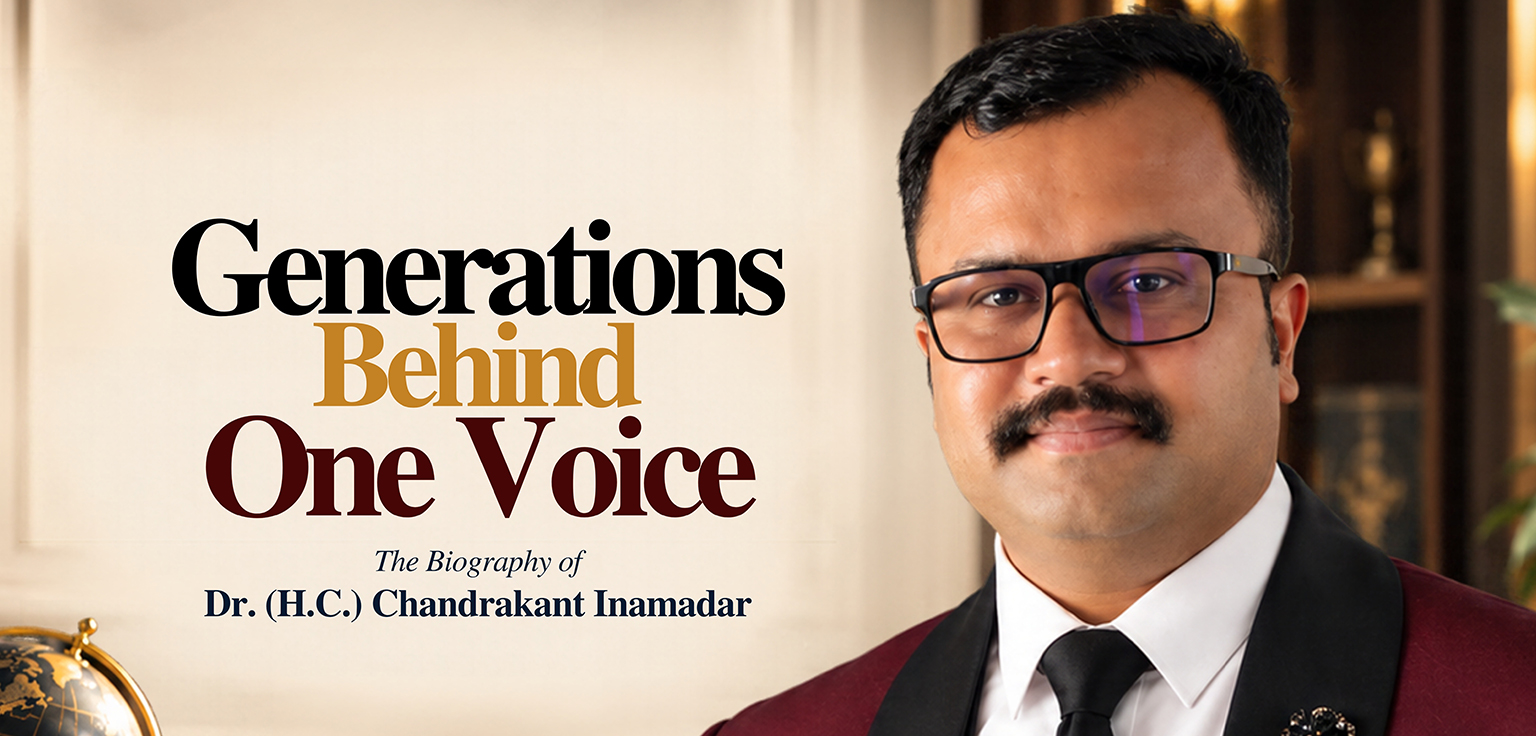
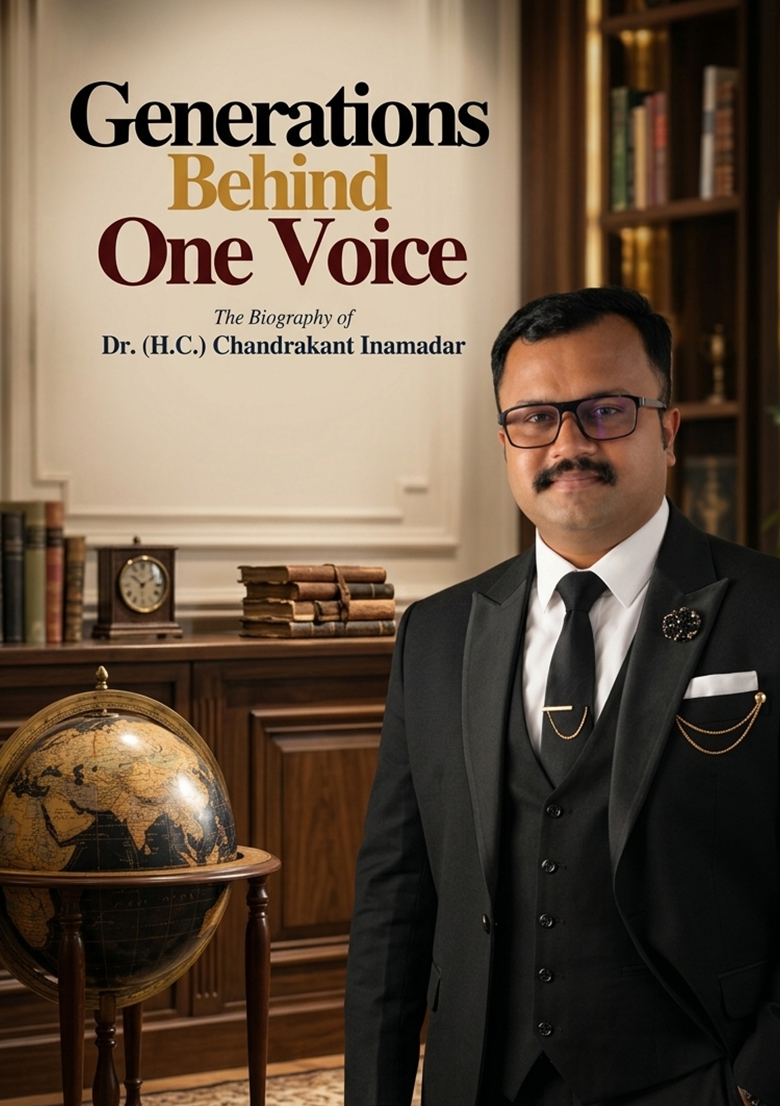
“Learn with humility, teach with sincerity, and keep moving forward with the belief that knowledge finds its true meaning when it becomes useful to others.”
Introduction
The life of Dr. Chandrakant Inamadar brings together music, learning, and a desire to share knowledge. Born into a family with ten generations of musical tradition, he grew up surrounded by music, though his father, Pandit Shrinivas, initially wanted him to follow a different path. Encouragement from his teachers eventually led him towards music, shaping an art that became an important part of his life.
His first steps in music began with learning the tabla from his uncle Pt.Vasant rao, after which he expressed his desire to learn singing. With the support of his family and guidance from his teachers, he started developing his musical abilities. What began as a response to a simple question from his school teachers about his musical background gradually became a lifelong commitment towards learning and performing. Alongside music, he continued his academic pursuits, completing his education in science and later earning his M.Sc. from Kuvempu University. His interest in physics was also shaped by the inspiration he received from his professor, whose international teaching experience encouraged him to think beyond boundaries.
Throughout his student years, Dr. Chandrakant learned the importance of discipline by balancing academics and music practice. His daily routine reflected his dedication, as he continued to give time to both studies and music. His participation in cultural programmes and competitions helped him grow as a performer, taking him from local stages to larger platforms, including performances before thousands of people. His understanding of music continued to deepen through his foundation in Hindustani classical music, where he valued training, practice, humility, and continuous improvement.
He began his professional teaching journey at Bharatiya Sangeeta Vidyalaya, where he worked as a coordinator and later expanded his experience by teaching in different schools. His transition from a family-based musical environment to structured school education introduced him to new forms of teaching, including community songs and curriculum-based music learning. Over time, his role as an educator became more meaningful as he started understanding that teaching was not only about sharing knowledge but also about supporting students in their growth.
After joining Jawahar Navodaya Vidyalaya,, his responsibilities expanded further. As part of a residential school environment, he became closely involved in students’ academic and personal development. His efforts to guide students through music competitions, including helping B.Praful Gowda reach the national level through Kala Utsav, became significant moments in his teaching experience. He continued to explore new ways of teaching by adopting technology, learning through training programmes, and introducing modern methods alongside traditional musical practices.
Beyond classrooms and performances, Dr. Chandrakant also used digital platforms to share knowledge. His YouTube channel, started with the intention of helping students, became a space where he provided educational support without focusing on financial returns. His commitment to free learning reflected his belief that knowledge gains value when it reaches those who need it.
Along with his dedication to music and education, he continues to carry a desire to serve society. Inspired by seeing a Deputy Commissioner helping people, he developed an aspiration to become a KAS officer and contribute through public service. Guided by the values instilled by his parents, especially his father’s direction and his mother, Anuradha, Dr. Chandrakant continues to believe that learning never ends and that every opportunity to guide others is a responsibility to be honoured.
“Sometimes, a simple question in childhood stays with us, quietly opening a door we never knew was waiting.”
Phase 1: Born Into the Rhythm of Ten Generations
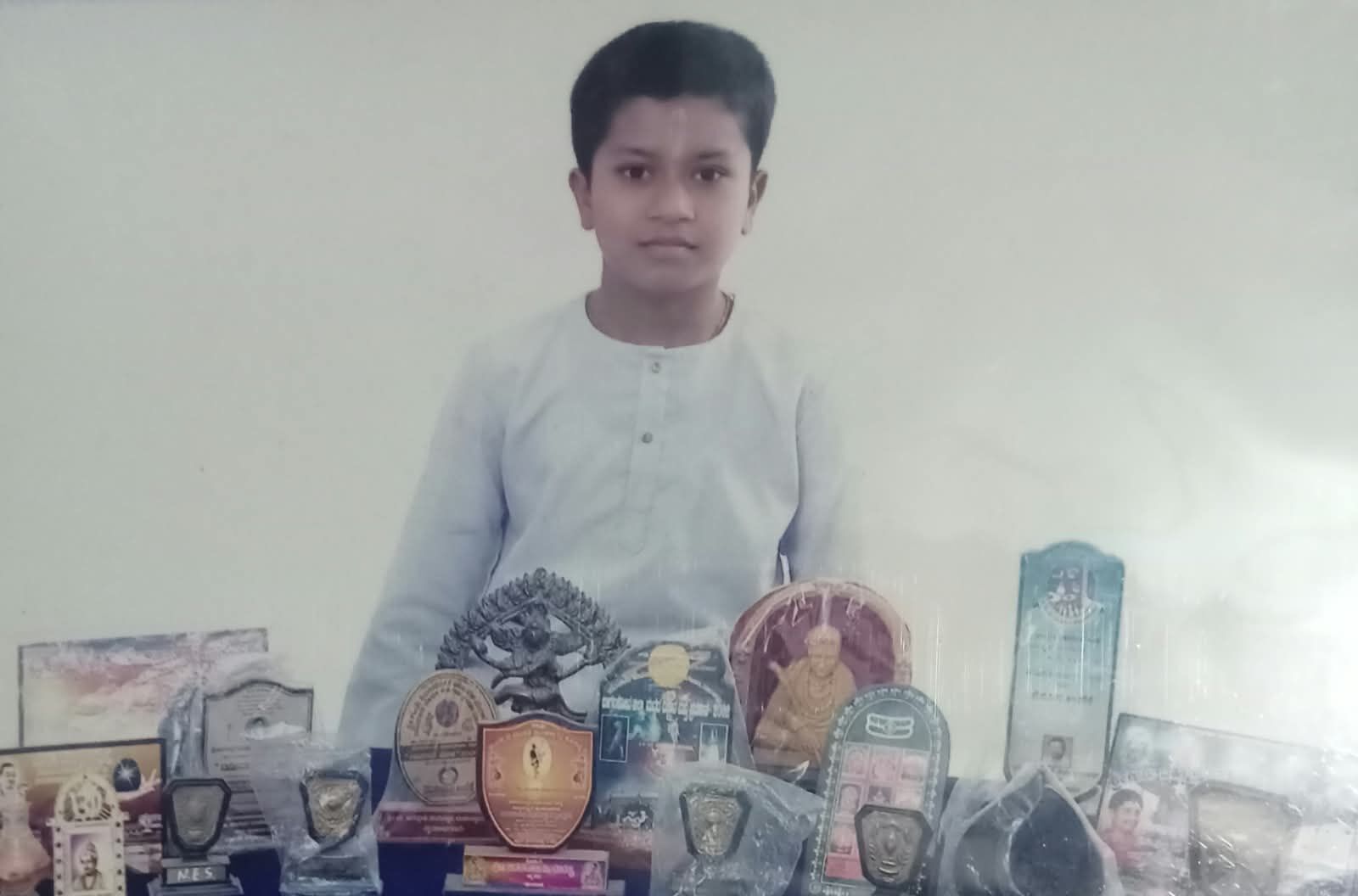
Long before Dr. Chandrakant Inamadar understood the meaning of music, music had already found a place around him. It was present in the walls of his home, in the voices of learners who came to his family, and in the traditions that had continued through ten generations. He was born into a family where music was not just an art but a way of life. The environment around him carried the discipline of practice, the sound of instruments, and the presence of people who looked towards his family for musical guidance.
Yet, his own beginning with music was not as straightforward as one might imagine. Despite belonging to such a deeply rooted musical family, he was not immediately trained in music. His father, Pandit Shrinivas, had a different thought for him. After witnessing generations of the family being connected with music, his father wanted him to explore another direction. He wanted his son to build an identity beyond the path that had been followed for years.
As a child, Dr. Chandrakant watched music being taught around him, but he remained a listener rather than a learner. Students would visit his home to learn music, while he continued with his own childhood activities. At that time, he did not question why he was not being taught the same art that surrounded him every day. Music existed around him, but he had not yet realised that it would become an important part of his own life.
He was also remembered as a calm and reserved child. He tended to observe and listen rather than draw attention to himself, although he remained curious and eager to learn new things. Speaking before teachers or coming forward in front of others did not come naturally to him. Even solving a mathematics problem before a teacher could make him nervous. The child who would later stand before large audiences had once found such simple moments difficult.
The first significant change in his relationship with music came when he entered school. His teachers knew that he belonged to a family of musicians, and they were surprised when they realised that he did not know how to sing. Their questions stayed with him. When they asked how the son of a music teacher could not sing a song, their words made him think about the music that had always surrounded him. For the first time, he began feeling that he should learn the art that had been such an important part of his family’s identity.
Before learning singing, his first step into music came through his uncle, who was a tabla player. Under his guidance, he started learning tabla. Those initial lessons introduced him to the discipline behind music and gave him his first experience of learning an art form. He continued learning tabla for nearly two years.
"Some days ask for study, some for practice, and growing up means learning how to make room for both."
Phase 2 : Balancing Science, Notes, and Discipline
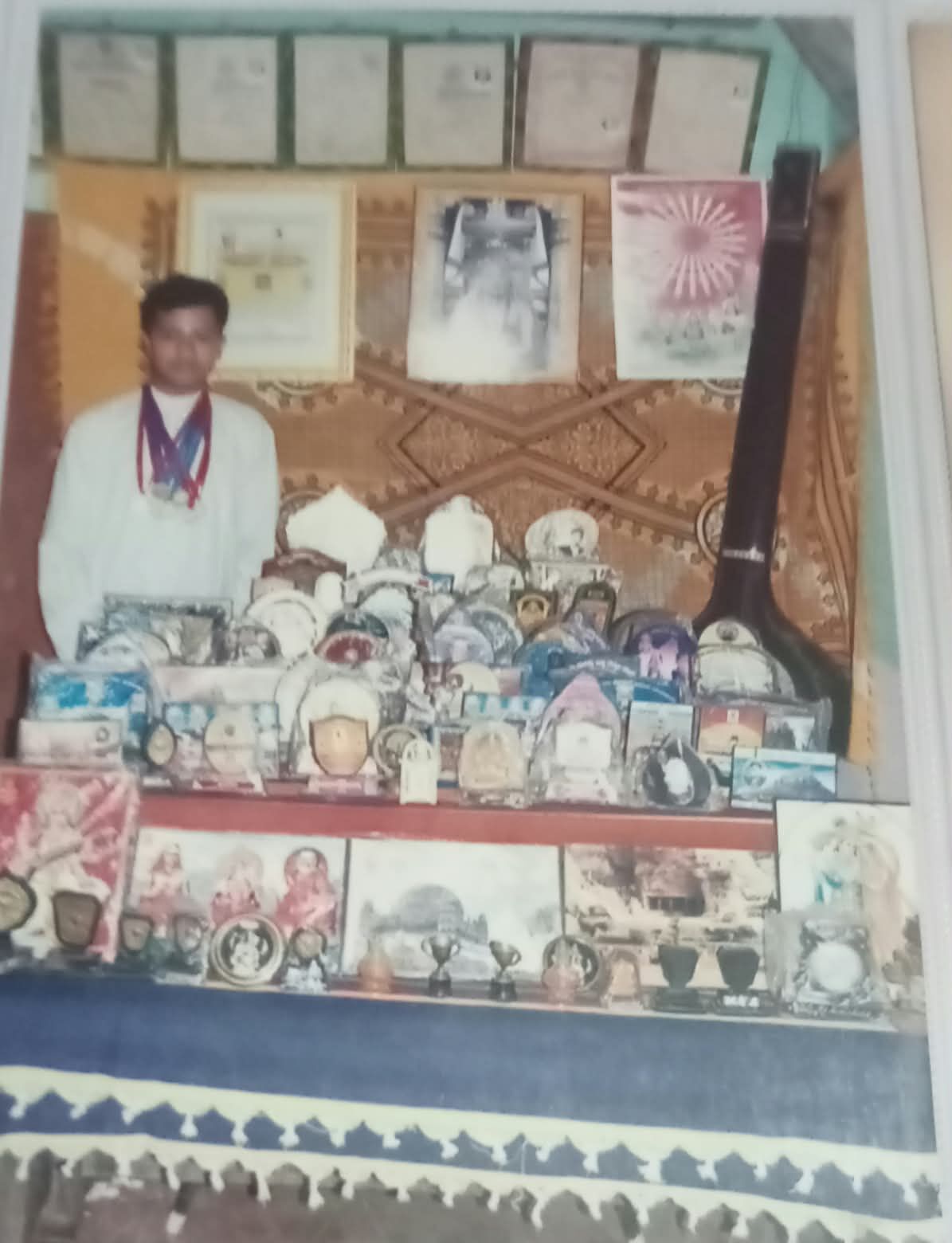
For Dr. Chandrakant Inamadar, learning was never limited to a single direction. While music gradually became an important part of his life, he continued to give equal importance to education. His academic path developed alongside his musical growth, creating a balance between two different areas of learning. The discipline he developed during these years became an important part of how he approached both studies and music.
His formal education began at Navodaya School, where he studied from LKG to 10th standard. Although the name carried a similarity with Jawahar Navodaya Vidyalaya, where he would later work as a teacher, his own schooling was completed at a private Navodaya institution. These early school years became the foundation of his academic development and introduced him to different subjects, experiences, and challenges.
After completing his school education, he continued his studies with a science combination during his 11th and 12th standards at Lions College. His interest in science gradually became stronger, and he moved forward with higher education at Government First Grade College, Nargund, where he completed his degree. Later, he pursued his M.Sc. from Kuvempu University through distance education. Although he had to travel to Dharwad for examinations, he continued managing his studies while remaining connected with his home and his musical practice.
Alongside his general education, he continued developing his knowledge of music through formal training. He pursued musical qualifications from Akhil Bharatiya Gandharva Mahavidyalaya Mandal, Mumbai, where he completed Sangeet Visharad and Sangeet Alankar. He also completed Sangeet Vidwat from the Karnataka State Education Examination Board, Bengaluru. These qualifications reflected his commitment towards understanding music with deeper knowledge and structured learning.
During his academic years, one of the important influences on his thinking came from his physics professor, Dr. M.D.Kamatagi Sir. While studying in his second year, he noticed that his professor had travelled to London. When he asked about it, he learned that his professor had been invited as a visiting lecturer to teach physics at an international university. This left a strong impression on him.
The idea that a subject like physics could connect a person with opportunities beyond geographical boundaries inspired him. He understood that knowledge could open doors across the world because scientific principles remain the same everywhere. This thought created a desire within him to strengthen his understanding of physics and imagine possibilities beyond what he had seen around him.
However, managing academics and music together required discipline. Dr. Chandrakant followed a routine where he gave dedicated time to both areas. During his studies, he focused on academics in the morning sessions and reserved time in the evening for music practice. Even with the pressure of science studies, he continued giving at least an hour towards maintaining his voice and musical abilities.
“A familiar stage feels different from a crowded one, and every new face teaches a little more confidence.”
Phase 3 : From Village Stages to Recognised Performances
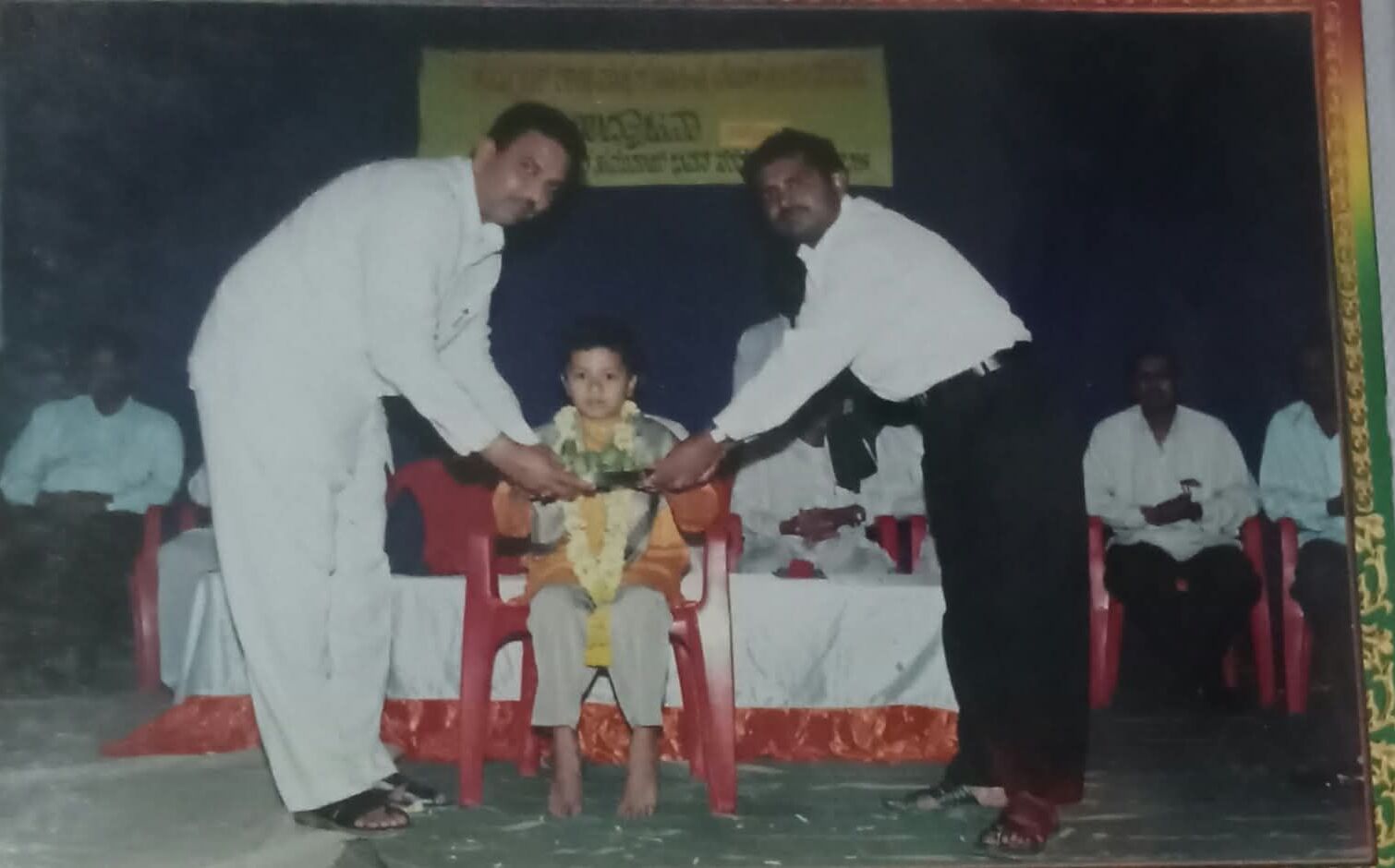
For Dr. Chandrakant Inamadar, music was never limited to practice rooms or lessons. It slowly became a medium through which he connected with people, expressed himself, and discovered confidence. The transition from a learner sitting quietly with his practice to a performer standing before audiences happened through years of participation, observation, and continuous involvement in music.
His earliest stage experiences came from familiar surroundings. The first programmes where he performed were connected with his own family and village environment. He began performing at his grandfather’s remembrance programme, where people who already knew his family and their musical background gathered. He also performed at programmes organised in his village, including events held at places like Matmandir. Since these audiences were familiar to him, he did not experience a strong sense of fear or nervousness while performing.
As time passed, his performances began reaching different villages. The audiences became larger, but the experience continued to feel comfortable because many people were still connected with the same surrounding communities. These early performances gradually helped him become more confident on stage. Every programme gave him another opportunity to understand the relationship between a musician and the listeners.
A major change came when he performed in Haveri, where he faced an audience much larger than anything he had experienced before. For the first time in his life, he stood before around 10,000 people. This was different from the stages he had known earlier because many faces in front of him were unfamiliar. The scale of the gathering made the moment memorable. Although he had already performed several times, this experience gave him a new feeling because he was no longer performing only among people who knew him personally.
Alongside stage performances, competitions became an important part of his musical development. From his school years, he actively participated in cultural programmes and vocal competitions. Beginning from the early classes, he was encouraged by teachers to take part in different activities. Over time, his involvement moved towards classical vocal competitions, where he began testing his abilities on larger platforms.
During these competitions, he achieved recognition at different levels. He participated in district-level and state-level competitions and was selected at the state level in classical vocal music and Gazal Singing. Even during his degree years, he continued participating in inter-college competitions and achieved state-level selection. These experiences helped him understand different approaches to music and introduced him to performers with varied styles and techniques.
For Dr. Chandrakant, competitions were never only about winning. They became opportunities to observe other musicians and understand different styles of singing. Whenever he participated, he carefully listened to other performers, noticed their approaches, and tried to identify different aspects of music that could help him improve.
Note of Thanks
Every achievement carries the contribution of many people who provide support, encouragement, and guidance along the way. For Dr. Chandrakant Inamadar, the path he has travelled has been shaped by the presence of people who believed in him and helped him continue moving forward.
He expresses his heartfelt gratitude to his parents, especially Pandit Shrinivas, whose guidance became a constant source of direction in his life, and his mother, Anuradha, whose support gave him the confidence to continue pursuing music and learning. Their faith played an important role in shaping his choices and values.Gratitude is also to his wife, Smt. Nirmala, for her constant cooperation and for standing as a pillar of support and encouragement in every endeavor.
He also acknowledges the teachers and mentors who recognised his abilities and encouraged him during different stages of his growth. Their words of motivation helped him discover his potential and continue improving as a musician and educator.
His gratitude also extends to his students, colleagues, and everyone who became a part of his teaching experience. The trust and enthusiasm of his students have continued to inspire him to share knowledge with greater dedication.
For Dr. Chandrakant, every person who guided him, challenged him, or walked alongside him has contributed a meaningful lesson. He carries their support and encouragement with respect as he continues learning, teaching, and contributing through music and education.
thanks,
– Dr. (H.C.) Chandrakant Inamadar

AIMLAY is a leading global education platform empowering ACADEMIC and EXPERIENTIAL learners, uniquely focused on recognizing knowledge gained through experience and building a diversified community of doctorates and aspiring researchers.