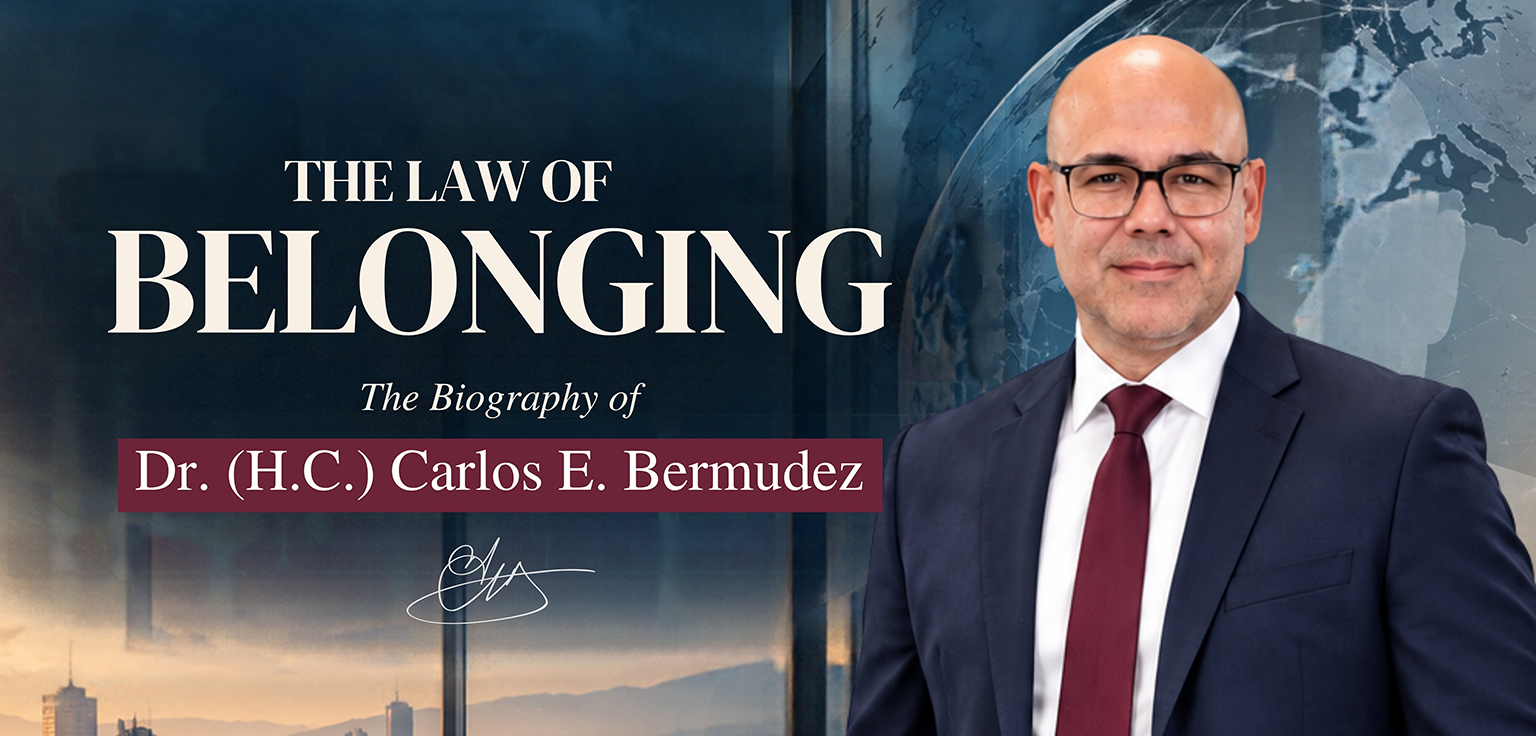
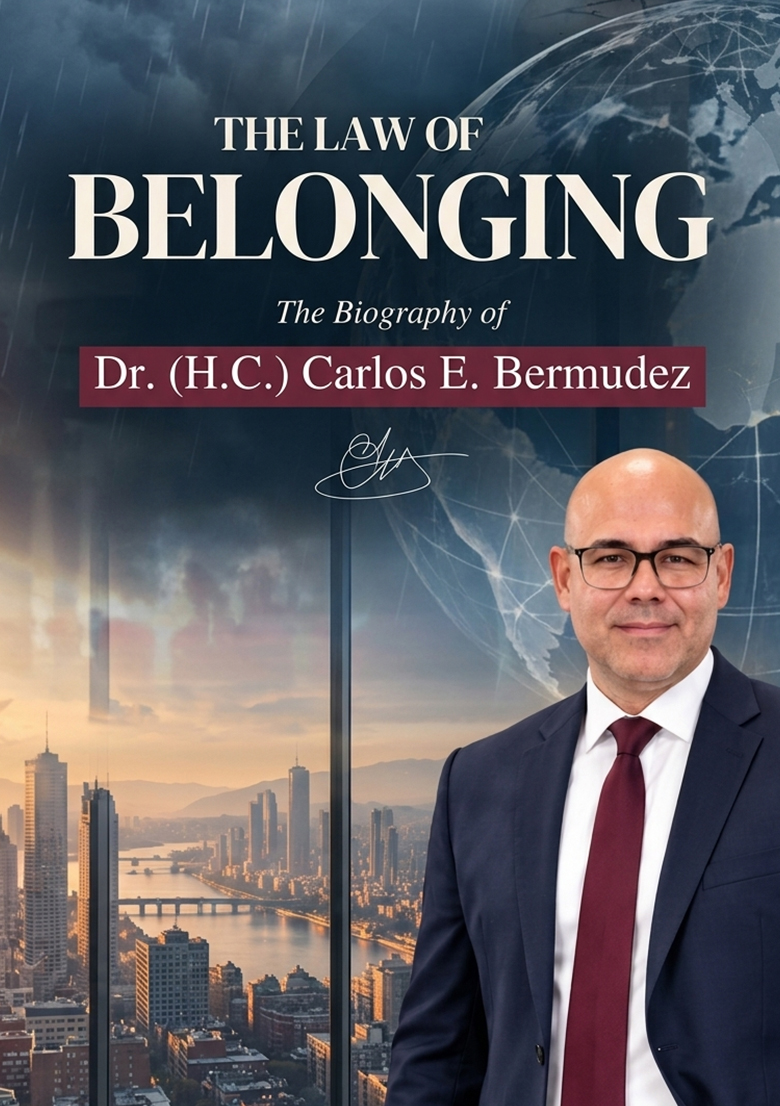
“Not everyone follows the same path, and no meaningful journey is perfectly straight. Often, the difficulties we face become the experiences that shape our character.”
Introduction
There is a form of understanding that cannot be gained through study alone. It comes from standing on both sides of uncertainty. Dr. Carlos has analyzed legal problems as a trained professional, but he has also entered a country as an immigrant whose future depended on a process he could not fully control. Those two perspectives have never remained separate. Together, they have shaped how he listens, teaches, and guides those seeking help.
His outlook is rooted in family, education, and personal responsibility. He considers himself conservative in the sense that home, commitment, discipline, and the care of one’s family matter deeply to him. Yet that understanding has never led him to accept the dehumanization of people whose nationality, language, or immigration history differs from his own. He has seen ordinary immigrants working exhausting hours, raising children, studying, building businesses, and contributing to the communities around them. For that reason, broad descriptions of immigrants as criminals do not remain abstract political statements to him. They conflict with the people he knows and the lives he encounters.
He has also learned to be cautious of political certainty. His experience taught him that ideology can become a disguise for power and that politics can be turned into a weapon against people who lack information or influence. He worries when public leadership becomes a contest of popularity rather than a search for knowledge, preparation, and sound judgment. Charisma may command attention, but attention alone cannot solve complex problems. In his view, leadership must be measured by competence, restraint, and the willingness to protect rights even when doing so is inconvenient.
Education stands at the heart of that belief. He regards academia not as a distant institution but as a necessary foundation for responsible citizenship. People must be taught how systems work, how decisions are made, and how to distinguish evidence from noise. At the same time, he recognizes the danger that arises when political agendas enter education and attempt to replace inquiry with prescribed ideology. Learning must give people the ability to think, question, and understand. It should not instruct them whom they are required to obey.
This conviction shapes his communication with immigrants and aspiring professionals. When someone believes that a meaningful professional life in the United States is no longer possible, he does not respond with an empty promise. He offers his own example. He knows what it is to arrive with experience that employers do not immediately value. He knows the discomfort of speaking in a language that does not yet feel strong enough for a professional room. He also knows that progress may require beginning in a position far removed from the one a person previously held.
His empathy is therefore practical. It appears in the time given to a complicated matter, in the careful preparation of evidence, in the effort to explain unfamiliar procedures, and in the refusal to assume that a difficult case is automatically an impossible one. He understands that an immigration file may carry the future of an entire household. A missed detail can affect employment, safety, family unity, or the ability to remain in the country. Technical accuracy and human attentiveness must consequently work together.
He finds hope in the fact that no political period lasts forever. The separation of powers and the possibility of governmental change give him reason to continue even when the system appears harsh or unbalanced. He knows that many professionals are working quietly toward fairer outcomes. Their efforts may not always attract public attention, but they create spaces in which people can still be defended, educated, and treated with dignity.
“My parents gave me more than a good childhood. They showed me the kind of person I wanted to become.”
Phase 1: A Childhood Framed by Family and Freedom
Dr. Carlos was born in Venezuela in 1979, the second of three children in a family whose life was shaped by affection, professional discipline, and a strong sense of togetherness. His older brother, Irving A. Bermudez, was only eighteen months ahead of him, while his younger sister, Armenia I. Bermudez-Kraft, completed the household. As the middle child, he jokingly described himself as “the flavor of the sandwich”. The expression reflected the ease with which he remembered those early years. He did not view childhood through a catalog of grievances. What remained strongest in his memory was the feeling of being surrounded by people who were present.
That closeness did not fade with adulthood. His relationship with Irving and Armenia grew stronger as the years passed, shaped by shared history, mutual respect, and the understanding that family relationships must continue to be cultivated long after childhood ends. The circle expanded naturally when Armenia married John W. Kraft, whom Carlos came to regard as part of that same family bond, and with the arrival of their daughter, Isabelle J. Kraft. For Carlos, the relationship with his siblings is not simply a connection to the family in which he was raised; it is a living relationship that has matured across countries, marriages, parenthood, and the passage of time.
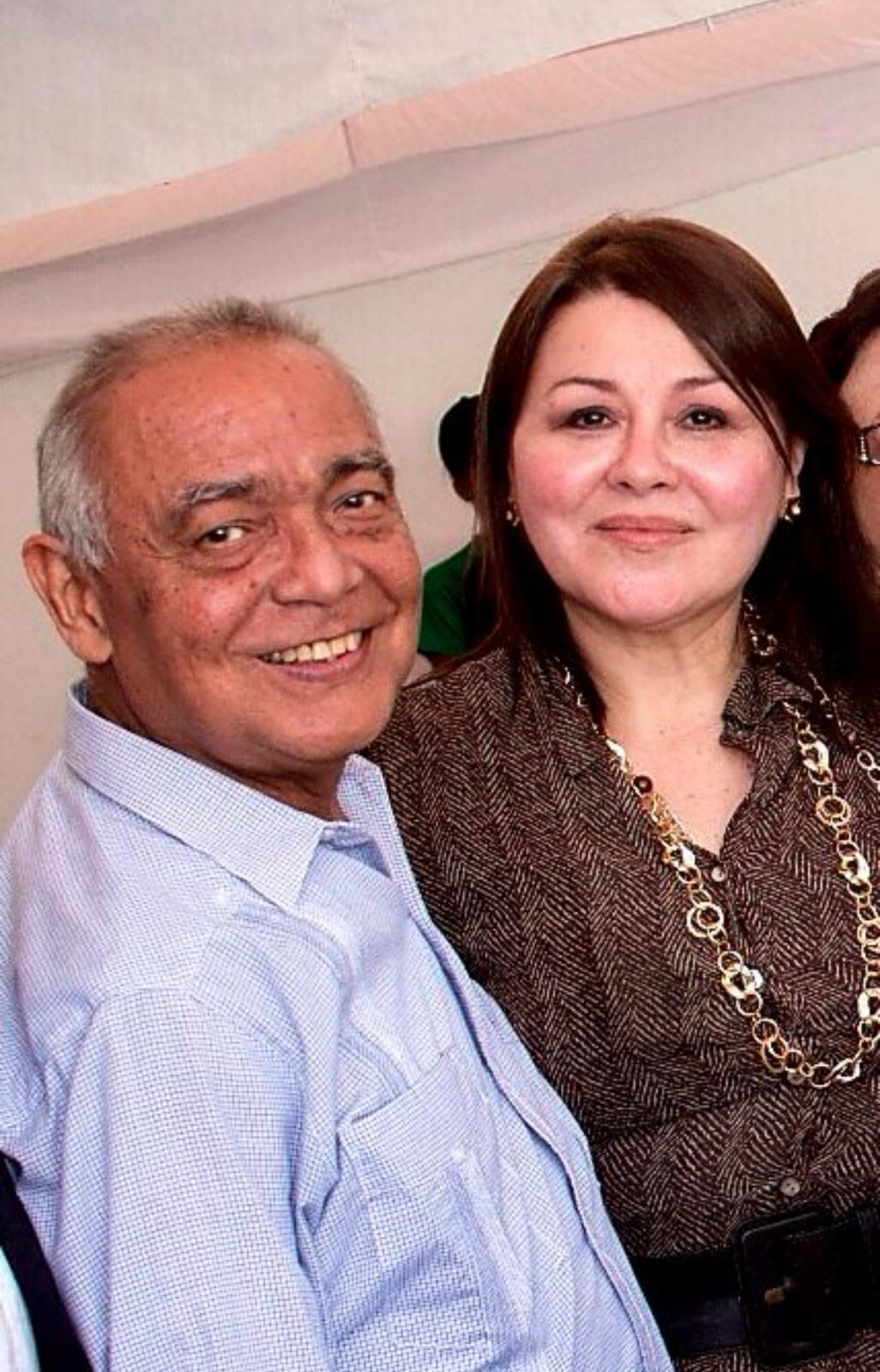
His father, Irving Bermudez, was an attorney whose work extended beyond private professional ambition. He represented workers and labor unions, helped people through legal difficulties, and remained actively involved in the political life of his country. To his son, he was not simply a parent with an impressive profession. He was an example of effort, courage, and service. Even after adulthood brought a more realistic understanding of human imperfections, the admiration endured. Dr. Carlos believed that becoming even half the man his father had been would be an achievement worthy of gratitude.
His mother, Nubia Silva de Bermudez, was also an attorney. Her professional attention leaned more toward civil litigation, but her influence was equally visible within the family. The household did not create a division between intellectual responsibility and personal care. Both parents worked, both understood the demands of law, and both remained involved in the lives of their children. Their presence gave the young boy a security that he would appreciate more deeply after seeing families whose circumstances had been far less stable.
Beyond the immediate household stood a large extended family. Both sides included seven brothers and sisters, which meant that cousins, aunts, uncles, and grandparents formed a substantial part of his early world. The family’s roots reached toward San Fernando de Apure, in the south of Venezuela. Vacations there gave the children time with relatives and introduced them to a part of the country that felt different from ordinary school life. Those visits were remembered not through a single dramatic incident but through the warmth of being among many people connected by history and kinship.
Daily childhood was active and uncomplicated. He played outdoors with friends, ran through parks, rode his bicycle, and collected toys. He was healthy, energetic, and free to explore the world around him without carrying adult fears too early. His parents treated the children with respect, and home remained a dependable place. His sister may have received the additional protectiveness often extended to girls in Venezuelan families, but he and his brother experienced no sense of damaging competition. Their relationships remained close as they grew older.
“I thought I wanted to build things with my hands, but life taught me that I could build something meaningful through law.”
Phase 2 : From the Drawing Board to the Courthouse
By the time he completed high school in 1995, Dr. Carlos had not designed a precise map for adulthood. He was still young, more interested in friends, parties, and enjoying the freedom of that stage than in constructing a detailed professional plan. His talent for drawing and his fascination with creative design had made architecture an attractive possibility. He could imagine working in a field where imagination met structure, and where the ability of his hands might become part of his professional identity.
Law was already familiar because of his parents, but familiarity did not initially make it his first choice. Although he gained admission to law studies, he chose to enter architecture school. The experience lasted approximately one year. Looking back, he did not blame the institution or question the value of the discipline. He saw himself at that age as naïve and insufficiently mature for what architectural education demanded. Talent alone could not supply the focus he had not yet developed. Leaving the program was an admission that desire and readiness were not always the same thing.
The next decision carried the influence of family expectations. He entered law partly because he wanted to please his parents. His father’s pride was immediate. The idea that his son might become an attorney gave him visible happiness, as though a professional tradition were being passed from one generation to the next. For Dr. Carlos, however, entering law did not mean that every uncertainty vanished. It meant beginning a discipline that he had first understood through the people closest to him and would gradually come to understand through his own encounters.
His earliest employment placed him close to legal and administrative work before he had completed his formal education. From July 1998 to August 1999, he worked as a clerk and legal department assistant with CASEP, the Caja de Ahorros Sector Empleados Públicos. The duties were administrative and clerical, but they gave him experience with the everyday order upon which professional work depends. Documents must be organized, information must be accurate, and legal departments rely upon people willing to complete tasks that rarely receive public recognition.
In September 1999, he began working part time as a legal assistant with Bermudez Silva Abogados Consultores Asociados. There, his responsibilities included clerical work, legal research, and document drafting. The position continued until December 2006, allowing his education and practical experience to develop beside one another. He was not observing law only from a classroom seat. He was learning how research becomes an argument, how language affects legal meaning, and how careful preparation supports decisions made later by more senior professionals.
An internship in the Criminal Judicial Circuit of the Metropolitan Area of Caracas exposed him to an entirely different side of the legal system. He reviewed court records, transcribed judgments, and assisted with legal drafting. The work placed him near cases involving people who had already been sentenced and were serving terms of imprisonment. Until then, his family life had protected him from many of the harsher social realities around him. The criminal courts removed that distance.
“Sometimes loee begins in the smallest moments, and before you realise it, that person becomes your whole world.”
Phase 3 : A Dance, a Shared Meal, and a Lifelong Bond
The university years gave Dr. Carlos more than a professional direction. They introduced him to the person who would become central to nearly every chapter that followed. In 2000, while studying at Universidad Católica Andrés Bello, he joined volunteer activities organized through the university’s cultural division. The group supported meetings, performances, artistic events, and other programs that brought students together outside their formal classes.
Among the volunteers was Rosy Pellegrino, a first year education student. Their relationship did not begin with a dramatic declaration. They worked beside one another, became friends, and learned each other’s personalities through the natural rhythm of shared responsibilities. Friendship gave them time to become comfortable before either attempted to define what was developing. The setting suited them. He was studying law but remained drawn to art and culture, while she was beginning an educational path of her own.
The moment that changed his attention came during a university party. Music began to play, and he noticed her differently. She looked at him, he looked at her, and he asked her to dance. What had been an easy friendship acquired a new possibility. The shift was neither planned nor forced. It emerged from the recognition that someone already familiar had become important in another way.
Their first date took place in the university food court. Dr. Carlos was highly protective of his meals and did not normally welcome anyone reaching into his plate. Rosy, either unaware of the rule or entirely untroubled by it, placed her fork into his food, tasted it, smiled, and announced that it was good. His first instinct was irritation. Then he saw her expression. The offense disappeared, and something far more enduring took its place. In his memory, that small act told him that she was the one. From then on, sharing food became part of their life together.
They formally became a couple in 2001. The relationship developed within close contact with her family. He visited her home regularly, ate dinner with her parents, and allowed them to know his intentions through consistency rather than promises. They saw what he was studying, what he valued, and how he treated their daughter. Their willingness to receive him made courtship feel less like a private arrangement between two students and more like the gradual joining of families.
Her parents carried their own migration story. Felice Pellegrino and Marilena Di Stefano had moved from Italy to Venezuela, bringing language, customs, and a way of family life shaped by their origins. Dr. Carlos developed a close relationship with both. Felice represented perseverance and the lessons of a life rebuilt away from the country of his birth. Marilena embodied a mother’s devotion to her family. They welcomed the young man into their home as though he were another son, allowing him to experience Italian Venezuelan family culture from within rather than at a distance.
Rosy was the eldest of Felice and Marilena’s three children, followed by her brothers Giuseppe Pellegrino and Alessandro Pellegrino. As Carlos’s relationship with Rosy deepened, his bond with her brothers developed naturally as well. Over the years, the family circle continued to grow: Giuseppe built his family with his wife, Isabel, and their children, Arabella and Gio, while Alessandro shared his life with his wife, Ana. These relationships became part of the extended family that accompanied Carlos and Rosy through marriage, migration, parenthood, professional rebuilding, and the many ordinary moments that give family its lasting meaning.
For Carlos, the distinction between his family and Rosy’s family gradually lost much of its meaning. Felice and Marilena had welcomed him with the generosity of parents, and the relationships with Giuseppe, Alessandro, and the families they formed became part of the same larger story. Migration had already taught the Pellegrinos that family could carry identity across countries. Marriage taught Carlos something equally enduring: family can also expand without diminishing what came before. Love does not divide the circle; it makes room for more people within it.
Note of Thanks
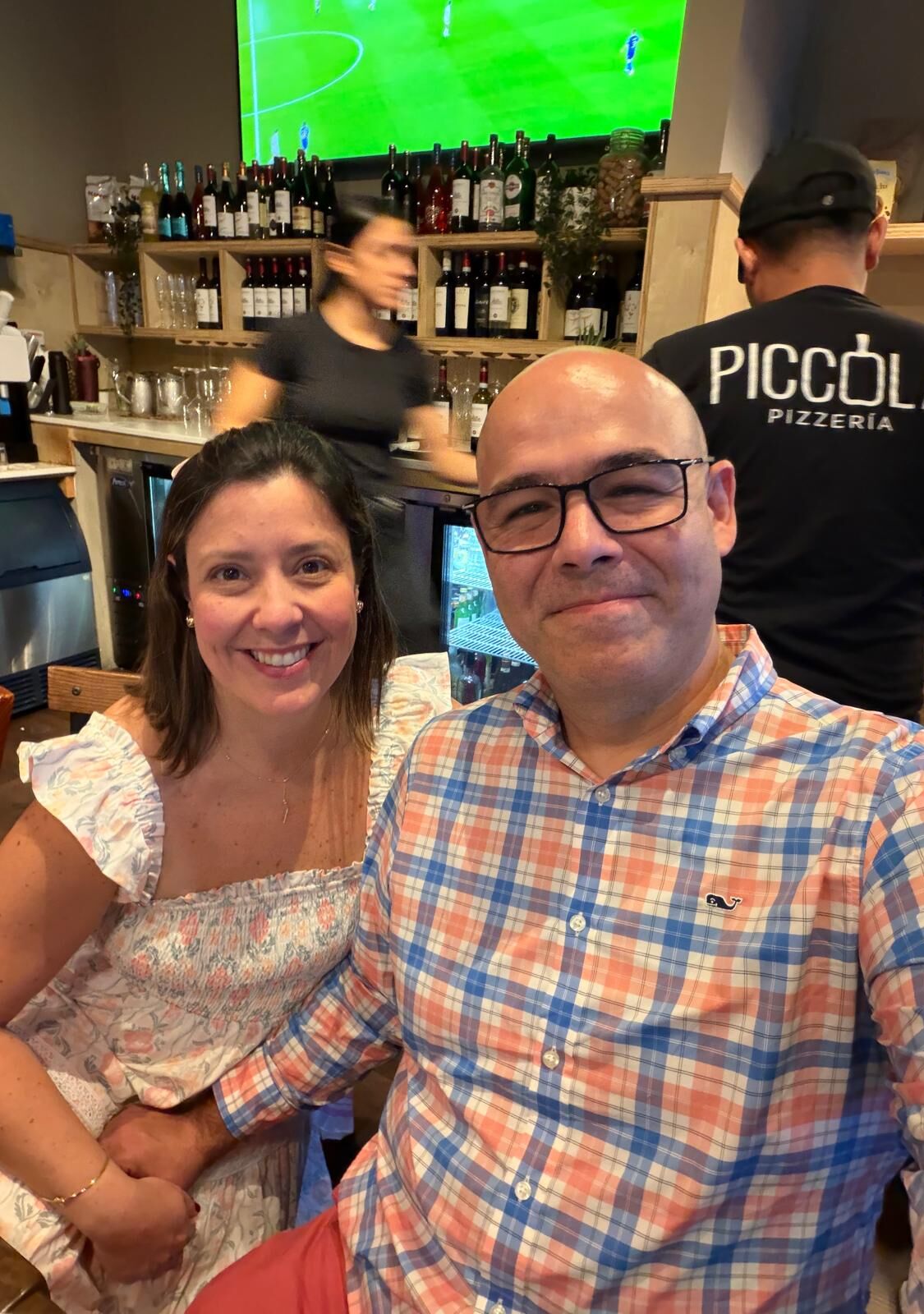
With deep affection, Dr. Carlos offers his first and most personal thanks to Rosy Pellegrino. She chose to share her life with him and remained present through relocation, demanding studies, parenthood, disappointment, illness, and recovery. Her love was not required by birth or obligation. It was renewed through choice, which gives it a value he finds difficult to express fully.
He remains grateful to his late father, Irving Bermudez, whose example continues to live within him, and to his mother, Nubia Silva de Bermudez, whose strength protected the family through its most uncertain periods. His children, Eduardo, Ricardo, and Sara, have given his work a purpose extending far beyond professional accomplishment.
Sincere appreciation is also offered to Felice Pellegrino and Marilena Di Stefano, who received him with the generosity of parents and allowed him to become part of their family; to Giuseppe Pellegrino and his wife, Isabel, and their children, Arabella and Gio; and to Alessandro Pellegrino and his wife, Ana. Across the years, their affection, companionship, and shared family life have remained enduring gifts throughout his marriage to Rosy.
He also thanks the lecturers, classmates, colleagues, friends, community members, government officials, nonprofit partners, and fellow immigrants who shared information, opened doors, provided practical help, or simply reminded him that he was not alone. Some supported him in classrooms, some during exhausting workdays, and others while a new professional direction was still uncertain.
Every act of trust became part of the journey. His gratitude rests not only in memory but in the continuing obligation to extend the same patience and assistance to someone else.
thanks,
– Dr. (H.C.) Carlos E. Bermudez

AIMLAY is a leading global education platform empowering ACADEMIC and EXPERIENTIAL learners, uniquely focused on recognizing knowledge gained through experience and building a diversified community of doctorates and aspiring researchers.