"I learned early that nothing comes easy. So I worked, I studied, I stumbled, and I rose. Every brick I laid carried a dream, every challenge a lesson. This is not just my story. It is proof that persistence builds more than structures."
Introduction
A life can change direction in a single moment. For Dr. Bipin Ramesh Bhoir, it changed many times. Each shift demanded a new decision, a different kind of courage, and the willingness to begin again. His story is rooted in responsibility, yet it is also shaped by curiosity, practical intelligence, and a quiet belief that knowledge remains useful only when it is carried into real life.
He was born in Panvel, Maharashtra, and spent his childhood in Mumbai after his family moved there in search of better educational opportunities. Home was guided by the discipline of his father, Ramesh Savlaram Bhoir, who worked as an Income Tax Officer in Churchgate, and by the resourcefulness of his mother, Indira Ramesh Bhoir. She contributed to the family through sewing and by teaching women tailoring-related skills. Her example stayed with him. Work was never presented as a burden alone. It was a way of protecting the family, preserving dignity, and making progress possible.
While still in school, he understood that education required sacrifice. After his classes ended, he worked at the Indian Express newspaper office and later assisted at a dental clinic. The hours were long. Homework waited at the end of the day, when most young students would already have been resting. That routine developed an early discipline in him, but it also gave him an understanding of effort that could not be learned from a classroom.
At New Model English High School, Mumbai, he found encouragement from teachers who recognised his circumstances and supported his participation in academics and activities. Nirmala Ma’am, Flora Ma’am, Late Laura Ma’am, and Dubey Sir each influenced him in different ways. Geography and Biology attracted his attention, while sport gave him another space in which to compete, cooperate, and test his limits. Cricket, football, badminton, and other games became part of his school and college life. His friendships endured across decades, strengthened by shared interests and travel.
His first academic preference was Biology, and he briefly entered medical education in Jogeshwari, Mumbai. Financial limitations, however, made it impossible to continue. A friend suggested Civil Engineering, a field that offered a more affordable route into professional life. The change was significant. He moved from an interest in the human body to the study of structures, materials, foundations, and construction. At Raibag Polytechnic, scholarship support helped make the decision possible. The three-year diploma gave him a technical base and introduced him to teachers whose guidance remained important. Unchikati Sir, his surveying teacher, became both a mentor and a close friend, while Hariharan Sir strengthened his understanding of structural subjects.
The first years of employment placed that knowledge against the demanding reality of construction sites. As a Junior Engineer, he worked on industrial and building projects, learning through foundations, RCC work, structural activity, restoration, billing, and coordination. Each role added another layer to his understanding. He gradually moved from direct site execution towards quantity surveying, technical-commercial auditing, project management, and consultancy. The change did not happen through a single promotion. It grew from accumulated experience and from his habit of asking what could be understood more clearly and done more effectively.
"I worked before I understood why. School, work, homework, sleep. That rhythm taught me what effort truly means."
Phase 1: The Boy Who Worked Before He Understood Why
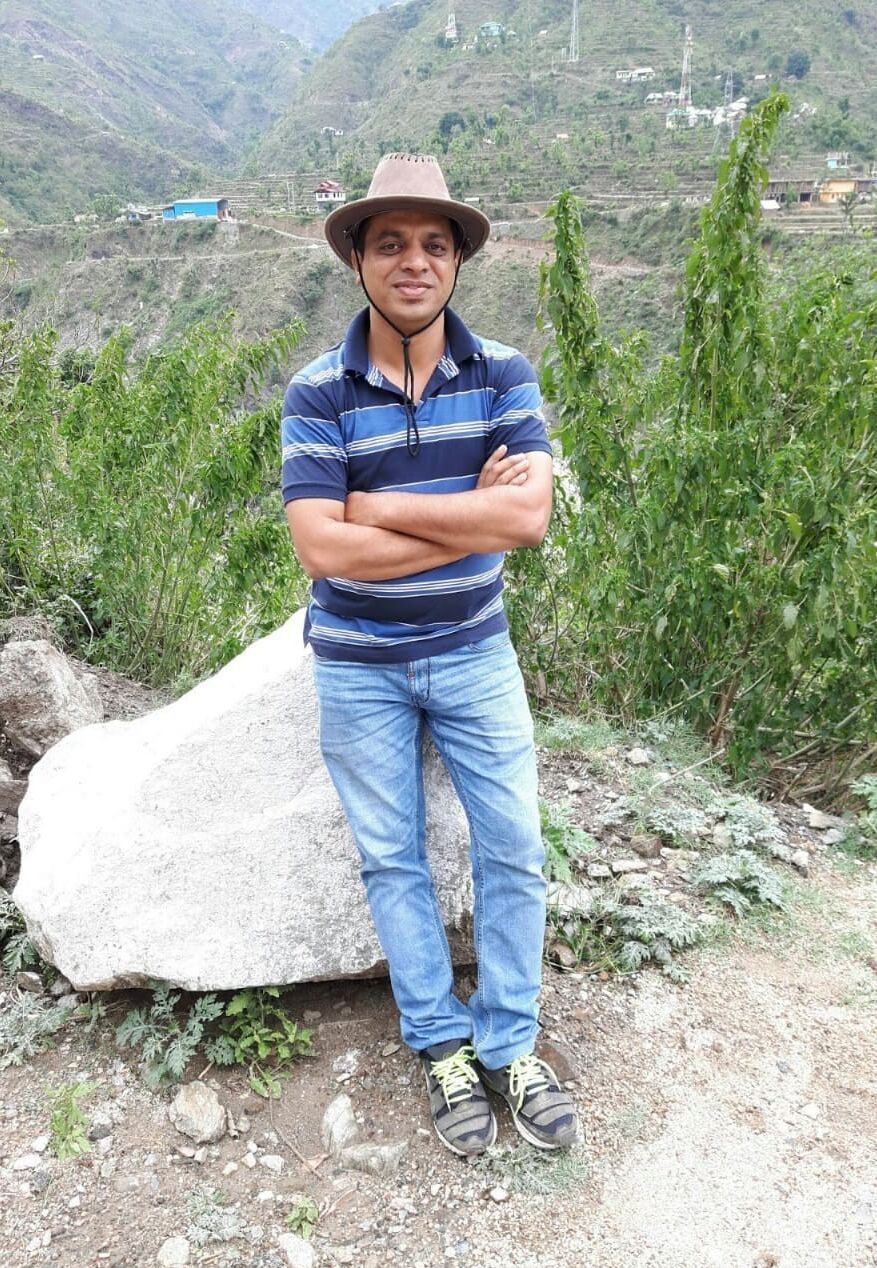
For Dr. Bipin Ramesh Bhoir, responsibility did not arrive with a job title or an adult decision. It entered his life while he was still young, through the practical demands of education and family expenses. It appeared in the form of school fees, books, sports expenses, and the ordinary needs of a family that could not afford to treat education as something automatic. In those years, growing up was not a slow process. It happened between school hours, evening work, and the quiet determination to keep his studies alive.
He was born in Panvel, Maharashtra, and later grew up in Mumbai, where his family had moved in search of better educational opportunities. His father, Ramesh Savlaram Bhoir, worked as an Income Tax Officer in Churchgate. His mother, Indira Ramesh Bhoir, managed the household while also contributing through sewing and teaching women tailoring-related skills. His father’s professional life and his mother’s contribution through sewing and teaching tailoring exposed him to discipline, skilled work, and shared family responsibility.
There was little room for idleness. By the time he reached the seventh standard, he had begun working because the family’s educational expenses required support. His school day generally ran from the early morning until around half past twelve. When other children were returning home, his own day was only changing shape. He went to the Indian Express newspaper office in Churchgate, where he worked until the evening. Later, he also worked with a dentist as a ward assistant, remaining there until approximately nine at night.
The pattern was demanding. School. Work. Home. Homework. Sleep. Then the same hours again.
Yet he did not describe those years only through hardship. There was a practical clarity in the way he approached them. He understood that money had to be earned, that education had to be protected, and that every contribution mattered. The work was not separate from his schooling. It became part of the education itself, teaching him punctuality, endurance, and the discipline of completing what had to be done even when tiredness had already settled in.
His family responsibilities were shared. A younger brother, Mandar Ramesh Bhoir, who also worked in the Income Tax Department, contributed to the education of the household. A younger sister remained part of the close family circle. Together, the children learned that progress required cooperation. Their parents provided the structure of the home, while the siblings carried portions of its daily demands.
The influence of his mother reached him through observation rather than instruction. He saw her continue working, sewing, teaching, and contributing to the family’s needs. Independence, in her example, was quiet. It was found in the decision to make use of one’s abilities instead of waiting for circumstances to improve on their own. That lesson stayed with him.
Another important influence was his maternal uncle, Mr. Krishna Sitaram Bhoir. He introduced the young student to professional environments and helped him understand how people conducted themselves at work. Through him, places such as Mazagon Dock Limited became more than distant institutions. They offered him an early glimpse of technical workplaces and professional conduct. The experience widened his understanding of the world beyond school and home.
"Teachers who noticed me, friends who stayed for decades, games that tested my limits. School gave me more than lessons."
Phase 2 : Where the Classroom Met the Playing Field
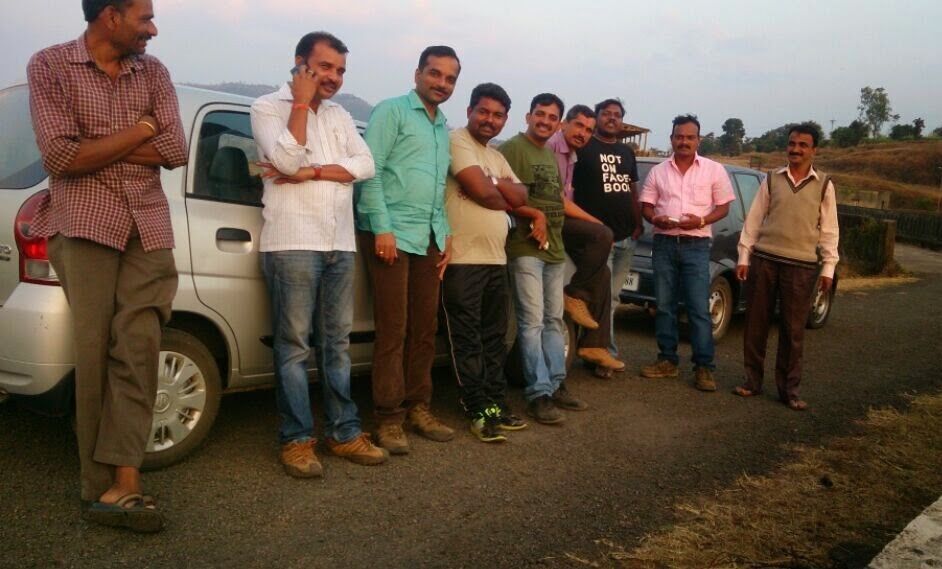
School gave Dr. Bipin Ramesh Bhoir a place where responsibility did not erase curiosity. His days were demanding, but they were not defined by work alone. Within the classrooms of New Model English High School, Mumbai, he found teachers who noticed him, encouraged him, and made room for his interests. Their support mattered because it allowed him to remain connected to learning even while carrying duties beyond school.
He remembered Nirmala Ma’am, his Geography teacher, with particular respect. Geography remained one of his favourite subjects and strengthened his interest in places, landscapes, and the wider world. Flora Ma’am, his English teacher, gave another kind of influence. Her teaching supported his engagement with English and classroom learning. Late Laura Ma’am, the principal, represented the wider authority of the school, while Dubey Sir, his Hindi teacher and actual mentor, offered guidance that reached beyond the subject he taught.
A mentor is often remembered through the small changes he creates. A word of encouragement. A correction given at the right moment. A feeling that one’s efforts have been noticed. For him, the teachers who supported him helped make school a place of belonging. They understood his family background and encouraged him in academics as well as extracurricular activities. Their support did not remove the difficulties around him, but it gave him space to participate fully despite them.
He described himself as an average student, yet that description never captured the full range of his interests. His attention was drawn to Geography and Biology, but the playground revealed another side of his nature. Sport brought movement into a life already governed by schedules. It required alertness, cooperation, instinct, and the ability to recover quickly after a mistake. He played cricket, football, badminton, and several other sports during his school and college years. The variety mattered. He was willing to try, learn, and test himself in different settings rather than remain confined to one activity.
Cricket held a special place. He represented his college team, carrying the responsibility of playing for something larger than himself. A team demanded more than individual ability. It required trust in others, attention to the moment, and acceptance that success could not always be controlled by one person. Those lessons belonged to sport, yet they also became part of the way he related to people.
Football gave him a different rhythm. Badminton demanded concentration and quick response. Each game drew out another quality. Together, they formed a childhood and college life filled with energy, competition, and companionship. Among these activities, cricket and badminton remained especially important to him.
Friendship provided another constant. He maintained a close group from his school days, and the bond continued for approximately fifty years. Such friendships are carried through changing circumstances. People grow older, responsibilities increase, and daily life becomes more complicated, yet some relationships remain anchored in shared memories. His friends were connected to the years when school ended, sport began, and the world still felt open to discovery.
"I wanted to study life. Life had other plans. Engineering became the path I never imagined, and it fit."
Phase 3 : The Crossroads That Led to Engineering
For Dr. Bipin Ramesh Bhoir, the path towards Civil Engineering did not begin with a childhood plan carved in certainty. It emerged from an unexpected turn, shaped by circumstances, practical choices, and the ability to recognise possibility even when an earlier direction had to be left behind. Sometimes a person discovers the right road only after standing at a difficult crossroads.
During his school years, his interest was strongly connected with Biology. The subject appealed to his curiosity, and he carried that interest forward after completing his schooling. This led him to secure admission to a medical college in Jogeshwari, where he began studying medicine. For a brief period, he stepped into a field that matched his academic inclination. The admission allowed him to begin studying in the field that had initially attracted him.
However, education also had a practical reality attached to it. The financial requirements of medical studies became difficult to manage, and continuing in that direction was no longer possible. Financial limitations eventually made it impossible for him to continue the course. The situation demanded adjustment rather than disappointment. He had to reconsider his options and identify a path that aligned with both his abilities and his circumstances.
A suggestion from a friend became the link between one field and another. The friend introduced him to the possibility of Civil Engineering, explaining that it could provide a meaningful professional direction while remaining financially manageable. It was a significant change. The student who had spent years drawn towards Biology now had to enter a world of mathematics, structures, materials, and technical principles.
The transition required more than admission into a new course. It required a complete shift in thinking. He moved from studying living systems to understanding the systems created by human effort. Mathematics became a new area of focus. Technical concepts that were unfamiliar at first gradually became part of his daily learning. He responded by concentrating on the unfamiliar subjects required by Civil Engineering.
For his diploma education, he selected Raibag Polytechnic because it offered a practical solution to his circumstances. The availability of scholarship support made higher education possible without creating an overwhelming financial burden. He later recalled that after receiving the scholarship, his personal contribution towards three years of education was approximately ₹3,200 to ₹3,500. For him, the institution represented more than a place of study. It represented access.
The early days of engineering education required adjustment. The subjects were different, the methods of learning were different, and the expectations were different. Yet he gradually developed confidence through consistent effort. His first-year performance demonstrated his growing adjustment to the new field.
Note of Thanks
Every chapter of life is shaped by the people, experiences, and moments that leave an impression along the way. As this story is reflected upon, gratitude extends to everyone who contributed in different ways to the person Dr. Bipin Ramesh Bhoir has become.
A heartfelt appreciation goes first to his family, whose support remained a constant source of strength through every stage of life. The values received from his parents created the foundation upon which he built his approach towards responsibility, discipline, and commitment. He offers particular gratitude to his wife, Bhagyashri Bipin Bhoir, for her enduring presence throughout the changing chapters of their life together.
He also expresses gratitude to the teachers and mentors who guided him during his formative years. Nirmala Ma’am, Flora Ma’am, Late Laura Ma’am, and Dubey Sir played meaningful roles during his school years by encouraging his learning and personal growth. The guidance received from Unchikati Sir and Hariharan Sir during his engineering education helped him strengthen his technical understanding and confidence in a new field.
Appreciation also goes to the colleagues, seniors, friends, and professional associates who shared their knowledge, created opportunities, and offered valuable perspectives throughout his career. Every workplace, every assignment, and every interaction brought a lesson that contributed to his professional development.
Finally, gratitude belongs to every person who supported, trusted, and believed in him during different phases of his life. Each person acknowledged here contributed through guidance, trust, opportunity, or companionship.
To all those who became a part of this story, whether through support, mentorship, friendship, or shared experiences, he offers his sincere appreciation. Their contributions remain an important part of the path he continues to walk.
thanks,
– Dr. (H.C.) Bipin Ramesh Bhoir

AIMLAY is a leading global education platform empowering ACADEMIC and EXPERIENTIAL learners, uniquely focused on recognizing knowledge gained through experience and building a diversified community of doctorates and aspiring researchers.