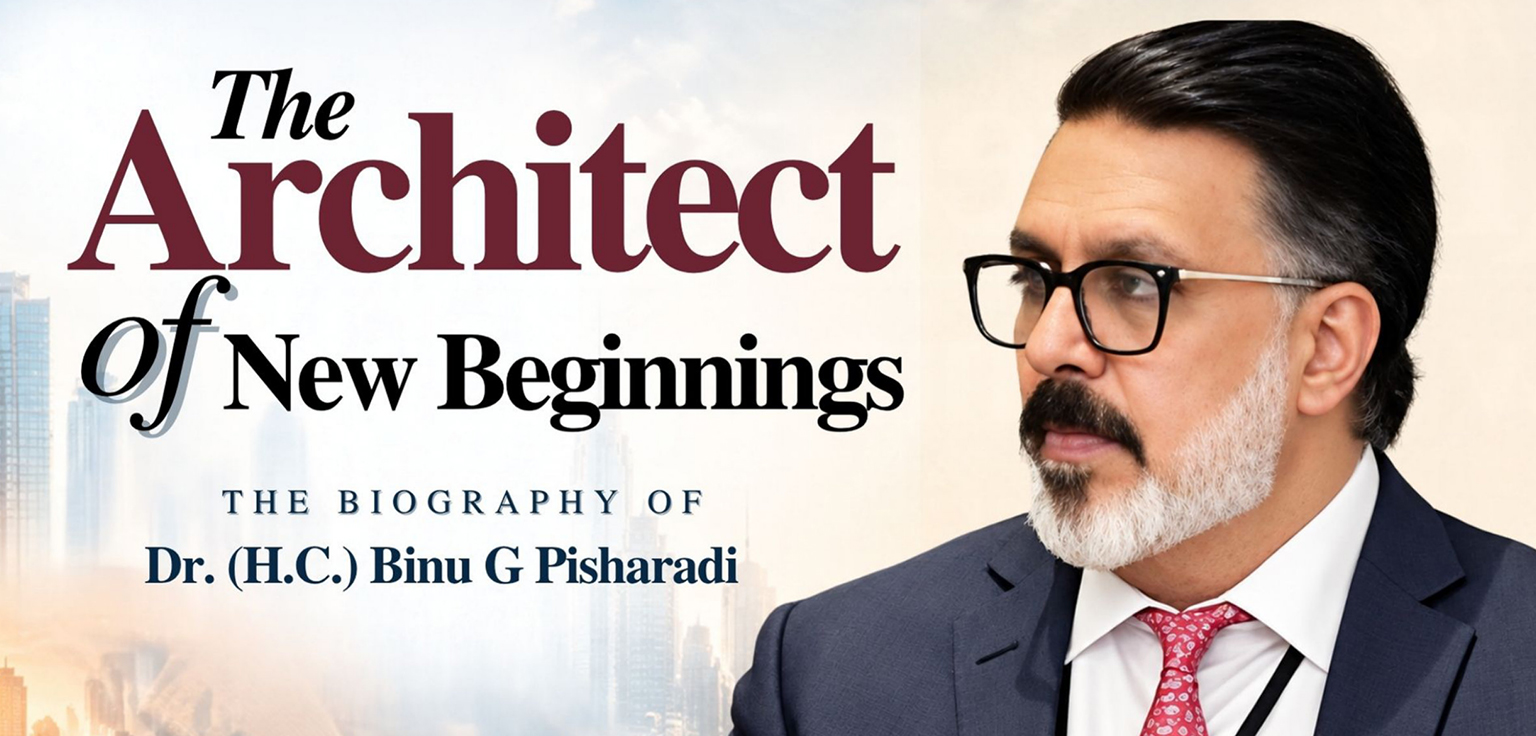
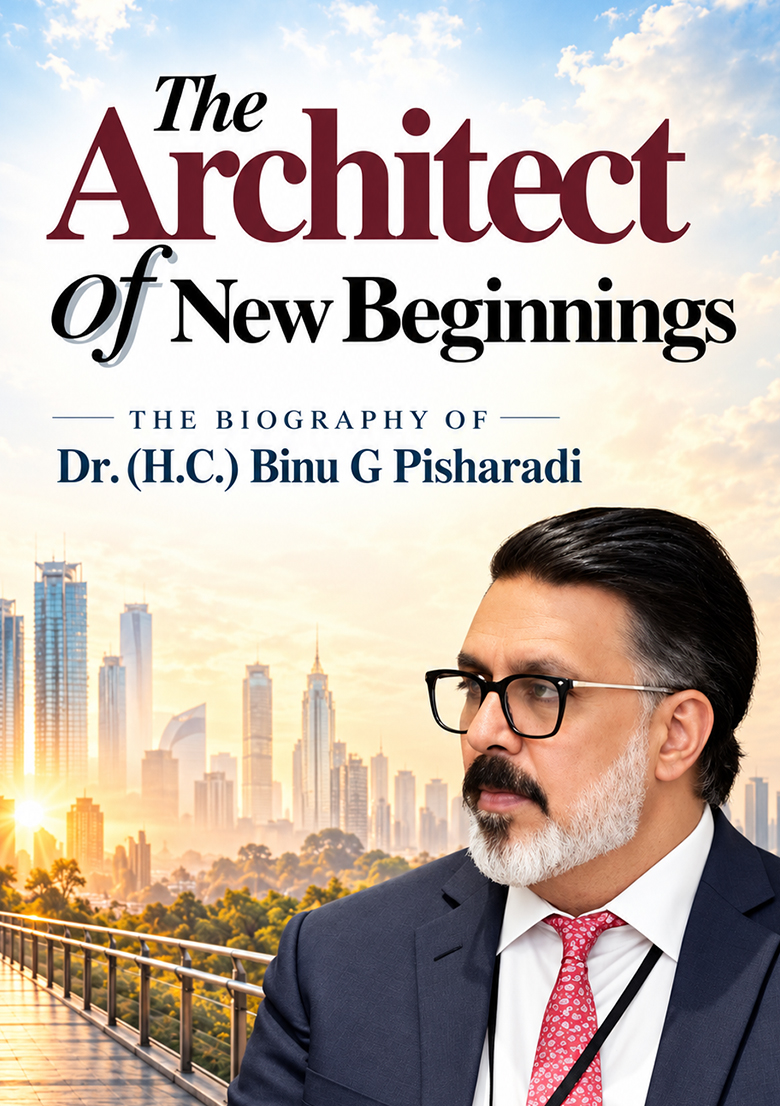
"Every beginning asks for something we don't yet have. The question is not whether we are ready but whether we are willing to become ready."
Introduction
The professional journey of Dr. Binu Gopalan Pisharadi Madasseri has unfolded across more than twenty-eight years of business development, strategic planning, investment promotion, commercial leadership, and healthcare sector development. What gives his story its distinct character is not simply the length of his career, but the way each stage widened the scale of responsibility placed before him. His path moved from sales and market development into government-linked investment promotion, strategic planning, and later into the specialised environment of healthcare commercial affairs. With each transition, he was required to understand unfamiliar markets, work with different kinds of stakeholders, and adapt without losing the practical clarity that shaped his professional outlook.
Born in Cochin on 12 January 1974, Dr. Binu grew up with an early understanding of responsibility, discipline, and family commitment. His childhood was shaped between Cochin and Hyderabad, where his father worked in a semi-central organisation. His journeys to Hyderabad during school vacations became some of his most cherished memories, not only because they took him into a different environment, but because they allowed him to spend extended time with his father. Those early experiences exposed him to new places, languages, and people, while also giving him the confidence to adjust beyond what was familiar.
His professional journey began in the real estate Sector, where he entered a structured corporate environment and learned the practical foundations of sales, client interaction, reporting systems, and organisational discipline. As a Sales Officer, he was expected to understand the needs of potential buyers and communicate the value of residential projects clearly. His capabilities were recognised early, and within a short period he was promoted to the company’s Dubai Office as Sales Manager for the Middle East. That move became one of the first significant turning points in his career because it placed him in a market he had never originally planned to enter.
Dubai tested him personally as much as professionally. He had to adjust to a faster environment, unfamiliar people, language barriers, and the emotional strain of being away from home. Yet the experience taught him something that would remain relevant throughout his career: opportunity does not always arrive in a form that feels comfortable. His decision to remain and continue working eventually opened the door to wider international exposure and responsibilities that could not have been imagined at the beginning of his journey.
His next major professional chapter unfolded with the Ras Al Khaimah Free Trade Zone Authority, where his role moved beyond selling and into investment attraction, market development, and institutional growth. He became involved in promoting the free zone to companies interested in entering the UAE, helping them understand the commercial advantages of establishing operations in a developing emirate. The assignment demanded more than presentation skills. It required market understanding, investor confidence, government coordination, and the ability to communicate long-term value.
One of the defining achievements of this period came when he was entrusted with establishing the organisation’s presence in Mumbai. For Dr. Binu, this was more than another posting. It was an expression of institutional trust. He was expected to represent a UAE government authority in India, create a functioning office, navigate regulatory requirements, develop business relationships, and build awareness across multiple markets. The assignment placed him at the centre of a larger responsibility, where strategy had to be converted into practical results.
"Long before a person learns to lead others, life quietly teaches him how to observe, adapt, value people, and carry responsibility."
Phase 1: Between Cochin and Hyderabad
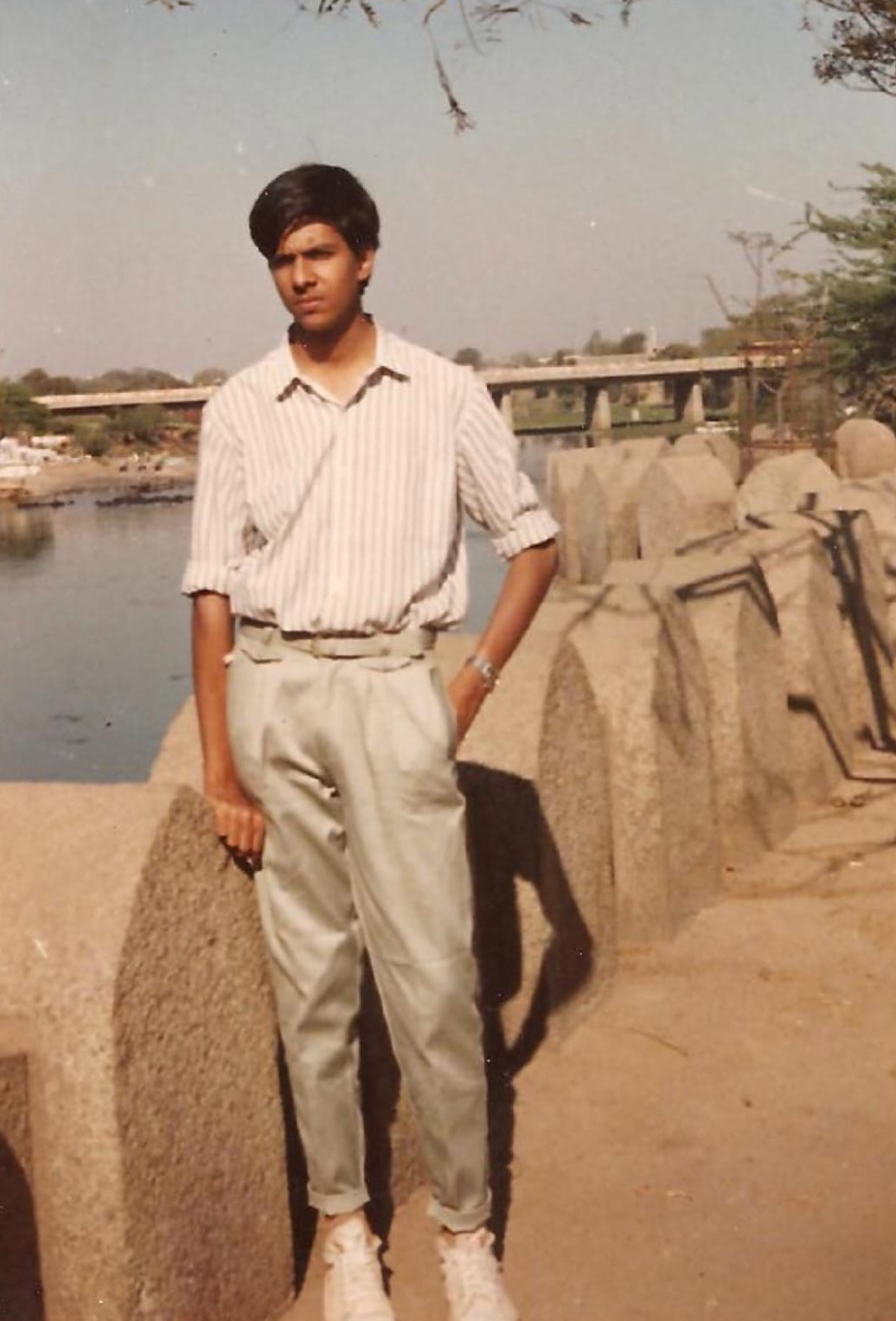
The earliest years of Dr. Binu Pisharadi were shaped not by one place alone, but by the emotional connection between two cities. Born in Cochin on 12 January 1974, he spent most of his childhood there with his mother and sister while his father worked in Hyderabad. That arrangement gave his early life a distinctive rhythm. Cochin was home, the place of school, family routines, and everyday familiarity. Hyderabad, by contrast, became associated with anticipation, discovery, and the precious time he could spend with his father.
His father, V. G. Pisharadi, worked in a semi-central organisation in Hyderabad and held a middle management position. Because his employment kept him away for much of the year, Dr. Binu’s childhood was predominantly spent under the care of his mother, M. N. Sarojini. Yet distance did not diminish the importance of his father’s presence. Instead, the periods when the family could be together became especially meaningful. School vacations were not simply breaks from classes. They were occasions Dr. Binu looked forward to because they meant travelling to Hyderabad and spending nearly two months with his father.
Those train journeys remain among the most cherished memories of his childhood. In an era when long-distance travel carried a sense of adventure that later generations might find difficult to imagine, leaving Kerala for Hyderabad felt significant. For a child growing up in Cochin, the journey itself opened a window into a larger world. The scenery changed, languages changed, and the social environment felt different. Hyderabad appeared almost metropolitan compared with what he was accustomed to at home.
The excitement did not end when the train arrived. During those weeks, he encountered a different terrain and began hearing and picking up unfamiliar languages, including Telugu. He met new people and formed friendships outside the circle he knew in Cochin. These were simple childhood experiences, yet they quietly required him to adjust. He learned that entering another environment did not have to mean withdrawing from it. A new place could be observed, understood, and gradually made familiar.
After approximately two months, he would return to Cochin and resume school. contrast between the two worlds became part of the enjoyment. Among his classmates, the journey itself carried an almost exotic quality. Some friends looked at him with a kind of innocent envy because he had travelled to College Hyderabad such a long distance by train. In the context of the 1980s, such travel was enough to make a schoolboy’s vacation sound unusually adventurous.
Behind these memorable journeys, however, was a family environment that was steadily forming his character. His father represented qualities that Dr. Binu would later recognise more clearly with age. He was straightforward, hardworking, responsible, and deeply committed to his family. He believed that belonging to a family created an obligation to care for it properly. Responsibility was not something to speak about occasionally. It had to be demonstrated through conduct.
Dr. Binu observed that his father provided for the family within his means. He was not a wealthy man, but he did not allow limited resources to become an excuse for avoiding responsibility. That example left a lasting impression. It taught his son that caring for a family involved understanding what people needed rather than waiting for them to repeatedly ask. Responsibility, in that sense, began with attentiveness.
"The first real test of ability often comes when someone is willing to trust you with more than the role you were originally given."
Phase 2 : From Sales Officer to Middle East Responsibility
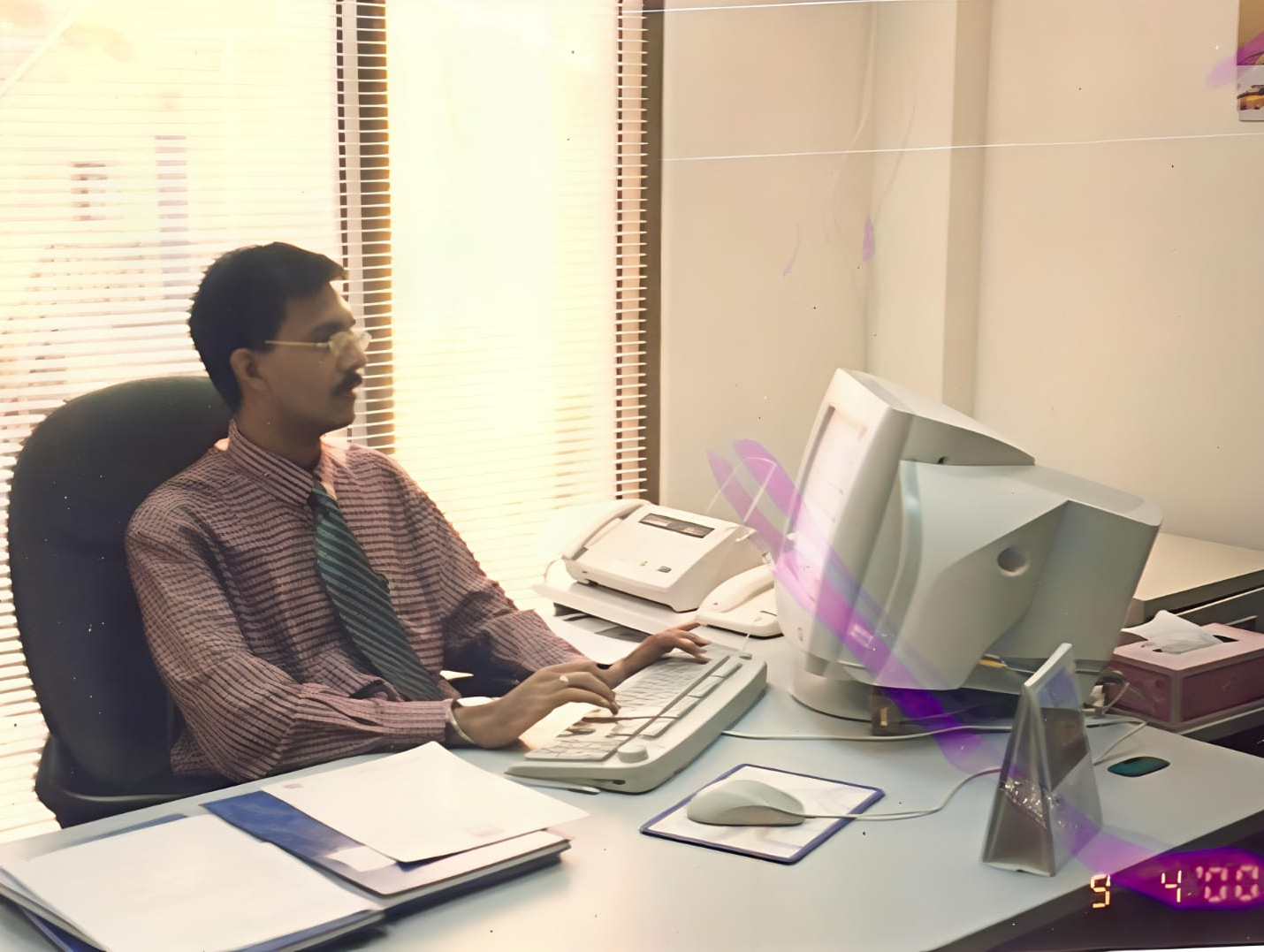
By the time Dr. Binu returned to Cochin, the years of school, movement between cities, and family influence had already given him a certain steadiness. What he still needed was a professional environment capable of testing those qualities. That opportunity came when he entered the real estate sector and began working in a company where systems, hierarchy, accountability, and performance were clearly defined.
Before joining the organisation that would mark the beginning of his recognised career, he had taken up a few small sales-related jobs. He did not consider those early roles important enough to include in his professional profile, but they formed part of the period in which he was learning how to engage with people, respond to expectations, and understand the practical nature of sales work.
In 1998, he joined Southern Investments, a reputed real estate company. For Dr. Binu, this was the first organisation that felt fully structured and systematic. Recruitment was formal. There was a proper human resources department, a reporting hierarchy, defined responsibilities, and an organised management system. It was a different professional experience from the smaller roles he had undertaken earlier.
That structure became important because it showed him how organisations actually function beyond the individual task assigned to an employee. Work was not simply about completing a sale. It was also about reporting correctly, understanding the chain of responsibility, meeting expectations, and operating within a larger system.
The company itself had a strong presence in the real estate market and was involved in developing multi-storey residential complexes, apartments, and high-rise buildings in Cochin. At the time, such projects represented a significant part of the city’s changing residential landscape. The organisation was Chennai-based and had established a reputation in the sector.
Dr. Binu joined as a Sales Officer. His responsibility was direct and practical. He had to meet prospective buyers, understand what they were looking for, and explain the advantages of the company’s projects and residential plans.
For someone at the beginning of his professional career, the role demanded more than confidence. Buyers were not simply purchasing a product that could be replaced easily. They were considering homes, apartments, and long-term investments. That meant the person representing the company had to communicate clearly and create enough confidence for the client to move forward.
"Sometimes the opportunity that changes a life first arrives as discomfort, uncertainty, and a strong desire to go back home."
Phase 3 : Dubai, Homesickness and the Letter That Changed His Direction
When Dr. Binu arrived in Dubai, the move represented far more than a professional transfer. Until then, his working life had developed within familiar surroundings and through an organisation whose systems he already understood. Dubai changed that immediately. The work itself was not entirely unknown, because he was still serving the same company, but the environment around the work was completely different. He was young, newly married, away from his family, and living in a city whose pace and scale were unlike anything he had previously experienced.
The professional responsibility was clear. He knew what the company expected from him and understood the broad nature of the role. What he had not anticipated was the emotional weight of being suddenly removed from the life to which he was accustomed. He had always been a family-oriented person. His normal rhythm had been simple: work, return home, remain close to his parents, and later share life with his wife. Dubai interrupted that rhythm. The distance from home was not only geographical. It created a feeling of isolation that he had never experienced before.
For a young man of around twenty-five or twenty-six, the contrast was sharp. He had come from Cochin into a city that moved at an entirely different speed. In his memory, everything about Dubai seemed fast. Cars moved fast, people walked fast, conversations moved quickly, and daily life appeared to run at a pace that demanded immediate adjustment. Even cities such as Mumbai or Delhi, which he already considered fast-paced, seemed different when compared with the intensity he encountered in Dubai.
There were also practical barriers. He did not know people there. He had no established personal network to rely upon. Language differences added another layer to the adjustment. The company in India supported him from a distance, but the daily responsibility rested largely on his own initiative. If he did not move forward, make decisions, meet people, and create opportunities, nothing would happen automatically.
That realisation was unsettling.
For the first time, Dr. Binu found himself asking a question that was more personal than professional: what was he doing there alone?
The thought did not disappear quickly. Homesickness became a real struggle. It was the first time he fully understood what that emotion could mean. Being away from home, particularly so after marriage, made the transition more difficult. His wife was in India, his familiar support system was distant, and the new environment offered little comfort during the early weeks.
Note of Thanks
At the close of this biography, Dr. Binu offers his sincere gratitude to the people whose influence has remained woven into both his personal life and professional journey. His first thanks belong to his parents, Late V.G Pisharadi and M.N Sarojini, whose values gave him the earliest understanding of responsibility, hard work, straightforwardness, care, and commitment to family. Their example continued to shape the way he approached both people and responsibility long after childhood had passed.
He also expresses deep appreciation for his wife, Sandhya Binu, and his children, whose presence has given personal meaning to the years of professional movement and growth. Their support has remained an important source of steadiness across changing roles, cities, and responsibilities.
Dr. Binu extends special gratitude to the mentors and leaders who influenced different dimensions Of his professional development. Jacob Chandi helped shape his understanding of leadership and responsibility. Ashok Verma strengthened his thinking around management, decision making, and crisis handling. Dr. Abdelaziz Saeed continues to influence him through humility, humane conduct, leadership, and quiet charitable work.
He is equally thankful for the organisations and teams that trusted him with meaningful responsibilities, from his early corporate years to Ras A1 Khaimah Free Trade Zone Authority and Sharjah Healthcare City Authority. Each opportunity gave him something to learn, build, or contribute.
This note of thanks is, therefore, not a conclusion, but an acknowledgement. Dr. Binu’s journey reflects the contribution of people who guided, trusted, challenged, and stood beside him, and he carries that gratitude forward with the same seriousness that he brings to responsibility itself.
thanks,
– Dr. (H.C.) Binu G Pisharadi

AIMLAY is a leading global education platform empowering ACADEMIC and EXPERIENTIAL learners, uniquely focused on recognizing knowledge gained through experience and building a diversified community of doctorates and aspiring researchers.