“Hard work may not guarantee success, but it gives opportunity a greater chance to find us.
Introduction
Some people arrive at their chosen profession through a carefully considered plan. Others discover their direction while making decisions with whatever knowledge and opportunities are available to them. Dr. Bhagwan Singh Khanka belongs, in many ways, to the latter group. His life has been shaped by academic interest, practical circumstances, unexpected opportunities, and a willingness to learn when the answers were not immediately clear.
He did not grow up surrounded by engineers or university graduates. During his school years, even understanding the different professional courses available after secondary education required effort. The possibility of studying abroad seemed particularly distant. Yet he eventually earned an engineering degree in India, completed postgraduate studies in the United States, and established a career spanning more than three decades in wireless telecommunications.
There is a particular quality to the way he describes these experiences. He does not present every decision as an example of exceptional foresight. He readily acknowledges the uncertainty that accompanied important moments in his life. His admission to engineering, for instance, involved circumstances that he could scarcely have anticipated. The profession that became central to his identity was not one he had fully understood when he first applied to study it.
That willingness to recognise the role of circumstance is closely connected to his understanding of success. He does not regard achievement as something entirely within an individual’s control. Preparation, opportunity, timing, and effort all have a part to play. He believes that a person who works consistently improves the probability of achieving a desired outcome, even when success cannot be guaranteed. Such thinking is especially significant in an engineering profession, where problems seldom disappear simply because someone wishes them away. Networks must perform under changing conditions. Technical decisions must account for practical limitations. An apparently successful solution may later reveal weaknesses that require further attention.
Over the course of his career, he has encountered these realities in different organisations, technologies, and geographical settings. His professional experience extends across successive generations of wireless communication, from earlier cellular systems to contemporary 5G networks. He has worked in RF design, optimisation, network performance, operations, and leadership, developing a broad understanding of how telecommunications systems are planned, deployed, maintained, and improved. His professional record includes assignments with organisations such as Reliance, Marconi Wireless, Tata Teleservices, Sprint Nextel, AT&T, Award Solutions, UNLV, and T-Mobile. Each stage brought different responsibilities and opportunities to develop his expertise. The nature of the work changed over time, moving from individual technical assignments toward managing teams, addressing complex operational concerns, and making decisions affecting large network environments.
Innovation became another important part of his career. With 125 issued United States patents recorded in his September 2026 professional profile, he has established a substantial body of patented work. His inventions reflect a continuing interest in finding better ways to solve technical problems rather than accepting existing methods as the only available options. Yet an account limited to telecommunications would overlook several important aspects of his personality. He has maintained a strong connection with sports, both through his own participation and through his involvement in his children’s activities. Basketball, American football, golf, and pickleball have all occupied places in his life. His appreciation of sport extends beyond physical activity. He sees value in the experience of losing, recovering, cooperating with others, and fulfilling responsibilities when circumstances become demanding.
"Hard work is a substitute for everything else."
Phase 1: The Wealth His Family Could Not Measure in Money
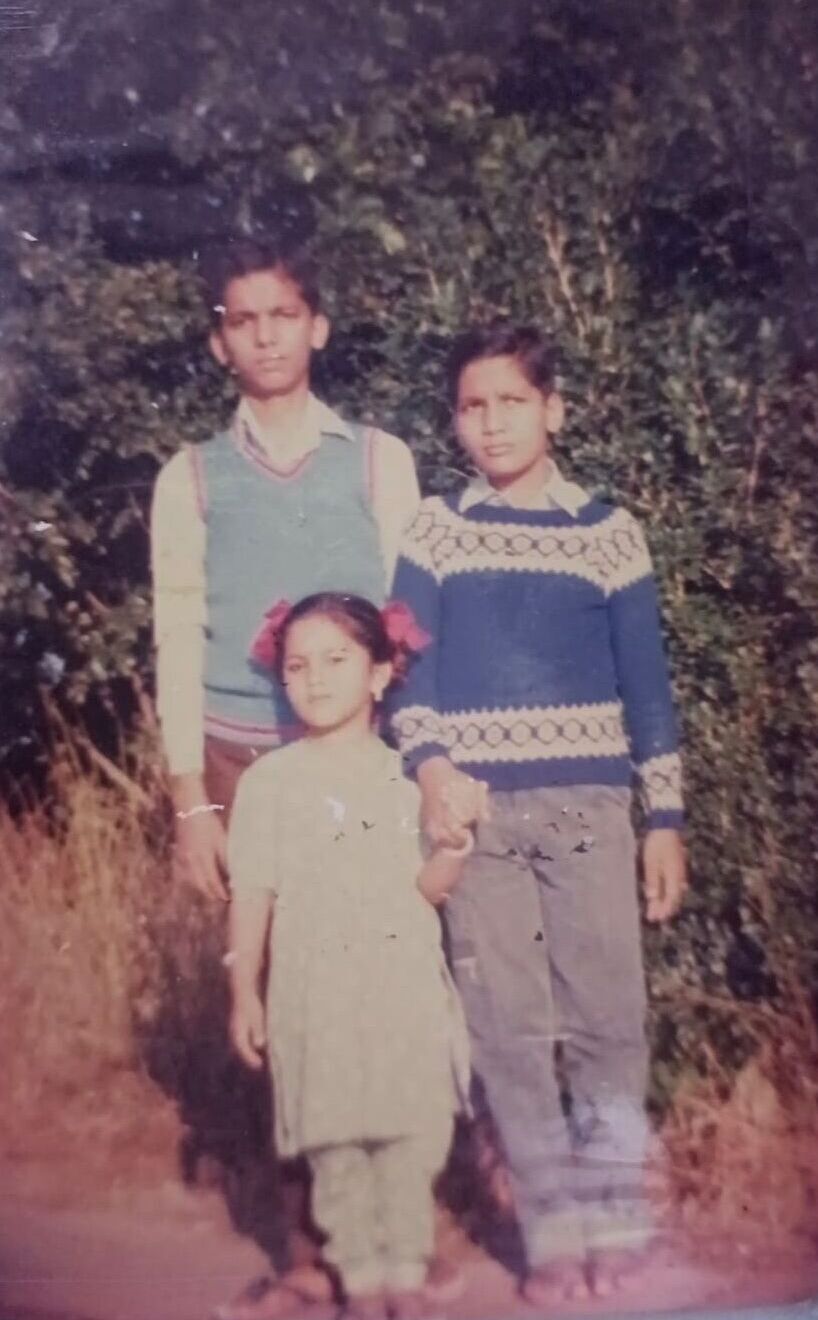
Thane, a city in the Indian state of Maharashtra, was where the life of Dr. Bhagwan Singh Khanka began. Although he was born and raised there, his family’s ancestral roots lay in Uttarakhand, a connection that remained part of his cultural identity. His childhood unfolded in a household where financial resources were limited. The family could not depend on wealth, professional influence, or the advantages that often make educational and career decisions easier. Nevertheless, his parents worked to ensure that their children received opportunities to study and build independent futures.
His father, Narayan Singh, came from a military background. Service in the armed forces was familiar within the wider family. His grandfather, uncles, and other relatives had also served in the military, making the profession an established part of the family’s history. After his military service, his father worked at Voltas, initially as a watchman and later as a welder. These occupations required regular work and provided for the household, although they did not place the family among the financially comfortable.
His mother, Revati Devi, shared the responsibilities of raising their three children. Dr. Bhagwan Singh Khanka was the eldest, followed by a brother three years younger and a sister ten years younger. Being the eldest placed him in a particular position within the family. He was the first child to encounter important educational decisions and the first to face questions about what might follow school. There was no older sibling whose experience he could draw upon when those decisions arose. Despite the family’s financial circumstances, he does not describe his childhood as an unhappy period.
He recognises that, judged by the material standards of later life, the family experienced difficulties. Yet his memories are also marked by an appreciation of what his parents provided. Both parents were present, the children had sufficient food, and education was never treated as something that could be neglected. These were meaningful forms of security. One of his parents’ important decisions was to send all three children to English medium schools. In the community where they lived, this was not an insignificant undertaking. Such schooling offered educational opportunities that were not necessarily common among the families around them. His parents had not followed the university path they wanted their children to pursue themselves. Their commitment to schooling therefore came from a belief in its importance rather than personal experience of higher education.
His father also had a direct way of explaining the importance of effort. He reminded his sons that they did not have a wealthy father, a politically influential father, or a famous father. These were advantages that other people might possess, but their absence did not mean that the children had no means of progressing. Hard work, he believed, could compensate for much of what the family lacked. The message remained with Dr. Bhagwan Singh Khanka long after childhood. It did not promise that life would be fair or that every effort would immediately produce a reward. Instead, it directed attention toward something an individual could influence through personal conduct.
His father also emphasised the importance of behaving properly toward others. The family valued doing good and believed that good conduct mattered. Alongside this principle was a firm attitude toward those who deliberately caused harm. These ideas formed part of the moral guidance he received while growing up. Religion was another influence within the household. The family followed Hindu traditions, but his parents did not restrict their children’s understanding of religion to their own practices. Their upbringing included contact with people from different religious communities. They visited churches, mosques, and gurdwaras. Through these experiences, they became familiar with aspects of Christianity, Islam, and Sikhism.
“I didn’t know what it takes to be an engineer, to be honest."
Phase 2 : A Curious Mind Without a Roadmap
Long before engineering became his profession, Dr. Bhagwan Singh Khanka had developed a natural interest in subjects that required logical thinking. Mathematics and science appealed to him during his school years, and physics gradually became the subject he enjoyed most. He considered himself academically inclined rather than particularly athletic during childhood. His school performance was consistently above average, giving him the academic standing needed to continue into higher secondary education.
Yet good examination results did not automatically provide an understanding of what to do next. At that time, no one in his immediate family had completed a university degree. He had no older siblings who could explain the different courses available after school, and the community around him offered few examples of people who had followed professional academic careers. He had heard of engineers, but he did not know precisely what becoming one involved. After completing his secondary school examination with marks of approximately 80 per cent, he entered the science stream. His decision was influenced by his academic performance and his existing interest in scientific subjects.
It was during his first year of junior college that he began to understand the major professional choices available to science students. Engineering and medicine emerged as the two principal directions he could consider. Engineering appealed to him more strongly. His performance in the twelfth-standard examination helped make that possibility realistic. He obtained 93 per cent in Physics, Chemistry, and Mathematics, placing him in a favourable position for engineering admission. The next challenge was understanding the admission process itself. During the period when students were required to submit their engineering preferences, Mumbai experienced heavy rainfall and flooding. Railway services were disrupted, and travelling to the admission centre became difficult. The forms had to be submitted at Veermata Jijabai Technological Institute, then known as Victoria Jubilee Technical Institute. A friend whose father owned a car helped him reach the admission centre despite the disruption. The journey itself was only one part of the difficulty. He also had to select engineering branches and institutions without a clear understanding of their differences.
Electrical, civil, and mechanical engineering were among the familiar names. Other branches, including electronics and instrumentation, were less well understood by students who lacked professional guidance. Rather than make an independently informed selection, he followed the preferences entered by his friend. It was a practical decision under uncertain circumstances, and he has never attempted to present it as anything more deliberate than it was. Their examination results were close, but Dr. Bhagwan Singh Khanka scored approximately one percentage point higher. That difference gave him a better position in the admission ranking. When his turn arrived during the first admission round, he learned that a place was available in Instrumentation Engineering at Nanded. There was one problem. He had not included Nanded among his preferences. He did not know where the city was located and had no personal familiarity with the institution. Nevertheless, the available place represented an opportunity to study engineering. He asked whether he could add the option to his form at that moment. The officials permitted him to do so. He wrote down Nanded and Instrumentation Engineering, and the decision resulted in his admission. It was an important turning point, made without the detailed research or preparation that students today might associate with choosing a university.
When he returned home, he was pleased that he would become an engineer. His father was pleased as well. Unlike his son, he knew something about Nanded because of its importance in the Sikh religious tradition. His military background had also given him a wider familiarity with places beyond their immediate surroundings. He understood that the city was a considerable distance from home. At that time, information was not available through mobile phones, online maps, or internet searches. Dr. Bhagwan Singh Khanka could not simply examine the campus, compare travel routes, or learn about the surrounding area through a computer.
The uncertainty was therefore genuine. He was preparing to leave home for a place he barely knew, to study a discipline he had only recently begun to understand. Yet the admission offered something that had previously seemed distant: the opportunity to receive a professional engineering education. He accepted it. The experience reveals an important aspect of his early development. He did not always have complete information before making decisions, but he was willing to act when a worthwhile opportunity became available. His choice also demonstrates how small differences in circumstances can influence the direction of a life.
“When you are young, you want to change the world.”
Phase 3 : Discovering His Abilities Beyond the Classroom
Arriving in Nanded marked the beginning of a different stage in Dr. Bhagwan Singh Khanka’s life. He was no longer studying within the familiar surroundings of his childhood. Engineering college placed him among students with different backgrounds, interests, and expectations for their futures. He pursued his undergraduate education in Instrumentation Engineering, a field that required the application of scientific and mathematical principles to technical systems.
His interest in physics provided a useful foundation for the course. However, engineering demanded more than an appreciation of theoretical subjects. Students had to understand how principles could be applied, how technical systems behaved, and how problems could be approached through practical work. During these years, he gradually became more familiar with the profession that he had entered without a detailed understanding of its different branches. College also exposed him to students who were thinking about opportunities beyond India. Some of his friends came from financially comfortable families and were preparing for examinations such as the GRE and TOEFL, with the intention of pursuing further education in the United States.
Their plans introduced him to possibilities that had not previously been part of his own educational expectations. At that stage, however, his circumstances were different. The cost of international examinations and overseas study was a significant consideration. He could not simply assume that pursuing a degree abroad would be financially possible. He therefore concentrated on the education and opportunities available to him. His undergraduate years included involvement in technical projects and innovation competitions. These activities gave him opportunities to work with engineering concepts outside ordinary classroom examinations.
His academic records include recognition for innovation-related participation and prizes, including first, second, and third-place achievements. The supporting certificates document these distinctions, while his experiences demonstrate an early willingness to participate in technical problem-solving activities. One of the projects he discussed involved the development of a graphics editor. Such work required students to move beyond reading about technical ideas and attempt to make them function in practice.
The value of these activities was not limited to the awards themselves. They provided experience in developing solutions, confronting technical limitations, and presenting completed work. This practical exposure became an important part of his engineering education. His interests during college were not confined to technical subjects. Although he had not considered himself a particularly athletic child, he became involved in basketball and swimming and participated as a member of his college team.
The sport introduced him to an activity that would remain important in his life long after graduation. Basketball required regular practice, cooperation with teammates, and the ability to make decisions during changing situations. It also brought experiences of both winning and losing. His later appreciation of sport would be shaped by these broader lessons rather than by individual victories alone. At the same time, another possible career continued to attract his attention. Military service had been familiar throughout his childhood, and he had seriously considered entering the Indian Armed Forces. His interest was not merely theoretical. He had undertaken military selection processes and achieved a national ranking in an earlier selection experience, according to his recollection. His parents, however, did not want both their sons to pursue military careers. His younger brother was physically stronger and more naturally suited, in their view, to the demands of army service. They preferred that the younger son follow that direction. Dr. Bhagwan Singh Khanka accepted that his own physical abilities were not necessarily the strongest match for military life. Nevertheless, the possibility continued to interest him. During the final year of his engineering studies, he again pursued selection through the Short Service Commission route. He travelled to Dehradun to compete in the short service selection process.
Note of Thanks
Dr. Bhagwan Singh Khanka acknowledges with sincere appreciation the people whose presence, guidance, and cooperation have contributed to his personal and professional life. His gratitude begins with the teachers and educators who helped develop his interest in learning. Their instruction provided an academic foundation that remained valuable long after he completed his formal education. He particularly appreciates the teachers who encouraged understanding rather than memorisation and helped him recognise the satisfaction of solving difficult problems. He also values the opportunities provided by the educational institutions where he studied. Each stage of his education introduced him to new subjects, different people, and possibilities that had previously seemed distant. Throughout his professional career, he has worked alongside engineers, managers, technical specialists, and colleagues from numerous organisations. Their collective efforts have been an important part of the projects and responsibilities he has undertaken.
He recognises that complex engineering work depends on cooperation. Networks are designed, deployed, and maintained through the contributions of many people, each bringing particular knowledge and experience. His appreciation extends to the colleagues and team members with whom he has worked on challenging assignments, technical improvements, and innovative solutions. He also acknowledges the students and academic colleagues who have made his involvement in university education personally rewarding. Their questions, enthusiasm, and willingness to learn continue to make teaching an activity he enjoys.
Above all, he values the relationships that have given his life meaning beyond professional accomplishments. The encouragement he received, the knowledge others shared, and the opportunities to work with people from different backgrounds have all contributed to his experiences. He regards these contributions with appreciation, recognising that a person’s achievements are never entirely separate from the people encountered along the way.
thanks,
– Dr. (H.C.) Bhagwan Singh Khanka

AIMLAY is a leading global education platform empowering ACADEMIC and EXPERIENTIAL learners, uniquely focused on recognizing knowledge gained through experience and building a diversified community of doctorates and aspiring researchers.