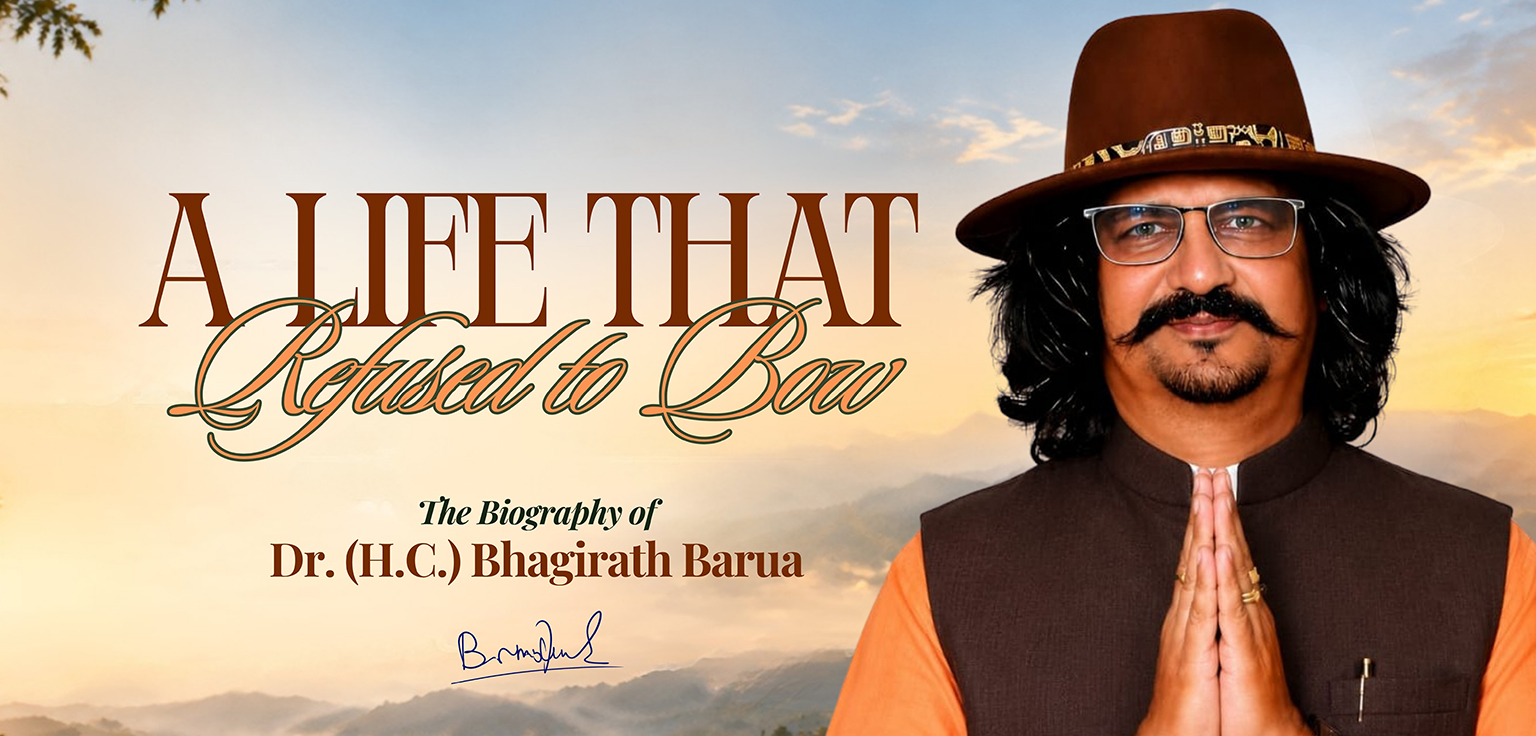
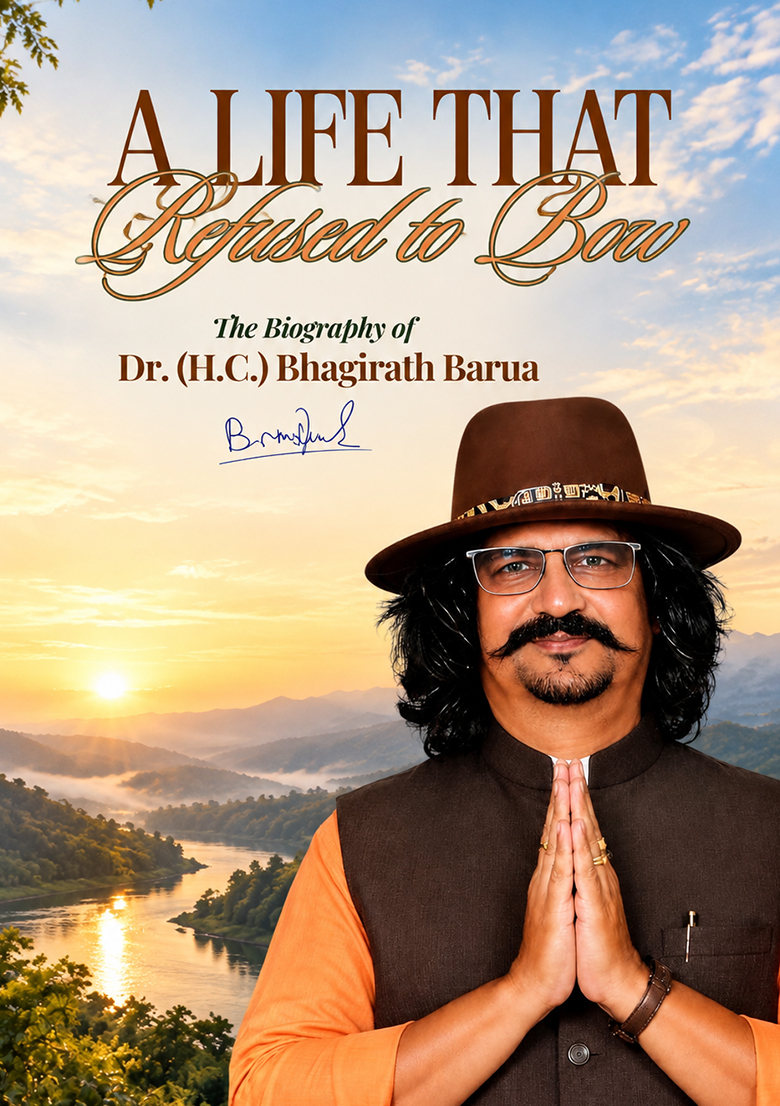
“He rose. He remembered. He served.”
Introduction
There are achievements that can be measured through qualifications, professional designations and completed projects. Then there are achievements that reveal themselves more quietly, through the values a person protects after enduring circumstances that could have changed him for the worse. The story of Dr. Bhagirath Barua belongs to both.
Born on 12 July 1964 in Barua, Hamirpur, Uttar Pradesh, he entered a world where opportunity was limited and dignity could not always be taken for granted. Poverty shaped the conditions of his childhood, while social discrimination added wounds that went beyond material hardship. Yet neither deprivation nor humiliation persuaded him to accept that his future had already been decided. Education became the means through which he could move forward, not by denying his beginnings, but by carrying their lessons with him.
His progress from a village school to engineering education in Bhopal demanded patience, discipline and an unusual resistance to discouragement. Still, he continued. Each classroom took him further from the restrictions that had surrounded his childhood, while every hardship strengthened his determination to become worthy of the hopes placed in him.
That determination eventually developed into a distinguished engineering career. His professional path led him through public service, hospital maintenance, irrigation administration and responsibilities that affected communities and farmers across Uttar Pradesh. By the time he retired in July 2024, he had carried the charge of seven divisions and contributed to the completion of fourteen unfinished dam projects in Lalitpur. His career reflected technical competence, but its deeper significance lay in the way he understood responsibility. A position, in his view, mattered only when it enabled useful work.
Beyond his official duties, another identity steadily took shape. Dr. Bhagirath became someone people approached when they needed medical assistance, educational support, encouragement or practical help. The suffering he had known did not become a reason to withdraw from society. It became the source of his sensitivity towards those standing in difficult circumstances. His assistance was never meant to depend upon caste, religion or social position. Having experienced exclusion himself, he chose inclusion as a personal principle.
His story also belongs to those who stood quietly behind his progress. His wife and in-laws supported his family during demanding years, while teachers, friends and well-wishers offered encouragement at moments when even modest help carried immense value. He remembered such kindnesses and often returned them through the opportunities he created for others.
Now, with active political aspirations and a desire to expand the reach of his service, Dr. Bhagirath looks towards a purpose beyond retirement. His account is not simply about rising from poverty to professional authority. It is about refusing to let hardship dictate one’s conduct. It asks readers to consider what becomes possible when ambition is joined with humility, memory with gratitude and personal success with responsibility towards others.
“He inherited no wealth from his beginnings, but he received something more enduring: an honest name, the courage to work and the responsibility to rise without forgetting others.”
Phase 1: Raised Among Scarcity, Guided by Honest Hands
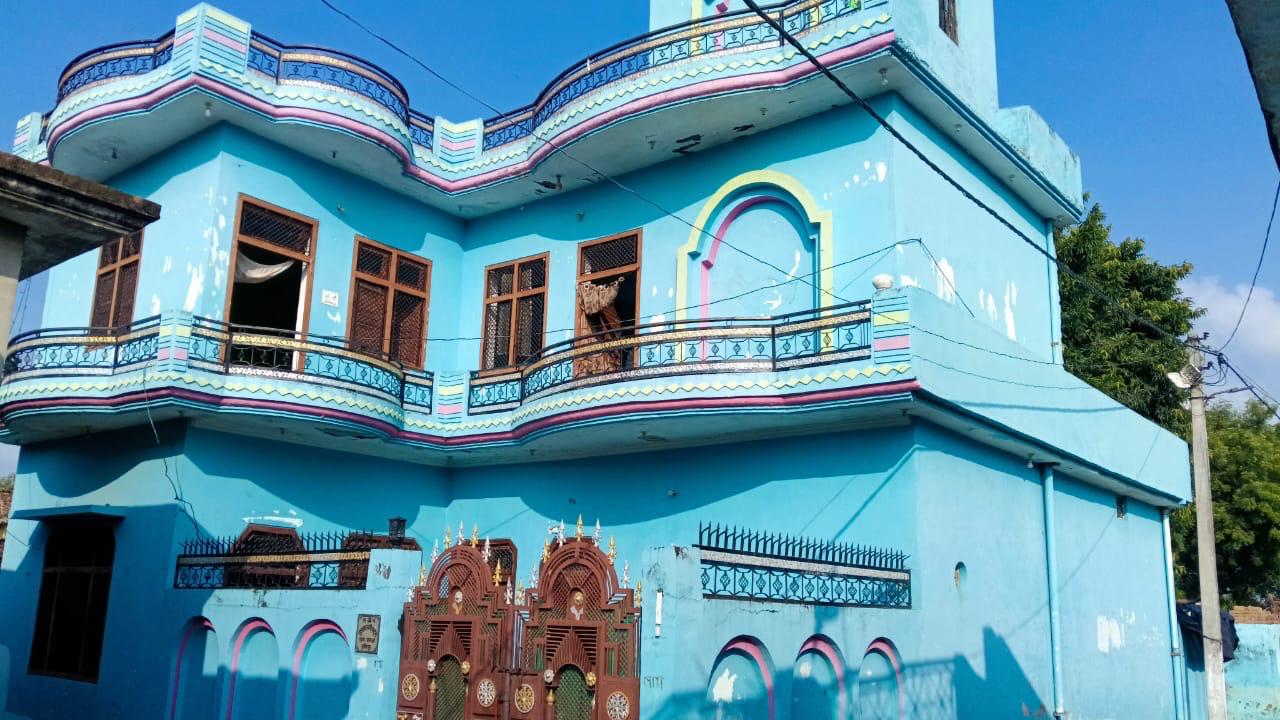
When Dr. Bhagirath Barua speaks of where his story began, he does not separate his birth from the circumstances surrounding it. His parents had little material security, and every necessity depended upon their willingness to work. There was no inherited comfort waiting for their children and no assurance that tomorrow would be easier than the day before. What the family possessed was earned through daily effort.
His father, Sri Summi, made shoes for a living. The occupation may have appeared modest to others, but for the family it was the means through which food could be secured and hope could be protected. His hands carried the responsibility of providing for his children despite the narrow possibilities available to him. The income was limited, yet he continued because stopping was never an option when a family depended upon his labour.
Dr. Bhagirath’s mother also worked to support the household. She went into other people’s homes and performed the work available to her. Her contribution came through physical effort, patience and a readiness to do what was necessary for her children. Between a father who made shoes and a mother who worked in other households, the family survived through labour that required humility and endurance. Their circumstances did not allow them to choose work according to prestige. They accepted honest work because it kept the family moving.
There were six children in the household, four brothers and two sisters, with Dr. Bhagirath as the eldest. That position carried meaning beyond age. As the firstborn, he saw the strain under which his parents lived and gradually understood that his choices could not remain concerned with himself alone. His progress would eventually carry implications for the younger members of the family as well. The sense of responsibility that later became visible in his relationships with his siblings had its roots in these early family conditions.
Poverty formed the background of his childhood, but he never regarded it as permission to surrender his self respect. His parents could not remove every hardship from his path, yet their conduct gave him an example of how hardship could be faced. They worked rather than complained, accepted responsibility rather than avoided it and continued despite the absence of certainty. Long before he entered professional service, he had already witnessed the discipline required to sustain a household with very little.
Among the qualities Dr. Bhagirath associates most strongly with his father is honesty. Sri Summi was, in his son’s memory, an exceptionally honest man. His character was not measured by the status of his occupation but by the integrity with which he fulfilled it. Dr. Bhagirath came to understand that the value of work did not depend upon how society ranked it. It depended upon whether the person performing it remained sincere, responsible and truthful.
“When he could not arrive in the right uniform, he still arrived with the right purpose: to learn, endure and refuse to see himself as less.”
Phase 2 : The Student Poverty Could Not Silence
Dr. Bhagirath’s earliest classroom stood within his own village of Barua, where he completed his primary education. School introduced him to a world in which thought could travel farther than circumstances. At home, almost every necessity depended upon careful effort. In the classroom, however, he discovered that the ability to understand a lesson did not depend upon the clothes he wore or the possessions his family could afford.
After completing primary school, he continued his education at Shri Gandhi Inter College, Gohand, Uttar Pradesh where he studied from the sixth to the eighth standard. Reaching school required commitment. The distance from his village was several kilometres, and the journey had to be managed without the conveniences available to many other students. He did not have access to a bicycle during childhood and therefore never learned to ride one. Walking became a regular part of his education.
The distance was only one difficulty. A prescribed school uniform existed, but purchasing and maintaining it placed an additional burden on a household already struggling to meet essential needs. At the time, the uniform consisted of a blue or khaki half pant with a white shirt. His father somehow managed to have one set made for him. For the young student, that uniform was not simply clothing. It allowed him to stand among his classmates without immediately revealing how difficult it had been for his family to provide it.
When the shirt eventually tore, replacing it was beyond the family’s means. His father found an old kurta belonging to someone else and had it altered so that his son could continue attending school. Dr. Bhagirath spent the rest of the year wearing that kurta with his half pant. The combination did not match the required uniform, but it was all that was available to him.
The clothes served their practical purpose, yet they also exposed him to situations no child should have to manage. Whenever an inspector was expected to visit the school, his teachers worried that his appearance would not satisfy the prescribed standard. They would sometimes tell him not to attend for a day or two because he did not possess the correct uniform. He was not being kept away for poor conduct or lack of ability. He was asked to remain absent because poverty was visible in what he wore.
Those missing days carried a pain that went deeper than losing classroom time. He wanted to study and had done nothing to disqualify himself from being present. Still, a condition beyond his control temporarily placed him outside the school. The very institution meant to educate him sometimes required him to hide the evidence of his family’s hardship.
“The opportunity reached him through merit, but it was endurance that kept him moving after the door had opened.”
Phase 3 : Merit Carried Him Beyond the Village
For Dr. Bhagirath, education began as a possibility within difficult circumstances. By the time he had completed his early schooling, he had already learned that ability alone did not remove practical barriers. A capable student could still be limited by distance, clothing and the financial condition of his family. The next stage of his education would therefore require more than intelligence. It would require access to an opportunity that his family could not have created through money.
That opportunity came through an initiative of the Government of Uttar Pradesh for talented students from rural backgrounds. Under the Integrated Scholarship Scheme, a competitive examination was conducted to identify promising pupils from areas such as Bundelkhand. Those who performed successfully could receive admission to a government inter college on the basis of merit. For students whose families could not independently arrange stronger educational opportunities, the examination offered a meaningful route forward.
Dr. Bhagirath appeared for the competitive examination and earned selection. The result carried significance beyond admission to another school. His performance confirmed that the promise recognised by his earlier teachers could withstand formal competition. The circumstances surrounding him might have limited his resources, but they had not limited his ability to qualify when assessed alongside other talented students.
Following his selection, he was admitted to Government Inter College, Orai, commonly known as GIC Orai. Leaving the familiar setting of village schooling marked an important transition. He was entering an institution where academic expectations were greater and where he would continue from the ninth standard through Intermediate. The scholarship had created access, but the responsibility of making use of it now rested with him.
The transition also exposed the differences between his circumstances and those of other students more sharply. When he arrived wearing khaki trousers and a white kurta, some students mocked his appearance. His clothes reflected what his family could afford, not the seriousness with which he approached his studies. Yet for a young student entering a new environment, the laughter was painful. He remembered feeling deeply hurt and close to tears.
The moment could have made him retreat into silence or question whether he belonged there. Instead, his academic ability gradually changed how he was seen. His teachers recognised that behind the modest clothing stood an intelligent and determined student. Their affection and encouragement helped restore the confidence that ridicule had threatened. One teacher even arranged a pair of trousers and a shirt for him, providing practical assistance at a time when it carried genuine importance.
Note of Thanks
Dr. Bhagirath offers his heartfelt gratitude to his mother, whose hard work and perseverance strengthened the family during years of limited means. Her contribution remained an enduring part of the foundation upon which he built his future.
His deepest appreciation belongs to his wife, Manorama Barua, whose support allowed him to fulfil responsibilities extending far beyond their home. Her humility, generosity and willingness to assist others gave strength to his commitment to social service.
He also thanks his son, Prabhat Verma, his daughter-in l aw, Seema Singh, and his daughters, Prashanta and Ruchi, whose respectful conduct and freedom from pride have remained a source of happiness and fulfilment.
Dr. Bhagirath remembers his childhood teacher, Tularam Rajput, with sincere gratitude. The encouragement he received during his formative years helped him recognise that difficult circumstances did not have to limit his ability. He also values the friendship of Jitendra Mishra and the place that sincere companionship has held throughout his life.
Within his professional career, he extends his respect and thanks to R. P. Singh, D. K. Mishra and Virpal Rajput. Their presence as Chief Engineers formed an important part of the professional environment in which he carried significant responsibilities and developed through years of public service.
His gratitude also reaches his brothers, sisters, relatives, colleagues, teachers, friends and every person who offered guidance, shelter, encouragement or practical assistance. To everyone who shared a part of his path, he offers lasting appreciation. Their support helped him continue, serve and remain conscious that progress becomes worthwhile when it is accompanied by gratitude.
thanks,
– Dr. (H.C.) Bhagirath Barua