“Success is not the key to happiness. Happiness is the key to success. If you love what you are doing, you will be successful.”
Introduction
The story of Dr Barry Antonio Regis is one of resilience, determination, and the relentless pursuit of success against all odds. Dr Regis was raised in a household that valued sacrifice, hard work, and discipline. He was born in a small, rural village in southwest Trinidad. Wilmuth Regis and Stephanie Regis, his parents, taught him that regardless of the situation, hard work and determination could lead to success. His character was moulded by their influence, which gave him a strong sense of accountability, humility, and a love of learning.
From a young age, Dr Regis was thrust into a life of responsibility. Being the only son in a family of six children, he quickly learned the importance of hard work and contributing to the household. At the age of 12, he began managing a small duck farm, where he learned the value of not just working but working with purpose. This hands-on experience taught him valuable skills; from animal husbandry to the art of slaughtering, preparing, and selling ducks. His mother played a pivotal role in this process, teaching him practical skills that would serve him throughout his life. However, this procedure was just the beginning of his journey into hard work and self-reliance.
As Dr Regis entered his teenage years, his mother insisted that he continue to build upon his skills. During school vacations, while other children played, he learned mechanics in a garage in the city, working on cars and trucks. His future path was shaped by this mechanical work exposure, laying the groundwork for his professional career and entrepreneurial endeavors. He was already gaining practical experience at the age of 13 or 14 in fields that many teenagers would never even consider. Dr Regis didn’t have the luxury of a traditional childhood. He spent his time working and learning, which he later realized was a key factor in his success.
Upon completing secondary school, Dr Regis faced a world that demanded more from him. With economic hardship and the need to support his family, he took up a job as a janitor in a local drink factory at the age of 16 or 17. Though it was a menial job, Dr Regis approached it with the mindset of being the best janitor possible, focusing on the task at hand, and gaining invaluable work experience. His attitude was one of dedication to excellence, no matter the role. In hindsight, he attributes this period to shaping his work ethic, as he learned the value of doing even the simplest tasks with dedication and professionalism.
“Tough times don’t last, but tough people do.”
Phase 1: Early Life and Background

Dr Barry Antonio Regis was born into a world shaped by hardship, sacrifice, and the unwavering determination of his parents, Wilmuth and Stephanie Regis. Growing up in a small village in southwestern Trinidad, his early years were marked by the kind of challenges that many people can only imagine. However, those challenges became the very foundation on which Dr Regis would build his life, career, and personal legacy.
The small village where Dr Regis spent his formative years was far from the bustling cities and conveniences that others might take for granted. It was in this rural setting, near the historic Darwent One oil well – one of the first oil-producing wells in the country – that Dr Regis began to understand the importance of hard work and resilience. While the area was rich in history, it was economically underdeveloped, and resources were scarce. Yet, this environment played a crucial role in shaping the character of the young boy who would grow to become a respected leader and innovator in his community.
Wilmuth and Stephanie raised Dr Regis along with his five sisters; he was the only son in a family of six. As the only boy, he was entrusted with responsibilities that were typically expected of adults. This early exposure to responsibility was required, not voluntary. Despite their love and devotion, his parents were strict and felt that their children should be taught the virtues of perseverance, discipline, and hard work. These values were especially important in a family struggling to make ends meet. There was no space for leisure time or childhood indulgences due to the economic difficulties of the period. Although Wilmuth and Stephanie put in a lot of effort to make sure their kids had the necessities, they never let their situation serve as a justification for a lack of drive.
Growing up without much, Dr Regis soon learned that nothing would come easily. He didn’t have the luxury of long vacations or carefree days. Instead, from a very young age, he was expected to contribute to the family’s survival. At the age of 12, he began managing a small duck farm. This was not a decision made by Dr Regis but rather a necessity born out of the situation. Despite the challenges of his work, he found purpose and pride in his duties.
Phase 2 : Formative Years and Early Responsibility
Dr. Barry Antonio Regis’s journey has its roots in his early years, when he was taught the importance of hard work, discipline, and responsibility. Growing up in the small village of southwestern Trinidad, with his five sisters, Dr Regis was always aware of the challenges his family faced. Being the only son, he was held to high standards and soon discovered that hard work was a necessity rather than a choice in life. His character would be shaped by his parents, Wilmuth and Stephanie Regis, in ways that would affect every aspect of his life.
At a time when other children were enjoying the freedoms of childhood, Dr Regis found himself thrust into adult-like responsibilities. His family had a modest background, and the economic conditions in Trinidad meant that every member of the family had to contribute. From a very early age, Dr Regis understood that if he wanted to make a difference in his life, he would have to work for it.
At the age of twelve, his first responsibility was to help manage a small duck farm. Stephanie, Dr Regis’s mother, decided to teach him the farm’s customs. He gained knowledge about how to take care of the ducks, kill them, and prepare them for sale. During school breaks, Dr Regis was working nonstop to make sure the farm was successful, while the majority of kids were out having fun with their friends.
This work required preparation, consistency, and discipline in addition to physical labour. The ability to manage the farm on his own was a skill that would later serve him well in his professional and personal life.
His early experiences on the farm taught him the value of hard work and attention to detail. Dr Regis developed his inner fortitude and resiliency during those silent, frequently lonesome times spent caring for the ducks. His attitude towards the work was just as important as the actual work. He was determined to be the best, no matter how small the task, and that mindset became the foundation of his future success.
“Education is not the learning of facts, but the training of the mind to think.”
Phase 3 : Education and Early Career

The journey of Dr Barry Antonio Regis is one of constant growth, shaped by the education and experiences he gained early in life. His pursuit of knowledge was not limited to the classroom but extended into the real world, where he applied every lesson learned with a deep commitment to excellence. His educational path, while not a traditional one, laid the groundwork for his later success in both his personal and professional life.
Born in the small village of southwestern Trinidad, Dr Regis’s early education was rudimentary, attending local schools that lacked the resources often found in more urban areas. However, his family’s emphasis on hard work and discipline played a crucial role in shaping his character from the start. As a child, he faced significant challenges, including the scarcity of educational resources, but he made the most of every opportunity he was given. Wilmuth and Stephanie Regis, his parents, had limited formal education, but they instilled in their children the belief that the pursuit of knowledge was the path to progress.
Dr Regis’s formal education started outside of the classroom in many respects. His parents, particularly his mother Stephanie, who understood the value of practical skills at a young age, taught him. She made sure he understood the importance of working with his hands and using what he learnt in practical situations, rather than merely expecting him to go to school and learn the fundamentals. Dr Regis acquired skills that would benefit him throughout his life, including welding, mechanics, and the art of killing ducks on the family farm. In order to succeed professionally, he needed to learn how to fix cars and trucks, which his mother encouraged him to do.
As he entered his teenage years, Dr Regis began his formal education at the local primary and secondary schools, where he showed an early aptitude for mechanical work and hands-on learning. Unlike many of his peers, who focused primarily on academics, Dr Regis had a natural gift for understanding and working with machines. This talent, which he developed early on, set him apart from others in his community and laid the foundation for his future career. His schooling, while not always traditional, equipped him with the skills he would need to thrive in the industrial sector.
After completing his secondary education, Dr Regis was faced with the challenge of figuring out what to do next. Even though he was a skilled mechanic, he understood that he would require more than just real-world experience to thrive in a world that was changing quickly. In order to better understand the industries he was passionate about, he would need to formalise his education. But like many young people, Dr Regis had to make tough choices regarding his future because the road ahead was not always clear.
Note of Thanks
Dr Barry Antonio Regis would like to express his sincere gratitude to everyone who has helped and encouraged him along the way. First and foremost, he would like to thank his parents, Wilmuth and Stephanie Regis, whose sacrifices and unwavering support provided the foundation for his success. He is still guided daily by their teachings on self-control, diligence, and tenacity.
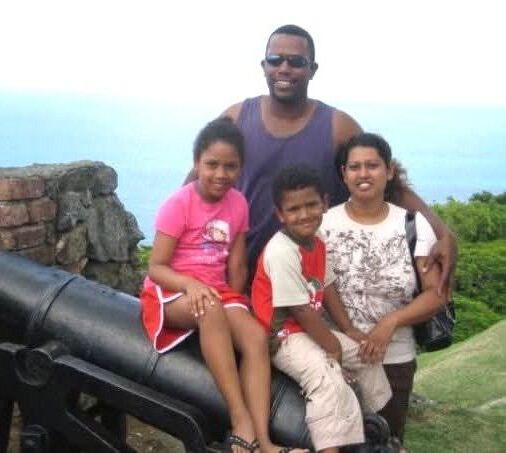
He is also incredibly appreciative of his wife, Kwailan, for her unwavering love, tolerance, and cooperation in creating a solid and encouraging family. He is incredibly proud of the paths his children, Lilee Beth, Chaiym, and Zarah, are taking in life. They have been his greatest source of pride and inspiration.
Dr Regis would also like to express his heartfelt thanks to his colleagues, mentors, and everyone who has crossed his path, offering their guidance and support. Their assistance has been crucial to his development both personally and professionally. Finally, he is grateful to the communities that have allowed him to give back and make a difference. All of his accomplishments have been made possible by their support, and as he continues his journey, he is dedicated to helping and motivating others.
Thanks,
– Dr. (HC) Barry Antonio Regis