“True change does not begin when life becomes easier; it begins the moment we learn to listen to ourselves with honesty, patience, and courage.”
Introduction
A human life rarely reveals its direction in a single, dramatic moment. More often, it unfolds through subtle recognitions, gradual shifts in perception, and experiences that only gain coherence when viewed in retrospect. The journey of Dr. Arpitha Gupta exemplifies such an unfolding, one defined not by rigid planning, but by awareness, introspection, and an enduring curiosity about the nature of human experience.
From early childhood, two powerful yet contrasting influences quietly shaped her inner landscape. Her father, Dr. K. Jagat Sanjeevi, approached the world through careful observation and analytical clarity. His professional orientation was not limited to clinical diagnosis; it reflected a deeper habit of listening, questioning, and seeking root causes rather than accepting surface explanations. Alongside this rational framework existed the equally strong presence of her mother, Sai Priya, whose deeply religious disposition introduced an entirely different dimension of understanding. Faith, devotion, and reverence for the unseen were not abstract ideas but living realities within the household. The coexistence of these perspectives did not produce conflict within her thinking; rather, it cultivated an early comfort with complexity, encouraging both inquiry and reflection.
Childhood was characterised by experiences between idealised simplicity and overwhelming hardship. There were disturbances within the family environment, yet these experiences contributed to a formative resilience. Even at a young age, Dr. Arpitha displayed a natural inclination to step beyond immediate tensions, gravitating toward friendships, activity, and a sense of inner lightness. This tendency did not represent avoidance but an instinctive orientation toward balance and psychological space. Simultaneously, her academic year revealed a temperament characterised by alertness, spontaneity, and intellectual confidence. She recalls herself as energetic and restless, yet consistently capable in studies, a combination that teachers recognised not as indiscipline but as vitality paired with competence.
Education introduced its own quiet influences. She would later complete her formal degree in the arts, but her earlier academic interests reflected a broad intellectual curiosity. History evoked a fascination with continuity and human narrative across time. Economics and civics offer frameworks for understanding structure, society, and collective behaviour. Later engagement with sociology deepened this orientation, providing conceptual tools to observe social patterns, relationships, and the dynamics of growth and change. English literature, pursued as a principal field of study, opened a different doorway, that of language, expression, and sensitivity to nuance. Over time, she recognised that these disciplines were not isolated academic experiences but foundational lenses through which later professional insights would emerge.
Parallel to intellectual development ran a disciplined engagement with classical dance. Beginning at the age of three, Dr. Arpitha devoted nearly two decades to Bharatnatyam training. Such long-term artistic practice demands more than technical proficiency; it requires consistency, patience, and immersion into rhythm and structure. Although this pursuit would not remain her lifelong vocation, it contributed significantly to her inner orientation, reinforcing discipline, embodied awareness, and an appreciation for subtle expression.
“The foundations of a life are rarely built through grand events; they are formed quietly, within everyday moments, questions, and observations that shape how one learns to see the world.”
Phase 1: Origins of Awareness, Childhood, Contrasts, and the Formation of Inquiry
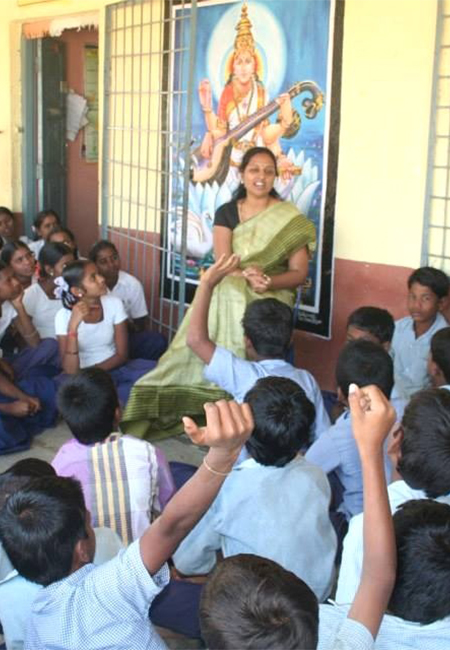
The earliest phase of Dr. Arpitha Gupta’s life cannot be understood through conventional descriptions of comfort or difficulty alone. Her childhood, as she reflects with characteristic honesty, did not belong to extremes. It was neither relentlessly harsh nor effortlessly smooth. Instead, it unfolded within a landscape defined by contrasts – emotional, intellectual, and philosophical – that would later become central to her way of understanding human experience.
At the heart of this environment stood the distinct yet complementary influences of her parents. Her father, Dr. K. Jagat Sanjeevi, embodied a scientific temperament that extended far beyond professional identity. His approach to diagnosis was marked by patience, attentiveness, and a curiosity that resisted superficial conclusions. Instead of treating symptoms as isolated occurrences, he understood them as expressions of deeper causes. Where many practitioners might rely solely on routine tests and standard prescriptions, he preferred careful listening and contextual understanding. He asked when discomfort began, how it unfolded, and what subtle factors surrounded it. For a child observing this orientation, the lesson was powerful yet understated: true understanding requires inquiry, not assumption.
Equally influential was her mother, Sai Priya, whose deeply religious disposition introduced an entirely different dimension of awareness. Faith was not presented as doctrine alone but as lived presence, a constant reminder of devotion, reverence, and reflection on the unseen aspects of existence. Within such an atmosphere, questions arose naturally. What is God? Does divinity truly exist? How should one relate to something that cannot be perceived directly? These reflections did not emerge from conflict but from curiosity stimulated by a home where spirituality was woven into everyday life.
For many individuals, the coexistence of scientific rationality and deep religious conviction might produce internal tension. Yet for Dr. Arpitha, these influences created an early education in balance. Dr. Arpitha experienced analytical thought and spiritual curiosity not as opposites, but as parallel avenues of exploration.
“Education, at its best, does not merely inform the mind; it reveals the many ways in which a person learns to relate to the world, to ideas, and ultimately to oneself.”
Phase 2 : The Energy of Learning, Academic Curiosity, Expression, and Early Identity
As Dr. Arpitha Gupta progressed beyond the earliest years of childhood, her academic life began to assume greater definition. The first phase of her journey was marked by the formation of awareness; this stage was characterised by the expansion of curiosity, intellectual engagement, and the gradual shaping of personal identity within structured educational environments. Schooling did not simply represent a sequence of examinations and subjects; it became a living arena in which temperament, perception, and thought interacted continuously.
One of the most striking features of this period was the distinctive combination of liveliness and academic competence that defined her presence in classrooms. She did not conform to the archetype of the quiet, inwardly focused student. Her nature was animated, energetic, and expressive. She was usually active in her environment. Yet this vitality coexisted with a consistent clarity of understanding. Teachers recognised that her restlessness did not reflect her indifference toward learning. On the contrary, it was paired with alertness, confidence, and the ability to respond thoughtfully when challenged intellectually.
She recalls this duality with characteristic candour, being among the most academically capable while also being notably dynamic in behaviour. Such a combination often invites misunderstanding within rigid educational settings, yet her experience unfolded differently. Instead of reducing her to labels, she found acceptance among educators who believed that enthusiasm and comprehension need not be mutually exclusive. Questions could be answered, lessons grasped, and concepts retained. Her energy was not a distraction from learning but an expression of engagement.
Underlying this academic confidence was a deepening relationship with subjects that stimulated reflection rather than rote absorption. During her intermediate studies, history emerged as a particularly compelling field of interest. It was not merely the memorised dates or events that drew her attention.
“Some forms of learning do not occur through instruction alone; they unfold through repetition, patience, and the quiet dialogue between effort and awareness.”
Phase 3 : Discipline, Rhythm, and the Silent Education of Art
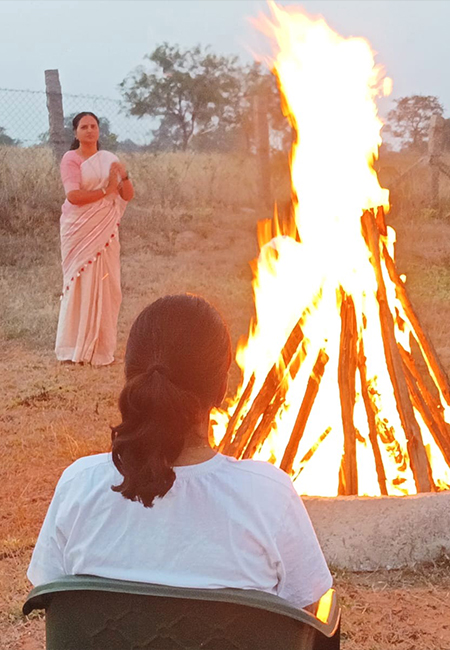
While academic pursuits continued to shape Dr. Arpitha Gupta’s intellectual orientation, another equally significant dimension of her formative years evolved alongside formal education: a prolonged and deeply disciplined engagement with classical dance. This phase represents a chapter of structured artistic devotion that would profoundly contribute to her inner development, even though its influence would only be fully recognised much later.
Her introduction to Bharatanatyam began at an exceptionally early age. At just three years old, she entered a world defined by rhythm, posture, expression, and precision. Unlike casual extracurricular activities that many children encounter briefly, the subject was not a temporary exploration.
It became a sustained practice extending across approximately seventeen to eighteen years of her life, continuing through the major portion of her schooling and into the period surrounding her graduation. Such longevity within a classical discipline reflects more than interest; it signifies commitment, perseverance, and a capacity to remain engaged with a demanding art form over time.
Bharatnatyam, by its very nature, is not merely a physical performance tradition. It is an intricate system of embodied knowledge, requiring the synchronisation of movement, emotion, concentration, and memory. Training demands consistency, discipline, and attentiveness to subtle detail. Every gesture carries meaning, every sequence requires precision, and every performance emerges from countless hours of repetition. For a young student, immersion within such a framework cultivates qualities that transcend technical skill.
For Dr. Arpitha, this prolonged artistic engagement became a silent yet powerful education. The practice instilled discipline not as external enforcement but as lived experience. Progress within classical dance cannot be rushed; it unfolds through patience and sustained effort.
Note of Thanks
Gratitude, in its truest sense, extends far beyond formal acknowledgement. It is a recognition that a life’s journey is never shaped in isolation but is quietly influenced by countless presences, relationships, and moments of insight. This narrative stands as a reflection of such interconnectedness.
At the foundation of my journey, Dr. Arpitha Gupta offers her deepest appreciation to my parents. Her father, Dr. K. Jagat Sanjeevi, instilled the discipline of inquiry, observation, and thoughtful understanding. His approach to life and work taught her that clarity emerges through patience and attentive listening. Dr. Arpitha’s mother, Sai Priya, nurtured the dimension of faith, devotion, and trust in the unseen. From her, Dr. Arpitha learnt the value of humility, reflection, and inner grounding. Together, they shaped the balance that has guided her perceptions and choices.
Dr. Arpitha remains sincerely thankful to her brother, whose steady encouragement and grounding presence supported her formative years. His simplicity and quiet assurance provided her strength during periods of exploration and growth.
Dr. Arpitha’s heartfelt gratitude also extends to her husband, Partha Gupta, whose companionship, encouragement, and intellectual alignment have been invaluable. His commitment to contemplation and authorship reflects a shared orientation toward understanding and inner inquiry.
To her children, Sushmita Gupta, Aryan Gupta, and Aryaman Gupta, she offers gratitude for the joy, learning, and perspective they continually bring into her life. Their individual paths remain a source of inspiration and reflection.
Finally, I express sincere appreciation to every student, client, and individual whose trust and openness allowed shared spaces of reflection and understanding. Each interaction has contributed to my learning. To all who have, in ways seen and unseen, shaped this journey, I remain deeply grateful.
Thanks,
– Dr. Arpitha Gupta’s