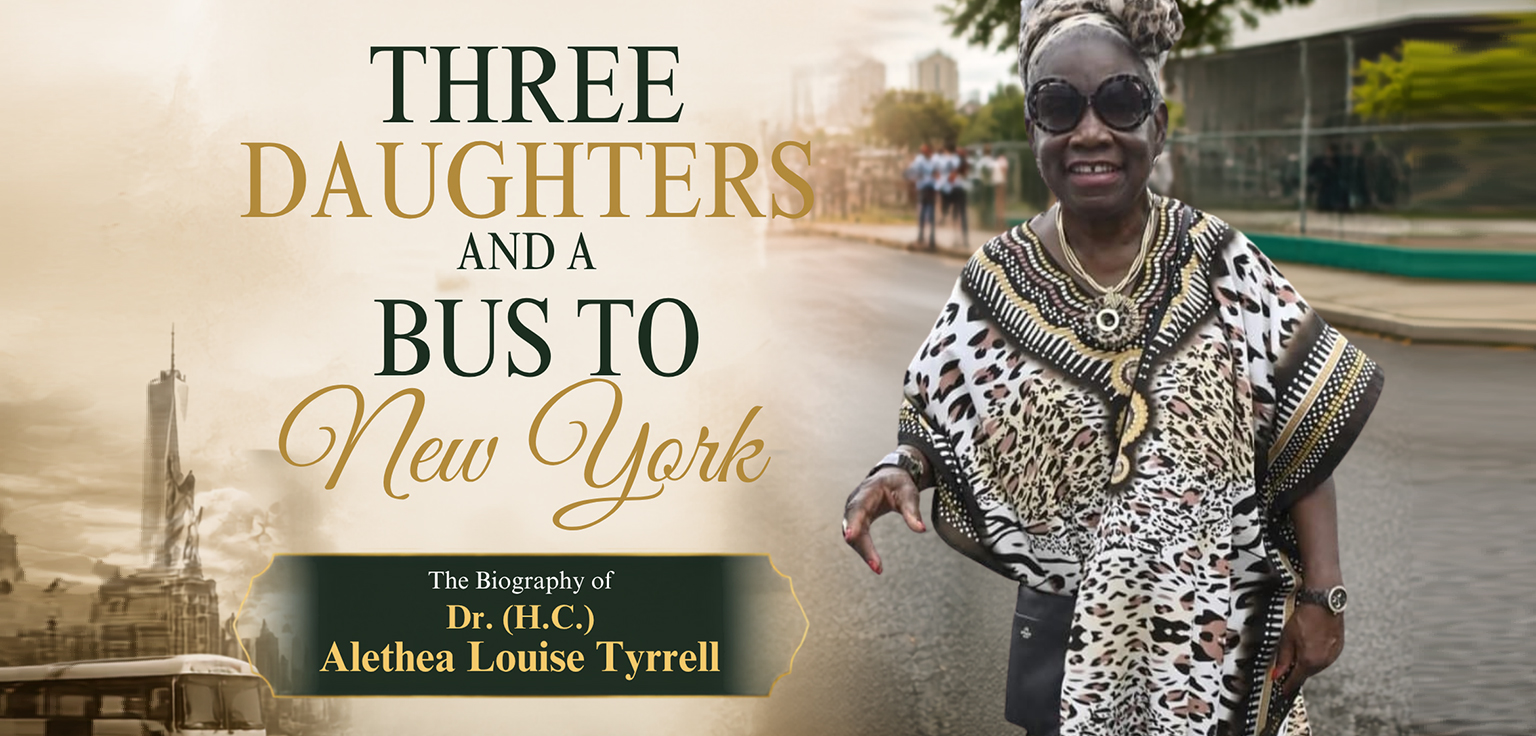
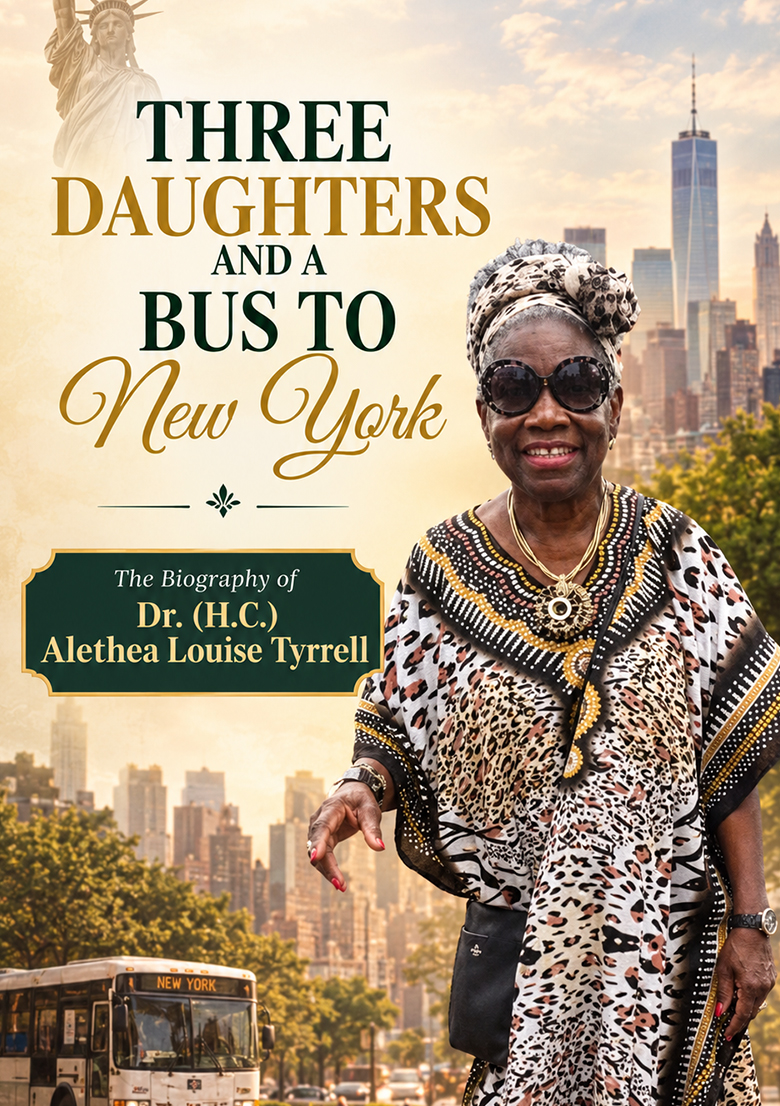
“I will be the example. And yes, I was the example. ”
Introduction
There are people who appear to have reached an age at which life expects them to slow down, look backwards, and speak of their strongest years as though those years have already departed. Dr. Alethea does not carry herself that way. Her past is vast, yet her relationship with life remains immediate. She speaks with the energy of someone who still expects another task, another lesson, another person to guide, or another opportunity to put her knowledge to use.
Her strength is not theatrical. It has been built through repetition: showing up, learning, questioning, working, protecting, and beginning again whenever circumstances demanded it. She does not separate courage from practicality. To her, courage is often a sensible decision made at the right moment. It is recognising that mistreatment should not be tolerated. It is studying when there is little time. It is travelling with children towards an uncertain beginning.
The tenderness within her is equally practical. She cares by preparing people. She encourages through honesty rather than easy reassurance. When she has believed that someone could do more, she has expected more. Her maternal nature has never required her to lower standards. Instead, it has allowed her to recognise potential and insist that it be taken seriously.
Much of her life has unfolded in environments shaped by discipline. Science required accuracy. Karate required control. The military required readiness. Pharmacy demanded vigilance. Motherhood required endurance. None of these responsibilities could be approached casually, and she did not approach them casually. Yet her seriousness did not remove joy from her character. She laughs easily, remembers movement and music, and has never viewed age as a command to become still. Even during years of midnight work, she found ways to remain alert and animated. Energy was not merely a personality trait. It became part of her method for meeting life.
Her intelligence developed alongside an instinct for observation. She learned to notice what others overlooked: the educational opportunity hidden inside a difficult schedule, the danger contained in an incorrect medical order, the usefulness of military training within civilian pharmacy, and the value of experience that had not yet been recognised by a degree. She understood that formal credentials mattered, but she also knew that a credential without practical knowledge could never replace competence. When the opportunity came to unite both, she accepted the challenge.
As a woman of her generation, she encountered expectations that could easily have narrowed her future. She was expected to carry domestic responsibilities, support a husband’s advancement, and accept the restrictions surrounding her. Instead, she transformed the very knowledge she had acquired while helping another person into the beginning of her own military journey. She did not abandon her role as a mother. She expanded her identity beyond the boundaries that had been assigned to her.
“We are our choices.”
Phase 1: Caribbean Roots Beside the Panama Canal
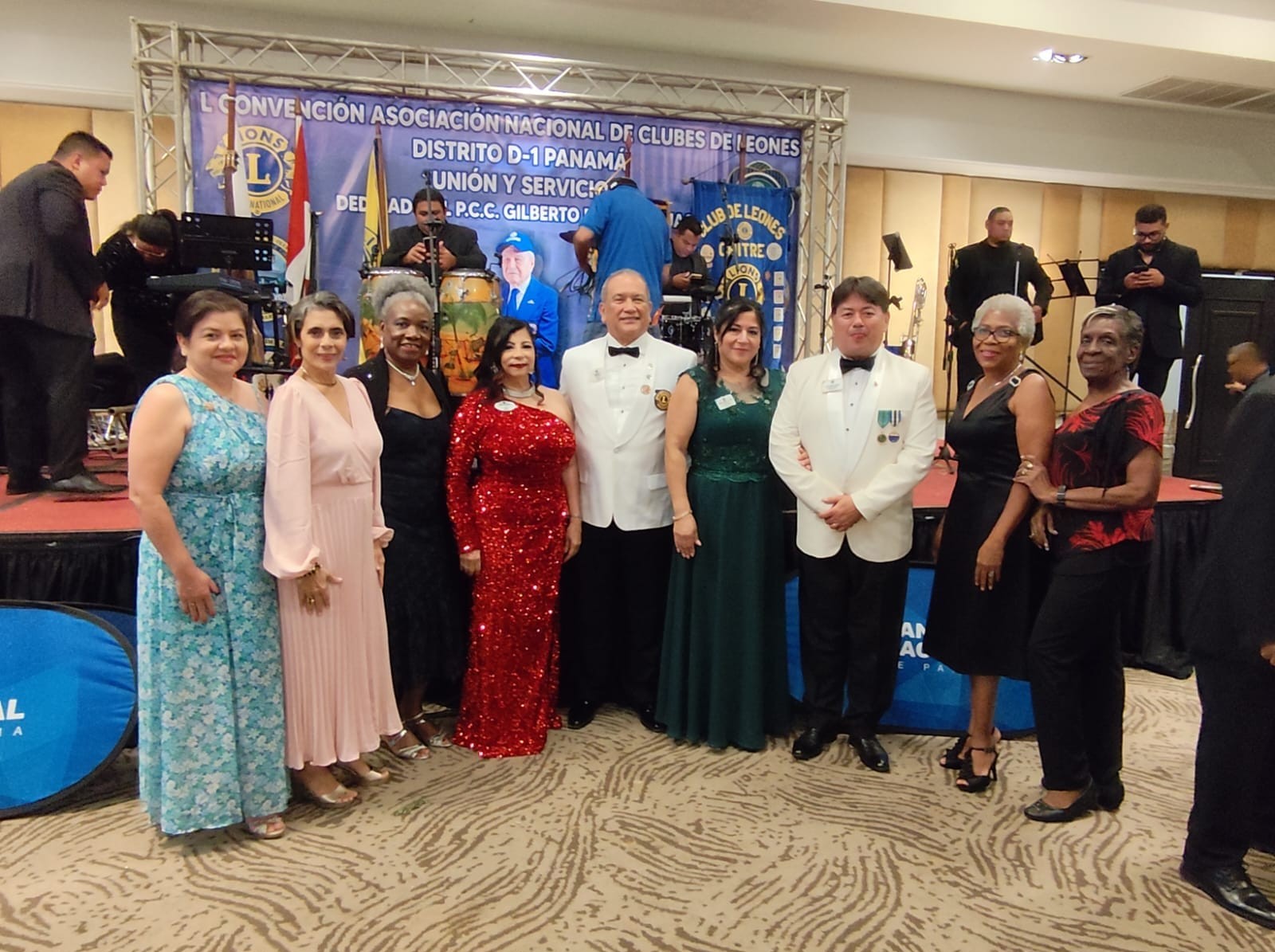
Dr. Alethea’s beginning was shaped by movement across the Caribbean and by the history surrounding the Panama Canal Zone. Her father came from Barbados, while her mother’s family belonged to Martinique. Their journeys brought distinct languages, customs, and experiences into the same Panamanian household.
Her mother, Amelia Rose Crepi Tyrrell, was only five years old when she arrived in Panama. Her own mother was a teacher in Martinique and was not prepared to abandon her profession. She therefore entrusted the child to one of her three sisters travelling to Panama. The eldest aunt, Dolores Trotman, became responsible for raising her.
Through the aunt’s husband, Amelia later met Austrian Leon Tyrrell. The men were connected through their work in the Canal Zone, where employment attracted many workers from the Caribbean and other West Indian communities. He was fifteen years older than the young woman he would marry.
Together, the couple formed a large family of eight children. Dr. Alethea, born in 1948, was the seventh child and therefore the second youngest. The household included five boys and three girls, including her. Life among so many siblings carried its own education. Space, attention, conversation, play, and responsibility were shared. A child learned early how to make herself heard while also understanding that she belonged to something larger than herself.
Her father worked in the Canal Zone for forty-five years. Because he was employed by the federal government there, the children were born at Gorgas Hospital within the Canal Zone, although the family lived in Panama City. The distinction became part of Dr. Alethea’s understanding of home. Her birthplace was connected to the vast international operation around the canal, while her daily life unfolded within the rhythms of the city and its communities.
Language reflected that blended inheritance. Spanish became her first language because it was the official language of Panama and the language surrounding her childhood. English entered the household through her Barbadian father and the English-speaking Caribbean community. She became fluent in both, moving naturally between the two worlds represented within her family.
Her mother’s French Caribbean background remained present through her name and history, even as life in Panama shaped the family’s shared identity. Dr. Alethea grew up aware that her parents had come from elsewhere and had established themselves through work. Their household was not isolated from the larger movements that had built the Canal Zone. It was part of that story.
"No one can make you feel inferior without your consent."
Phase 2 : Skates, Stairways, and the First Refusal to Be Intimidated
Movement came naturally to Dr. Alethea. As a young girl, she was rarely drawn towards stillness when the world outside offered space to run, skate, jump, or compete. Her community gave children opportunities to gather, and a woman known as Maria Pantalon organised activities for the young people living there.
At seven, Dr. Alethea learned to skate. The activity quickly became more than a temporary amusement. Skates remained among her favourite childhood possessions, especially around Christmas, when toys and outdoor activities filled the community with excitement. Scooters were also popular, although these were the ordinary kind that required a child to push forward with her own foot. Skating held her attention longer. A photograph from around the age of twelve captured that continuing enthusiasm.
The pleasure came from speed, coordination, and freedom. She learned to trust her balance and recover quickly when movement became uncertain. These were small physical lessons, but they suited her character. She enjoyed what required energy.
Her brothers also kept exercise close to family life. They had weightlifting equipment towards the back of the building in which the family lived. She watched them and found ways to join the activity, testing her own body and enjoying the feeling of becoming stronger. She did not see physical strength as belonging exclusively to boys.
That conviction became important when a young boy in the building repeatedly troubled her. He was the grandson of the property owner, and he would wait near the stairs, throw things, and attempt to intimidate her as she passed. The language of bullying was not commonly used around her then, yet she recognised the behaviour for what it was. He expected her to remain frightened.
Instead, she began preparing herself. A boxing gym stood only a short distance from her home, and she paid attention to what she could learn. When the boy, remembered as Miguelito, approached her again, the encounter did not end as he expected.
“Nothing in life is to be feared; it is only to be understood.”
Phase 3 : Science in the Classroom, Discipline in the Dojo
Dr. Alethea’s formal education in Panama developed in stages, each one requiring a greater level of concentration. Her primary schooling took place at the Republic of Peru School, where she completed six years.
The name of the school stayed with her in an unusually joyful way. Students were required to learn the Peruvian national anthem, and she retained part of it throughout adulthood. Years later, whenever she entered a Peruvian restaurant, she sometimes surprised the people there by reciting the opening portion. The reaction could be so delighted that a meal was occasionally offered without charge. What had once been a school requirement became a lasting connection between memory, language, and humour.
After primary school, she attended Richard Neumann for the first cycle of secondary education, covering grades seven through nine. The second cycle, equivalent to senior high school, brought a more demanding opportunity.
Admission required a strong academic record. Panama used a grading scale extending to five, and a student needed an average of at least four to qualify. Dr. Alethea entered with an average of 4.2. At that time, the institution admitted female students only for grades ten through twelve. The earlier levels remained male, making the presence of young women in the senior classes both selective and significant.
She chose the science course rather than the humanities route. The programme included chemistry, biology, zoology, botany, physics, and other subjects that would later become directly useful. She graduated from Instituto Nacional with a Bachelor of Science at the secondary-school level in 1968.
The education was valuable beyond the certificate. Students completing the programme could enter the University of Panama without sitting for the usual entrance examination. Dr. Alethea did not yet know how frequently her scientific foundation would return to support later decisions. At the time, she simply understood that the work was challenging and that she enjoyed meeting that challenge.
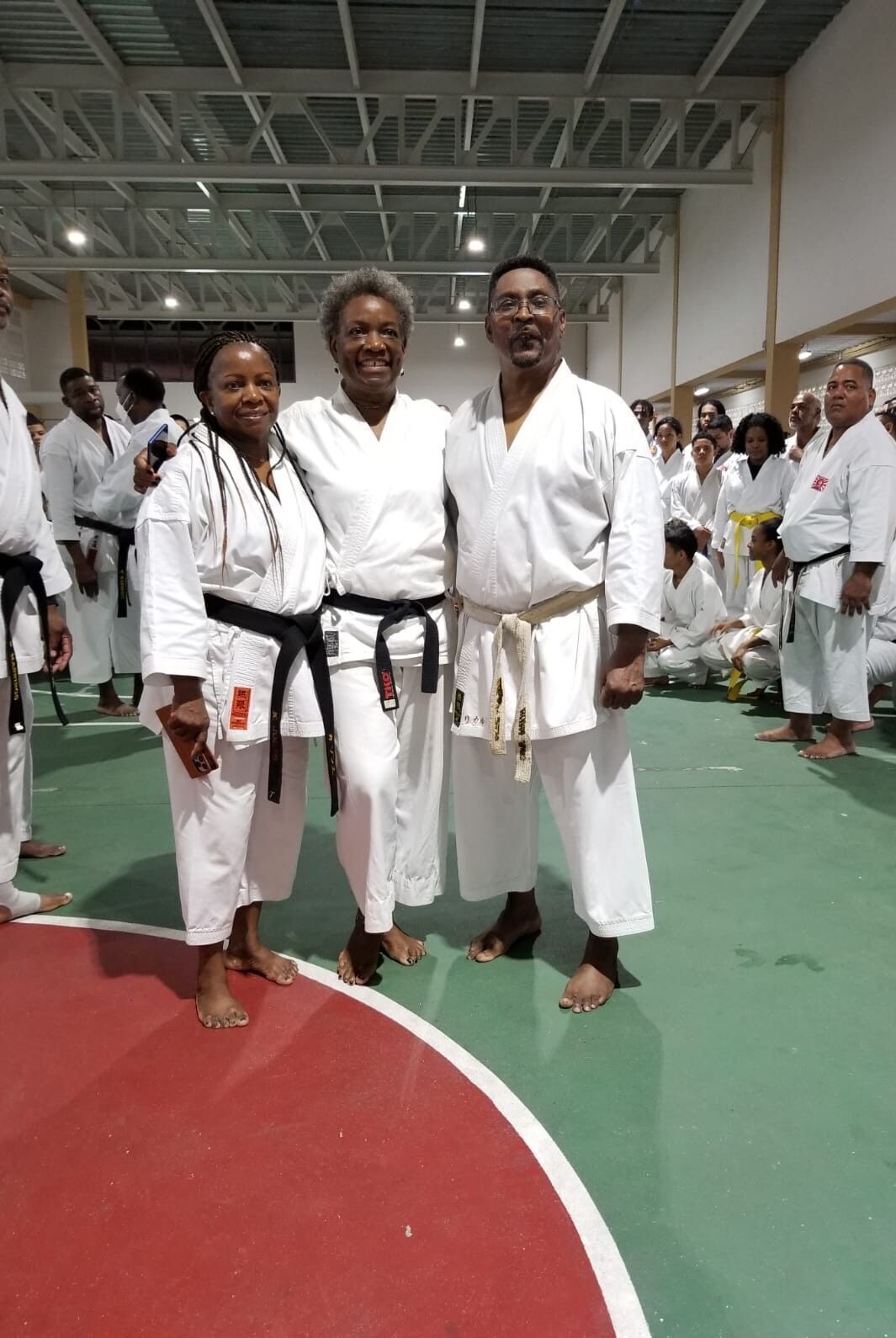
Parallel to the classroom, another demanding education had begun. At sixteen, she entered a Shotokan karate school. The school was composed of male students, and she became the first woman in Panama to enrol there.
Her decision did not arise from a desire to perform rebellion for its own sake. Karate attracted her because it developed the whole person. It required physical control, mental focus, decisiveness, and the ability to remain calm under pressure. She understood it as something larger than self-defence.
Note of Thanks
“No act of kindness, no matter how small, is ever wasted.”
Dr. Alethea offers a deeply felt expression of gratitude to Stella Lee, whose encouragement arrived at a moment when experience, ambition, and responsibility needed practical support. Stella recognised that Dr. Alethea already possessed extensive pharmaceutical knowledge. Years of technical practice and hospital responsibility had prepared her well, yet the formal degree required to become a licensed pharmacist remained unfinished. Rather than merely telling her to continue, Stella helped create the conditions under which continuation became possible.
No suitable part-time position existed that could easily accommodate full-time university study. Stella therefore created a weekend role specifically for her. She also understood the continuing demands of Army Reserve service and allowed the schedule to remain flexible whenever military drills required Dr. Alethea’s attendance.
That decision gave a working mother and service member the time needed to complete pharmacy school. It did not make the academic work easy, nor did it remove family and military responsibilities. It provided something equally important: a fair opportunity.
Stella asked whether she would truly finish. Dr. Alethea answered with certainty that she would, and she kept that promise.
The gratitude attached to that support has endured because it was both emotional and practical. Stella saw ability that deserved recognition and acted upon what she saw. Her confidence helped transform professional experience into an accredited career.
Dr. Alethea’s thanks therefore honour more than assistance with a schedule. They honour a woman who opened a door, trusted her determination, and made room for a future that had been waiting for its rightful qualification.
thanks,
– Dr. (H.C.) Alethea Louise Tyrrel