

“Nothing came easily. Nothing was handed to me. I built my life one choice at a time, carrying my grandfather’s faith, my family’s support, and my own stubborn belief that I could. This is my story.”
Introduction
Her field was biology. When a place opened for her in the family business, that connection gave Dr. Akansha a practical reason to consider it. A flour mill might seem distant from a childhood ambition to become a doctor, yet its laboratory required knowledge she had spent years acquiring. There were materials to analyse, standards to uphold, and people whose work needed coordination. Her education had an application here. Whether she wished to take it on was a more personal question.
Marriage brought her into a family with an established business and political commitments. The enterprise needed a family member who could give it greater attention. Encouraged to become involved, she stepped into Narayanshri Flour Industries Private Limited, where her responsibilities came to include laboratory operations, teamwork and management. She had hesitated initially. That hesitation belongs in her story as much as the decision that followed, because accepting a role and becoming familiar with its demands are different experiences.
Long before this responsibility, science had held her interest. She had been a sincere student who wanted to enter medicine, and her eventual choice of academic stream was a decision she regarded as a risk. Biotechnology became her field of study through both her bachelor’s and master’s degrees at Christian Eminent College, Indore, affiliated with Devi Ahilya Vishwavidyalaya. Practical training added to her classroom education, giving her opportunities to work with scientific methods beyond examinations.
Her life, however, cannot be understood through qualifications alone. She grew up in a joint family, with a father engaged in the restaurant business, a mother who had studied at Allahabad University, and an elder brother. School included basketball alongside studies. College brought friendships, including one formed through a similarity in temperament. These details give her story its individual character, placing the student and professional within the relationships and interests that also matter to her.
Preparation for PSC examinations formed another part of her search for direction. Her path contained more than one possibility, and the choices she considered did not all point towards the same profession. After marriage, the support of her husband, Nimish Kesharwani, became particularly important. She wishes to acknowledge him for standing beside her, an expression of gratitude that gives the personal partnership its rightful place alongside her working life.
Today, her laboratory responsibilities involve a reported team of thirty. Scientific understanding must meet the daily demands of coordination, quality, and accountability. Away from these duties, she has an interest in calligraphy, another detail of a life that extends beyond a professional designation.
She does not select one achievement as the only one worthy of pride. None, in her view, has come easily. That assessment gives this biography its measure: attention to the work behind an accomplishment and to the circumstances surrounding a choice. Across these pages, her life takes shape through those particulars, allowing room for the girl drawn to science, the woman weighing a new responsibility, and the person still larger than either description.
"He did not just hear me. He listened with the kind of attention that made me believe I mattered. That belief shaped everything I became."
Phase 1: A Girl Among Many, Seen by One
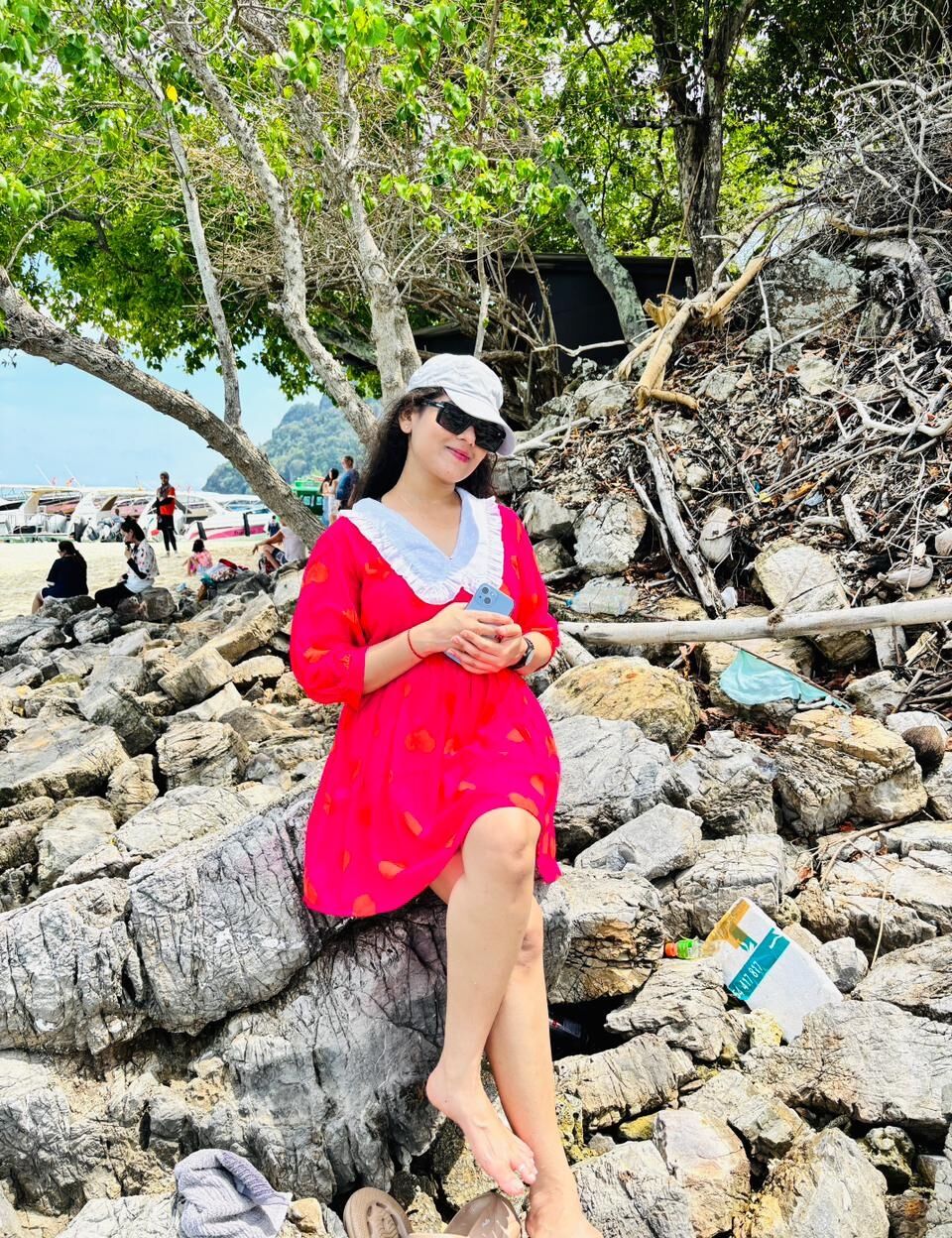
She arrived in 1997, the youngest of two, into a household that was never quiet. A joint family means noise, movement, overlapping conversations, someone always in the kitchen and someone always at the door. For a small girl, it also means many pairs of eyes. Many hands. Many people who notice you, and a few who truly see you.
One of those few was her grandfather. Shiv Kumar Gupta occupies the centre of her earliest memories. When Dr. Akansha describes him, she does not reach for grand language. She says he pampered her. She says he listened. She says he supported the things she wanted to do, even the small things, even the things that might have seemed unimportant to anyone else. Those are simple verbs, but they describe a childhood shaped by attention.
Her father, Anand Gupta, ran a restaurant. Long hours, a demanding trade, the kind of work that keeps a man occupied and tired. Her mother, Sadhna Gupta, kept the home. She had studied at Allahabad University, a fact that belongs in her portrait as much as her role within the household. She was not only a mother. She was a woman with an education, a history, a mind of her own, and her daughter grew up watching that.
Then there was Akash, her elder brother. Two children, a household of adults, and an extended family that stretched beyond the walls of their home. The relatives mattered. The elders mattered. Her childhood cannot be drawn with just four figures. It was a crowded canvas, and she was the younger one, the girl among many, finding her place.
Her uncle belonged among her early guides. So did her grandfather, though the word “guide” feels too narrow for what he was. He guided, yes. But he also indulged. He made her feel like what she said was worth hearing. That combination, guidance and affection, is rarer than it sounds.
She remembers being heard. That is the phrase that stays. Before the degrees and the laboratories and the responsibilities, there was a girl in a joint family who knew that at least one person would always turn toward her when she spoke. He took her interests seriously. He offered support without conditions. Whatever came later, whatever she built and whatever she became, this was the ground beneath it.
A child who is heard learns to speak.
“I loved science before I understood what it would ask of me. I played basketball because it made me feel free. Both taught me something about trying."
Phase 2 : Chasing Questions, Finding Balance
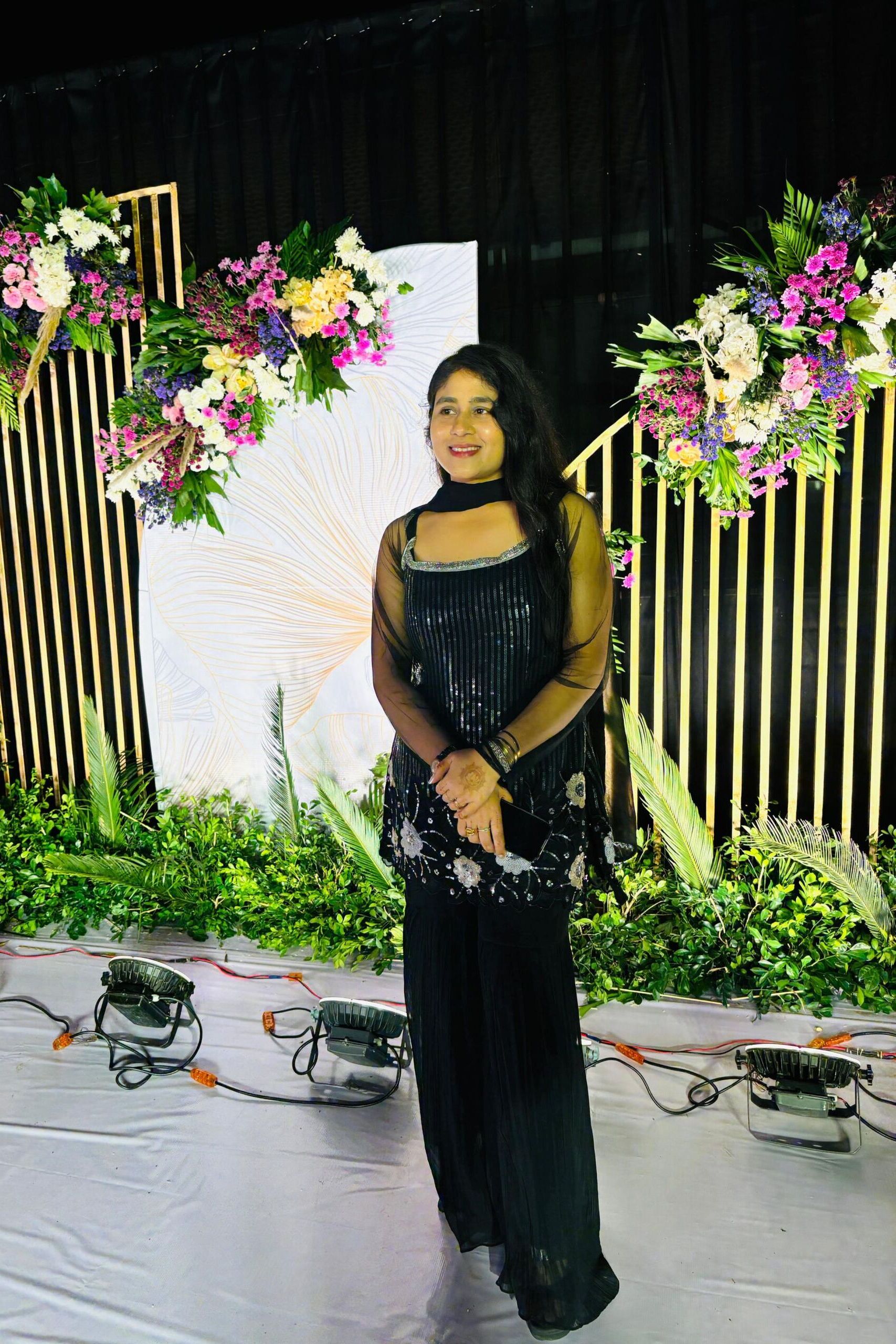
St. Michael’s Secondary School gave her two things she would carry forward: a love of science and a taste for the court.
The classroom came first, or at least it came with a certain seriousness. Dr. Akansha Gupta was the kind of student teachers notice without needing to be told. Not necessarily the loudest, not the one collecting prizes, but sincere. She did the work. She paid attention. And science, more than anything else, held her.
It was her favourite subject. She says so plainly, without decoration. Before it became a qualification or a career, it was simply the class she looked forward to. A girl leaning over a textbook, curious about how things worked, what they were made of, why they behaved the way they did. That curiosity came before any plan. It deserves to be remembered on its own terms.
The plan, though, was already forming. She wanted to become a doctor. The ambition had a shape and a name, even then. Medicine was the future she pictured for herself, and science was the road that would take her there. At that age, the two fit together neatly. Life would complicate the picture later, as it does, but for now the dream was clear.
Her principal stands out among the adults who shaped those years. Dr. Akansha names this person as an influence, which says something about the kind of school she attended and the kind of student she was. Teachers matter. Principals matter. Someone who takes an interest in a child, who offers encouragement or example, can leave a mark that lasts longer than any lesson. She remembers, and she acknowledges.
Then there is basketball. The court gave her something the classroom could not. Movement. Speed. The pleasure of a game played with others, away from desks and examinations. She played, and that fact belongs in her story. Not because she won trophies or broke records, but because it shows a girl who had more than one dimension. She studied seriously. She also ran and jumped and competed. Both things are true.
No championship needs to be invented here. No dramatic victory. The game itself was enough. It gave her balance. It gave her joy. It gave her another way to spend the hours of her childhood, alongside the books and the ambition.
The schoolgirl at the centre of this chapter is easy to picture: sincere in her studies, drawn to science, hoping to become a doctor, and on the court when she could be. Her principal offered guidance. Her favourite subject offered direction. Basketball offered something harder to name, a kind of freedom, perhaps, or simply the pleasure of play.
She was young. She was serious. She was also, in her way, happy.
“Biotechnology was not the obvious choice. But I chose it, and in choosing it, I learned to stand behind my decisions. That lesson was worth as much as the degree.”
Phase 3 : The Risk She Called Her Own
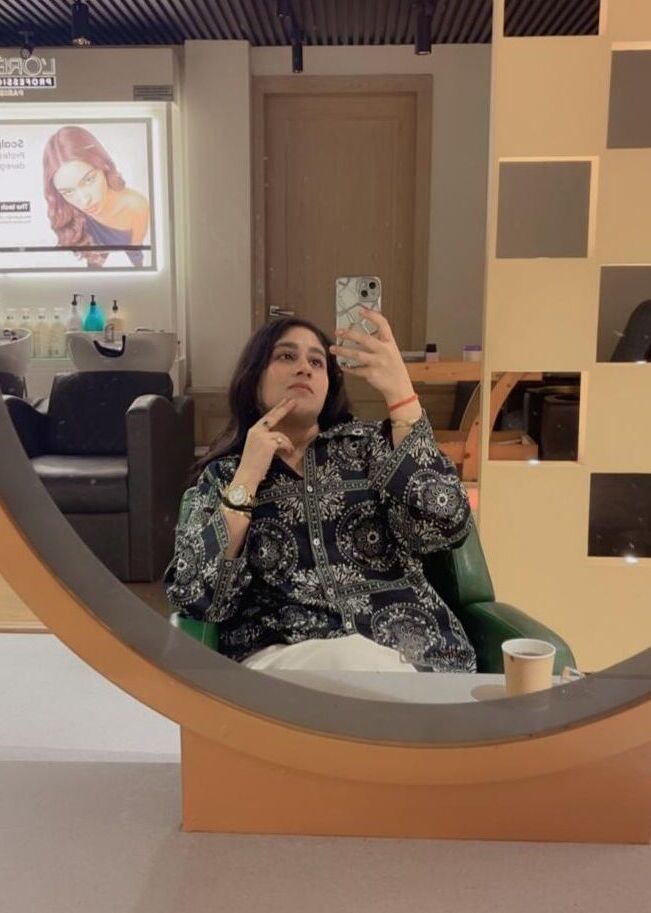
She called it a risk. That is the word Dr. Akansha Gupta uses when she describes choosing biotechnology, and the word carries weight. This was not a decision made lightly, not a path chosen because it was obvious or easy. She picked it, and in picking it, she committed herself to a direction that would demand years of her life.
Christian Eminent College, Indore, became the place where that commitment took shape. Affiliated with Devi Ahilya Vishwavidyalaya, the college offered a programme that wove biotechnology together with chemistry and computer science. Three disciplines and three ways of thinking are all required. She could not hide in one subject. The course asked her to move between them, to hold the full combination in her mind.
For three years, she did the work. Theory and practical examinations came in turn, each demanding its own kind of preparation. Written answers were not enough. She had to demonstrate understanding with her hands, at the bench, in the lab. The foundation course added another layer. By 2020, she had completed her Bachelor of Science in the first division. The risk had become a qualification.
College gave her more than a degree. Khushboo was there, a friend she met during those years. Jigyasa came too, and something about their temperaments matched. Dr. Akansha describes this as a similarity in personality, a recognition of kindred nature. That detail matters. It shows the girl beneath the student, the one who needed connection as much as knowledge.
There was also the FTIR training in 2019, organised through the college’s Department of Biosciences and Chemical Sciences alongside PG Tech Research Institute, Indore. Hands-on work with a specific analytical technique, a chance to move beyond the textbook and into practice. It added a focused experience to her undergraduate studies, another thread in the growing fabric of her scientific education.
She did not stop there. The Master of Science in Biotechnology followed, a deeper dive into the discipline she had chosen. The subjects multiplied. Biochemistry, cell and developmental biology, microbiology, biostatistics, and bioinformatics. Each one opened a different window onto the living world. Practical coursework continued alongside, because theory alone would never be enough.
Molecular biology came next, then bacterial genetics and genetic engineering, immunology, and analytical techniques. The programme also included communicative English and personality development, a recognition that scientists need to speak and write and present themselves, not only conduct experiments. Enzyme technology, environmental biotechnology, food science and technology. Research methodology, intellectual property rights and biosafety. Pharmaceutical biotechnology. The list is long, and it should be. It shows the range of what she studied, the breadth of a programme that refused to let her specialise too soon.
Note of Thanks
These pages would be incomplete without them. Dr. Akansha Gupta knows this. A life is not built alone, and hers has been shaped by people whose affection, guidance, and encouragement have left their mark. Each holds a different place in her story. Her gratitude makes room for each of them.
Her husband, Nimish Kesharwani, receives her warmest thanks. His support has meant something particular to her, and she wants it recognised here, in these pages, where the record of her life is being written. When marriage brought new responsibilities and decisions, he stood beside her. That presence became a valued part of her experience. Her appreciation is personal, offered to the partner she identifies with, such gratitude.
She thanks her parents, Anand Gupta and Sadhna Gupta, with love. They gave her the family in which she grew up, the household that formed her earliest world. Her elder brother, Akash Gupta, belongs within this expression of affection, alongside the relatives who filled that childhood home.
Her grandfather, Shiv Kumar Gupta, receives a special acknowledgement. He listened to her. He encouraged her interests. He offered the affection she remembers so clearly, the pampering that made her feel seen. She also recognises her uncle as one of her earliest mentors, with gratitude for his guidance.
Her appreciation extends to her father-in-law, Shri Alakh Narayan Kesharwani, her mother-in-law, Minakshi Kesharwani, her brother-in-law, Aditya Kesharwani, and her sister-in-law, Ayushi Kesharwani. They hold their places within the family she became part of after marriage, the household that welcomed her and brought new relationships into her life.
She remembers her school principal among the educators who influenced her. She acknowledges the teachers who contributed to her education, those whose lessons extended beyond the syllabus. Her college friends, Khushboo and Jigyasa, receive her warm thanks for the friendships that remain part of those years, the connections that gave her education a life beyond examinations.
She also acknowledges the laboratory team whose work she coordinates. Thirty people, each contributing to the operations she oversees. Their contribution deserves recognition alongside her own responsibilities.
To the family members, mentors, friends, and colleagues named here, she offers her sincere thanks. This acknowledgement gives each a place within the story of her life, with affection and regard for what they mean to her.
thanks,
– Dr. (H.C.) Akansha Gupta

AIMLAY is a leading global education platform empowering ACADEMIC and EXPERIENTIAL learners, uniquely focused on recognizing knowledge gained through experience and building a diversified community of doctorates and aspiring researchers.