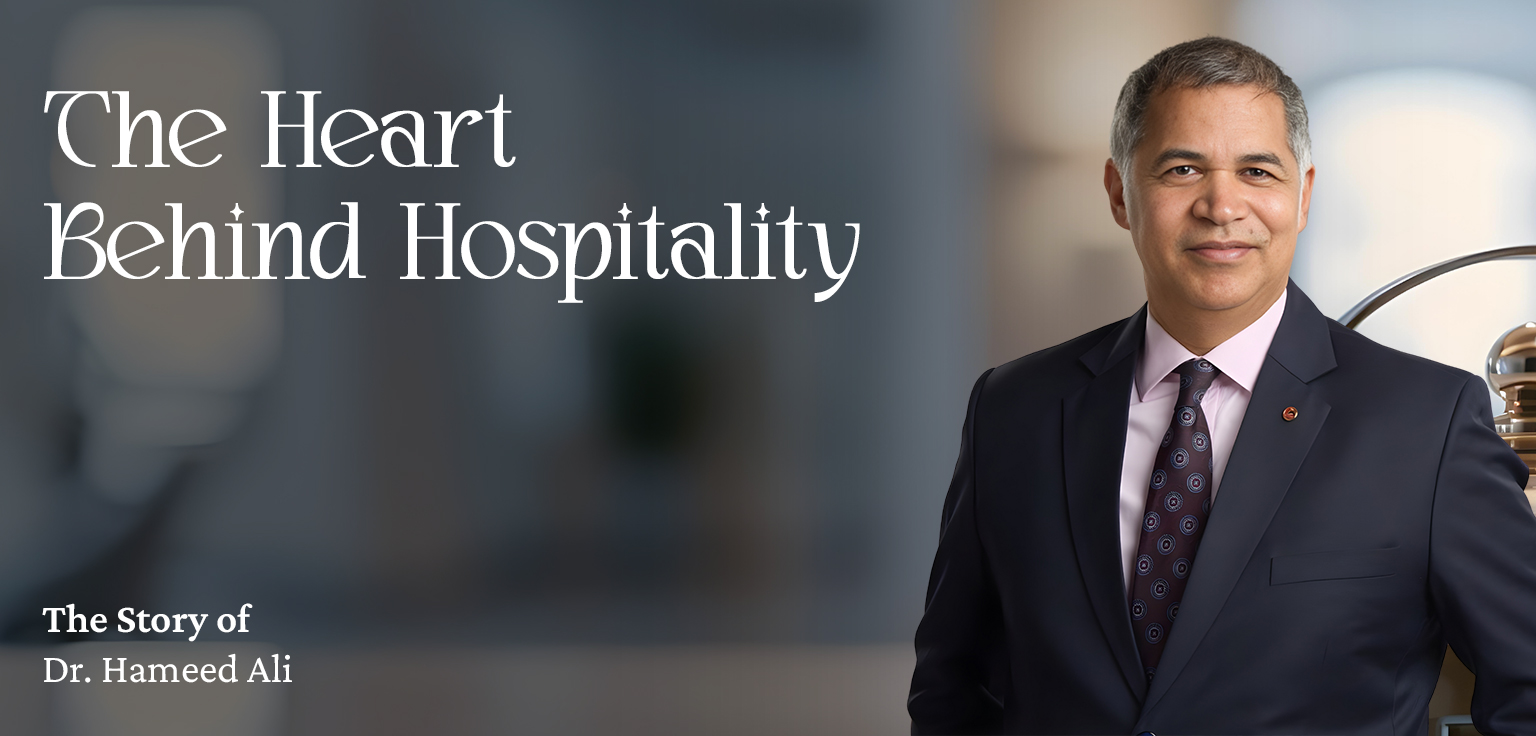
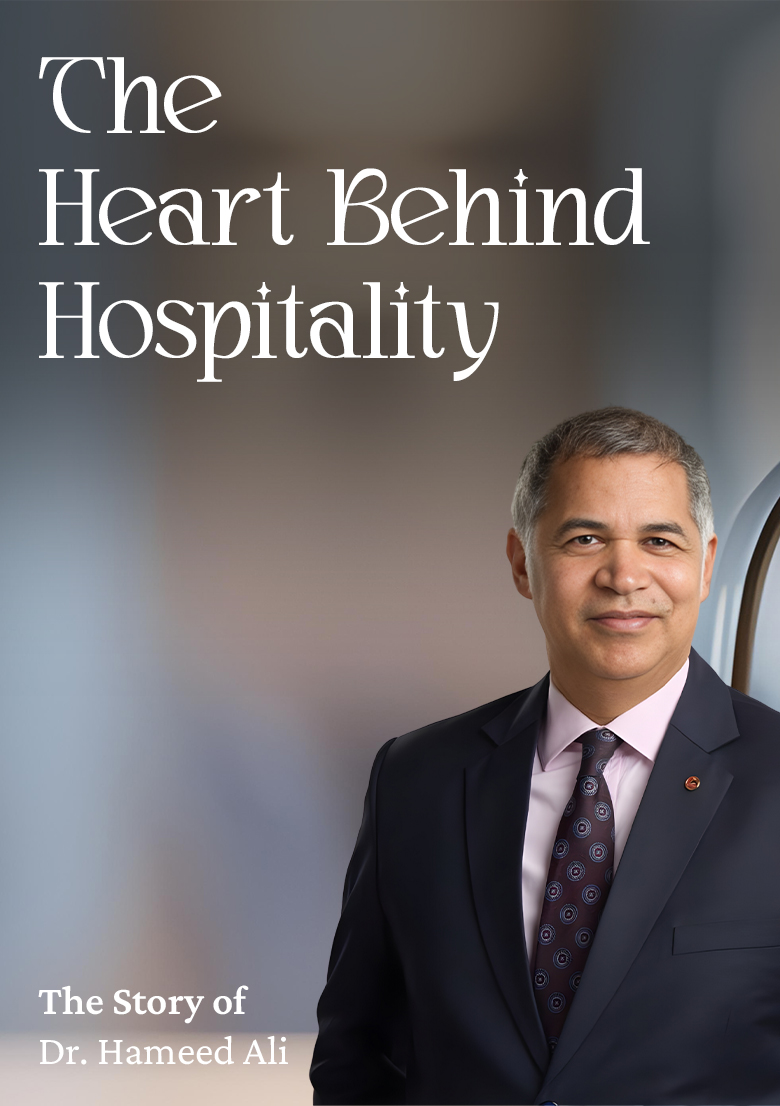
A life becomes extraordinary not by the heights it reaches, but by the grace, strength, and humanity it carries along the way.”
Introduction
A meaningful life is not defined by comfort or advantage. It is shaped by discipline, resilience, and the choices a person makes when faced with pressure. The journey of Dr. Hameed Ali reflects this truth. His life shows how strength is built step by step, how character forms through responsibility, and how purpose develops through the way one treats others. His story stretches across decades in the hospitality industry, across different countries and cultures, and across thousands of people who saw leadership through his example. At the centre of his path is a simple belief learned early in life: work with discipline, treat people with respect, and build something every day that reflects who you are. He grew through resilience, consistency, innovation, and passion, becoming a true hotelier and a role model for many.
Dr. Hameed was born and raised in Bahrain. His childhood shaped him in ways that stayed with him throughout his life. His father taught him structure, consistency, and the value of hard work. His mother taught him emotional control, compassion, and patience. These two influences formed a balanced foundation. They showed him how to stand firm and how to care for others, how to stay strong during pressure and how to remain human when situations become difficult. He did not grow up in comfort. He grew up with expectations that required maturity, responsibility, and awareness. These early lessons built the emotional strength and practical discipline that later defined his leadership style.
His early career began from the ground up. He began as a management trainee, rotating through food and beverage, back-of-house, and front-of-house departments. This exposure built his operational foundation and shaped his understanding of how a hotel functions. He approached work differently from others. He did not look at tasks as tasks. He looked at them as opportunities to observe people, understand behaviour, and strengthen his own discipline. He studied how staff worked together, how guests reacted, how teams communicated, and how leaders handled pressure. These years in the service environment shaped his understanding of people more than any classroom could.
His experience with British Airways marked a major turning point. Working with international passengers and multinational teams deepened his understanding of cultural differences and communication styles. He learnt how to deliver service under strict procedures, tight timelines, and high expectations. More importantly, he learnt the importance of presence. Staying calm when others were anxious. Speaking politely even when situations were tense. Guiding conversations with clarity and respect. This period taught him how emotional intelligence influences service quality, teamwork, and leadership. It helped him see people with more insight and understand how behaviour affects performance.
As he continued to grow, his understanding of hospitality changed. He realised that the industry is not driven by systems or structures. It is driven by people. Buildings, branding, and procedures do not create great hotels. People do. Teams that trust each other deliver better service. Staff who feel respected show more care. Leaders who stay consistent create stability. This simple truth became the foundation of his leadership philosophy. It guided his decisions, shaped his management approach, and influenced how he built teams in Bahrain, Oman, the UAE, and Saudi Arabia.
“Strength is born the moment a child learns to rise, not because life is easy, but because responsibility arrives too early.
Phase 1: Where Strength Was Born: How to Build a Strong Soul
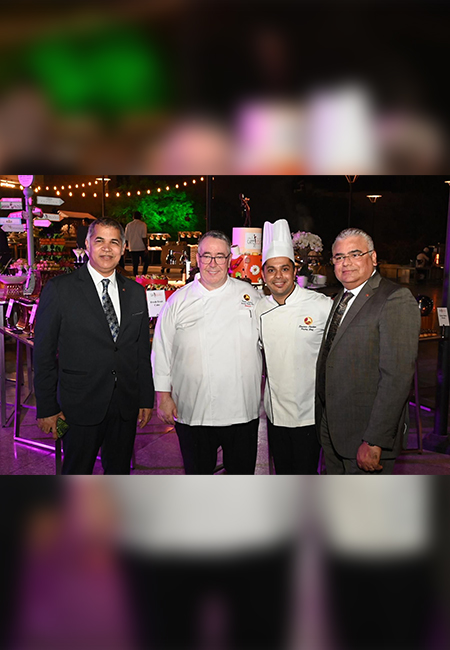
Every remarkable life begins long before success becomes visible. The story of Dr. Hameed Ali began in a modest home in Bahrain, where discipline shaped daily routines and where resilience was built through challenges that required maturity far earlier than most children ever face. His childhood did not offer comfort or luxury. It offered lessons—lessons that would later become the foundation of the leader he became.
He was born and raised in Bahrain, in an environment where work, respect, and responsibility were not optional. His father believed in structure. He set clear standards, spoke with purpose, and expected effort from his children. He was not a man who repeated instructions. When he spoke, it came from experience and the seriousness of life. The discipline in the household was strict, but it came from a place of preparing the children to survive and succeed in a world that rewards persistence. These early years shaped young Hameed’s understanding of strength. Strength was not noise. Strength was consistency.
His mother balanced the home with warmth and emotional guidance. She was compassionate, patient, and grounded. Her presence created a sense of safety that eased the weight of responsibility placed on the young boy. She taught him how to understand people, how to stay calm, how to listen, and how to move through challenges with a steady heart. The combination of his father’s discipline and his mother’s emotional intelligence formed the foundation of his character. Strong but kind. Focused but fair. Firm but human.
Hameed’s early life required maturity. While many children enjoyed carefree days, he learnt responsibility. He helped with small tasks at home, watched adults work long hours, and observed how people handled pressure. Life introduced him early to the reality that comfort is not guaranteed. But instead of weakening him, these experiences made him stronger. They taught him that growth does not come from ease, but from effort.
“When the world demanded maturity before youth was over, he chose purpose over comfort and character over ease.”
Phase 2: Awakening Responsibility : The First Lessons in Work and Character

The shift from childhood to adolescence is often simple for many young people. It usually unfolds slowly through curiosity, school friendships, and the early search for identity. But for Dr. Hameed Ali, the transition came earlier and carried more weight. Instead of discovering youth through freedom, he experienced it through responsibility. His teenage years were not about wandering, relaxing, or escaping routine. They were about understanding life, carrying responsibility, and learning how character forms long before adulthood arrives. While boys his age played without thought or concern, Hameed dealt with a different reality—one that demanded maturity, commitment, and emotional strength.
He grew up in Bahrain, a country filled with a mix of cultures, traditions, and modern expectations. It was a place that required awareness and adaptability. Around him, he saw different lifestyles, different values, and different ways of thinking. The energy of the expat community, the depth of Bahraini culture, and the demands of family life blended into an environment that shaped him early. He did not only navigate the typical challenges of adolescence. He also learnt how to observe people, understand behaviour, and recognise the weight of responsibility.
During these years, his father’s expectations grew clearer and more structured. The household operated on routine. Every task had a purpose. Every person carried a role. There was no room for carelessness or delay. Everyone contributed to daily life. Hameed woke each morning with a quiet sense of purpose, even if he did not fully understand its meaning yet. He carried out tasks, supported family needs, and took part in the rhythm of the home with maturity that stood out for his age. His father repeated one sentence often: “Discipline today becomes dignity tomorrow.” At the time, the words were heavy. But later in life, they became one of the strongest pillars of his leadership.
“Greatness begins quietly—often in humble rooms, long hours, and the hands that learn to serve before they learn to lead.
Phase 3 : Discovering the Call : When Hospitality Found Him
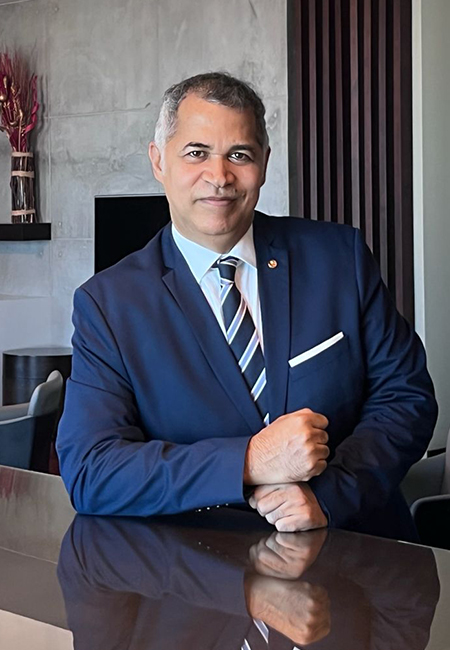
There are moments in life when destiny appears quietly. These are not loud turning points or dramatic events. They are simple choices, often made without deep thought, that later change everything. For Dr. Hameed Ali, one of these moments arrived the day he entered the hospitality world for the first time. It was not part of a long-term dream. It was not driven by ambition. It was a practical step taken by a young man searching for work, responsibility, and stability. Yet this simple decision became the beginning of a lifelong path—one that would define his identity, shape his leadership, and influence thousands of people across decades.
By the time he reached adulthood, Hameed carried a level of maturity far beyond his age. His father’s discipline had given him structure. His mother’s emotional guidance had given him balance. His childhood responsibilities had built integrity and consistency. These qualities naturally matched the demands of hospitality. The industry needed people who were patient, observant, emotionally aware, and willing to serve without ego. Hospitality needed people who understood human emotion and could respond with dignity, clarity, and respect. Without realising it, Hameed already held all the qualities the industry valued most.
His first roles were in departments that demanded real work—fast pace, long hours, pressure, detail, and humility. Kitchens, dining areas, guest service points, and back-of-house spaces became his starting ground. He accepted the work without hesitation. He did not overthink the hours, the pressure, or the demands. Instead, he welcomed the challenge. He saw tasks that others considered routine or stressful as chances to learn. What made him stand out early on was his mindset: every job had value, every shift had purpose, and every responsibility mattered. This thinking would later become one of the strongest pillars of his leadership.
Hameed never viewed hospitality as just employment. He viewed it as a discipline and an art form. He noticed details that others overlooked: the change in a guest’s tone when they felt heard, the reaction on a face when respect was shown, the improvement in team performance when appreciation was expressed.
Note of Thanks
Dr. Hameed Ali extends his deepest gratitude to every person who has been part of his journey, each leaving an imprint on the leader he has become. He remains profoundly thankful to his family, whose values, sacrifices, and steady support formed the core of his discipline, resilience, and sense of purpose. Their presence shaped his character long before the world recognised his achievements.
He expresses sincere appreciation to the mentors who guided him, the colleagues who collaborated with him, and the team members who placed their trust in him. Their belief pushed him forward, their challenges strengthened his abilities, and their dedication elevated every step of his professional growth. Their influence reinforced his commitment to lead with honesty, emotional intelligence, and respect. He extends heartfelt thanks to the hospitality industry for offering him the space to learn, evolve, and give back with authenticity and passion. He is equally grateful to the guests, partners, and stakeholders whose interactions deepened his understanding of service, leadership, and humanity.
Most importantly, he honours the people who stood beside him through victories and through hardship—those who reminded him that no success is achieved alone and that every accomplishment becomes meaningful through the people who share the journey. Their presence gave strength to his purpose and heart to his legacy.
Thank You
– Dr. Hameed Ali