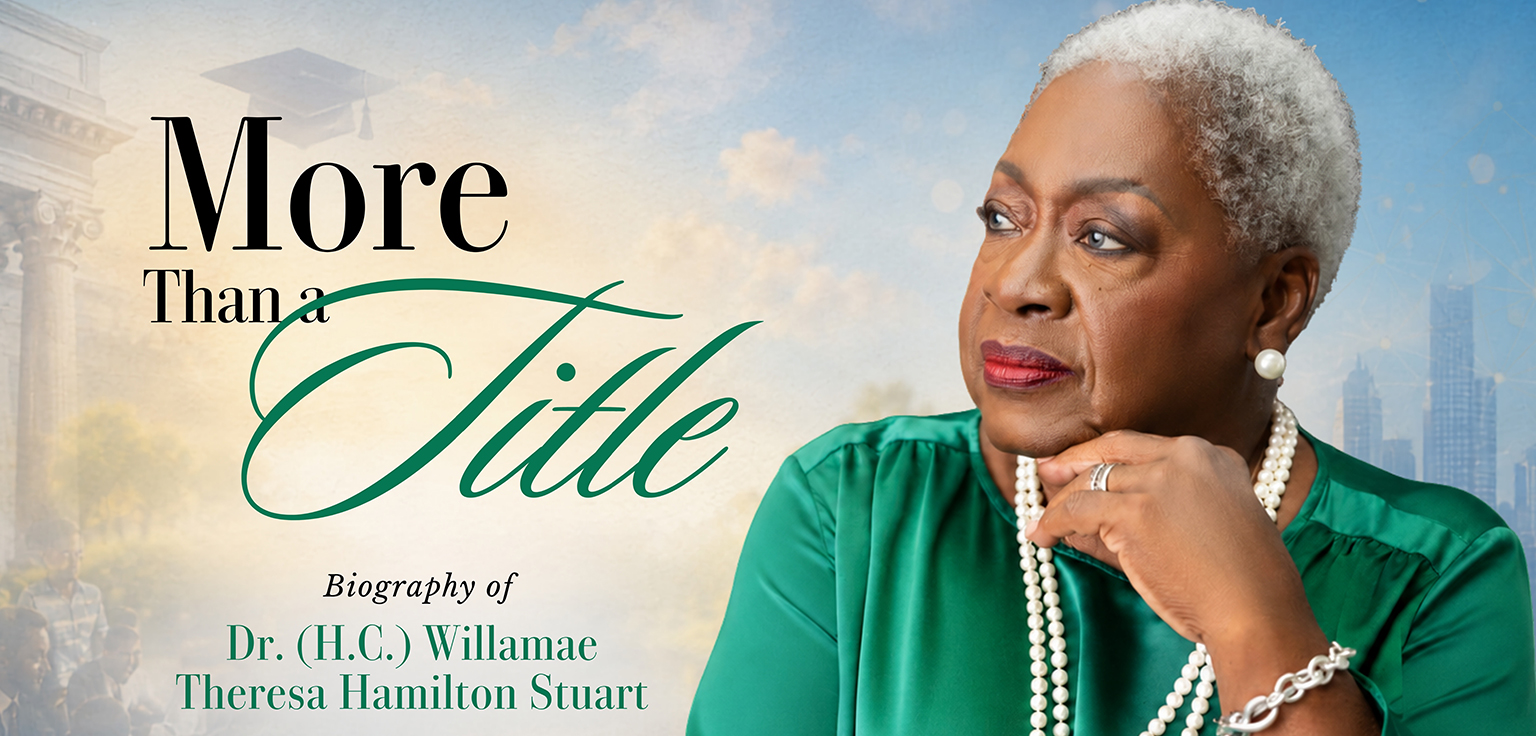
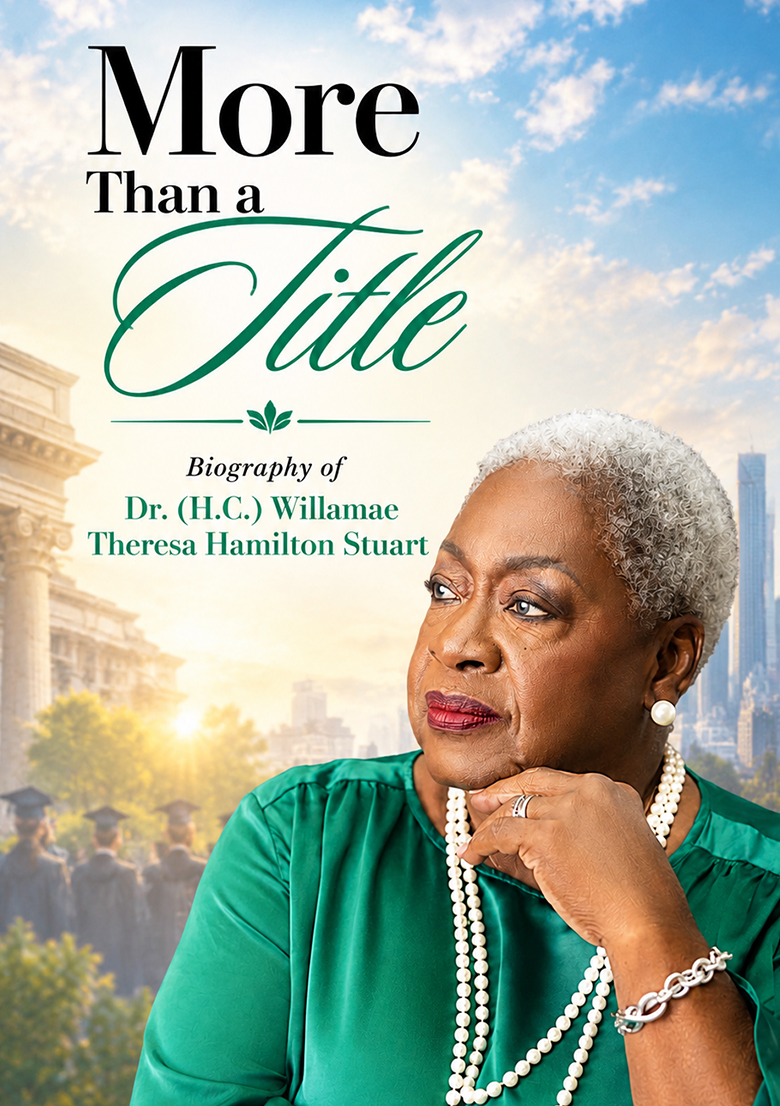
“I want to be remembered as a compassionate, sensitive, and loving person, one who loves everybody and sees the light of Christ in every person as God’s creation.”
Introduction
The life of Dr. Willamae Theresa Hamilton Stuart is a story shaped by faith, service, learning, and an uncommon sense of responsibility toward others. Her journey does not ask to be remembered only through positions held or qualifications earned, although those form an important part of her professional path. It asks to be understood through the deeper current that has guided her life from the beginning, a desire to care, to teach, to strengthen people, and to help systems become more thoughtful, more prepared, and more human.
Born in The Bahamas on January 10, 1948, Dr. Willamae Theresa Hamilton Stuart entered a home where faith was not reserved for special occasions. It was part of the rhythm of family life. Her parents, Reuben Alfonso Bernard Hamilton and Maud Vernita Poitier, raised their children with the strong Catholic traditions of prayer, worship, discipline and devotion that shaped their daily life. Sunday Mass was a family practice, the rosary held a meaningful place in the home, and devotion to the Blessed Virgin Mary remained one of the most cherished elements of her early spiritual formation.
That childhood gave her more than memories. It gave her a way of seeing people. It taught her that life carried responsibility, that service had meaning, and that faith was strongest when it became visible through action. Cultural and religious celebrations of her early years instilled in her the value of belonging and the influence of her parents helped to build the moral ground on which she would later stand as a nurse, educator, leader, consultant, and person of service.
In school, she showed interest in many subjects. Science drew her attention, especially areas that helped her understand the body, nature, and the world around her. History also stayed with her, particularly because it opened her mind to wider human stories, nations, struggles, and change. At the same time, her mother’s involvement in political life introduced her to the movement of country affairs, community voices, voting, leadership, and national development. She did not enter that world directly at first, but the exposure left an impression. It helped her become aware of systems, decisions, people, and the way public life affects ordinary families.
Her professional direction did not appear all at once. Like many young people, she first explored what seemed available and practical. Teaching entered her path before nursing fully claimed her heart. Yet something within her was drawn toward care. Nursing gave her a place where compassion could become skill, discipline could become service, and personal concern for people could become a life’s work. She later trained beyond home, qualifying as a state-registered nurse in Poole, Dorset, England, and as a state-certified midwife in Glasgow, Scotland. These experiences widened her understanding and deepened her professional foundation.
Still, she came to realise that caring for people only after they became sick was not enough. One of the defining shifts of her life was the movement from treating illness toward helping people remain well. She began to think more deeply about prevention, family health, mothers, newborn babies, children, communities, diet, rest, exercise, education, and the conditions that shape wellbeing long before a person reaches a hospital bed. This became one of the most important decisions of her career. In her own reflection, moving toward the care of well people was one of her greatest achievements and one of the best decisions she ever made.
“Faith is not only taught in words; it is lived through the quiet habits of home.”
Phase 1: The Home That Planted Grace
Dr. Willamae Theresa Hamilton Stuart’s life began wrapped in the warmth of faith and family, in a home where belief wasn’t just something people talked about but something they lived every day. She was born on January 10, 1948, in The Bahamas, into a household where spiritual discipline, religious devotion, and the closeness of family formed her very first picture of the world. Her parents, Reuben Alfonso Bernard Hamilton and Maud Vernita Poitier, gave all their children a foundation sturdy enough to guide her long after she left childhood behind.
The Catholic faith sat at the very centre of the home she grew up in. It wasn’t confined to Sunday Mass or special holy days; it shaped everyday life, defined who the family was, and became the way values passed from one generation to the next. Prayer felt as natural as breathing, going to church was simply what you did, and devotion had a quiet, steady presence in the house. That religious atmosphere left a deep mark on her heart. It didn’t just tell her what to believe. Over time, it shaped how she would serve, lead, and care for people.
When she thought back to her childhood, the practices of faith filled most of her memories. Sunday Mass was a given, a fixture of family life. Sometimes she would go to morning Mass during the week with her father too. The rosary held a special place in the household; both parents encouraged it, and devotion to the Blessed Virgin Mary meant something deep to the family. Her mother’s belief in Mother Mary brought a gentle, reverent tenderness into their home, while her father’s faith lent strength and a sense of discipline to their spiritual life. These practices didn’t just teach her the doctrines of the Church. They taught her a real sense of patience, sacrifice, humility, love and responsibility.
The customs and traditions of their faith were followed with seriousness and affection. The feast days of the Church calendar were important occasions, occasions shared together by the entire family. They were not distinct religious occasions, not occasions of ceremony. They were moments all shared, binding all together in a common spirit of worship and belonging. She remembered those times as an exciting part of being a child, precisely because they gave rhythm and meaning to life. There was always a feast to look forward to, something to prepare, something to honour, something new to learn.
A few customs stayed with her in a particularly vivid way. Fridays meant no meat on the table, and the days around Holy Thursday and Good Friday had their own quiet, memorable rhythm. These practices were woven so naturally into the household that they didn’t feel like rules. They taught discipline without making it hollow. They taught reverence without ever taking away warmth. And they showed, quietly, that real belief had to be lived through action, habit, and a shared commitment to something bigger. Long before she would set foot in a hospital ward or lead any organisation, she had already seen that care and devotion often hide in the small, repeated acts of ordinary life.
Her parents were the centre of this formation. Her father’s influence was steady and strong, and his own connection to religious life added another layer to the faith filled atmosphere they were raised in. Her mother, who kept the home and later worked at one of the hotels, also became a fervent political supporter of the party that helped reshape the government of the Bahamas. Through her mother, she was exposed early to the movement of crowds, the energy of public life, talk of voting, leadership, and national change. She didn’t fully grasp everything she heard and saw back then, but those experiences quietly opened her mind to a world beyond the front door.
“The mind that keeps asking questions is already walking toward purpose.”
Phase 2 : The First Signs of Curiosity and Purpose
Before Dr. Willamae Theresa Hamilton Stuart came to understand the full direction of her life, she was first a young girl learning how wide the world could be. Her early education did not give her a ready made answer about what she would become, but it opened doors in her mind. It showed her that knowledge was not one thing. It could be found in the body, in the land, in history, in people, in government, and in the quiet questions a child begins to carry without yet knowing their importance.
In school, she did not limit herself to one favourite subject. When asked about what she enjoyed most, she remembered liking all of them. There was no single area that stood alone above the rest. Yet, as she looked back, she recognised that she had a natural strength in the sciences. At the time, the subject was known as general science, but within it she encountered ideas that would later feel connected to the life she chose. She studied plants, animals, the human body, and areas that introduced her to anatomy and physiology. Even before she fully understood the future value of those lessons, they were giving her a language for life, health, and the living world.
Her curiosity was not limited to the body alone. She also found interest in geography, mapping, landscapes, wind, rain, and the natural environment. These subjects helped her notice how the world worked beyond the walls of a classroom. They drew her attention to patterns, movement, places, and conditions. In time, such awareness would matter deeply, because her later work would not only involve individuals, but also communities and the surroundings that shaped their wellbeing.
History also held her interest. In her school years, she studied more international and British history than Bahamian history, largely because of the educational environment of that time. She learned about early human history, the Reformation, and figures such as Henry VIII. As The Bahamas was a Commonwealth country, the curriculum reflected that wider historical influence. She later recognised that there was very little American history in her schooling and only a small amount of Bahamian history during that period. Still, history taught her to look beyond the present moment. It helped her understand that nations, power, belief, and change were all part of the human story.
Alongside school learning, another kind of education was taking place in her life. This one did not come from books or examinations. It came from her mother’s involvement in public life. Maud Vernita Poitier was deeply connected to the political movement of the time and became a strong supporter of the party that helped bring change to the government system in the Bahamas. As a child, she often went with her mother to meetings. At first, it was not because she had chosen to be there. She went because her mother took her along. Yet those gatherings left a quiet mark on her.
In those rooms and public spaces, she heard about matters that were larger than one household. She became exposed to discussion about the labour movement, political development, voting, policies, procedures, parliament, leadership, and the direction of the country. She did not fully realise then that she was being introduced to the workings of national life. She was simply present, listening, observing, and absorbing what was happening around her. Later, she would understand that those experiences had given her an early awareness of culture, government, and the connection between public decisions and ordinary people.
“Nursing gave her a place where concern for people could become a life’s work.”
Phase 3 : The Profession That Held Her Heart
At the end of her school years, Dr. Willamae Theresa Hamilton Stuart did not step into life with every answer already arranged before her. Her direction came gradually, through thought, opportunity, instinct, and the quiet pull of compassion. She had been a curious student, drawn to many areas of learning, but choosing a life’s work was not something she understood all at once. Like many young people standing at the edge of adulthood, she first looked toward what seemed possible, available, and practical.
Teaching entered her life before nursing fully claimed it. It was one of the first doors open to her, and she stepped through it. There was something natural about this beginning, because she had always carried an interest in learning and communication. She liked knowledge, liked understanding how people grew through information, and liked the idea that a person could help another person become more aware of the world. Teaching gave her a first experience of guiding others, even before she would later become known for educating nurses, families, and communities.
Yet beneath that practical beginning, there was another feeling forming inside her. She sensed that she was being drawn toward care. It was not simply a desire for employment or a wish to wear a professional title. It was something more personal and more human. She later described it as a pull, a compassionate spirit that made nursing feel like the better fit for who she was becoming. Teaching had opened one path, but nursing offered her a place where concern for people could become daily action.
That decision represented a major shift in her life. Nursing brought order to qualities that had been developing in her. It asked for discipline, patience, courage, humility, and attention. It required knowledge, but it also demanded tenderness. It involved the body, but it could never ignore the person. She was not looking for work that was empty of feeling. She needed a field where skill and compassion could stand together.
In entering nursing, she moved closer to the kind of service that would shape her identity for decades. She came into a profession where people were often seen at vulnerable moments, where trust had to be earned, and where the smallest act of care could stay in someone’s memory for years. She understood that nursing was not only about procedures or instructions. It was about presence. It was about being close enough to notice fear, discomfort, hope, confusion, and need. It was about seeing the human being behind the illness.
Her early happiness in nursing confirmed that she had not chosen wrongly. She found meaning in the work and felt at home in the act of caring. Still, even as she accepted the profession with sincerity, her mind did not stop questioning. She had entered nursing, but she would not remain satisfied with simply doing things as they had always been done. She began to notice the deeper shape of the healthcare system around her. She saw people being cared for after illness had already reached them, and while that work was necessary, something inside her wondered whether there should be more.
Note of Thanks
Filled with gratitude, Dr. Willamae Theresa Hamilton Stuart offers her heartfelt thanks to everyone who walked alongside her through the many seasons of her life. She never carried the journey on her own strength alone. It was shaped by faith, by family, by the guidance she received, by the fellowship of her profession, and by the steady presence of people who lifted her up at moments when the path demanded courage, patience, and sacrifice.
She is deeply grateful to her husband, Mr. Reuben Theresa Stuart. His understanding and support opened the way for her to continue her education and professional growth, even in seasons when that growth came at a personal cost. His belief in the worth of learning remained a quiet but constant source of strength in her life.
Her children hold a place of heartfelt gratitude. She lived through many chapters, and their lives stayed close to her heart. Their very presence gave meaning to so much of her effort and kept her grounded in the importance of family, care, and responsibility. She remembers, with great tenderness, the support of her parents, Reuben Alfonso Bernard Hamilton and Maud Vernita Poitier. Their faith, their values, their discipline and guidance laid the foundation on which her whole life of service was built.
She is thankful, too, for her brothers and sisters, who gave their help along the way with love and generosity. She remembers the mentors who taught her to look for the principle behind every matter, to treasure kindness and humility, and to lead always with reflection and compassion.
Her thanks reach out as well to the nurses, colleagues, students, trainees, patients, families, communities, and professional organisations that became the fabric of her life’s work. Each person, each experience, helped shape her sense of purpose. Through them, she learned, served, taught, and grew. With deep humility, she offers this note of thanks as a reflection of a life carried by many hands and guided, all the while, by grace.
thanks,
– Dr. Willamae Theresa Hamilton Stuart