If I can help one soul find direction, my journey has been worth it. I like to help, because a little belief can carry a person far, and everyone deserves someone who sees possibility in them.
Introduction
The story of Dr. Tanuja Ragoobar Beharry begins in Fairfield, a place that carries the earliest memories of her life and the first lessons that shaped her character. She was born into circumstances where love, duty and distance all existed together. Her father spent much of his time working away from home, and because of that, she spent a significant part of her childhood with her grandmother. Those years were not simple. For a young child, growing up without regularly seeing her parents was emotionally difficult, and she would later remember that there were moments when she almost felt she did not truly know what it meant to have parents near her. Yet those same years also gave her discipline, quiet endurance and a deep inner strength that would remain with her throughout life.
Her grandmother became one of the most important figures in her early journey. In that home, Dr. Tanuja realised that education was not just a ritual but a way of advancement. Her grandmother’s wish for her to succeed was a strong force in her thoughts. Her uncle also played an important role, helping to support her financially during her childhood. Life asked much of her at an early age. There were days when school meant long travel, waiting early, passing through villages, and carrying the burden of limited resources. When others could attend extra lessons, her parents could not afford the same opportunity for her. Still, she continued. She studied, prepared, and moved forward with the determination of someone who understood that progress often begins quietly, long before anyone notices it.
During her school years, she showed a strong interest in learning and was drawn especially toward the business area. She was not a student who allowed difficulty to become an excuse. She continued her education, wrote her CSEC examinations, and carried within her the desire to build something meaningful from the opportunities she had. Her older brother also influenced her path. He had entered teacher training before her, and although she had to learn many things independently, his example helped her see teaching as a possible future. More than a job, teaching became connected to her desire to give back.
Before entering the classroom, Dr. Tanuja began her professional life in public service. She worked as a Legal Clerk II at the Essequibo Magistrates’ Court in the Judiciary of Guyana, serving from November 2005 to July 2010. This role placed her in an environment that required care, order and responsibility. She kept court records, prepared files and documentation, assisted with court related work, supported magistrates and attorneys, and developed the administrative and organisational skills that later strengthened her work in education and leadership. Starting in public service at a young age gave her more than work experience. It gave her a deeper understanding of duty, discipline and the importance of accuracy.
Her heart, however, was steadily moving toward teaching. After her training at the Cyril Potter College of Education, where she earned her Trained Teachers’ Certificate and specialised in English, she stepped into the profession she had long felt drawn to. In the classroom, she discovered a place where her own struggles could be transformed into patience for others. She taught English Language and Literature at the CSEC level at Anna Regina Secondary School, preparing students for regional examinations, conducting assessments and providing support for school and curriculum activities. These years gave her the opportunity to grow as an educator and further strengthen the sense of responsibility she carried for her students.
Later she went to Aurora Secondary School where she is an Assistant Mistress and teacher. Her role expanded to include English Language, Literature (English B) and business subjects. She planned lessons, marked students, supported school initiatives, mentored students and junior teachers and reached out to the community through educational work. The heart behind her profession is seen in the way she speaks of her students. She calls them with affection, often seeing them as children in her care rather than names on a class list. Their development, confidence and achievements matter to her deeply.
"Some childhoods do not begin with comfort, but they still teach the heart how to endure."
Phase 1: The Girl Who Grew Through Absence
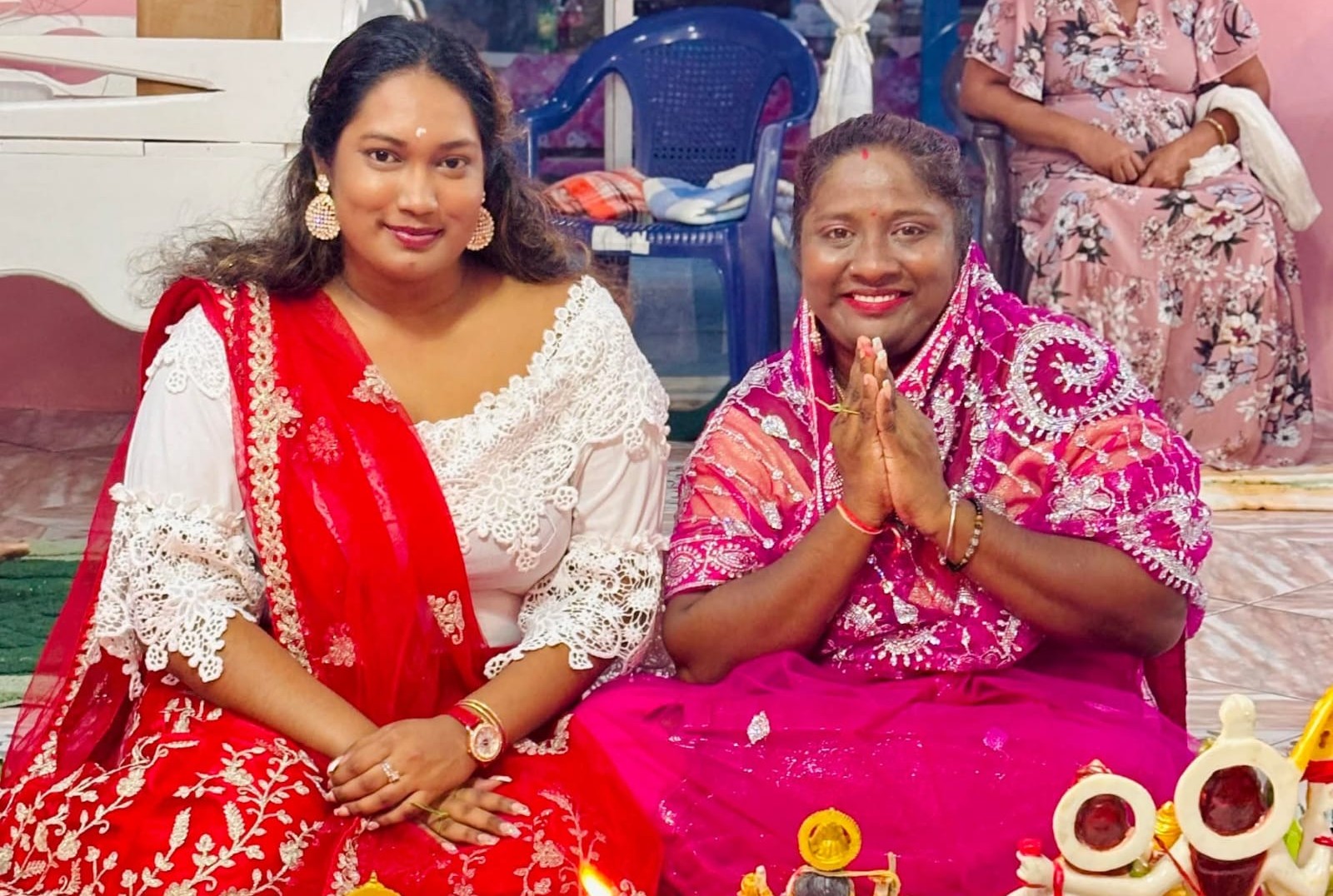
The early life of Dr. Tanuja Ragoobar Beharry began in the village of Fairfield, a place that remained closely tied to her identity, her memories and the first shaping of her character. It was there that life introduced her not only to family and belonging, but also to distance, waiting and a kind of emotional maturity that arrived earlier than it does for many children. Her childhood was not built around ease. It was built around adjustment, understanding and the slow acceptance of circumstances that she could not control.
Her father spent much of his time working away in another country. Because of that, he was often home only for short periods before leaving again. For a child, such absence could not be understood in the practical language of responsibility and survival. It was felt in simpler, deeper ways. It was felt in the quiet space where a parent should have been near. It was felt in the moments when other children may have known the daily comfort of both parents, while she had to learn life mostly through the care of others.
From her nursery years, and for much of her childhood, Dr. Tanuja lived with her grandmother. That arrangement became one of the defining facts of her early life. Her grandmother’s home was not just a place of shelter. It became the place where her first habits were formed, where her thoughts about education began to take shape, and where her young heart learned both dependence and resilience. She was still a child, yet life had already placed her in a situation where she had to grow with a sense of separation from her parents.
She would later describe that period as very difficult. There was a time when she almost felt as though she did not know what it meant to have parents, not because they did not exist in her life, but because she did not get to see them often. That feeling speaks to the emotional truth of her childhood. It was not a complaint, nor was it spoken with bitterness. It was the honest memory of a girl who had to live with absence while still learning how to move forward.
Her grandmother became one of the most important figures in that space. She gave Dr. Tanuja care, structure and a reason to keep reaching for more. The wish she carried for her granddaughter was clear. She wanted her to excel. That desire may have been simple in words, but it became powerful in meaning. It told the young girl that education was important, that effort was important, that when life was not easy, she could still reach for something better.
The home in which Dr. Tanuja grew was also connected to sacrifice. Her uncle was a major part of her childhood, especially because he worked and helped to provide financial support. Her grandmother also did what she could to help send her to school. These were not grand gestures performed in public view. They were the quiet acts that often hold a life together. They showed her, even as a child, that people sometimes give from what little they have so that someone else may continue.
"Education means more when you have had to walk through difficulty to reach it."
Phase 2 : The Schoolgirl Who Refused to Stop
For Dr. Tanuja Ragoobar Beharry, education was never something that came wrapped in comfort. It was something she had to reach for, sometimes literally, through distance, difficulty and sacrifice. The early foundation of her life had already taught her that nothing meaningful should be taken lightly, and school became one of the first places where that truth began to show itself. Long before education became her profession, it was the road she had to keep choosing despite the obstacles around her.
Her school days carried the quiet weight of practical struggle. At that time, transportation was not easily available to her, and money for travel was not always within reach. There were days when getting to school meant walking through a number of villages. Sometimes, the path took her through fields as she continued toward the place where learning waited. To many children, school may have been a normal part of the day. For Dr. Tanuja, it often began with effort before a lesson was even taught.
These experiences did more than test her physically. They created her understanding of opportunity. She understood that education had a price, not just in money, but in time, energy and discipline. The walk to school was not just a journey across distance. It was a daily reminder that progress required movement. She had to wake with purpose, prepare herself and continue even when the circumstances did not make it easy. It was in those repeated acts of going forward that her character became steadier.
Later, when she returned to live with her parents around the age of fifteen, another set of challenges appeared. The change did not remove the difficulty of travel. In fact, she explained that being with her parents meant an additional transportation cost, almost twice the amount compared to what was required when she stayed with her grandmother. School remained important, but reaching it still demanded sacrifice from the family. She had to wake earlier, wait longer and adjust to a different rhythm.
During that period, another challenge stood beside her. Many students were able to attend extra lessons, especially when preparing for important examinations, but her parents could not afford to send her. When she prepared for her CSEC examinations, she did not take additional lessons. She had to depend on her own effort, her own study habits and the discipline she had built over time. That part of her journey shows something important about her nature. She did not allow the absence of extra support to become the end of her ambition.
Her determination was not loud or dramatic. It was quiet and practical. She studied because she had to. She continued because she believed she could. She knew that if she wanted to rise, she would have to do much of the work herself. This understanding later became part of the way she viewed learning and growth. It taught her that guidance is valuable, but personal effort remains necessary. It also helped her understand students who may not always have easy access to resources, because she had known that reality herself.
"I was very driven in terms of becoming a teacher. So, after two years, I started a seroportical education."
Phase 3 : Young Woman in Public Service
After her school years, Dr. Tanuja Ragoobar Beharry stepped into the world of work at an age when many young people are still trying to understand where life is leading them. She had already learned that effort was not optional, and that life often required courage before comfort. Those lessons followed her into her first professional role, where she began working in public service at the age of seventeen. It was a new chapter, but it did not stand apart from the discipline she had built earlier. Instead, it gave that discipline a place to mature.
Her entry into public service came through her role as Legal Clerk II at the Essequibo Magistrates’ Court, within the Judiciary of Guyana. She served there from November 2005 to July 2010, a period that introduced her to a structured working environment where accuracy, order and responsibility were essential. For someone still young, this was more than employment. It was a serious beginning, one that required her to understand the importance of records, documents, procedures and accountability.
The work of a legal clerk may not always seem dramatic from the outside, but it is weighty. Every file matters. Every record has to be taken care of. Every piece of documentation supports a larger system of service. In this environment, Dr. Tanuja learned the importance of precision. She maintained court records, prepared files and documentation related to court work, and maintained legal files. These duties helped her understand that behind every formal process were people, decisions and duties that needed careful attention.
She also helped magistrates and lawyers with administrative jobs. This made her need to be observant, reliable and organised. She was not just doing routine jobs. She was learning how professional systems work, how offices need consistency and how one person’s attention to detail can help the work of many others. Those early duties built her capacity to handle information, follow processes and stay steady in a formal setting.
Working as an administrator within the judiciary system also helped her develop confidence. It placed her in contact with a workplace that required discipline in speech, conduct and performance. There was no room for carelessness. The role demanded seriousness, and she accepted that demand. For Dr. Tanuja, this was one of the first professional spaces where her sense of responsibility became visible outside the classroom and outside family life.
The experience also gave her extensive administrative and organisational skills. These skills would later become important in her journey as an educator, leader and school professional. The ability to keep records, prepare documents, manage files and support institutional work did not end with her time at the court. It became part of the foundation she carried forward. Long before she would support school initiatives, mentor others or assist with educational responsibilities, she was learning how to work with structure and reliability.
Note of Thanks
Dr. Tanuja Ragoobar Beharry wishes to convey her sincere appreciation to those who have supported her journey with their kindness, belief, and encouragement. Her life has been strengthened not only from her own determination but also from those who have stood by her in personal, professional, and emotional ways.
She is truly grateful to her Head Teacher Rabinath Boodram and Deputy Head Teacher Lalita Kushal for believing in her capabilities and giving her opportunities to serve her students. Their trust has made her extend herself beyond her duties and to perform her duties with commitment and dedication. She also remembers their humanity with gratitude especially during a time of emergency when they made sure that she got medical attention and proper care.
Dr. Tanuja would also like to thank her brother, Ramnaraine Ragoobar, her sister, Devita Ragoobar, and her sister-in-law, Ashmini Mohan, who have always stood by her as cheerleaders, supporters and sources of encouragement. Being connected by family love and shared understanding, they have offered her guidance, strength and support through different stages of her journey.
Her heart also carries love for the younger members of her family, including her nephews, Fun Ragoobar and Zane Ragoobar, and her nieces, Piya Persaud, Paavini Persaud and Katalina Ragoobar. Their presence adds warmth, affection, and personal joy to her life.
She also wants to thank her adopted daughter Bhomeka Ramroop, who has been a great source of care and help, especially during times when she was unwell and whose love, trust and support has been felt by Dr. Tanuja, who in turn has been helpful to Bhomeka in building her business.
Through every stage of her journey, Dr. Tanuja remains thankful for the people who believed in her, cared for her and helped her continue with strength, service and purpose.
thanks,
– Dr. Tanuja Ragoobar Beharry