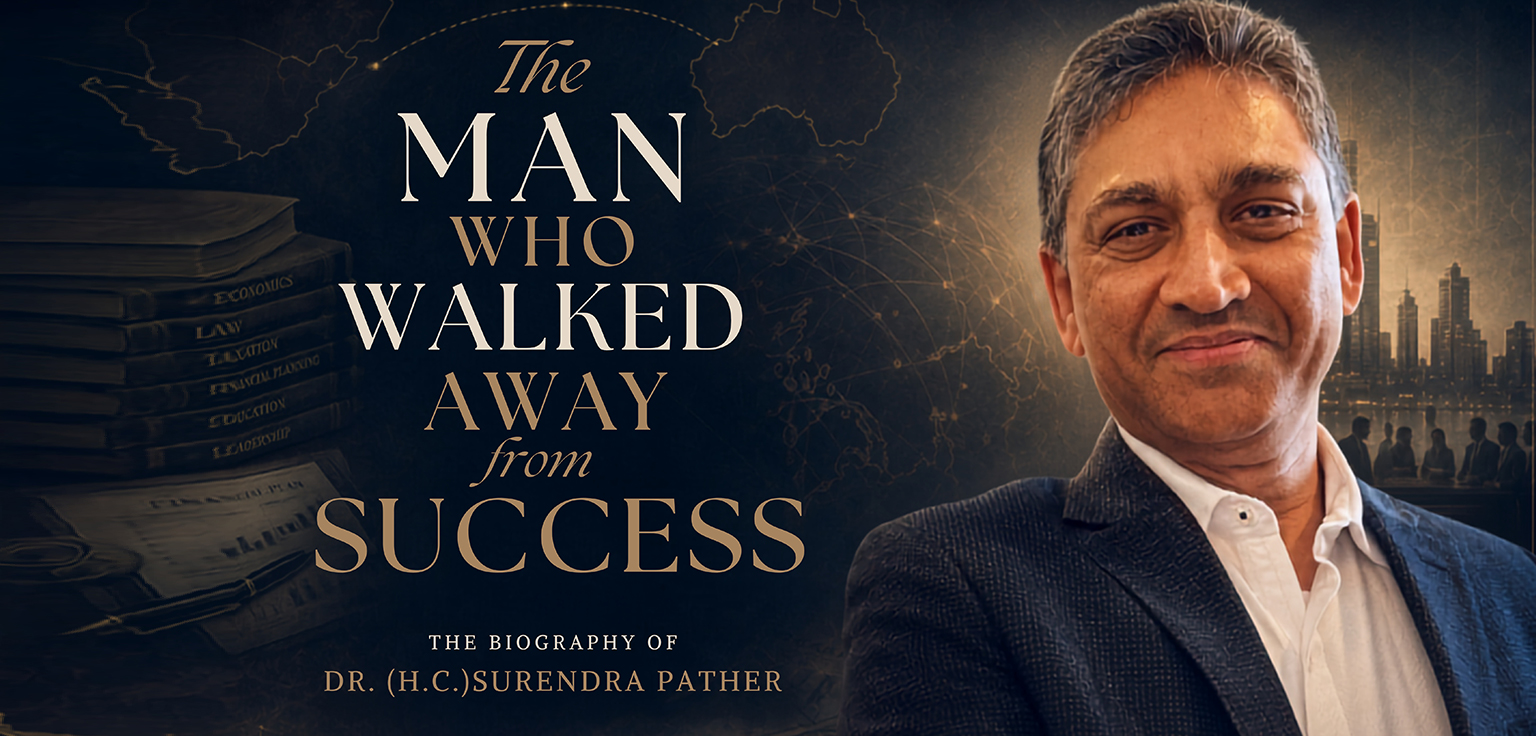
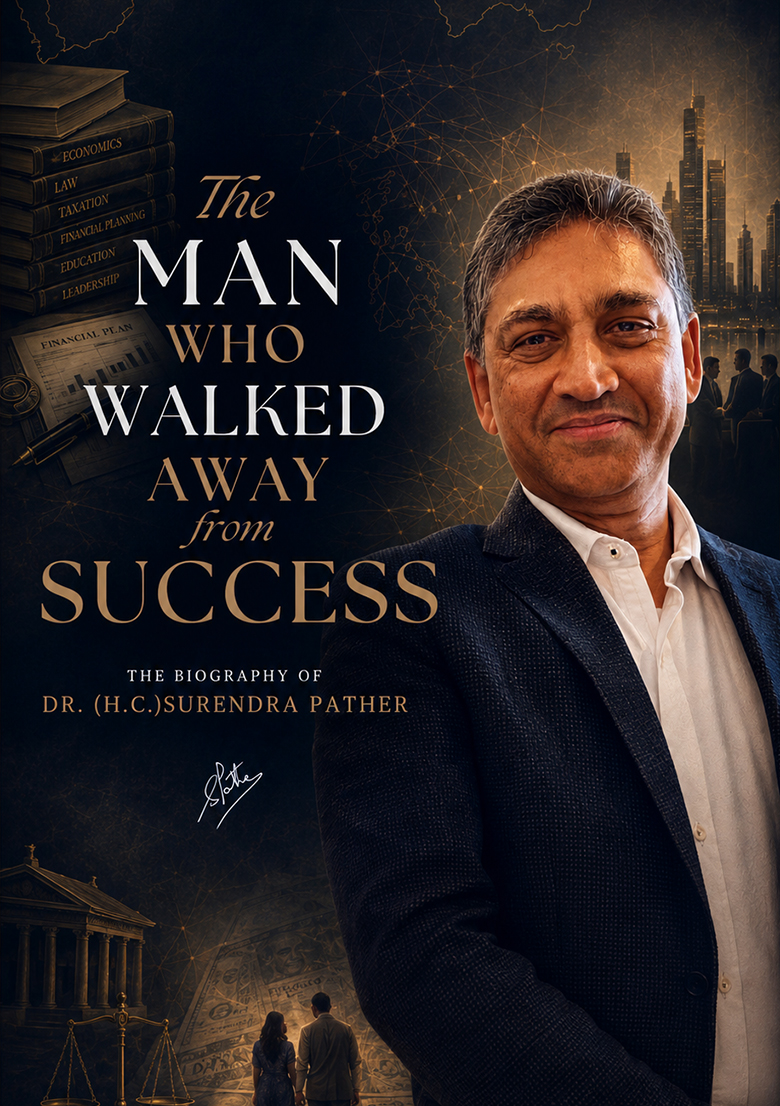
"I left behind everything familiar, built an empire from nothing, lost it, and found myself in the silence that followed. Now I know that a life well lived is not measured by what you accumulate, but by who you become and how deeply you love."
Introduction
The journey of Dr. Surendra Pather is one of movement, choice, courage, and quiet reflection. It begins in South Africa, passes through the uncertainties of migration and professional life, and unfolds into a story devoted to financial innovation, entrepreneurship, education, and a deeper search for meaning. This is not a tale defined by a single profession or one great achievement. It is the account of a man who learned to reconsider his direction whenever life revealed that there was still more to understand.
He was born into a highly accomplished medical family, surrounded by expectations, discipline, and a deep respect for learning. His father’s remarkable academic journey and his mother’s devotion to raising four sons created an environment where effort and responsibility were taken seriously. But outside the family home, the world was a different place. Apartheid cast a long shadow, and it imposed limitations based on ethnicity and colour. His childhood carried two realities at once: the security of a well-managed household and the painful awareness that opportunity was not equally available to everyone.
In 1978, his parents made the difficult decision to leave behind the successful life they had built and move the family to Australia. Their choice was not driven by personal comfort. It was made to give their children a future beyond the restrictions they had known. For Dr. Surendra, that sacrifice planted a lasting sense of responsibility. He understood that the freedom before him had been earned through the courage of those who were willing to start over.
Medicine and dentistry seemed like the natural paths for someone from his background, but his interests pointed elsewhere. Economics captured his attention because it offered a way to understand society, systems, resources, and the forces that shape people’s lives. At university, his focus sharpened. He was finally studying something that genuinely excited him. He entered the selective Economics honours stream and considered a future with the Australian Treasury or the Reserve Bank of Australia.
Then life took an unexpected turn. His mother passed away suddenly during his final Honours Year at Sydney University, and that loss altered his direction. To honour her wishes, he continued with Law, completing a second degree and searching for a profession that could unite his knowledge of Economics with legal understanding. That search led him into corporate taxation at Price Waterhouse. The opportunity was prestigious, but the work revealed something important about his character. He did not want to spend his life confined to a narrow speciality; simply for prestige. He wanted to stay connected to economics, people, opportunity, and the broader realities that affect their futures.
Leaving secure employment opened the door to financial planning, a profession that was still finding its feet in Australia. He entered the field when its structure and identity were being formed, and he became part of the country’s first group of Certified Financial Planners. But his involvement soon went beyond advising clients. He contributed to professional education, helped shape coursework, and played an active role in advancing financial planning knowledge.
"Born into a world that drew lines around people, he learned early that character matters more than colour, and that education is the key to unlocking any door."
Phase 1: Raised Beneath the Shadow of Apartheid
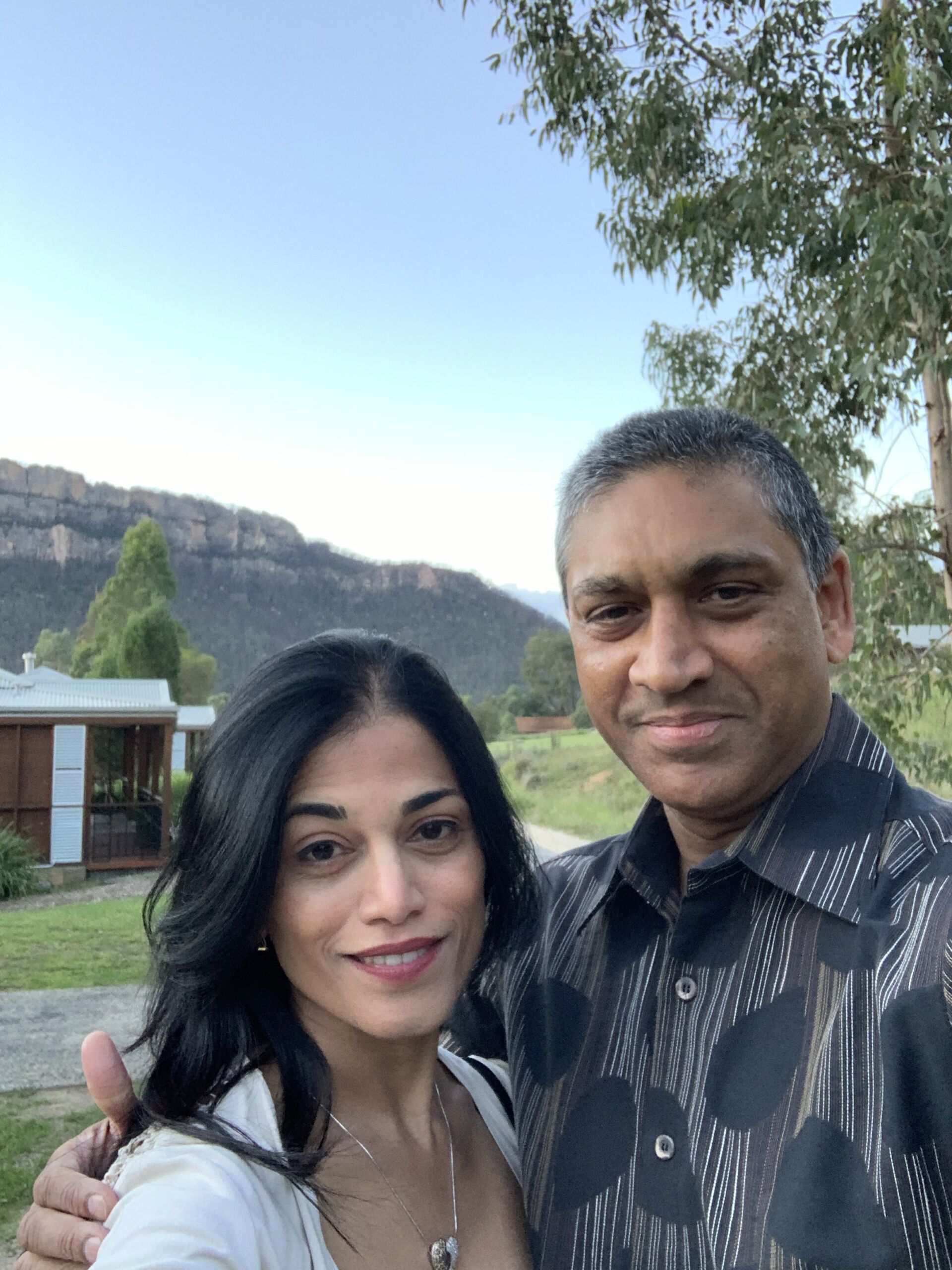
Dr. Surendra Pather was born on 15 May 1965 in South Africa, into a family where education, discipline, and professional responsibility carried great importance. His early life was shaped by the steady influence of his parents, Dr. Gopaul Pather and Thavamani, and by the experience of growing up alongside three brothers. Within the family home, he knew care, structure, and encouragement. Beyond it, he encountered a society divided by apartheid, where identity could determine opportunity long before talent or character had the chance to speak.
His father was a doctor, and the wider family included several members of the medical profession. This created an atmosphere in which academic achievement was respected and demanding careers were regarded as natural expressions of discipline. Dr. Surendra grew up understanding that education could open doors, provide independence, and strengthen a family’s future. He also saw that success required sustained effort. Nothing meaningful was expected to arrive without concentration, responsibility, and a willingness to work.
The influence of his mother was equally important. While his father’s profession demonstrated the value of learning and achievement, his mother helped create the emotional and moral foundation of the household. Raising four sons required patience, attention, and strength. Her role was not measured through titles or public recognition, but through the standards she helped establish at home. Care, integrity, and responsibility were not presented as occasional virtues. They became part of everyday life.
His parents’ influence gave him security, yet childhood in South Africa could not be separated from the realities surrounding the family. Apartheid was not simply a distant political idea. It shaped where people could live, what opportunities they could access, and how they were viewed by the larger society.
Even within a successful household, there remained an awareness that professional accomplishment did not remove every barrier. The family could build stability through education and hard work, but they still lived within a system that treated people differently according to race and colour.
For a young boy, such conditions were not always understood through political language. They were often felt through atmosphere, boundaries, and the knowledge that certain freedoms could not be taken for granted. Dr. Surendra grew up seeing the difference between what a person might earn through merit and what society might still refuse to acknowledge. That contradiction quietly shaped his understanding of fairness. It taught him that achievement mattered, but the environment in which people lived could either support their growth or limit it.
The influence of Gandhi was especially significant because South Africa formed an important part of Gandhi’s own development. His commitment to truth, restraint, and principled action demonstrated that resistance could emerge from inner discipline rather than anger alone. Mandela’s life offered another example of endurance, leadership, and the refusal to let injustice completely define the human spirit. For Dr. Surendra, these figures represented more than political achievement. They embodied the possibility of responding to unfairness with purpose.
"Sometimes the greatest act of love is leaving behind everything familiar so that those who come after can walk towards a freer future."
Phase 2 : The Sacrifice That Carried a Family Across Continents
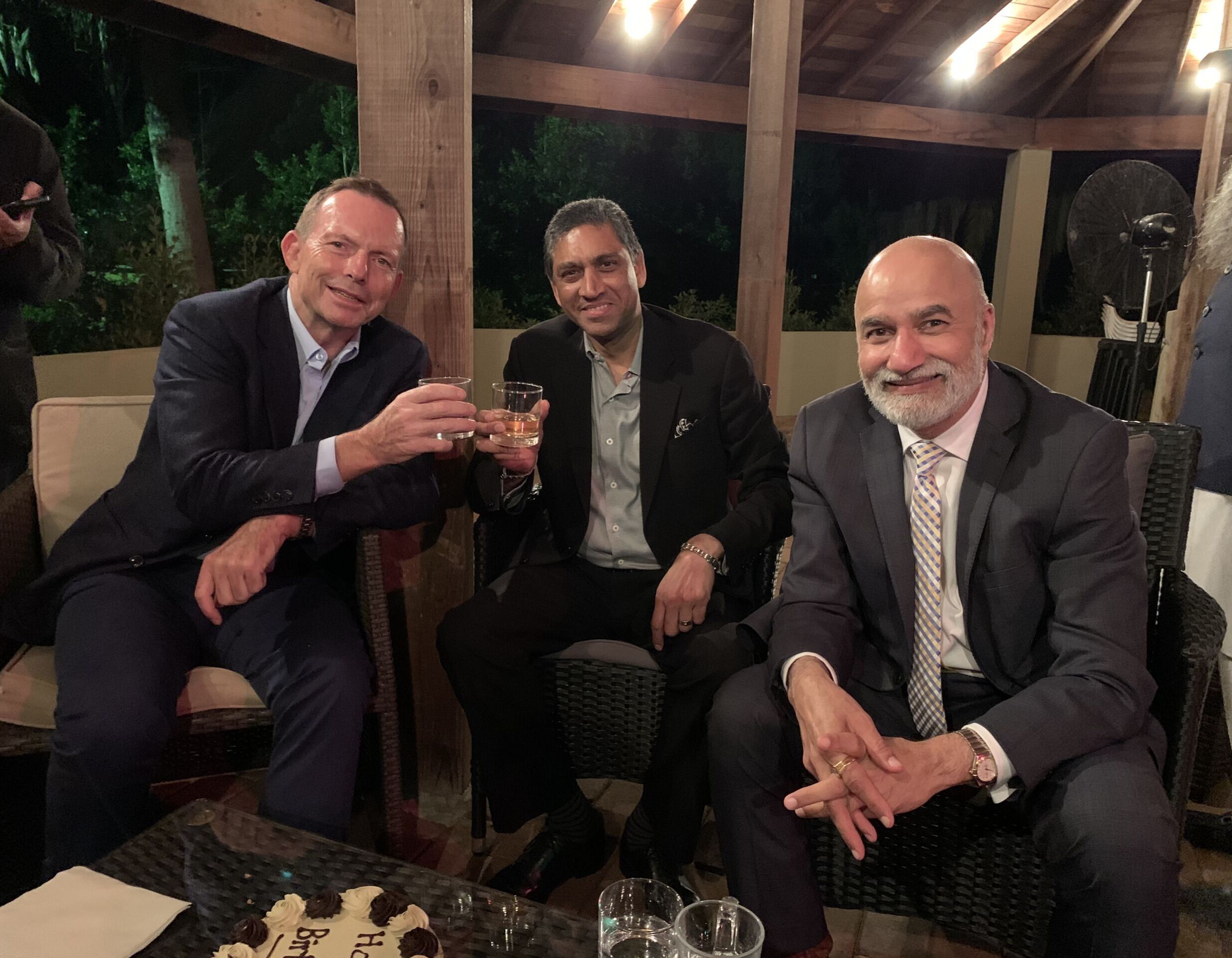
In 1978, the life of Dr. Surendra changed in a way that no ordinary childhood transition could have prepared him for. His parents made the decision to leave South Africa and relocate their family to Australia. This was not a move made in search of comfort or convenience. They were already well established and had built a successful life through education, discipline, and professional commitment. Their decision meant stepping away from familiarity, security, and years of personal effort. They accepted that loss because the future of their four sons mattered more than the life they had already created for themselves.
The choice reflected the seriousness with which Dr. Gopaul Pather and Thavamani viewed their responsibilities as parents. They understood that a comfortable home could not fully protect their children from the restrictions and unrest that surrounded them. Remaining in South Africa might have preserved what they had earned, but it could also have limited what their sons might one day become. Migration, therefore, became an act of foresight. It demanded courage because there was no guarantee that the life waiting in Australia would immediately match the stability they were leaving behind.
For Dr. Surendra, the move represented more than a change of country. It marked the beginning of a new understanding of sacrifice. At the time, he was still young, and the full weight of his parents’ decision may not have been immediately clear. With age, however, he came to recognise what they had placed at risk. They had not merely packed their belongings and crossed a border. They had left behind a professional and personal world they understood, then entered another society where they would have to rebuild their place from scratch.
That realisation stayed with him. It created a sense that opportunity should never be treated casually. The freedoms available in Australia carried a responsibility because they had been made possible by someone else’s willingness to begin again. His parents’ courage placed before him an unspoken obligation to use those opportunities meaningfully. He could not control every circumstance, but he could control the seriousness with which he approached his own future.
Migration often asks a family to live between two realities. One belongs to the world that has been left behind, while the other is still being formed. Dr. Surendra entered Australia carrying the values of his upbringing, yet he also had to understand a different environment. The familiar structures of South African life no longer surrounded him. The family now had to adjust to new social expectations, new possibilities, and the practical uncertainty that accompanies resettlement.
He did not leave his earlier life behind in the sense of forgetting it. The experience of South Africa remained part of the way he viewed freedom, fairness, and opportunity. Australia offered a broader field in which he could shape his education and professional direction, but the memory of restriction gave those possibilities greater meaning. He understood that access to opportunity was not the same as achievement. Freedom opened the door, but discipline would still determine how far he travelled.
"He honoured his family by choosing his own path. True respect, he discovered, lies not in imitation, but in carrying their values forward through a life authentically lived."
Phase 3 : Choosing Economics Over an Inherited Profession
As Dr. Surendra approached higher education, he stood before a choice that carried more weight than the selection of a university course. His family background naturally pointed towards medicine. His father was a respected doctor, and the wider family included several people from the medical profession. Within such an environment, medicine or dentistry appeared to be the logical continuation of a well-established tradition.
Dentistry, in particular, was initially considered as a possible direction. It offered a recognised profession, a clear structure, and the reassurance of following a path his family understood. There was no lack of respect for that world. He had grown up seeing the discipline required to enter and remain within a demanding profession. He understood the commitment behind such a career and the value attached to it. Yet respect did not automatically create personal interest.
The freedom his parents had worked so hard to give him also meant accepting responsibility for an honest decision. Choosing a profession simply because it was familiar would have been easier, but he recognised that a lifetime could not be built entirely around expectation. He needed to understand what genuinely engaged his mind and what kind of questions he wanted to spend his life examining.
His interests gradually drew him towards the social sciences. He began by studying Economics and Politics, two areas that offered a wider view of how societies functioned. Politics explored authority, public choices, and the structures that shape communities. Economics examined resources, behaviour, opportunity, production, and the decisions that influence both individual and national life. Together, they opened a world quite different from the clinical professions familiar within his family.
As he continued studying, economics began to stand apart. The subject gave him a way to understand the relationship between people and systems. It was not only concerned with money in the narrow sense. It asked why opportunities existed in some places and not in others, how resources were distributed, what shaped economic behaviour, and how decisions made by institutions could affect entire communities. These questions connected naturally with the world he had already observed.
Having grown up in South Africa under apartheid and later moved to Australia, Dr. Surendra had seen that social conditions could influence the course of individual lives. He knew that effort mattered, but he had also witnessed how political and economic structures could either support opportunity or restrict it. Economics offered language and method for examining forces that he had previously experienced mainly through observation.
His commitment eventually led him into the selective Economics honours stream at the University of Sydney. This was an important academic step. Honours study required greater depth, stronger analytical discipline, and the ability to engage seriously with complex economic ideas. It confirmed that his choice had not been a passing preference. He possessed both the interest and the ability to continue at an advanced level.
Note of Thanks
This biography concludes with heartfelt gratitude from Dr. Surendra to the people whose love, guidance, sacrifices, and wisdom shaped every chapter of his life. While professional achievements, innovation, and leadership have formed an important part of his journey, he knows that none of these would have been possible without the influence of those who stood beside him from the very beginning.
His deepest appreciation is extended to his parents, Dr. Gopaul Pather and Thavamani. Their courage in leaving South Africa to create a better future for their family laid the foundation upon which his entire life was built. Their commitment to education, resilience in the face of adversity, and unwavering belief in the value of knowledge gave him opportunities that continue to inspire him every day. He remains especially grateful for his mother’s encouragement to study law, a decision that became one of the defining milestones of his life.
Dr. Surendra also expresses his sincere gratitude to his wife, Mogestri, whose companionship, understanding, and unwavering support have remained a constant source of strength. Her own dedication to health and wellbeing has enriched their shared journey, while together they have built a family founded on mutual respect, learning, and compassion. He is equally thankful for his two daughters, whose presence has brought purpose, joy, and a deeper understanding of what truly matters in life.
He extends sincere appreciation to the teachers, colleagues, mentors, clients, and professional associates who trusted his ideas, challenged his thinking, and supported the development of SUMO and the multidisciplinary approach that became his life’s work. Every meaningful collaboration strengthened both his professional journey and his understanding of service.
Finally, Dr. Surendra offers humble gratitude to the spiritual teachings of Vedanta, and to the wisdom of Mahatma Gandhi, Nelson Mandela, Riaz Bharucha, and Swami Parthasarathy, whose insights helped him discover that life’s greatest success is not measured by wealth or recognition, but by inner peace, purposeful living, and the positive difference one leaves in the lives of others.
thanks,
– Dr. (H.C.) Surendra Pather