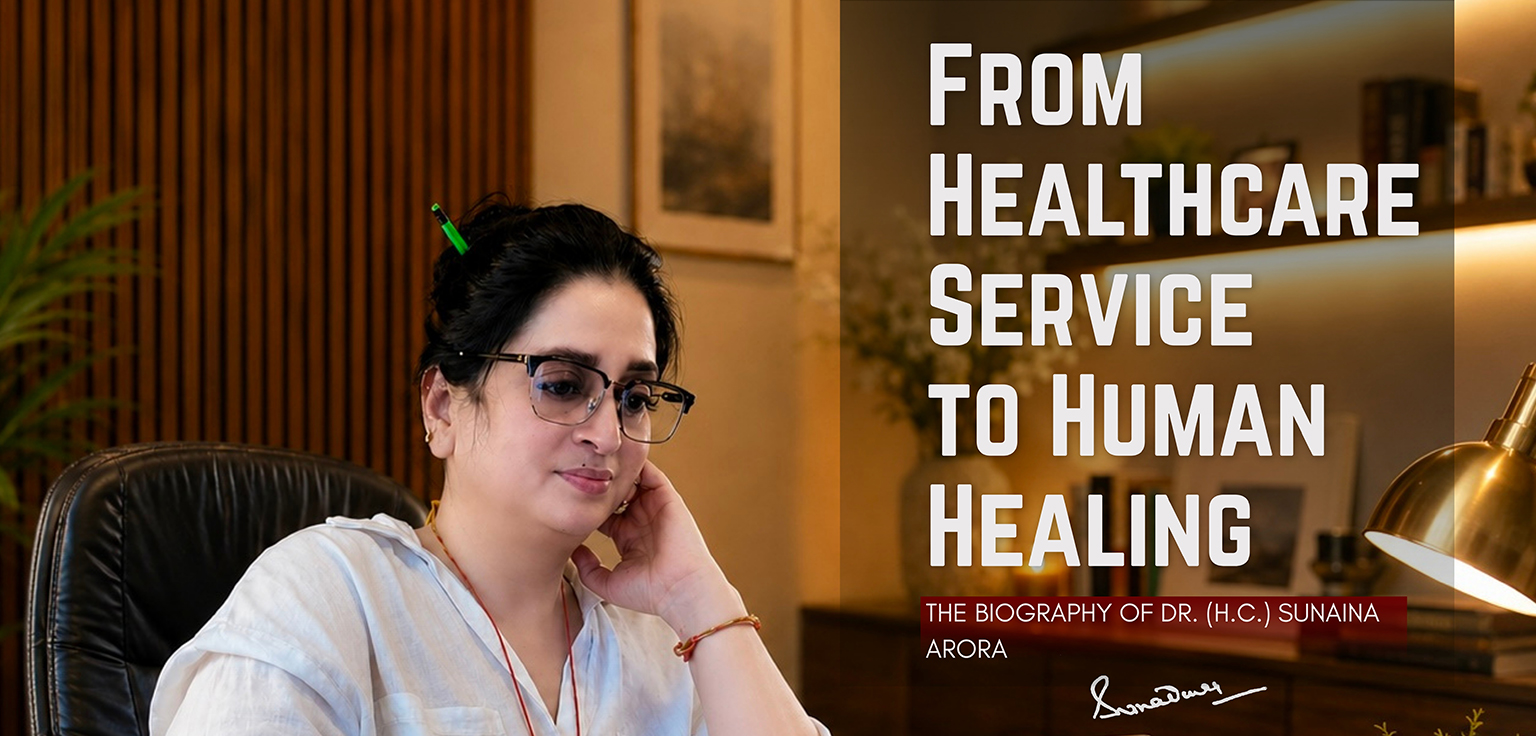
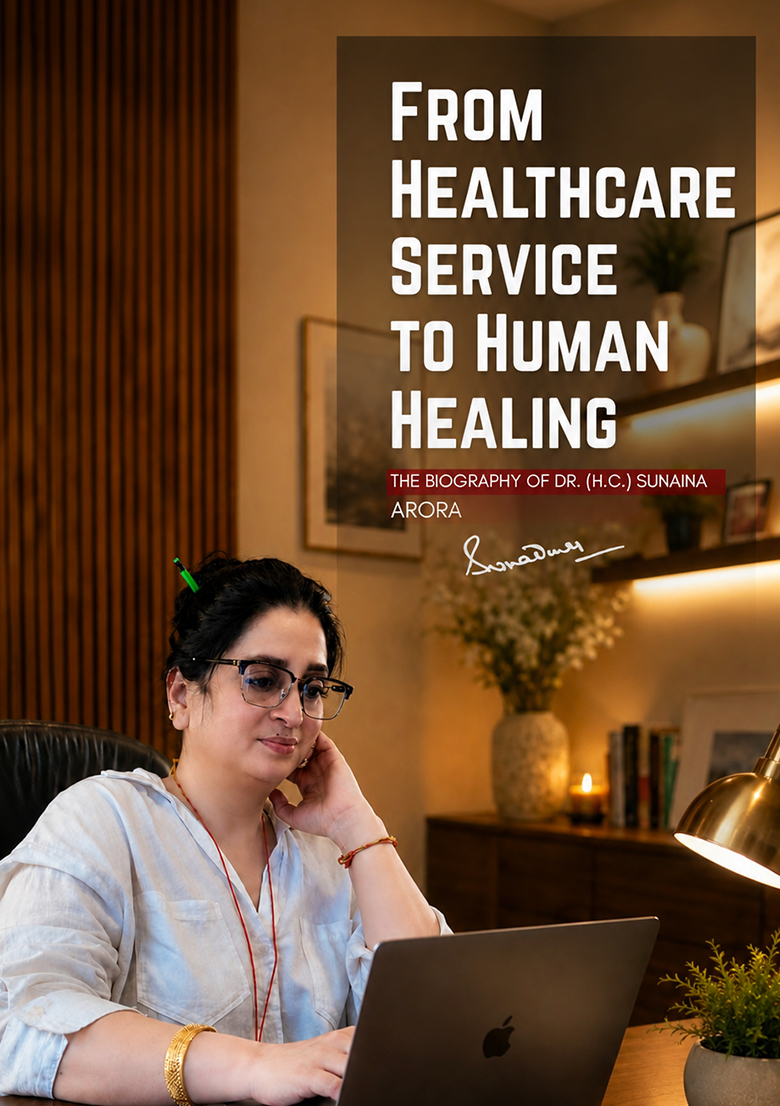
“Service gives meaning to experience, compassion gives strength to action, and humanity gives purpose to existence.”
Introduction
The life of Dr. Sunaina Arora unfolds as a journey marked by resilience, continuous learning, and a deep commitment to service. Her story begins with early adversity, having lost her parents at a very young age, a phase that shaped her emotional strength and introduced her to responsibility far earlier than most. Raised under the care and guidance of her elder brother, she grew within an environment where discipline, sacrifice, and determination became the foundation of her upbringing. These early circumstances did not limit her aspirations; instead, they became the driving force that shaped her future direction.
Her academic journey reflects both persistence and adaptability. Beginning her education in a government school environment, she continued to excel despite personal challenges. Even after entering marriage early in life, she did not allow her educational journey to pause. She moved forward with determination, completing her graduation in science and later pursuing higher studies in multiple disciplines, including postgraduate education and law. Alongside this, she expanded her learning into creative and technical fields, reflecting her belief in continuous self-development without boundaries.
Professionally, Dr. Sunaina dedicated more than two decades of her life to government service within the healthcare system. Her association with public health initiatives placed her at the forefront of community-level healthcare work, particularly in tuberculosis care and national health programmes. She contributed actively to awareness campaigns and patient support systems, working closely with communities to strengthen health outreach. Her role in these programmes reflects a consistent dedication to improving lives through service and responsibility.
Her journey also reflects a parallel path of inner exploration. Influenced by early spiritual awareness within her family environment, she gradually developed an interest in healing practices. Over time, she engaged with disciplines such as Reiki, hypnotherapy, and other holistic approaches, eventually expanding into astrology, numerology, and vastu consultancy. This dimension of her life represents a deeper engagement with understanding human experiences beyond conventional frameworks.
As a mother, she balanced personal responsibilities with professional commitments, ensuring that her children received stability, education, and guidance throughout their upbringing. Her life also reflects moments of humanitarian engagement, where she extended support to those in need through service-orientated actions rooted in empathy and responsibility.
The introduction to her journey is therefore not defined by a single path but by a continuous evolution shaped by hardship, perseverance, learning, service, and inner growth. It presents Dr. Sunaina Arora as an individual whose life reflects both grounded dedication and multidimensional development, setting the foundation for the detailed journey that follows.
“Strength is not always visible at the beginning of life; sometimes it quietly forms in the silence that follows loss and absence.”
Phase 1: Childhood Shaped by Loss and Early Responsibility

The earliest memories from the life of Dr. Sunaina Arora are marked by circumstances that demanded emotional strength far beyond her age. She was only a small child, studying in the early years of school, when life brought an irreversible turning point with the loss of both her parents. By the time she was around the second or third standard, her world had already changed in ways most children cannot comprehend. The absence of parental presence created an early vacuum, yet it also became the space where resilience quietly began to take form within her.
In those formative years, the structure of her family life shifted entirely. With no parents to rely upon, the responsibility of care naturally moved toward her elder siblings, particularly her brother, who stepped into a role that extended far beyond his age. He became the anchor of the household, taking upon himself the responsibility of guidance, protection, and emotional stability for all the children. This early transition created an environment where childhood was not defined by carefree innocence alone but by adjustment, understanding, and silent endurance.
Her mother’s presence, though physically limited due to her early passing, remained embedded in memory through impressions of her personality. She is remembered as a spiritually inclined and disciplined individual, someone associated with government service in the medical department and known for her devotion to routine practices of prayer and faith. These fragments of memory became the earliest emotional connection to values that would later influence Dr. Sunaina’s inner sensitivity and outlook towards life.
As the family navigated life without parental guidance, the household dynamics settled around survival and responsibility. The elder brother, still young himself, carried the weight of ensuring education, stability, and basic structure for his siblings. He worked through modest means, including private employment and tuition work, gradually building a foundation that kept the family together. His presence was strict yet protective, shaped by necessity rather than choice. Within this environment, discipline was not imposed as instruction but lived as daily reality.
The household structure also reflected significant age differences among the siblings, which naturally limited typical childhood interactions. The emotional bond existed, yet it was shaped more through responsibility than playfulness. Despite this, certain memories from those early years remained deeply imprinted. One such memory revolves around academic achievement, where school performance became a moment of shared pride within the family. Results, which once carried uncertainty and anxiety, transformed into a moment of recognition that brought visible relief and joy to her elder brother. His reaction reflected the emotional weight he carried as both carer and guardian.
“Character does not wait for the right age; it grows silently in spaces where responsibility arrives long before understanding fully settles.”
Phase 2 : Guided Growth Within Sibling Responsibility and Structured Upbringing
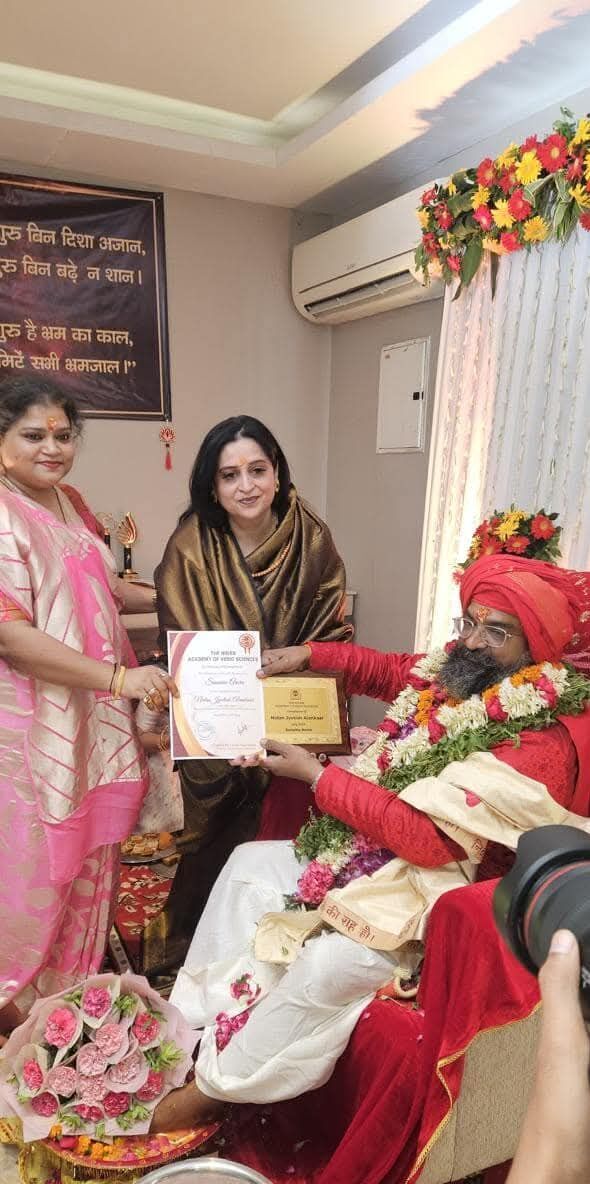
In the years that followed her earliest emotional foundation, the life of Dr. Sunaina Arora continued to take shape within a household where responsibility was not assigned through instruction but absorbed through lived experience. The absence of parental presence naturally positioned her elder siblings at the centre of her developmental environment, and among them, her elder brother became the most influential figure in her daily life. His role extended beyond that of a guardian; he carried the weight of decision making, discipline, and protection with a seriousness that gradually defined the emotional structure of the family.
Her brother’s personality was shaped by responsibility far earlier than expected, and this reflected in the way he approached the upbringing of his siblings. He maintained a strict yet purposeful presence, ensuring that direction was never lost despite the circumstances. For Dr. Sunaina, this created a childhood environment where emotional warmth existed alongside structured expectations. Respect became the foundation of their relationship, replacing casual familiarity with a deeper understanding of duty and care.
Within this dynamic, she experienced a childhood that did not follow the conventional rhythm of sibling interaction. The significant age gap between her and her siblings naturally shaped the distance in their day-to-day bonding. Instead of shared playfulness, there was a quiet acceptance of roles within the family. Her brother, being considerably older, had already entered a phase of life where he managed work responsibilities through modest employment and tuition work, while simultaneously ensuring that the household functioned with stability. This dual responsibility influenced the atmosphere in which she grew up, making discipline and perseverance familiar elements of her environment.
Her elder sister also remained part of this structure, though physical presence and shared time were limited due to circumstances that placed her away from the immediate household for periods of time. Even so, the emotional thread between them remained intact through occasional yet meaningful gestures of care and remembrance. These moments, though spaced apart, contributed to her understanding of family connection as something that does not always depend on constant presence but survives through intent and affection.
The environment in which she grew was also shaped by how the wider community perceived her elder brother. Within their locality, he became a reference point for discipline, sincerity, and responsibility. People around them often regarded him as an example of integrity and reliability, which naturally reinforced his position not only as a guardian within the family but also as a respected figure outside it. For Dr. Sunaina, observing this external recognition added another layer to her understanding of character and conduct. It subtly shaped her awareness of how actions, even within limited means, can influence perception and respect in a broader social setting.
“Education often becomes a quiet companion in uncertain times, offering direction even when life itself is still finding balance.”
Phase 3 : Academic Identity, Early Achievement, and the Transition into Responsibility
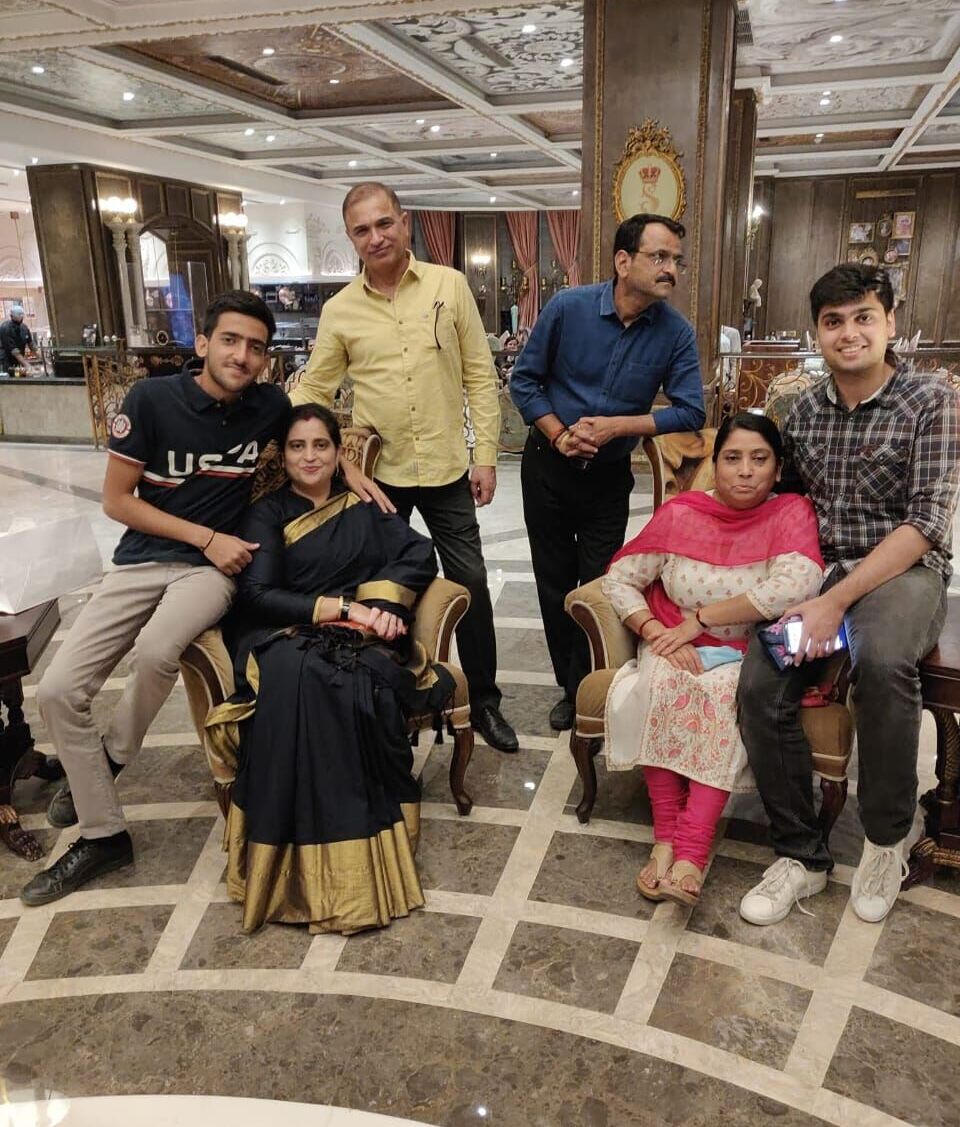
As Dr. Sunaina Arora moved into the structured environment of formal education, her life entered a phase where discipline, consistency, and quiet determination became increasingly visible in her academic journey. Having already grown up in circumstances that demanded emotional maturity far earlier than expected, she carried into her schooling years a natural seriousness toward learning that set her apart from others of her age. Education was never treated casually in her life; it became a stabilising force that gave her direction amid personal responsibilities and early life transitions.
Her academic foundation was built within a government school system, where structured learning formed the backbone of her early development. In this environment, she continued to demonstrate steady academic progress, developing a reputation for focus and reliability. Subjects such as science and language studies formed the core of her learning experience, allowing her to build a balanced intellectual base. Even while navigating personal emotional weight outside the classroom, she maintained consistency in her academic engagement, ensuring that her education remained uninterrupted in spirit even when life outside it was complex.
As she progressed through her schooling, she reached the completion of her secondary education, a milestone that represented both academic achievement and a turning point in her personal life journey. This moment carried significance not only as the completion of formal schooling but also as the threshold of a new phase of life that would introduce responsibilities beyond academics. Immediately following this stage, she entered into marriage, marking an early transition into adult responsibilities at a time when many are still fully immersed in education.
This transition did not diminish her connection with learning. Instead, it reshaped the way education existed in her life. The continuity of her academic aspirations remained intact, even as her personal life structure changed significantly. Rather than viewing education and personal responsibility as separate paths, she began to experience both simultaneously. This dual existence of roles became a defining characteristic of her experience during this period.
The early phase of her married life brought with it a new rhythm of responsibilities, yet it also strengthened her resolve to continue her academic path. Education did not pause; it adapted. She carried forward the discipline she had developed during her schooling years into this new stage of life, ensuring that personal circumstances did not interrupt her intellectual growth. This ability to sustain continuity despite change became one of the strongest reflections of her inner resilience.
Note of Thanks
This biography of Dr. Sunaina Arora stands as a reflection of a life shaped through resilience, responsibility, and unwavering dedication to service. It is made possible through the experiences shared across her journey, where each phase of life contributed to a deeper understanding of humanity, compassion, and perseverance.
She expresses heartfelt gratitude to her family, whose presence remained a guiding force through every stage of her life. Her parents, Mr. Vijay Singh Rathore and Mrs. Raj Singh, remain an enduring source of emotional strength and early values that shaped her foundation. Her elder brother, Ajay Rathore, holds a deeply respected place in her journey for stepping into responsibility during the most difficult phase of her childhood and providing stability and direction.
She acknowledges her husband, Baldev Arora, for his constant trust and unwavering support throughout her personal and professional responsibilities. His faith in her journey remained a quiet strength during demanding phases of life. Her children, Juhi Arora and Arpit Arora, remain central to her life, representing purpose, continuity, and emotional grounding.
Dr. Sunaina Arora also extends gratitude toward colleagues, healthcare teams, and individuals connected to her long years of service in the Medical and Health Department, whose shared efforts contributed to meaningful public service experiences.
thanks,
– Dr. Sunaina Arora