"Every lesson I’ve learned and every challenge I’ve faced has led me to one simple truth: the greatest gift we can offer is to help others believe in their potential."
Introduction
Education has always been more than a pathway to knowledge; it is a gateway to opportunity, a bridge between circumstance and possibility, and, for many, the single most powerful force for transformation.
Yet, for all its promise, access to quality education is not always guaranteed. Across communities, there are children whose potential remains unseen—not because it does not exist, but because the systems meant to nurture it are uneven, under-resourced, or misunderstood. This reality has shaped both education and the lives of those who navigate it.
This is a story that emerges from within that reality.
It is the journey of a young boy from Content Gap, East Rural St. Andrew, whose early experiences with the education system did not immediately suggest the path he would eventually walk. It is a story of persistence in the face of limited opportunity, of curiosity nurtured by family influence, and of a growing awareness that success is not simply about individual achievement but about the structures that make such achievement possible.
As the journey unfolds, it moves through classrooms, staff rooms, laboratories, and leadership spaces—each contributing to a deeper understanding of education not just as a profession but as a system requiring careful thought, deliberate action, and sustained commitment. From student to teacher, from teacher to Vice Principal, and from institutional leadership to national influence, each phase reflects a widening scope of responsibility and impact.
But this is not simply a record of progression.
It is a reflection on purpose.
It explores the questions that arise when achievement meets awareness: Why do some students thrive while others are left behind? What role does leadership play in shaping opportunity? How can systems be strengthened to ensure that access to quality education is not determined by circumstance?
These questions are not theoretical. They are grounded in lived experience: in schools with abundant resources and those with scarce ones; in moments of success and spaces where change is most needed.
Throughout this journey, one idea remains constant: that meaningful change in education requires more than policy or position. It requires presence—being fully engaged in the work, committed to the people, and grounded in values that guide decision-making even in the face of challenge.
"Where we come from shapes who we become, but it’s the choices we make along the way that define our true purpose."
Phase 1: Roots of Humility, Home, and First Lessons
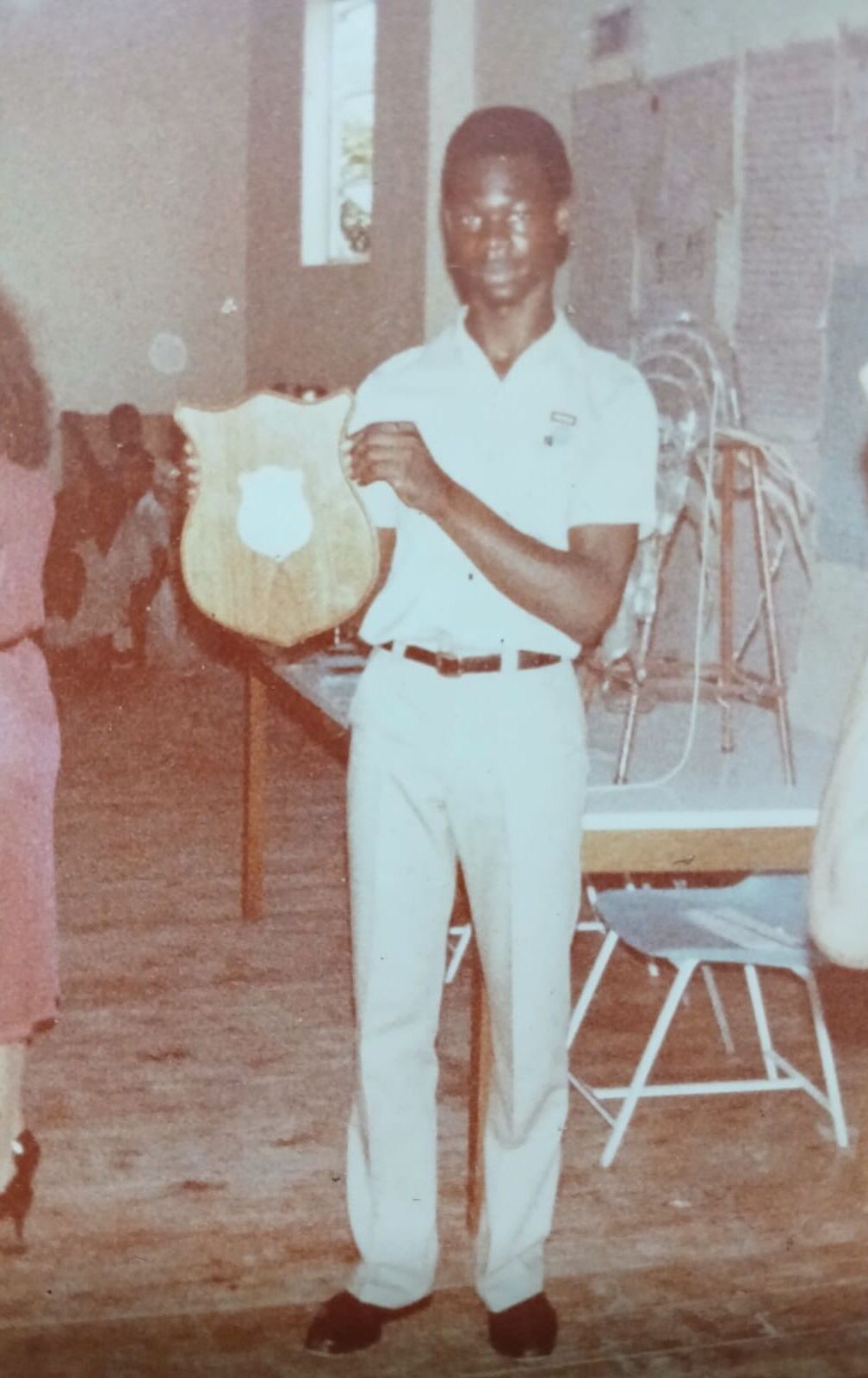
Dr. Sadpha Bennett’s life and career are deeply rooted in humility, community, and a profound respect for education. His story begins in Content Gap, where his early experiences laid the foundation for a life of leadership and service.
Born to Necellia, a devoted preschool teacher, and Hayden, a hard-working father whose skills spanned farming, factory work, and a wide range of practical trades, Dr. Sadpha grew up in a modest yet nurturing environment. Hayden was truly a jack of all trades, and from a young age, Dr. Sadpha was introduced to mechanical tools of all kinds. Whether observing or assisting, he developed an early appreciation for how things worked—an exposure that quietly nurtured his curiosity and problem-solving skills.
Necellia was a woman of quiet strength and dedication. Her influence extended beyond her classroom into her home and community. She ensured that education remained a priority, guiding her children with patience and purpose. Her example had a lasting impact on Dr. Sadpha, who came to see teaching not just as a profession but as a calling.
Although Hayden was not educated beyond primary school, he possessed deep practical knowledge and resilience. From long hours in the fields to adapting to factory work, he demonstrated both perseverance and adaptability. These qualities shaped Dr. Sadpha’s understanding of discipline, effort, and responsibility.
The Bennett household was rich in learning experiences. Education was not confined to school; it was part of everyday life. Alongside his siblings, his brothers Owen Ezyon and his sister Carol, Dr. Sadpha developed a love for learning and a strong sense of family and community.
Learning became even more fascinating for Dr. Sadpha through simple but powerful gifts from his parents. His father once gave him a hand lens, allowing him to observe things closely. Later, his mother introduced him to a Lyster’s Hygiene Book, further deepening his curiosity. There were few flowers or grains of pollen that escaped his attention. Dr. Sadpha explored the natural world with wonder, carefully observing, questioning, and learning. These early experiences laid the foundation for his lifelong passion for science.
“Every step forward begins with a willingness to learn, to adapt, and to believe that even the smallest effort can shape a greater future. ”
Phase 2 : School Years, Sport, Friendship, and the First Signs of Growth
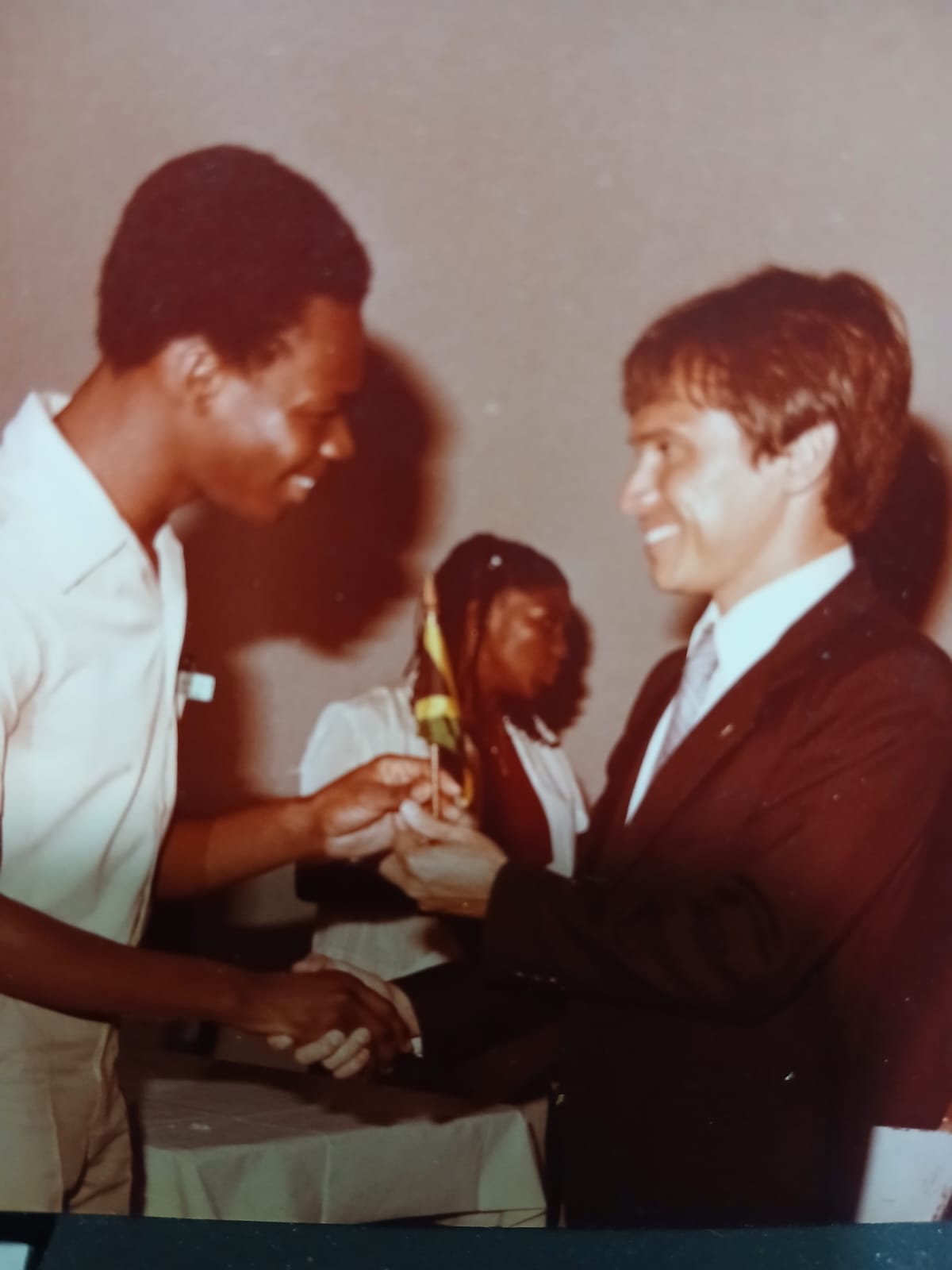
Dr. Sadpha Bennett’s years at Oberlin High School marked a defining chapter in his life—one where leadership, discipline, ambition, and identity were forged. School life for Dr. Sadpha was not limited to academics; it was a dynamic balance of leadership, sports, social life, and intellectual growth. Oberlin presented an open field where all dreams could come true, and Dr. Sadpha embraced every opportunity it offered.
The journey to Oberlin itself required sacrifice and maturity. The distance between Content Gap in East Rural St. Andrew and Oberlin in West Rural St. Andrew made daily commuting impossible. As a result, Dr. Sadpha boarded with families in Lawrence Tavern, an experience that demanded independence at an early age. Living away from home strengthened his resilience, discipline, and adaptability.
In his later years, Dr. Sadpha boarded with the Malvo family at George Mayson Drive. Living with Mr. and Mrs. Malvo was more than accommodation—it was a meaningful family experience. Their home provided stability, encouragement, and a nurturing environment during some of his most formative years.
At Oberlin, Dr. Sadpha distinguished himself across multiple areas. Academically, he continued to excel, particularly in the sciences, while also demonstrating strong competence in other subject areas. But it was his ability to lead and influence others that set him apart.
He served as Head Boy, a position that required integrity, maturity, and a deep sense of responsibility. In this role, he represented the student body, worked closely with the administration, and advocated for his peers. He also served as a student representative on the School Board, gaining early exposure to leadership at an institutional level and developing an understanding of governance and decision-making.
His leadership extended into the house system, where he became a leader of Beardslie House. Through this role, he participated actively in house activities, including competitions and sports, fostering teamwork and school spirit.
Sports played a central role in Dr. Sadpha’s development. He was an avid athlete, participating in various sporting activities, particularly track and field. He excelled in the discus throw, where he achieved a distance of 118 feet 7 inches, setting a school record that stood for over 15 years. This achievement was not just about athletic success; it built his confidence and reinforced lessons in discipline, perseverance, and commitment.
“Success isn’t just about achieving your goals; it’s about finding purpose in the journey and inspiring others to walk alongside you.”
Phase 3 : Science, Struggle, and the Rise of Academic Purpose
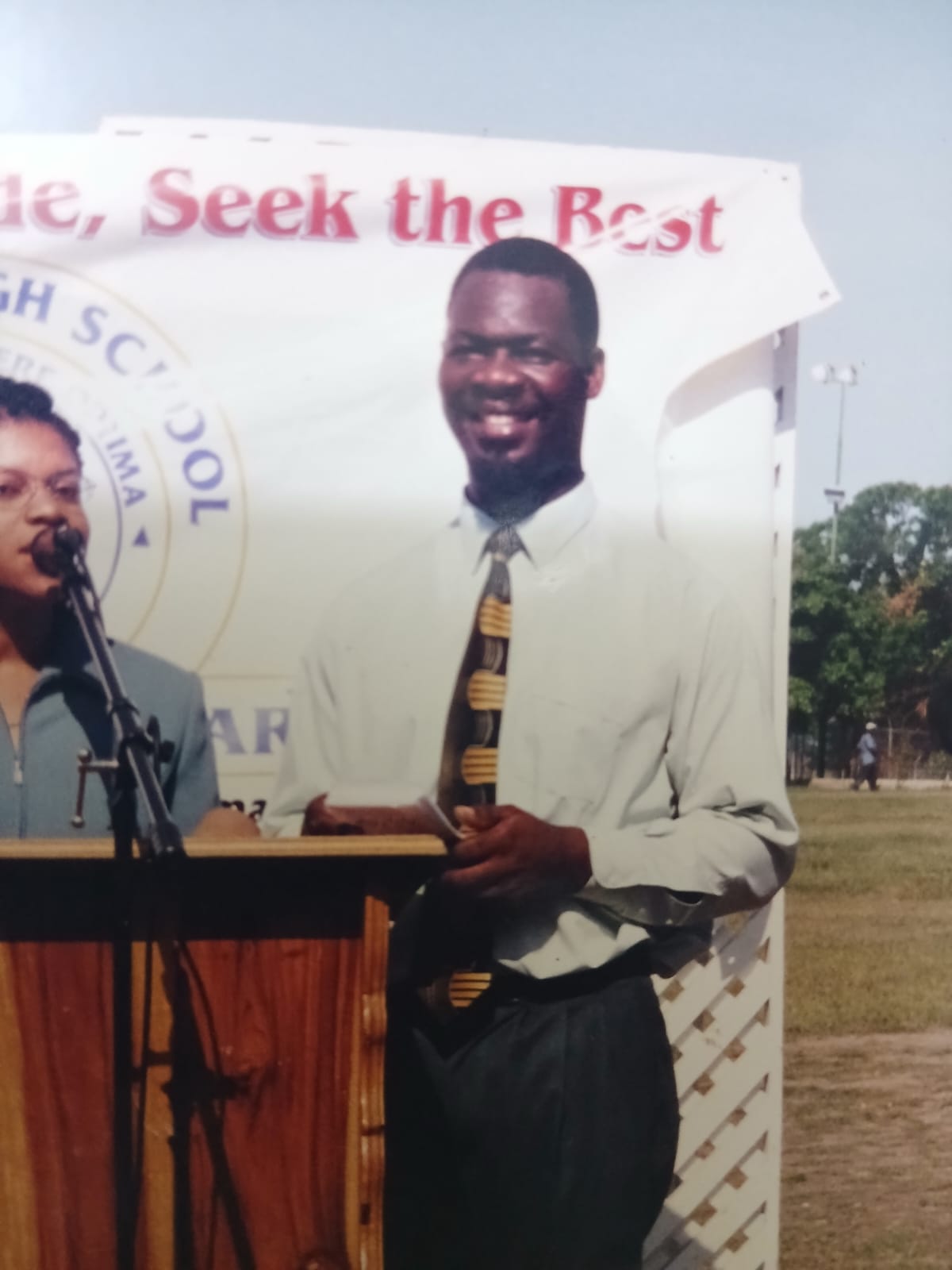
At the end of his secondary school journey at Oberlin High School, Dr. Sadpha Bennett stood at a defining crossroads. His experiences, particularly his participation in the International Science and Engineering Fair, had awakened in him a deep appreciation for science and its role in solving real-world problems. Yet, despite this clarity, his next step was not immediately certain.
Though drawn to teaching, Dr. Sadpha found himself reflecting carefully on his path.
It was during this period of contemplation that a pivotal opportunity emerged.
Recognising his potential, Rev. Richmond Nelson invited Dr. Sadpha to assist in the Mathematics Department at Oberlin High School. This invitation marked the beginning of his first real engagement with teaching—not as a student leader, but as someone responsible for guiding others.
Dr. Sadpha embraced the opportunity without hesitation.
Standing before students, however, came with its own challenges. At the time, he could hardly distinguish himself from the students, often dressing in the same khaki pants and white shirt. Determined to establish his identity as a teacher, he made a deliberate choice to begin cultivating a beard—something reserved for teachers. It was a small but symbolic step in claiming his new role.
During this period, Dr. Sadpha did more than teach. He continued to immerse himself in all aspects of school life—supporting activities, assisting where needed, and strengthening his leadership presence. What began as an invitation to assist gradually evolved into a defining experience.
Note of Thanks
This work would not have been possible without the many individuals, institutions, and experiences that have shaped both his journey and the reflections captured in these pages.
He begins by thanking God, whose grace has guided every step of this journey and whose presence has provided strength, clarity, and purpose through every season.
To his wife, Christine, he offers his heartfelt appreciation. Her diligence as an educator, her strength, and her unwavering support have been a constant source of inspiration. Their shared commitment to teaching and learning has strengthened both their personal and professional journeys. To his sons, Romaine, Michael, and Matthew, he extends thanks for their understanding, their pride, and the joy they bring. They have been a constant reminder of the purpose behind the work.
He expresses deep gratitude to his parents, Hayden and Necellia, whose influence laid the foundation for all that followed. His mother’s understanding of the education system opened doors that might otherwise have remained closed, and his father’s resourcefulness and practical wisdom instilled in him a spirit of curiosity and resilience that has guided his path.
Owen, Ezvon, and Carol, his siblings, all shared in his developing strong, lasting bonds from very early in their lives and greatly contributed to experiences that have enriched his life.
He extends sincere appreciation to the mentors and leaders who have guided his development. He acknowledges with gratitude Rev. Richmond Nelson, whose leadership and belief in his potential helped to shape his early journey. He also recognises the guidance of Mrs. Esther Tyson, whose influence has contributed significantly to his growth as an educator and leader.
He is grateful to the many teachers and colleagues who have walked alongside him at Content Gap All-Age School, Oberlin High School, Mico College, Ardenne High School, Holy Trinity High School, and the Ministry of Education. Their dedication, collaboration, and shared commitment to students have enriched his professional journey.
Special appreciation is extended to the Association of Science Teachers of Jamaica, whose work in advancing science education has been a critical part of his journey. He also acknowledges the contributions of Mrs Vilma McClenon McDonald, Dr Errol Miller, Dr Lilieth Nelson, and Mrs Marjorie Gaynor, his team of lifetime mentors and professional development coaches, and all teachers across Jamaica who have participated in training, research, and professional development initiatives with openness and dedication.
He also gives thanks for the spiritual grounding provided through fellowship and service at Meadowbrook United Church, where faith and community have remained important parts of his life.
To the students, past and present, he extends thanks. They are the reason for this journey. Their potential, their challenges, and their successes continue to inspire the work and give it meaning.
Finally, he extends his appreciation to lifelong friend Winston Davis and his family and to all who, in ways seen and unseen, have contributed to this journey; he extends his heartfelt gratitude. This work stands as a reflection not only of one life but also of a collective effort to improve education and expand opportunity for all.
With gratitude.
– Dr. Sadpha Bennett