
“Synergy is what happens when one plus one equals ten or a hundred or even a thousand, because the minds and hearts are completely committed.”
Introduction
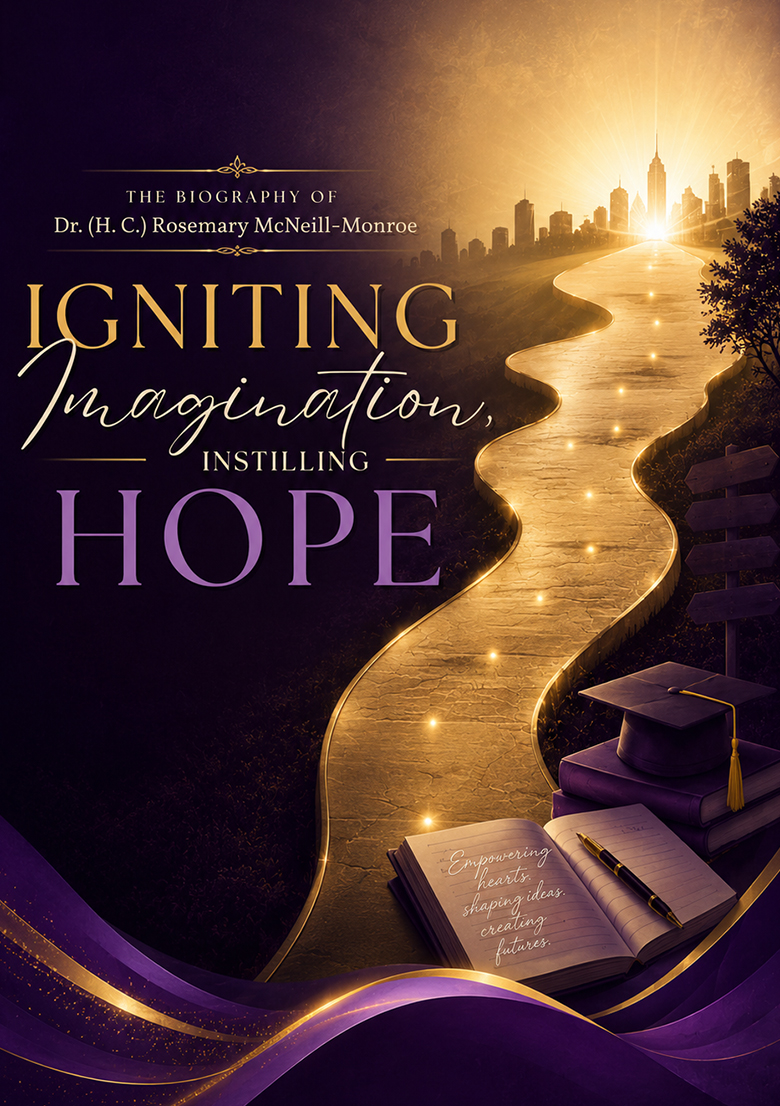
Dr. Rosemary McNeill-Monroe’s life is a testament to the power of dedication, vision, and service. From her early years in Robeson County, North Carolina, to her distinguished career in education, counseling, and organizational leadership, Dr. Rosemary has consistently exemplified the profound impact one individual can have on others. Her story is not simply about personal achievement but about a lifelong commitment to uplifting students, mentoring emerging leaders, and strengthening communities through service and guidance.
Born on December 21, 1954, Dr. Rosemary faced early challenges that would shape her character and her commitment to perseverance. The loss of her father at a young age placed her in the care of her mother, Margaret Graham McNeill, whose strength, faith, and dedication provided the foundation upon which Dr. Rosemary built her life. Growing up in a rural community, she learned the value of hard work, resilience, and education as a tool not only for personal advancement but also for creating opportunities for others. These early lessons would become the guiding principles of her career and her approach to leadership.
Dr. Rosemary’s journey in education began with her studies at Fayetteville State University, where she earned her Bachelor of Arts in Middle School Education, followed by a Master of Arts in Education. She furthered her expertise with a Master of Science in School Counseling from North Carolina Central University and doctoral coursework in Organizational Leadership at Grand Canyon University. Her academic pursuits reflect a commitment to lifelong learning and the preparation required to make a lasting impact in every role she assumed. Each stage of her education deepened her understanding of student needs, leadership principles, and the importance of fostering environments where individuals can thrive.
Her professional life has been defined by nearly four decades of service as a teacher and school counselor. During this time, Dr. Rosemary faced the challenges of working with students from diverse backgrounds, many confronting personal and financial obstacles that threatened their educational journeys. She dedicated herself to ensuring that each student received guidance, encouragement, and access to opportunities, including scholarships, enrichment programs, and mentorship. Beyond academics, she cultivated resilience, character, and leadership in the students she served, instilling a sense of purpose that would extend well into their adult lives.
In addition to her educational work, Dr. Rosemary has had a profound impact through her leadership in community and nonprofit organizations. Her forty-nine years of service with Las Amigas Incorporated, including her tenure as National President, exemplify her ability to inspire, organize, and mentor others. She has also contributed significantly to the National Council of Negro Women and her church, New Bethel AME Zion Church, demonstrating that leadership and service are inseparable and that guiding others with integrity and empathy leaves a legacy far beyond personal accomplishments.
“The future belongs to those who believe in the beauty of their dreams.”
Phase 1: Early Life and Foundations
Dr. Rosemary McNeill-Monroe’s story begins in the quiet, rural expanses of Robeson County, North Carolina, where she was born in Scotland County on December 21, 1954. Circumstance and the deep values instilled by her family shaped the contours of her early life. Born to a devoted mother and father, she experienced the heartbreak of losing her father at the tender age of five. This loss was not merely an absence in her life; it was a defining moment that shaped her understanding of resilience, responsibility, and the unwavering power of family. From that early point, her mother became the cornerstone of guidance, nurturing not only Dr. Rosemary but also her two sisters, ensuring that each child grew with purpose, aspiration, and the tools to overcome challenges.
Raised in a rural community, Dr. Rosemary’s childhood was steeped in the rhythms of country life, where the simplicity of daily living coexisted with the pressing importance of education and personal discipline. Even amidst limited resources, her mother maintained a steadfast commitment to providing for her daughters, emphasizing that education was not just a pathway to success but a responsibility to oneself and to the wider community. Dr. Rosemary’s mother was a single parent who balanced work, household duties and the guidance of three ambitious daughters and became an early model of strength and determination that Dr. Rosemary would carry with her throughout her life.
In Dr. Rosemary’s early childhood, both innocence and an emerging sense of responsibility shaped her experience. Living in a rural environment kept her world bounded by familiar landscapes and close-knit community connections. Yet, her mother’s insistence on education and exposure to new experiences subtly broadened Dr. Rosemary’s horizons. She witnessed firsthand the interplay of hard work, discipline, and moral guidance in shaping a meaningful life. These lessons, imparted at home and reinforced by her surroundings, instilled in her an enduring understanding that personal effort, perseverance, and integrity were inseparable from success.
In 1970, a significant transition occurred in Dr. Rosemary’s life when her family moved from their rural home in Maxton, North Carolina to Red Springs, North Carolina, a setting that offered greater educational and social opportunities. This relocation marked the beginning of a more expansive world for Dr. Rosemary, exposing her to new environments, schools, and experiences that would influence her intellectual and personal development. She attended two different schools that year, navigating the challenges of adaptation and integration while maintaining her focus on academic growth. By 1973, she had graduated from Red Springs High School, having absorbed the lessons of discipline, curiosity, and social awareness that would underpin her future achievements.
Even in these formative years, Dr. Rosemary’s character began to take shape in ways that would resonate throughout her professional life. Her early environment, though modest, cultivated in her a deep empathy for others and a sensitivity to the struggles faced by those with limited support or resources. These formative experiences laid the groundwork for her later dedication to student development, mentorship, and community service. Dr. Rosemary learned to value not only her own ambitions but also the potential within others, a perspective that would guide her career in education and beyond.
“Education is the most powerful weapon which you can use to change the world.”
Phase 2 : Academic Formation and Career Aspirations
The years following Dr. Rosemary McNeill-Monroe’s high school graduation marked a pivotal period in shaping her aspirations and laying the groundwork for a career dedicated to education and service. Graduating from Red Springs High School in 1973, she carried with her the lessons of resilience, empathy, and responsibility that had been instilled by her mother and shaped by her early rural upbringing. While her initial ambitions leaned toward entering the world of corporate America, Dr. Rosemary’s exposure to the family of educators around her and the realization of the potential to make a meaningful difference in the lives of children inspired her to reconsider her path. She recognized that education was not merely an academic pursuit but a powerful avenue for empowering others and leaving a lasting imprint on her community.
Dr. Rosemary enrolled at Fayetteville State University, where she pursued a Bachelor of Arts in Middle School Education. From the outset, her focus on education was deliberate, shaped by the desire to honor her family legacy while also exploring a profession where her talents and compassion could have tangible impact. Within the walls of her university classrooms, Dr. Rosemary immersed herself in the study of pedagogy, child development, and language arts, developing a keen understanding of the complexities of teaching. The rigor of her academic work, combined with her natural empathy for young learners, prepared her for the challenges of guiding students not only academically but also socially and emotionally.
During her undergraduate years, Dr. Rosemary became acutely aware of the broader responsibilities of educators. She understood that success in teaching required more than mastery of content; it demanded insight into students’ lives, creativity in problem-solving, and the ability to inspire and motivate. She cultivated these skills in both formal and informal settings, embracing opportunities to work with peers and mentors and engaging in community activities that provided early exposure to leadership and service. The experience reinforced her belief that education could be a vehicle for change, both within individual lives and in society at large.
After completing her bachelor’s degree in 1977, Dr. Rosemary returned to Fayetteville State University in 1985 to pursue a Master of Arts in Education. This decision was informed by a recognition that her own growth as an educator required continual learning and refinement of her skills. Her graduate studies provided deeper insight into educational theory, curriculum development, and instructional strategies, equipping her with the knowledge and expertise necessary to address diverse student needs and drive meaningful outcomes in the classroom. The pursuit of a master’s degree also reflected her commitment to lifelong learning, a principle that would remain central to her career and personal philosophy.
The trajectory of Dr. Rosemary’s academic formation continued with her enrollment at North Carolina Central University, where she earned a Master of Science in School Counseling in 1987. This specialization represented a significant shift from classroom instruction to a focus on the holistic development of students. It was here that Dr. Rosemary honed her ability to listen deeply, understand the complexities of student experiences, and design strategies to support emotional and social growth alongside academic achievement. She recognized that counseling required not only knowledge but also empathy, patience, and the courage to advocate for students in challenging circumstances. Her studies in school counseling provided the foundation for a career that would impact generations of young people, equipping her to navigate the interplay of home environments, community influences, and individual potential.
“A good teacher can inspire hope, ignite the imagination, and instill a love of learning.”
Phase 3 : Teaching and Counseling Career
Dr. Rosemary McNeill-Monroe’s professional journey began in the classroom, where she spent eleven formative years as a middle school teacher. These years were not merely an introduction to the world of education; they were a laboratory in which Dr. Rosemary discovered her capacity to connect with students, understand their challenges, and inspire them to achieve far beyond their expectations. Each day in the classroom was both a challenge and an opportunity. She worked with students from diverse backgrounds, each carrying their own hopes, fears, and unique circumstances. For Dr. Rosemary, teaching was never simply about delivering curriculum; it was about shaping young lives with patience, empathy, and determination.
The classroom presented Dr. Rosemary with a range of challenges that required more than academic instruction. She encountered students from unstable or financially constrained homes, and their learning experiences were often interrupted by circumstances beyond their control. In these moments, she realized that effective teaching extended far beyond textbooks and tests. She had to act as mentor, advocate, and sometimes even surrogate family, guiding students toward stability, self-confidence, and academic achievement. Her approach was holistic; she addressed the intellectual, emotional, and social dimensions of education, recognizing that each student’s success depended upon a balance of these elements.
After establishing herself as a skilled teacher, Dr. Rosemary transitioned into her most defining professional role: school counselor. For twenty-seven years, she served as a counselor across elementary, middle, and high school levels, offering guidance, mentorship, and unwavering support to students navigating critical years of growth and development. This role allowed her to combine the instructional skills honed in the classroom with the interpersonal and empathetic capacities cultivated over years of study and personal experience. Dr. Rosemary’s counseling approach was deeply personal. She invested herself fully in the lives of her students, learning their strengths, fears, and aspirations and devising strategies that would help each child succeed academically and emotionally.
Early in her counseling career, Dr. Rosemary faced significant challenges. Many students came from homes with limited parental support or from environments where education was not prioritized. Some struggled with behavioral issues, while others faced financial hardships that threatened their ability to pursue learning. Dr. Rosemary approached these challenges with a blend of creativity, determination, and compassion. She developed individualized plans, conducted one-on-one mentoring sessions, and coordinated with teachers and families to ensure students received the support they needed. Her ability to navigate these obstacles reflected her deep understanding that education is inseparable from the broader social and familial contexts in which students live.
Among Dr. Rosemary’s most impactful contributions during this period was her unwavering commitment to helping students access opportunities that might otherwise have been beyond their reach. She dedicated herself to scholarship programs, tirelessly assisting students with applications, guiding them to meet eligibility requirements, and ensuring they had every opportunity to succeed. Over time, her efforts directly resulted in students securing over half a million dollars in scholarships, a testament to her persistence and dedication. For Dr. Rosemary, these achievements were not about accolades or recognition; they were about witnessing young lives transformed through guidance, support, and unwavering belief in their potential.
Note of Thanks
Dr. Rosemary McNeill-Monroe extends her heartfelt gratitude to her husband, Ronald Monroe and all those who have played a pivotal role in her journey. She acknowledges with deep appreciation the unwavering support of her mother, Margaret Graham McNeill, whose guidance, faith, and resilience laid the foundation for her personal and professional life. She also thanks her sisters, Katie McNeill Moore and Jacqueline McNeill Leach, for their enduring encouragement and presence, which strengthened Dr. Rosemary through both challenges and triumphs.
Dr. Rosemary is profoundly grateful to her daughters, Romesia Robinson, Ronita Hemingway, and Rashika Hemingway, whose love, understanding, and inspiration have enriched her life and fueled her commitment to service. She also recognizes her students, colleagues, and the countless individuals who entrusted her guidance, participated in her programs, and allowed her to mentor and support them throughout their journeys.
She extends appreciation to the organizations that shaped her leadership path, including Las Amigas Incorporated, the National Council of Negro Women, and New Bethel AME Zion Church, where she learned, led, and contributed to the empowerment of others.
This note of thanks is a reflection of Dr. Rosemary McNeill-Monroe’s belief that every achievement, every opportunity to serve, and every moment of growth has been enriched by the dedication, encouragement, and support of those around her.
Thanks,
– Dr. Rosemary McNeill-Monroe