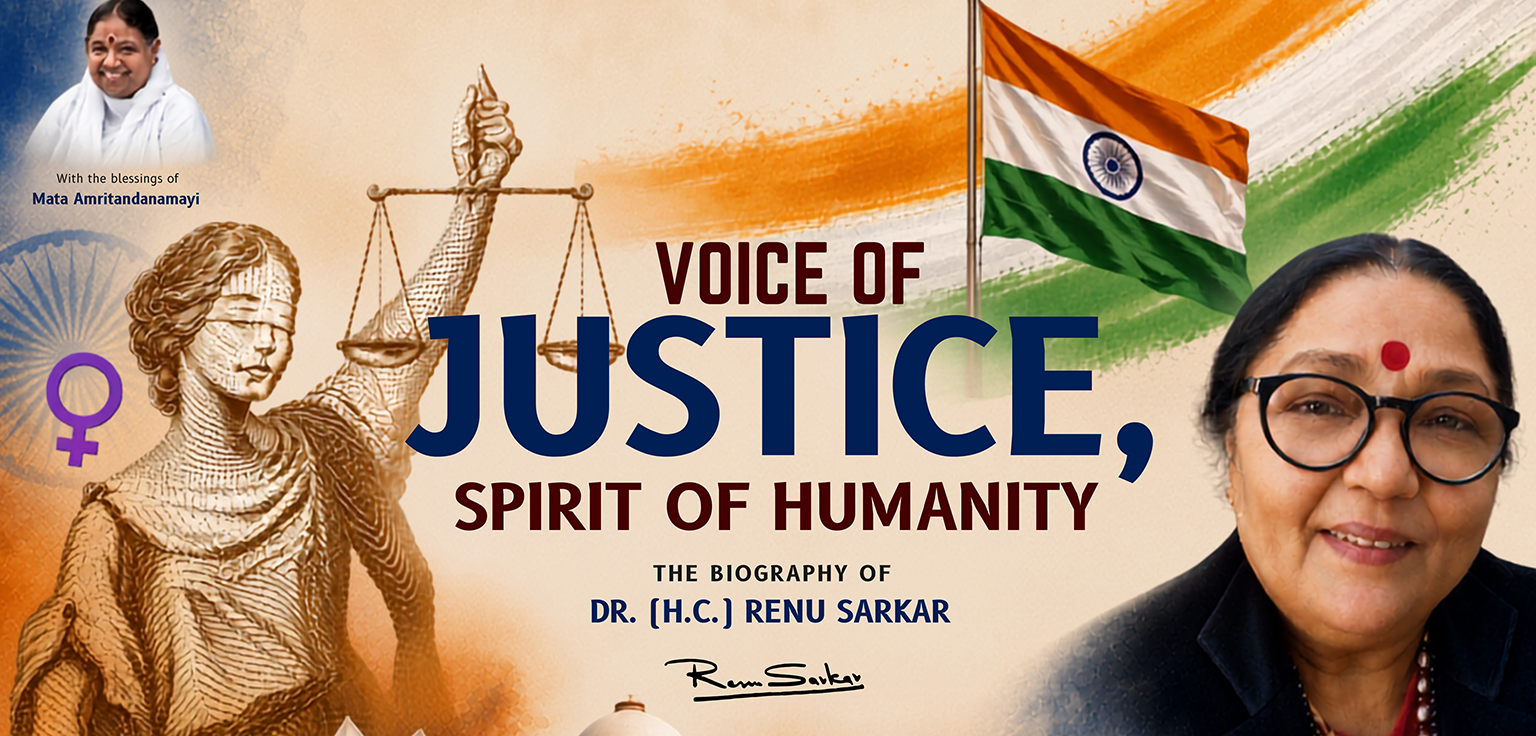
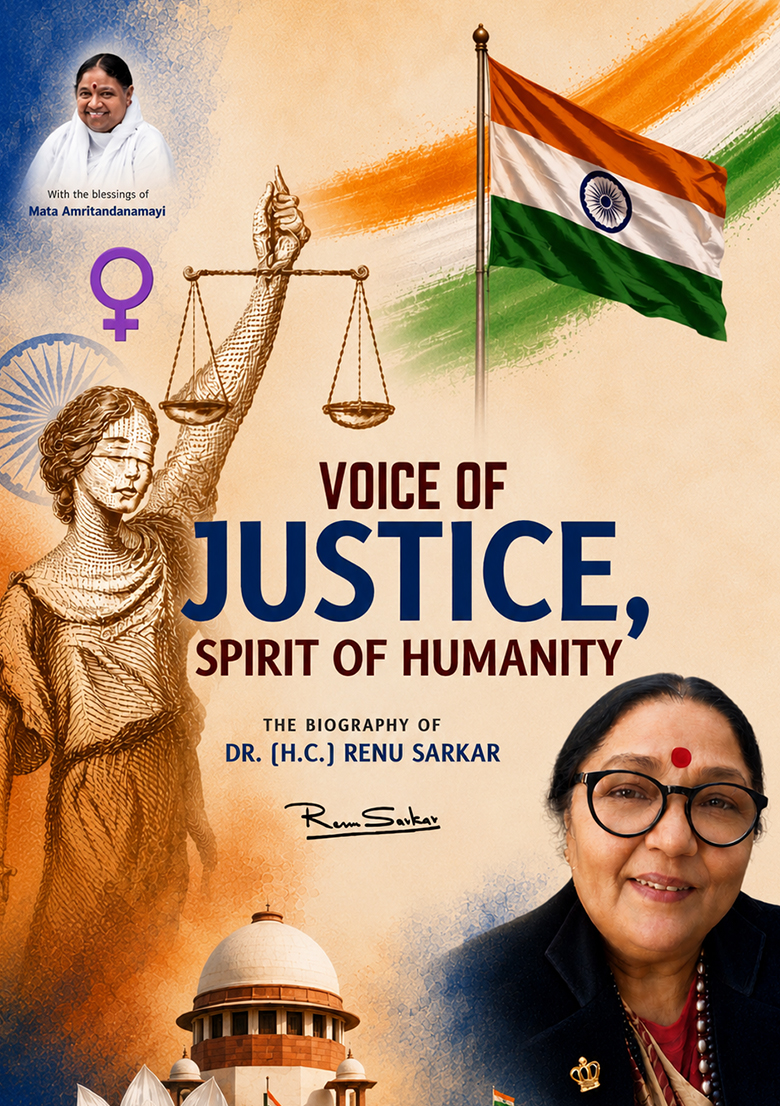
"When silence protects injustice, courage must become the voice; when suffering seeks hope, humanity must become the answer."
Introduction
Every meaningful life is shaped by a purpose that quietly begins long before the world recognises it. For Dr. Renu Sarkar, that purpose was never measured by personal milestones, titles or recognition. It was defined by an unwavering belief that every individual deserves dignity, justice and the opportunity to rebuild life with hope. Across decades of dedicated service, she has remained guided by a conviction that the strength of a society is reflected not in the comfort of the privileged, but in the protection it offers to those who are most vulnerable.
Her story is one of remarkable continuity between thought and action. The values that shaped her childhood gradually became the principles that directed her professional life. A home filled with education, discipline, spirituality and social awareness nurtured an outlook that viewed service as a natural responsibility rather than an extraordinary sacrifice. Those early influences remained constant as she entered adulthood, eventually shaping a lifelong commitment to gender justice, legal awareness and humanitarian work.
Long before conversations around women’s rights and gender justice became part of mainstream public discourse, Dr. Renu had already chosen her path. Rather than limiting herself to raising awareness, she devoted her efforts to creating practical systems of support where women could find safety, legal guidance, education and the confidence to reclaim their lives with dignity.
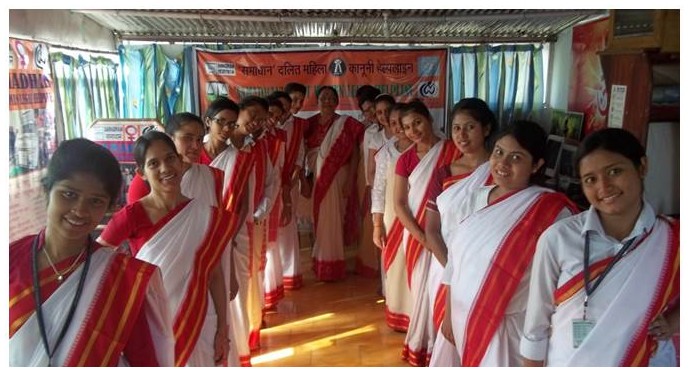
At the heart of this commitment stands SAMADHAN, built not as a shelter but as a place to restore broken confidence through trust, discipline, education, and legal support. For her, protection has never meant providing temporary refuge alone. It has always been about helping women survivors find their own strength again so they can stand on their own and face the world with confidence. Every life that entered its doors carried a different story, yet each deserved the same respect, compassion and opportunity to begin again.
Her spiritual foundation which she drew from Srimad Bhagwad Geeta has never separated her from the realities of society. Instead, it has strengthened her resolve to remain within the framework of law, uphold constitutional values and respond to injustice with courage rather than anger. Throughout her life, she has believed that true strength lies in remaining steadfast without abandoning compassion ancient wisdom of vedic culture.
She often came to see the most demanding moments not as periods of defeat but as opportunities to discover inner strength that had remained hidden until circumstances called it forth. This perspective became one of the defining characteristics of her life, allowing her to continue moving forward without bitterness while remaining emotionally connected to the people she served.
Beyond her public work exists a personality shaped by simplicity, curiosity and deep appreciation for life in all its forms. Even while carrying immense professional responsibilities, she has never allowed compassion to become selective.
Her concern extends equally to people, the natural world and every living being that depends upon care and protection. This biography is not merely the account of an activist, advocate or social reformer. It is the story of a woman who consistently chose responsibility over comfort, principles over convenience and service over personal gain. It follows the life of Dr. Renu Sarkar, whose work demonstrates that meaningful change is created not by extraordinary moments alone, but by ordinary decisions made with extraordinary consistency. The chapters that follow explore how those decisions shaped a life devoted to justice, humanity and the enduring belief that every person deserves the chance to live with dignity.
"A child who watches courage at home learns to carry it quietly in her own heart forever."
Phase 1: Born into Courage, Learning and Responsibility
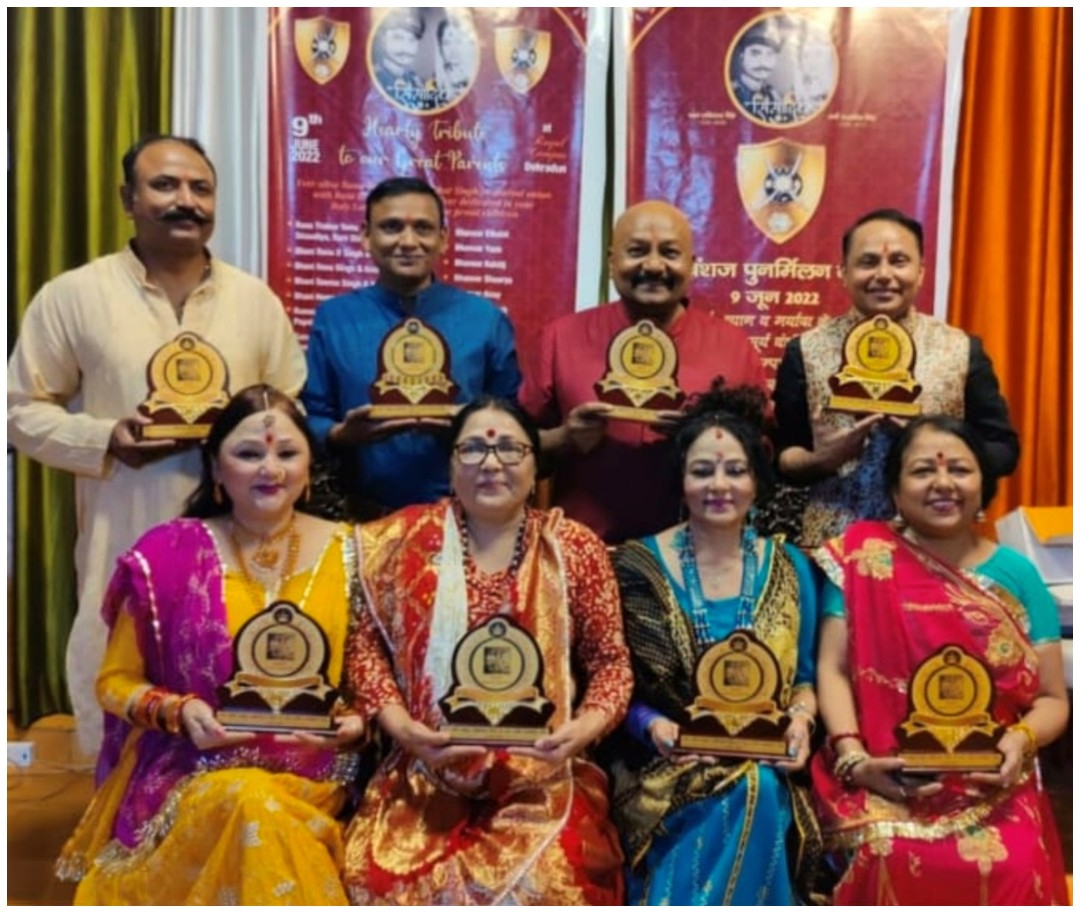
Before marriage, Dr. Renu Sarkar was known as Renu Dhar Singh. She was born in 1963 into a family where heritage carried a deep sense of duty. Her roots lay in the royal Sisaudiyas of Rajputana and Rana tradition, while her mother came from a Rathore royal family of Rajasthan. These backgrounds were not remembered merely through titles or lineage. They lived through the ethical values practised inside the home, where courage, education, discipline and service towards the mother nation were treated as natural responsibilities.
The family belonged to a warrior tradition. Before India gained independence, its history was closely connected with royal life, public responsibility and resistance to injustice. In the years that followed, many of the men chose to serve as officers in the Indian Army. Military service became a continuation of the same spirit of courage and accountability which those earlier generations had carried in different forms. The women, however, were never confined to the margins of that tradition. They were educated, articulate and socially aware. Alongside caring for their homes and children, many participated in writing, social service and activism.
Gender equality was therefore not introduced to Dr. Renu as an unfamiliar modern idea. It was visible within the family long before she understood the language of rights or public advocacy.
Women were respected for their intelligence and encouraged to develop their abilities to make their own informed decisions and choices. Their education was taken seriously, and their opinions were not dismissed merely because they were women. The atmosphere allowed her to grow without believing that courage, scholarship or leadership belonged to one gender alone.
She was born as the second child of her parents and the eldest daughter of the family. Her elder brother later retired from the Indian Army with the rank of Colonel. After him came Dr. Renu, followed by her younger brothers and sisters. Her three sisters are contributing towards the society in a big way (Dr. Reva Singh, Dr. Seema Singh & Dr. Hema Singh) while all four brothers (Retd. Col. V.D. Singh Sisaudiya, Retd. Col. Nishant Singh Sisaudiya, Kunwar Prashant Singh Sisaudiya and Kunwar Vikrant Singh Sisaudiya) are doing excellent in their current careers and public lives. Altogether, she had three sisters and four brothers. A close-knit family system founded upon mutual co-operation, responsibilities and unconditional compassion for each other; there was no emotional distinction amongst siblings and cousins. Everyone was regarded as a brother or sister.
It was a large, traditional Hindu joint family, with several generations living under one roof and sharing a single kitchen. More than seven or eight senior members were present in the household, each contributing something different to the upbringing of the children. The family was traditional in structure, yet progressive in its approach to life. Respect for elders existed alongside a strong commitment to education. Cultural discipline did not prevent intellectual freedom, and family unity did not require the younger generation to remain unaware of the wider world.
“Books become friends, faith becomes grounding, and a curious child grows into a fearless adult.”
Phase 2 : A Childhood Shaped by Books, Faith and Freedom
For Dr. Renu Sarkar, education was never confined to the hours spent inside a classroom. School gave her formal learning, yet much of her intellectual and spiritual development took place at home where books, conversations and observation remained a constant part of everyday life. She grew up in an atmosphere that expected children to study seriously while also encouraging them to understand culture, society and the deeper responsibilities of being human.
Her initial years (1960s) of schooling began in a convent environment. At that time, many elite families regarded Western-style education as an important preparation for a changing India. Her family also wanted every child to receive strong academic opportunities, and no difference was made between the education of sons and daughters. Learning was viewed as a necessity rather than a privilege, especially in a household where generations of women had already demonstrated intellectual confidence and social awareness.
A change came when she reached the fifth standard. Her father’s professional responsibilities brought the family to Lucknow, and her schooling continued there. He had moved from his earlier association with the military and the National Cadet Corps into the field of education, eventually serving as Principal of DAV PG College, Lucknow. His transition placed academic life even more firmly at the centre of the household.
Dr. Renu continued her education at Carmel Convent, where she encountered a structured academic setting alongside a wider circle of classmates. The school years helped strengthen her naturally social personality. She enjoyed being among people, formed connections easily and showed an instinctive ability to bring others together. Even as a young student, she did not remain enclosed within her own concerns. She keenly observed what happened around her and often thought beyond the boundaries of ordinary school life which later led to her developing an independent thought process.
Formal schooling represented only one part of her development. At home, she was introduced to Sanskrit and the ancient scriptures while having good exposure to French language and literature as well. She described her upbringing as Vedic, though she never understood spirituality as a narrow attachment to religion. For her, it was connected with humanity, universal values and the search for truth. She grew increasingly fond of Sanskrit because it allowed her to approach the scriptures in their original language rather than depend entirely upon interpretations prepared by others.
The family possessed a large library, and its shelves became some of her most dependable, adorable companions. After returning from school, she would often turn towards the scriptures and other books available at home. Reading was not imposed upon her as an academic obligation. She approached it with curiosity, affection & as a natural trait while finding in those pages a world that invited reflection and inner dialogue.
This early access to literature encouraged her to read with independence. She did not simply accept ideas because they were traditional or widely repeated. She absorbed them, questioned their meaning and tried to understand how they related to human conduct. The habit of returning to original texts gradually sharpened her ability to think with clarity and form her own interpretations.
“Sometimes the young heart knows its calling long before the world is ready to listen.”
Phase 3 : Samadhan Before Adulthood
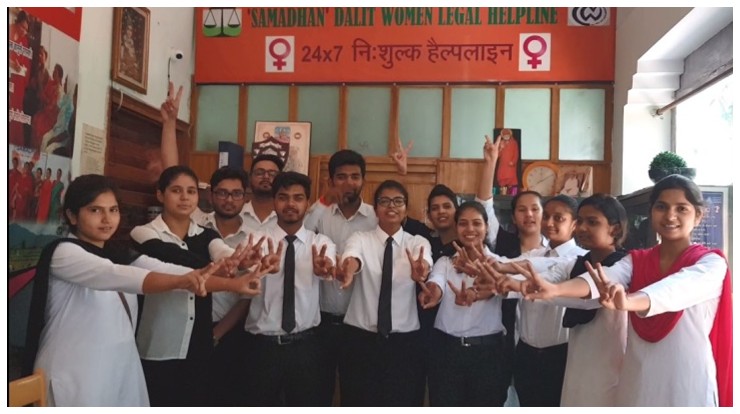
Some decisions arrive after years of careful planning. Others emerge with such clarity that age becomes irrelevant. For Dr. Renu Sarkar, the purpose that would shape her entire life appeared remarkably early. While many teenagers were still discovering their interests, she had already identified the direction she wished to follow. At the age of fifteen, she began the work that would eventually grow into SAMADHAN, not because anyone asked her to, but because she felt an unmistakable responsibility towards women whose voices were rarely heard.
The organisation did not begin with a building, official recognition or financial backing. It began with conviction. Since she had not yet attained the legal age required for registration under the Societies Registration Act, the initiative functioned as an informal forum. Formal recognition would come later, after she turned eighteen, but the work itself had already begun long before any certificate existed.
Not all of the earliest members of this initiative were not experienced activists or established professionals. They were schoolgirls, some of them classmates from Carmel Convent. Around twenty-seven young girls gradually became part of the group. They shared neither professional expertise nor institutional influence, yet they possessed enthusiasm, curiosity and a willingness to stand beside one another. Dr. Renu’s ability to bring people together became visible even during those school years. She naturally connected with others, explained her ideas with confidence and encouraged her friends to participate in something much larger than their own selves.
Leadership came to her without force. She did not persuade through authority, nor did she expect others to follow simply because she believed strongly in a cause. Instead, her sincerity inspired confidence and trust amongst like-minded people who had the spirit to serve humanity but were unaware of how to do it.
The girls who joined her recognised that she was serious about the work she wished to undertake, and gradually the small forum began to develop its own identity.
Although everyone involved was still very young, the purpose behind the initiative was unusually clear. Dr. Renu was not experimenting with different social causes to discover what interested her most. Her attention remained firmly focused on gender. Even at that age, she had reached a conclusion that would continue guiding her throughout life. She believed that gender rights were, fundamentally, human rights.
This understanding shaped the direction of SAMADHAN from its earliest days. She viewed violence against women not as an isolated issue affecting only individual victims, but as something that disrupted entire families and weakened society itself. Whenever women suffered because of violence, exploitation or injustice, children also suffered. Elderly family members were affected. Communities lost stability. To her, protecting women meant protecting humanity itself.
Note of Thanks
Every meaningful journey is shaped not only by personal conviction but also by the presence of people whose trust, guidance and encouragement quietly strengthen each step. Dr. Renu Sarkar carries heartfelt gratitude to those who became enduring influences in her life, offering wisdom, understanding and unwavering faith during moments of both purpose and mission.
Her deepest appreciation is reserved for her family, whose values became the foundation upon which her life was built. She remains profoundly grateful to her parents, whose faith in education, integrity and independent thinking allowed her to grow with confidence. She also cherishes the lasting influence of her grandparents and great grandparents, whose lives reflected courage, learning and responsibility in ways that shaped her understanding of service from an early age. The affection and companionship of her brothers, sisters and extended family enriched her journey with strength, belonging and shared values.
Dr. Renu expresses sincere gratitude to her husband, (Late) Sanjiv Sarkar, whose understanding and genuine encouragement have remained a constant source of reassurance throughout her life’s journey. Shri Sanjiv Sarkar’s respect for Adv. Renu Sarkar’s convictions and his steadfast presence has given her the confidence to continue serving with dedication while preserving the values that define her. Her son, Lt. Col. Prasenjeet Sarkar and daughter in-law Aparna Sarkar are a source of valuable emotional support.
She also extends her appreciation to Amba Shivranjani Ji, Shri Satish Sharma Ji and Dr. Anjali Nauriyal, Adv. Prabha Naithani Ji whose friendship, encouragement and faith have remained meaningful companions through different chapters of her life. Their support has reaffirmed the importance of relationships built upon trust, sincerity and mutual respect.
Her gratitude extends to every woman whose courage to seek justice strengthened her own resolve. Their resilience has continually reminded her of the extraordinary strength that exists within the human spirit, even during life’s most difficult moments.
Above all, Dr. Renu Sarkar remains thankful to every individual who chose compassion over indifference, truth over silence and responsibility over convenience. Their presence has reinforced her belief that meaningful change is never created by one person alone. It grows through countless acts of faith, kindness and shared commitment that quietly shape a more humane and just society.
thanks,
– Dr. Renu Sarkar