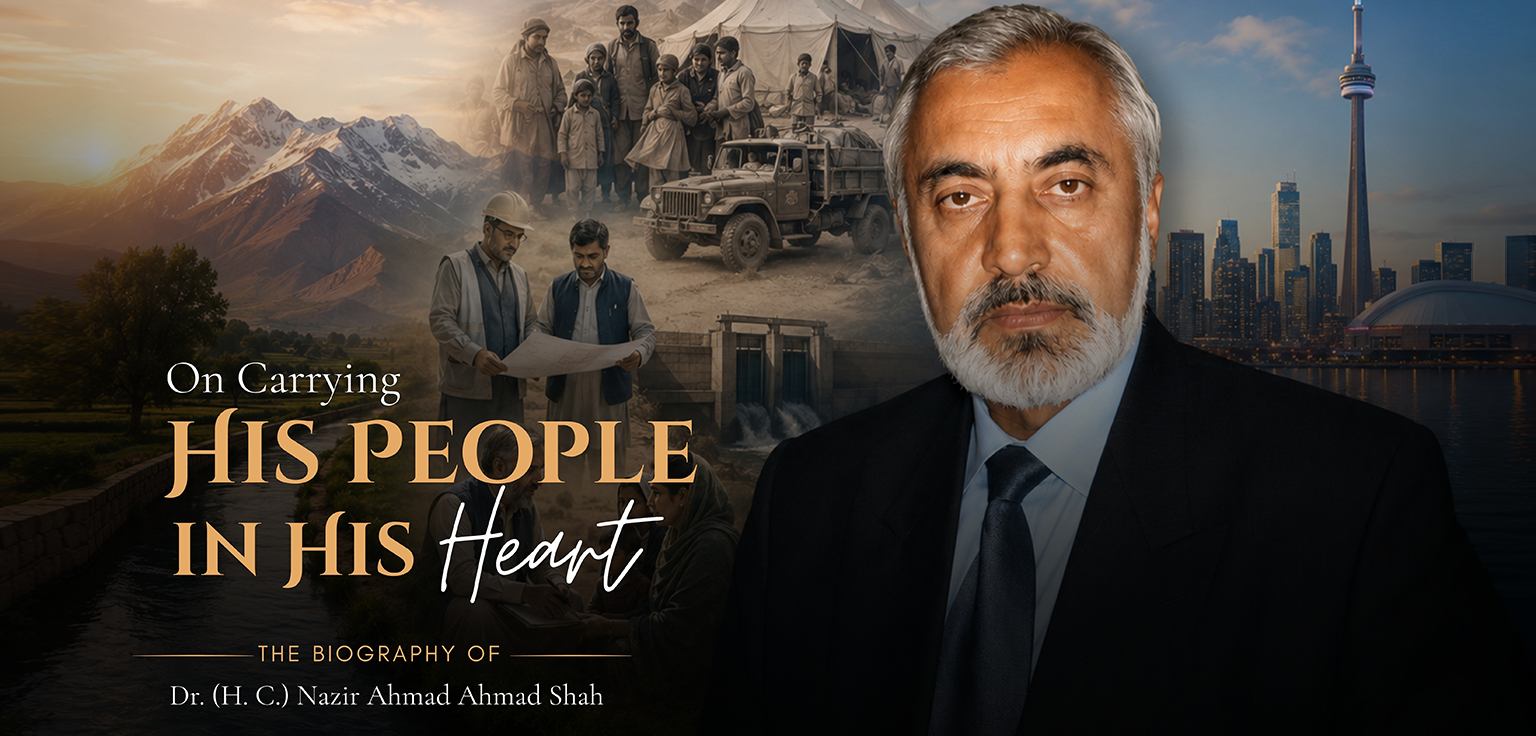
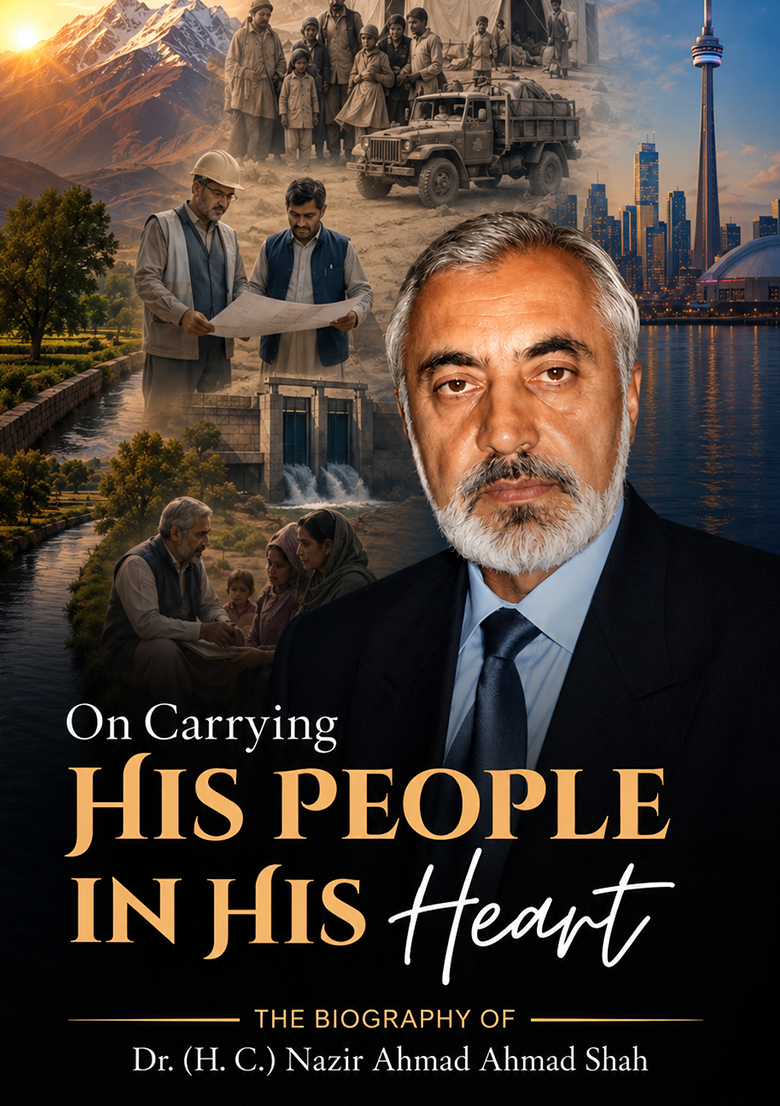
“Service to others is the rent you pay for your room here on earth.”
Introduction
The life of Dr. Nazir Ahmad Ahmad Shah is a journey shaped by service, courage, responsibility, and an enduring belief in the power of communities. His story begins in Kabul, Afghanistan, but it does not remain confined to one place, one profession, or one identity. It moves through education, engineering, sport, humanitarian rehabilitation, international development, migration, interpretation, and continued public commitment. At every stage, his life reflects the same central value: knowledge becomes meaningful only when it is used to help people.
Born in 1953, Dr. Nazir grew up with a strong connection to learning and discipline. His education at Habibia High School and later at Kabul University gave him the academic foundation that shaped his early professional direction. With a background in agriculture and irrigation engineering, he entered practical field work in water, canals, dams, irrigation systems, and agricultural development. From the beginning, he closely connected his work with the lives of people. He learned that development was not simply about constructing systems; it was about understanding the needs of communities and creating practical solutions that could support them.
The changing situation in Afghanistan deeply affected his early career. War interrupted the academic path he had hoped to continue and brought major changes to his personal and professional life. Migration to Pakistan placed him among Afghan refugee communities, where the suffering of displaced families became a reality he understood closely. Instead of allowing these circumstances to weaken his purpose, Dr. Nazir turned hardship into service. He accepted responsibility not only for his own family, but also for many refugee families and children who needed support, guidance, and hope.
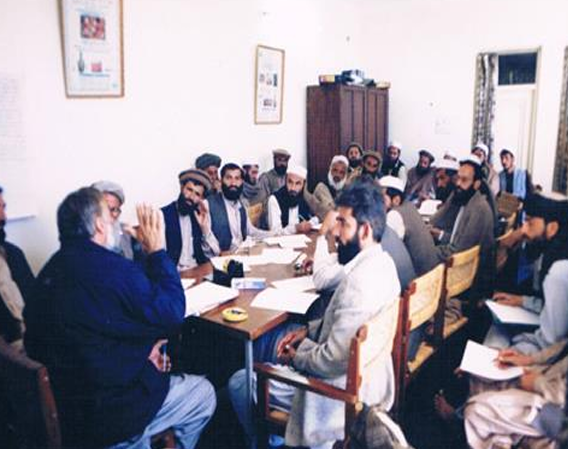
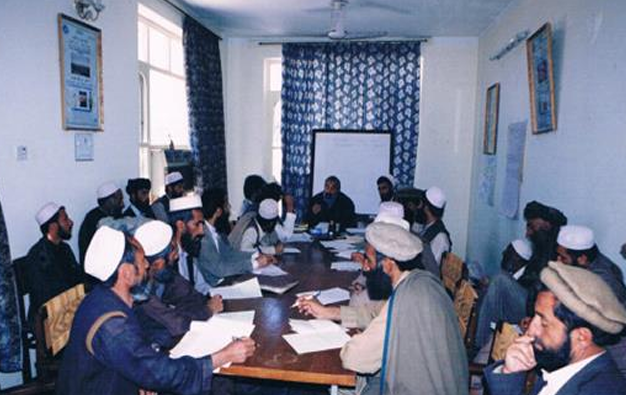
A major part of his life was dedicated to the International Rescue Committee “known as IRC” where he worked with the Rehabilitation Program for Afghanistan Known as “RPA from 1988 to 1999. This chapter placed him at the center of community-based rehabilitation work. He contributed to forming local councils, coordinating with elders and leaders, supporting infrastructure reconstruction, and helping create conditions for Afghan refugees to return to their homelands. His work covered irrigation canals, water supply structures, diversion dams, storage facilities, roads, agricultural support, and local community systems. These efforts revealed his ability to combine engineering knowledge with human understanding.
From 1999 to 2008, he served with the United Nations Office on Drugs and Crime, known as “UNODC” where he became deeply involved in illicit crop monitoring, opium poppy surveys, socioeconomic studies, drug flow monitoring, training, policy support, and coordination with national and international stakeholders. His work demanded courage because it involved sensitive field realities and serious risk. Yet he continued because he believed that Afghanistan’s future required honest research, practical alternatives, and community centred solutions.
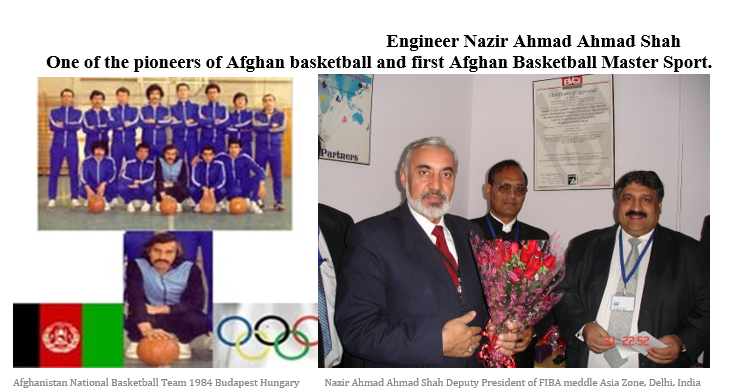
Beyond his professional life, Dr. Nazir also carried a proud identity in basketball. He played nationally and internationally, represented Afghanistan, later served in basketball leadership, and continued to value sport as a source of discipline, teamwork, and confidence. This part of his life reveals the human side of his journey: the athlete, the coach, the organizer, and the man who understood that leadership is learned not only in offices and fields but also on the court.
“Education is the most powerful weapon which you can use to change the world.”
Phase 1: Foundations in Kabul: Education, Discipline, and Early Promise
The story of Dr. Nazir Ahmad Ahmad Shah begins in Kabul, Afghanistan, where he was born in 1953. His early years were rooted in a country known for its deep cultural identity, strong community bonds, and respect for knowledge. Long before his professional journey took him through humanitarian work, engineering, rehabilitation, international development, community mobilization, and public service, the foundation of his life was being shaped quietly through education, discipline, and a growing sense of responsibility.
He belonged to a generation that viewed education not merely as a personal achievement but as a pathway to usefulness. In those early years, learning carried dignity. It connected family honor, national progress, and the hope of contributing meaningfully to society. This spirit became central to the way he looked at life. From a young age, he understood that knowledge should not remain limited to the individual. It had to be applied, shared, and eventually used for the benefit of people.
His formal education began in Kabul, and one of the important institutions in his academic journey was Habibia High School. The school became part of his early formation, not only academically but also personally. It gave him an environment where discipline, ambition, and confidence could take shape. The young Nazir was not merely passing through classrooms. He was absorbing lessons that would later help him stand before communities, communicate with leaders, guide teams, and face difficult situations with patience and clarity.
Receiving his high school diploma from Habibia High School was an important milestone. It marked the first major step in a journey that would later expand far beyond the boundaries of a conventional career. At that stage, he was still a young man preparing for higher education, but the qualities that would define him in later life were already visible. He had the seriousness of a student, the stamina of an athlete, and the quiet determination of someone who wanted to do something meaningful with his life.
After completing his schooling, Dr. Nazir pursued higher education at Kabul University, joining the Faculty of Engineering. He chose agriculture and irrigation engineering, a discipline that would later become relevant to his professional service. This was not a narrow academic path. It was a field directly connected with land, water, food, farming, rural life, and the survival of communities. In a country where agriculture and water systems were deeply important to everyday life, such an education carried practical value.
From 1971 to 1977, he remained associated with his engineering studies at Kabul University. During these years, he gained technical knowledge in areas that later helped him understand canals, dams, irrigation structures, agricultural systems, and development projects. His degree was not just a certificate earned in a university setting. It became part of the professional backbone that would later support his work in field projects, rehabilitation programs, and community-based development.
“Plans are only good intentions unless they immediately degenerate into hard work.”
Phase 2 : Engineering in the Field: The First Professional Calling
For Dr. Nazir Ahmad Ahmad Shah, professional life did not begin in an office of comfort, distance, or theory. It began close to land, water, people, and the practical demands of development. The education he had received in engineering was soon tested in real settings, where every decision mattered and every project was connected with the daily lives of communities. His early career became a bridge between academic knowledge and public usefulness. It was in this stage that he began to understand that engineering was not merely about structures. It was about service, planning, trust, and the ability to bring technical work into the life of ordinary people.
After completing his university education, Dr. Nazir entered his first professional career through work connected with the Ministry of Water and Power and the Helmand and Arghandab Valley Authority, known as HAVA/USAID funded program in Afghanistan 1970-1978 The work involved water development, irrigation, canals, and dam-related projects. This important beginning placed him in a field where he could apply his academic preparation directly. He was not only observing systems from a distance. He was stepping into a world where water had to be managed, land had to be supported, and communities depended on the success of such projects.
In his own recollection, he described this beginning as his first career in one of the major projects connected with dam and canal construction. The nature of the work introduced him to the discipline of field engineering. It required technical understanding, but it also required patience, movement, inspection, coordination, and responsibility. A plan on paper could not become meaningful unless it was properly surveyed, communicated, implemented, and supervised. These early lessons stayed with him and later became deeply useful in his wider development career.
During this period, Dr. Nazir worked for about one and a half to two years in this early project environment. The experience gave him practical exposure to irrigation work and water development. It allowed him to see that canals, dams, and agricultural systems were not isolated technical subjects. They were part of a larger chain of human need. When water moved correctly, land became productive. When land became productive, communities gained stability. When communities gained stability, a larger sense of development became possible.
This understanding shaped his professional mind. He began to see that engineering was not only about construction but also about restoring order, creating usefulness, and solving problems that directly affected people. His field experience helped him move beyond textbook learning. It taught him how to look at a site, assess a need, understand the ground reality, and think in terms of implementation. Such knowledge cannot be fully gained inside a classroom. It grows through walking through project areas, speaking to people, watching systems closely, and learning from the practical challenges that appear during implementation.
His work later continued with different sections of the Ministry of Water and Power and also with the Irrigation and Agriculture Ministries in Afghanistan. In his professional work history, he is also identified as an Irrigation Section Supervisor with the Afghan Government, connected with the Irrigation and Agriculture Ministries in Kabul, from 1978 to 1984. This role gave him a deeper connection with public sector engineering work and strengthened his practical foundation in irrigation and agricultural development.
“You may not control all the events that happen to you, but you can decide not to be reduced by them.”
Phase 3 : When War Changed the Road Ahead
There are moments in life when a person does not choose a new direction, but circumstances place that direction before him with such force that turning away is no longer possible. For Dr. Nazir Ahmad Ahmad Shah, such a moment came when the life he had planned through education, engineering, and professional service was interrupted by war in Afghanistan. Until then, his path had held the hope of steady professional growth. He had studied, trained, worked in technical fields, and begun building his future through practical engineering service. But the future he had imagined did not unfold in a straight line.
After his early professional years, the situation in Afghanistan changed deeply. War began to disturb not only institutions and public systems, but also private dreams. For a young professional who had already entered government-linked engineering work, the change was not a distant political event.
It entered the everyday life of families, professionals, students, and communities. It affected the ability to work, study, plan, and live with certainty. In his own reflection, Dr. Nazir remembered that after he graduated and began his professional journey, the war started and many things became mixed up. The word itself carries the weight of disruption. It was not simply a change of job or location. It was a change in the entire structure of life.
He had once intended to continue his education further. After completing his bachelor’s degree, he had started toward a master’s level academic path, but the war broke that continuity. What had once seemed possible became difficult, then almost impossible. It was not because he lacked interest, discipline, or ability. It was because life placed survival, family, and responsibility before academic progress. He later spoke openly about this unfinished dream, explaining that his life did not allow him to complete higher studies in the way he had wanted. This regret was not bitter in tone but honest. It came from a man who knew the value of education and also knew the cost of circumstances beyond personal control.
As conflict intensified, migration became part of his life. Dr. Nazir and his family moved to Pakistan, where they found themselves among the many Afghans displaced by the war. The word “refugee” was not an idea to him. It became a lived reality. He knew what it meant for families to leave familiar places, to face uncertainty, and to rebuild life away from home. This personal experience gave him a deeper understanding of displacement. Later, when he worked with refugee communities, he was not only responding as a professional. He was responding as someone who had seen the emotional and practical burden of uprooted life.
During this time, he had to think not only of himself but also of his family. The responsibility of supporting them became immediate and serious. He reflected that he was trying to feed his family and therefore could not simply leave everything to pursue education elsewhere. At one point, he chanced to go abroad for further opportunity, but he understood that doing so would have made it difficult to support those who depended on him. This decision reveals an important part of his character. He did not measure success only by personal advancement. He measured it by duty. For him, responsibility was not a word used in speeches. It was a daily choice.
The interruption of his academic dream remained one of the defining emotional threads of this phase. He had the capacity to study further, and he knew that his practical experience was growing to a high level. Yet formal academic recognition remained incomplete because his circumstances did not allow time, stability, or financial freedom. He later expressed that he had gained knowledge through work, field practice, community engagement, and major professional challenges, but he did not have the academic paper to signify it. This feeling stayed with him for many years. It became one of the reasons why recognition later in life meant so much to him.
Note of Thanks
Dr. Nazir Ahmad Ahmad Shah extends his sincere thanks to everyone who became part of his life, work, and journey of service. His heartfelt appreciation begins with his family, whose patience and support gave him strength during the most demanding years of his professional life. He especially acknowledges his wife, Mrs. Wagma Wardak, whose quiet encouragement helped him continue his responsibilities even when his work kept him away from home for long periods.
He also offers deep thanks to his sons, Naveed Ahmad Ahmad Shah and Nadeem Ahmad Ahmad Shah. Their achievements, love, and support have remained a profound source of pride and emotional strength for him. Their belief in his long-held dream has meant deeply to him and has added more meaning to this important chapter of his life.
Dr. Nazir also thanks the leaders, colleagues, field staff, international professionals, community elders, refugee families, and organisations who have trusted his work throughout his career. His years with the International Rescue Committee, UNODC, and community-based initiatives gave him the opportunity to serve people in meaningful ways.
Above all, he remains thankful for the chance to use his knowledge, experience, and strength for communities in need. His journey has been shaped by service, sacrifice, family support, and the enduring hope that he can help people rebuild their lives with dignity.
thanks,
– Dr. Nazir Ahmad Ahmad Shah