“The most courageous act is still to think for yourself. Aloud.”
Dedication
This biography dedicates itself to the silent strength of women, whose sacrifices go unrecorded yet profoundly felt. It honours the countless women who carry responsibility silently, who build families and communities through resilience, patience, and unwavering determination. Their stories may not always be written in history, yet their influence shapes generations. Through their endurance and compassion, they redefine what strength truly means.
At the heart of this dedication stands Dr. Narinder Kaur’s mother, Balwant Kaur, a woman whose dignity, resilience, and steadfast love became the foundation of her daughter’s life. More than a parent, she has been a constant companion, guide, and trusted friend. Through her example, Dr. Narinder Kaur learned that strength is not loud or performative; it is revealed through consistency, sacrifice, and unconditional care. Her mother’s presence has been a source of emotional grounding and encouragement through every phase of life.
This work is also devoted to the memory of her late father, Surian Singh, whose values and quiet wisdom continue to influence the path she walks today. Though he is no longer physically present, his legacy lives on in the principles of integrity, perseverance, and responsibility that shaped her character. Her father’s memory remains a guiding light that continues to inspire her commitment to service and purpose.
Beyond family, this dedication extends to every daughter who grows up carrying responsibility before comfort, learning resilience before ease. It is for those who balance duty with aspiration, who pursue education not for recognition but for dignity and independence. Their determination reflects the same spirit that has guided Dr. Narinder Kaur throughout her life.
Above all, this biography is dedicated to Waheguru Ji, whose divine grace has guided every opportunity, challenge, and blessing along her journey. Through faith, Dr. Narinder Kaur recognizes that every step of her life has unfolded under divine guidance.
May this dedication honor the love, faith, and strength that continue to shape her life and the lives she touches through care, compassion, and service.
“Children are not things to be molded, but people to be unfolded.”
Phase 1: Foundations Of Responsibility And Early Awareness
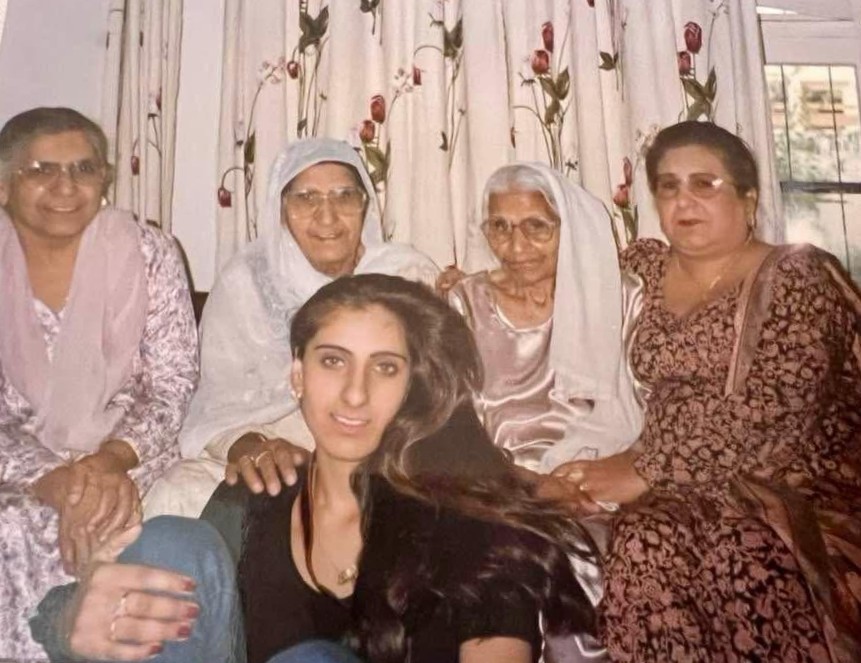
For Dr. Narinder Kaur, the initial era of her existence was not solely characterized by innocence; rather, it was characterized by awareness. She was aware, even when she was a little child, that her house required more than just her presence there. Participation was essential for it. The notion of responsibility was not presented gradually; rather, it was incorporated into the routines of daily life from an early age. While most children learned to rely on adults for care, Dr. Narinder Kaur learned to care for herself.
Since she was the youngest daughter in her family, it made sense to think that she would be safe from any problems that might come up. On the other hand, her situation brought her closer to the harsh realities of illness, emotional stress, and family duties. Her mother’s ongoing health issues had an emotional impact on her throughout her childhood. The presence of illness was not an occasional disruption; instead, it was a constant presence that affected the individual’s habits, priorities, and emotional responses. Dr. Narinder Kaur grew up in a place where she could see both strength and weakness. She learned early on that love often shows itself through endurance instead of comfort.
She started helping around the house when she was very young, and she did it because she knew it was important, not because she felt like she had to. She started doing things like cooking, cleaning, and helping to run the house much earlier than most kids her age. People at the time didn’t think these actions were acts of sacrifice. In short, they were the things that had to be done. However, looking back on them, they show how responsibility slowly shifted from parent to child, a change that required emotional maturity that was far beyond her years.
This time made her emotionally more sensitive. Dr. Narinder Kaur became more aware of silence. She got good at reading people’s faces, pauses, and moods. While her mother was sick, phrases were often unnecessary. It was more important to be there. She learned how to communicate without words at a young age, and this characteristic became one of her most important traits. She learned from her experiences that compassion doesn’t always mean giving answers. Occasionally it is achieved through focus, patience, and perseverance.
Even if it was a contrast to life at home, school life was not an escape. Dr. Narinder Kaur was a serious, observant, and disciplined individual when she was working in educational settings. The teachers remarked on her feeling of responsibility as well as her readiness to adhere to the established patterns. To put it another way, she was calm and engaged. In its place, she tackled learning with a calm and focused attitude. School offered her a feeling of order and regularity, which was a source of comfort in the midst of the unpredictability that she experienced at home. Additionally, it reaffirmed her conviction that effort was important and that discipline was the foundation for stability.
“Education is the most powerful weapon which you can use to change the world.”
Phase 2 : Education as awakening, autonomy, and self-definition
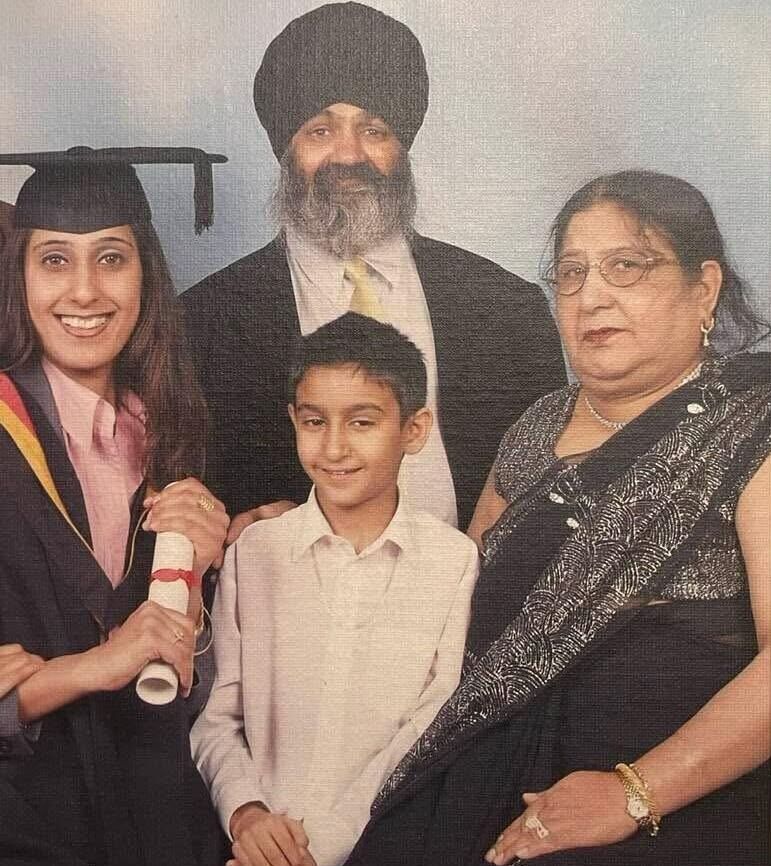
Dr. Narinder Kaur experienced a significant transformation during Phase Two, which was characterized by the maturation of duty into self-direction and the transformation of learning into a transformative kind of awakening. During this period, education shifted from being a necessity to a choice made by individuals. Additionally, it was during this era that she started to recognise her capabilities, not solely via praise, but rather through consistent work, discipline, and performance.
During her time at college, she had her first genuine experience of independence. Dr. Narinder Kaur has been quite open and honest about the fact that this time corresponded with social visibility and growing independence, both of which were accompanied by cultural friction. Certain societal circumstances typically discouraged women from possessing attributes such as youth, self-assurance, and academic prowess. She possessed all of these qualities. Early on, she became aware of the ease with which expectations may disrupt the educational opportunities available to women. She made a conscious decision to fight through this situation rather than letting it determine the course of her destiny.
One of the most independent things she did during this time was decide to learn to drive at the age of 18, without needing anyone else’s help with money. She chose to pay for her own driving lessons and get her license without any help. This was a big step forward. It represented self-determination. For her, the idea of mobility included both the freedom to move around and the freedom to think. This idea allowed her to switch between her responsibilities, her education, and her own growth as she saw fit.
After graduating from college, Dr. Narinder Kaur continued her education at the university level, a period of time that she recalls with self-assurance and clarity. Because of her time spent in university, her personality was able to develop more fully. She was disciplined, interested in social activities, and engaged in physical activity. Through her ability to strike a balance between academic rigour and self-expression, she became well-known for her confidence, her exercise routine, and her distinct personality. It is essential to note that she did not keep self-care and discipline separate. Her idea that mental and physical power are inextricably linked was strengthened by the fact that she went to the gym on a regular basis and followed organized routines.
She did very well in her studies. She was chosen to be the student representative, a job that showed both trust and leadership. She was put in a position where she could talk directly to both faculty and students to advocate for, mediate, and help people who were having trouble with school. One of the first signs of her natural tendency was that she was naturally adept at guiding and mentoring others, which would later become a big part of her career.
“Wherever the art of medicine is loved, there is also a love of humanity.”
Phase 3 : Clinical educator in practice and the art of care
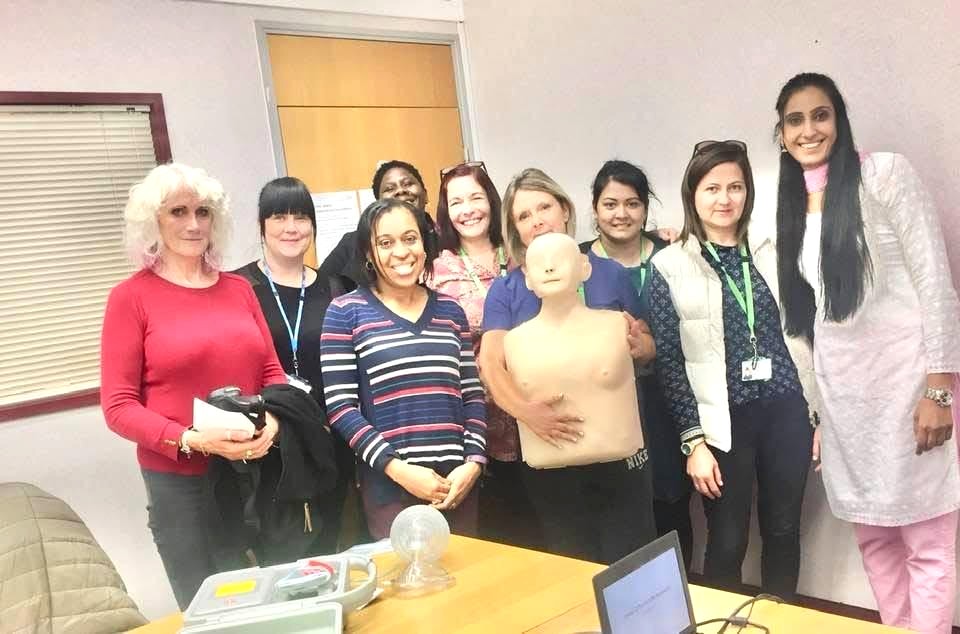
Phase Three marks the point in Dr. Narinder Kaur’s life when knowledge, discipline, and lived experience converged into a professional identity defined by guidance, instruction, and ethical responsibility. This was the phase in which she grew into the role of a Clinical Educator, not merely by qualification, but through presence, competence, and the ability to shape others through example. What had earlier appeared as responsibility in childhood and determination in education now matured into a purposeful role that combined leadership with learning.
By the time she entered this phase, Dr. Narinder Kaur had already developed the qualities that would make her effective in demanding professional environments. She was observant, composed, and attentive to detail. She understood the importance of structure, but she also recognized that human development cannot be reduced to procedure alone. These instincts became especially significant as she stepped into settings where learning was not confined to theory but embedded in real situations, real pressures, and real consequences.
Her transition into professional practice brought with it a more profound understanding of accountability. This was no longer a stage of acquiring information for personal advancement. It was a stage in which knowledge had to be applied responsibly, communicated clearly, and demonstrated consistently. In such environments, competence was not optional. Precision mattered. Judgement mattered. Reliability mattered. Dr. Narinder Kaur approached these expectations with seriousness and maturity, earning trust through steadiness rather than display.
It was in this context that her identity as a Clinical Educator began to take shape. She did not become an educator simply because she stood in front of others and explained processes. She became one because she understood that teaching is ultimately about enabling confidence, clarity, and ethical practice in others. She recognized that learning in professional settings can be intimidating. Many individuals enter such spaces with theoretical knowledge but uncertainty in application. Dr. Narinder Kaur responded to this gap with patience, discipline, and a calm instructional presence.
What distinguished her approach was that she taught through both explanation and example. She did not treat teaching as a separate activity detached from daily responsibilities. Instead, she integrated it into the fabric of her work. Guidance was offered in the moment, in context, and with purpose. She understood that some lessons are best taught not through abstract instruction, but through observation, repetition, and reflective correction. Her way of mentoring was therefore practical, grounded, and deeply attentive to the needs of the learner.
Note of Thanks
This biography reflects the many people, moments, and experiences that shaped the life of Dr. Narinder Kaur. Through this note, she expresses her sincere gratitude to all those who contributed, directly or indirectly, to the values, purpose, and perspective that define her journey.
First and foremost, Dr. Narinder Kaur is deeply grateful to the women and girls whose trust, courage, and lived experiences enriched her understanding of care, dignity, and resilience. Their openness transformed professional encounters into deeply human connections and strengthened her belief that listening itself can be a powerful act of healing.
She also extends heartfelt thanks to the educational institutions, mentors, colleagues, and community members who supported her growth at different stages of life. Their encouragement, guidance, and example helped shape her sense of responsibility, discipline, and ethical clarity.
This note also acknowledges the communities that welcomed her efforts with trust and collaboration. Their willingness to learn, engage, and grow together reaffirmed her belief that meaningful and lasting change is built through partnership, not instruction alone.
Finally, Dr. Narinder Kaur expresses quiet gratitude for the lessons gained through both transition and challenge. Every experience contributed to deeper reflection, stronger boundaries, and a clearer sense of purpose.
We offer this biography with appreciation to all those who uphold compassion through action, dignity through self-respect, and service through integrity.
Thanks,
– Dr. (H. C.) Narinder Kaur