“At the end of the day, I’m just someone who worked hard, stayed patient, and tried to understand people. The world is big, but if you’re open, it becomes small. And if you’re kind, people remember that more than anything you build.”
Introduction
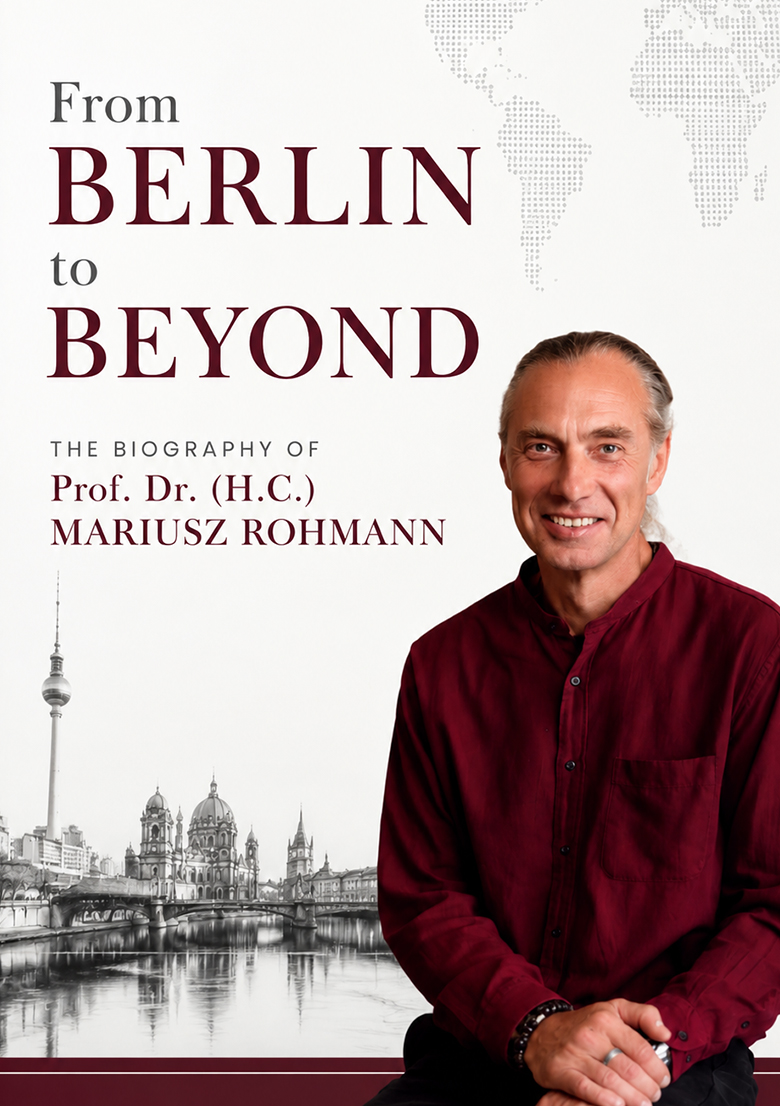
Dr. Mariusz Rohmann’s life story is a carefully layered journey of discipline, engineering mastery, and global exposure, shaped by years of structured growth and professional evolution. Born in 1975 in Poland, his family later moved to Germany, he grew up in an early environment naturally imbued with a blend of cultural duality. It was within the foundational environment of his family; the very beginning of the life of Dr. Mariusz Rohmann was colored by both stability and cultural movement. Raised in Germany with the Polish background, he formed a dual awareness that shaped his personality and the outlook on life. This balance of cultural identity and national environment allowed him to develop adaptability, the essential trait that would later define his international career.
His initial structured phase of professional foundation was in his early education and Siemens AG apprenticeship. Intensive training and technical exposure brought him into the world of engineering with Siemens AG and Siemens Energy AG, a decisive moment that defined his entire career path. The apprenticeship system not only introduced him to the principles of technical engineering, but also instilled in him a disciplined approach to problem-solving and system-based thinking.
Dr. Mariusz Rohmann has developed his expertise in high-voltage engineering systems, product lifecycle management and technical innovation during his career as he took on increasing responsibility in engineering development, project coordination and design of industrial systems. The roles he held required precision and long-term strategic thinking allowing him to grow from a trainee to an internationally engaged engineering professional. His international exposure has been an important part of his journey. His professional assignments took him across countries like India, France, China and Mexico. Each of these experiences added to his understanding of global engineering practices and multicultural collaboration. Working in diverse environments enabled him to adapt to different technical frameworks and organizational cultures while preserving engineering accuracy and consistency. Beyond his engineering duties, Dr. Mariusz Rohmann has developed a strong record of innovation and intellectual contribution. His patents and technical publications in the field of high-voltage systems demonstrate a continuous desire to advance engineering knowledge. These achievements highlight not only his technical skills but also his commitment to enhancing industrial systems and contributing to long-term technological progress. His career has also been marked by leadership roles in engineering settings, managing complex projects involving system design, coordination of research and development, and strategic implementation within the framework of Siemens AG and Siemens Energy AG. These roles required teamwork, integration of technical expertise, and alignment with global industrial objectives. Over time, he evolved into a professional capable of bridging technical knowledge and organizational execution. Outside of his career, his personal life also reflects the dynamics of international mobility and adaptation. The need to work in different parts of the world requires constant adjustment to new environments, cultures, and responsibilities. These experiences fostered a broader perspective on life beyond engineering, where individual discipline and professional obligations are often intersected.
Therefore, the beginning of his biography is not simply a list of accomplishments, but a story of constant growth. It’s a story of a life shaped by structured education, international experience, and lasting professional engagement. Dr. Mariusz Rohmann’s path is a testament to how technical proficiency, coupled with adaptability and cultural sensitivity, can forge a fulfilling and globally impactful career trajectory.
This biography is presented in detailed stages that will take us through his life in an orderly fashion, encompassing the range of his early foundations, career milestones, international experiences, and personal aspects. Each stage creates a larger story of growth, discipline, and accomplishment, shaping the whole story of Dr. Mariusz Rohmann.
"Identity is not inherited, it is shaped by where we come from and how we respond to it."
Phase 1: Across Barbed Wires and the Fence
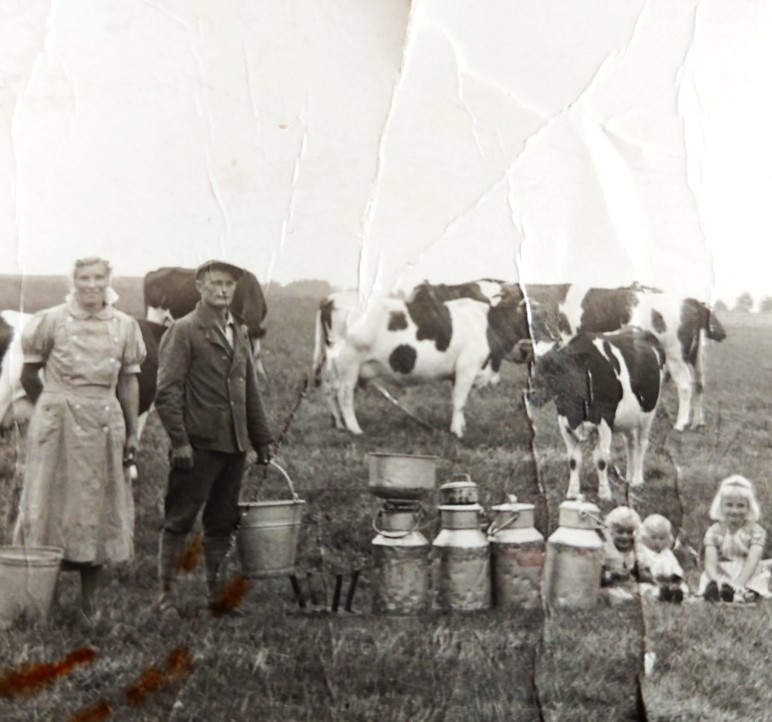
The life of Dr. Mariusz Rohmann starts out in a European location, full of culture, history and family values. Born in 1975 in Poland, but raised in Germany his initial identity was based on geography and culture. The country of his birth placed him in the framework of contemporary European culture, but his family history returned him to Polish culture, the duality of which would quietly stay with him all his life.
In this household, his father, Herbert Rohmann, and mother, Teresa Rohmann, were instrumental in establishing a foundation of stability and discipline. His sister Dr. med. Edyta Rohmann was also a part of this close-knit family unit where common values and shared lived experience shaped everyday life. It was in this family setting that responsibility, respect and internal discipline were first modeled rather than simply taught. The historical context of his youth is also quite significant. To live in Germany in a period of European post-war transition meant that order, reconstruction and social discipline were very much part of everyday existence. While no specific references are made to the political or economic environment, the setting was one that stressed organization, progress and reintegration. In this wider background, the early years of Dr. Mariusz Rohmann were spent in a climate fostering consistency and systematic development. His Polish origin was also a factor in identity formation. The Polish cultural roots in a German environment gave rise to a dual consciousness of belonging.
But this was not an identity conflict; it was an internal balancing of heritage and environment. It added to an early awareness that identity could be multidimensional at the same time, a concept that became relevant later in his international professional journey.
Values within the family were not taught through formal instruction but were absorbed through lived experience. The presence of both parents provided a stable foundation for the natural observation of responsibility and independence. These early influences were not structured lessons but rather daily patterns of behavior, communication and expectation. In such an environment, Dr. Mariusz Rohmann developed an early sense of internal discipline and an awareness of structure.
The household dynamic also had a profound sense of sibling attachment. Growing up with his sister, Dr. med. Edyta Rohmann, he shared a common developmental environment in which interaction, observation and mutual familiarity contributed to the development of social cognition. This closeness within the family provided emotional anchoring that later helped him to feel comfortable in the context of collaborative work.
Although specific childhood events are not discussed, it is clear that early life was shaped by a structured environment. This structure would later be reflected in his career interest in engineering systems, where precision, order, and process-oriented thinking are essential.
His development cannot be separated from the country of his upbringing, Germany. The societal frame, cultural efficiency and educational discipline created a background in which technical thinking could develop naturally. It was this background that shaped the way of thinking in the direction of logic, consistency and systematic understanding.
"We are shaped not only by where we are born, but by the cultures we learn to carry within us."
Phase 2 : Learning to Belong Twice
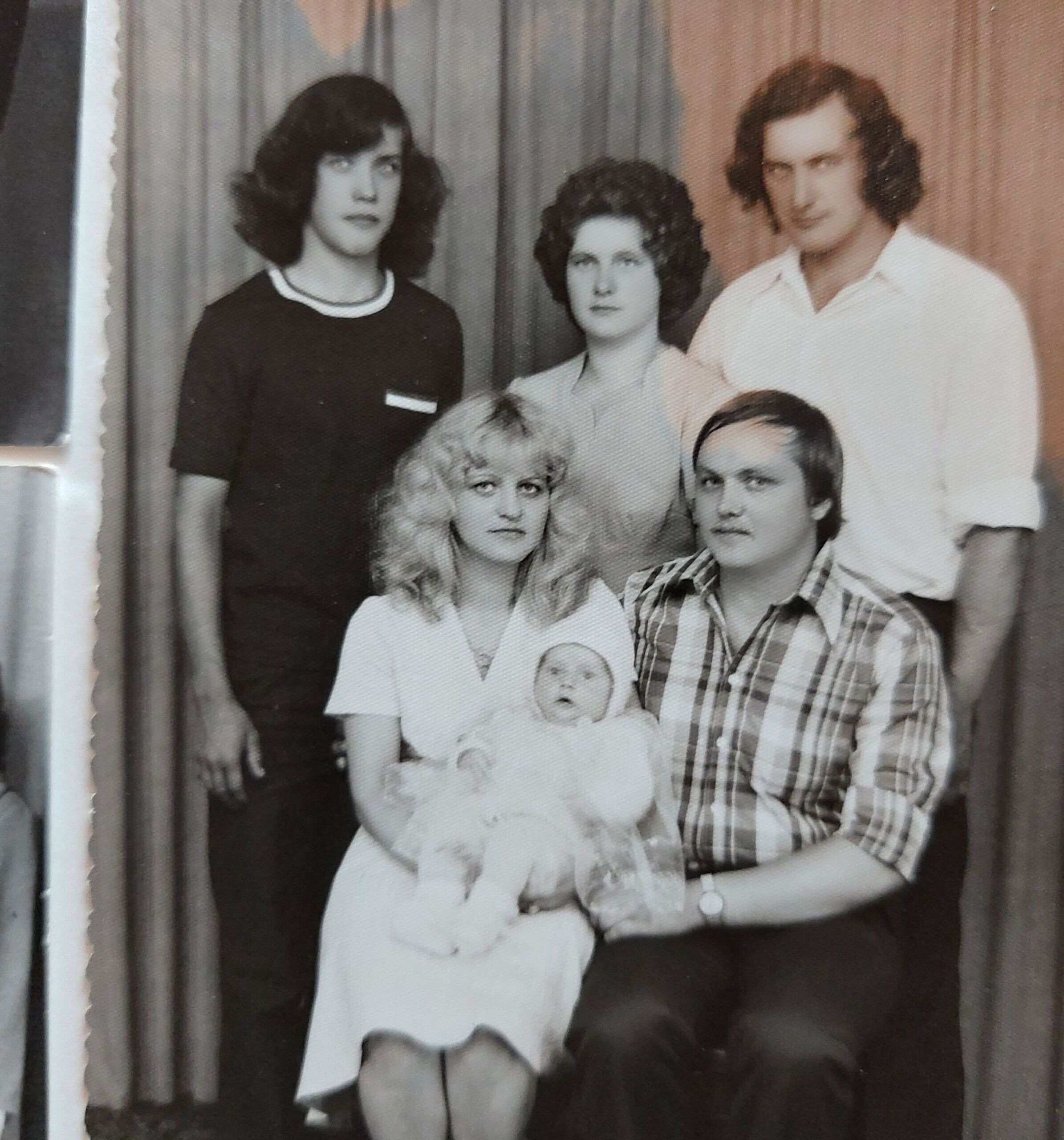
The early life of Dr. Mariusz Rohmann extended beyond the confines of his birthplace, blooming into a more profound comprehension of cultural identity and belonging. While his development in Germany provided him with a framework of structured Europeanism, the legacy of his family’s Polish roots added another cultural layer that subtly yet significantly influenced his early outlook on the world.
The dual cultural identity was not a pronounced conflict but a natural coexistence of two cultural influences. The Polish heritage was an underlying thread in the everyday life of the household of Herbert Rohmann and Teresa Rohmann, while the German environment offered stability, structure and social integration. Dr. Mariusz Rohmann grew up with the knowledge that identity is not monolithic but layered.
With his sister Dr. med. Edyta Rohmann, he grew up with a sense of shared cultural understanding. The family environment fostered continuity, familiarity and internal cohesion, where cultural values were lived rather than explicitly taught. Here, cultural identity was not taught but lived through interaction, family communication, and everyday life.
With age he felt more strongly that he belonged to two cultural contexts. Through family ties and cultural memories he remained connected with his Polish roots, but his daily life was still embedded in the orderly world of Germany. This contrast gave him an early sense of how to move between cultures, to see difference as normal and to shift identities without difficulty.
Specific details of the childhood are not available, but a consistent thread of cultural awareness and adaptation is identified. Dr. Mariusz Rohmann’s cross-border heritage introduced him early to the concept that identity can exist beyond national borders. This awareness would later be of critical importance in his professional life, which was marked by international experience.
His primary environment, Germany, was instrumental in shaping his feeling of structure, discipline and systematic thinking, aspects that are often attributed to the educational and societal context of his upbringing. At the same time, his Polish background offered a complementary sense of cultural continuity and historical identity.In their combination these influences created a balanced cultural foundation.
The values in the family structure were passed on through consistency, not formal dialogue. Herbert Rohmann and Teresa Rohmann were central to creating a stable environment where responsibility and awareness were naturally observed. The consistency allowed Dr. Mariusz Rohmann to develop a sense of grounded identity which was not dependent on external validation but internal understanding.
"Discipline is the bridge between goals and accomplishment."
Phase 3 : A Year of Hot Circuits and Discipline
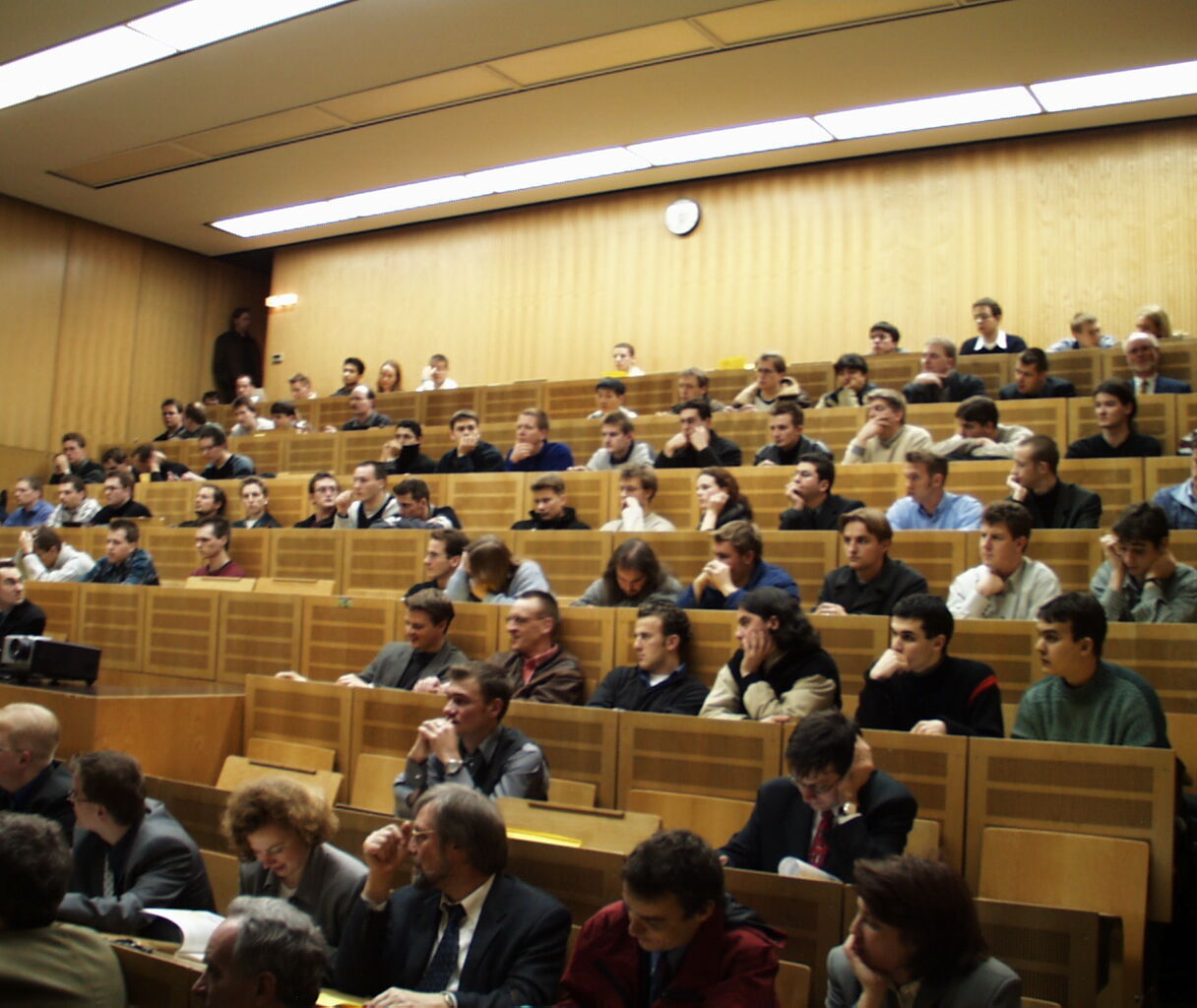
Dr. Mariusz Rohmann’s early professional formation started with a well-organized and disciplined educational path that set the stage for his long-term engineering career. His German childhood was steeped in an environment that respected technical accuracy, organized education, and the practical application of knowledge. This was the obvious gateway into his engineering and industrial systems career.
A pivotal moment in this era was his official induction into Siemens AG and Siemens Energy AG, where he entered a structured apprenticeship program. This apprenticeship was not just vocational training; it represented the beginning of a professional identity shaped through practical experience, technical exposure and systematic learning. At Siemens AG and Siemens Energy AG, Dr. Mariusz Rohmann was immersed in industrial engineering contexts that required precision, discipline and analytical thinking.
The years spent learning in an apprenticeship school provided Dr. Mariusz Rohmann with first-hand exposure to the world of engineering systems, technical processes and structured workflows.
These early experiences played a crucial role in shaping his appreciation of the translation of theoretical knowledge into real world industrial application. Rather than learning in a vacuum, he was inserted into environments where engineering concepts were being applied to functional systems, thus allowing him to develop practical as well as conceptual understanding at the same time.
He showed a consistent commitment to technical work and organizational responsibilities during this time. The apprenticeship system at Siemens AG and Siemens Energy AG is designed to combine study with practical experience and this enabled him to develop steadily a knowledge of fundamental engineering principles while adapting to industrial standards. It was within this setting that his discipline and technical outlook began to take shape.
The regimented environment of the apprenticeship training also instilled values of accountability and accuracy. Each task had to be done with close attention to detail, and each stage of learning deepened his understanding of engineering systems. For Dr. Mariusz Rohmann, this was not merely training, but the dawn of a professional orientation for life toward structured problem solving and system-based thinking.
It was at this stage that the transition from a learner to a contributor was more evident. His work at Siemens AG and Siemens Energy AG exposed him to engineering environments dealing with complex systems that required both individual focus and teamwork. This blend of technical skill and collaboration marked his early professional development.
His apprenticeship period was also the beginning of his acquaintance with industrial discipline. Working in systematic engineering environments meant he had to respect processes, timelines and technical standards. This experience helped him to build up a professional mindset based on consistency and reliability, which would later become essential in his advanced engineering roles.
Note of Thanks
This biography of Dr. Mariusz Rohmann is a reflection of a life marked by discipline, dedication and constant professional development and would not have been possible without the presence of people and environments that contributed to his journey.
He would like to express his heartfelt gratitude to his family: his father Herbert Rohmann, his mother Teresa Rohmann, and his sister Dr. med. Edyta Rohmann. Their early support and foundational values gave him the strength to build his life on. They provided stability, guidance, and a strong cultural grounding, all of which have helped shape his personal and professional identity.
He sincerely thanks his wife for her support and companionship, who has been with him through thick and thin, around the big wide world. Her presence was not only support but also a shared life experience, with their family and life together built through years of mobility, responsibility and international assignments. Her contribution is deeply rooted in the personal foundation of his journey and inseparable from his life story. Thanks are also extended to the professional environment of Siemens AG and Siemens Energy AG, whose central role in shaping his engineering foundation, technical growth and international exposure was instrumental. The structured apprenticeship system, engineering culture and international opportunities provided him with a platform to develop as a globally experienced professional.
Last but not least, heartfelt thanks to all colleagues, collaborators and professional networks who have contributed to his engineering journey and supported his growth in the different phases of life.
thanks,
– Dr. Mariusz Rohmann