“A path shaped by movement, hardened by discipline, and fulfilled in the quiet assurance that others stand safer and the environment cleaner because of the work done.”
Introduction
The life of Dr. Lee Joseph Hunter was never a straight line. It began in a British Army hospital in Germany and unfolded across borders, shaped by movement and military routine. Home was never a fixed address; it was a rhythm he carried with him through Germany, through England, through every new posting. That quiet steadiness became his anchor, holding everything together when nothing else remained constant.
His father’s military background shaped the world he grew up in, and his early schooling mirrored that same structured rhythm. Beneath the surface of discipline and routine, however, his teenage years brought their own turbulence, a period of struggle and uncertainty when direction felt blurred and the future seemed anything but clear. At sixteen, a single decision set the course for everything that followed: with his father’s guidance, he chose to join the British Army.
Within the Royal Engineers he found an environment where technical knowledge and military discipline worked hand in hand. His training in civil engineering and construction materials gave him a solid technical foundation, while service taught him how to perform under pressure, collaborate, and approach every challenge with focus and consistency. When that training moved from the classroom to the field, in the aftermath of conflict in the former Yugoslavia, engineering stopped being an exercise and became a lifeline for communities that had lost almost everything.
From those beginnings grew a specialist whose work would eventually influence how an entire industry treats one of its most persistent and dangerous contaminants. This introduction is about the foundations of that journey, a time defined by constant change, steady routine, and the gradual acceptance of greater responsibility, where an unsettled start slowly transformed into direction, and each chapter laid a quiet but powerful foundation for a career built on meaning, service, and an unrelenting commitment to protecting both people and the environment.
“A new path often begins when circumstances demand a choice, and that choice becomes the foundation for everything that follows.”
Phase 1: Early Foundations, Personal Challenges, and Pivotal Choices
The early years of Dr. Lee Joseph Hunter’s life were shaped by movement, by the influence of military life, and by growing up in a family where change was simply part of the rhythm of everyday existence. His story begins in Germany, where he was born in a British Army hospital. With both parents being Scottish, his identity was always a blend of heritage and circumstance.
For roughly the first seven years of his life, Germany was home. Growing up in a military family meant that structure, routine, and discipline were woven into the fabric of daily life, and his early schooling took place within a military primary school system where each day reflected the organised, predictable world of military communities. When the family moved from Germany to England, settling just outside Newcastle, it was simply another transition, another unfamiliar environment to adjust to. Each move quietly taught him resilience and flexibility, even if at the time it all felt like normal life.
His teenage years brought a different kind of challenge. His parents separated and eventually divorced, and the structured world he had known began to feel unsettled. This period brought emotional and behavioural difficulties that were hard to navigate, visible in conflicts and suspensions at school and a general uncertainty about where he was heading. Despite the turbulence, he continued with his education and completed his examinations with satisfactory results, an early sign that he was not willing to give up.
At sixteen, a defining moment arrived. His mother gave him a clear and urgent choice: within six months he would need to either find somewhere else to live or consider joining the British Army. Seeking guidance, he turned to his father, then working in the oil and gas industry in England, who not only supported the idea of service but also urged him to choose a trade that would provide useful, transferable skills for the future rather than entering the military without direction.
That conversation led towards the Royal Engineers, a branch that combined military service with genuine technical opportunity across trades such as bricklaying, carpentry, plumbing, electrical work, drafting, quantity surveying, and construction materials technology. After reviewing the options together, Dr. Lee Joseph Hunter’s father identified Construction Materials Technician as the most suitable path, chosen for its technical nature and its clear relevance to industries such as oil and gas. What had begun as a difficult personal situation quietly became a structured career choice, and at the age of sixteen and a half, he prepared to enter an entirely different world, one built around technical learning, engineering, and practical problem-solving.
“Structured routine transforms confusion into purpose when every hour carries meaning and every task has a reason.”
Phase 2 : Entry into Structured Discipline and the Making of a Military Trainee
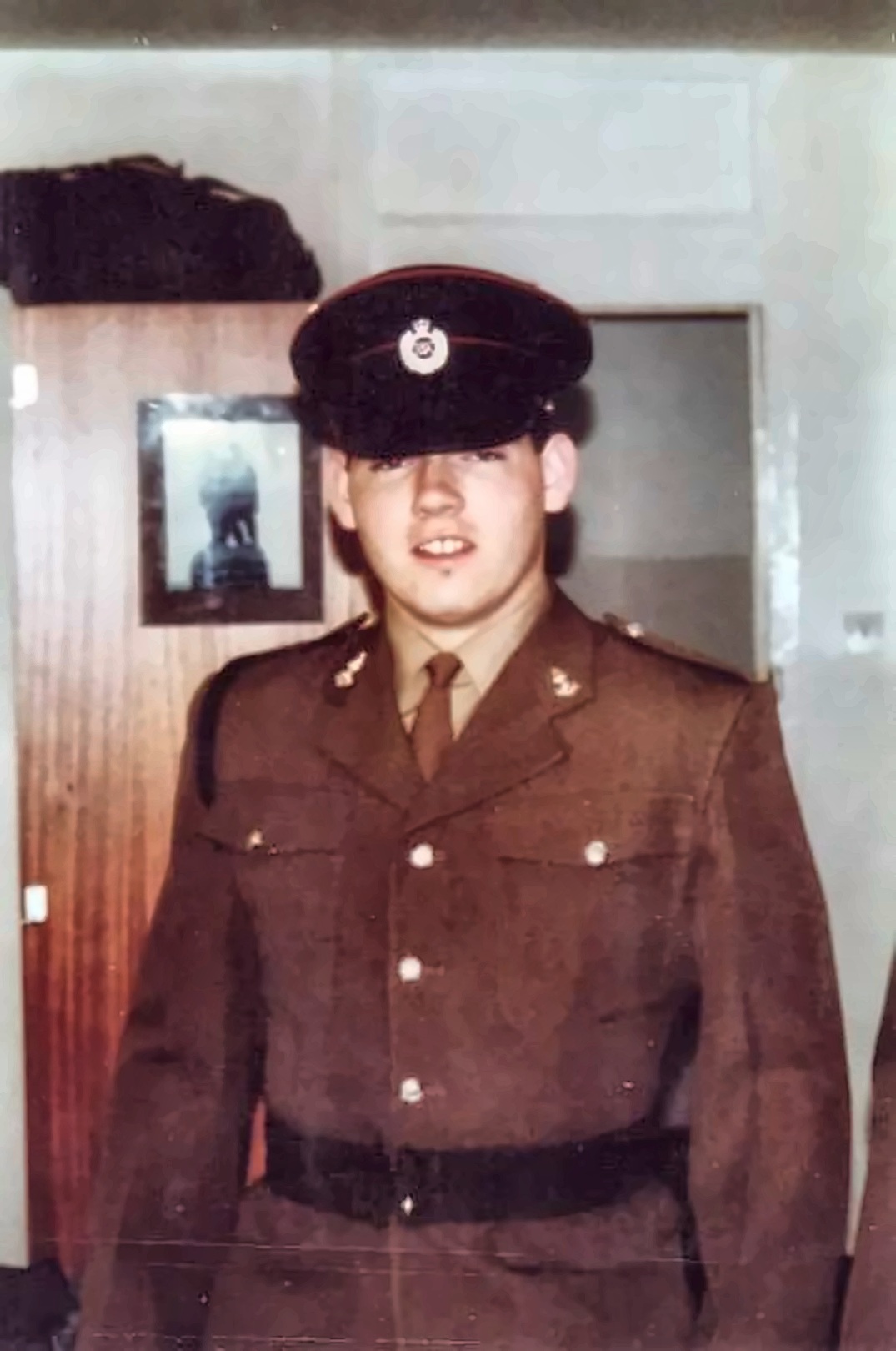
On the 5th of September 1990, at just sixteen and a half years old, Dr. Lee Joseph Hunter entered the British military system as one of the youngest to do so. Where most people his age were still deciding what they wanted to become, he was about to find out who he was going to be, and quickly. It was less a job application than a complete reset, a stripping down and rebuilding of identity, routine, and responsibility.
The first phase, known as boy service, was two years of training designed to shape uncertain teenagers into soldiers ready for adult military responsibilities. It felt less like basic training and more like a military college, a place where structure was not merely encouraged but enforced and where every hour had a purpose. This was where the habits that would define his professional life took root: precision, accountability, and the discipline to complete a task properly regardless of conditions.
His trade training in construction materials technology gave him a genuine grounding in the science of how materials behave, how they are tested, and how they perform under stress. Alongside this technical foundation, he absorbed the wider curriculum of the Royal Engineers, from stock control and asset management to the practical trades that keep an engineering unit functioning in the field. He also qualified as a marksman and trained across a broad range of engineering disciplines, building the versatility that field engineering demands.
It was during this period that he was also trained as a Nuclear, Biological and Chemical (NBC) Warfare Instructor, a specialisation that would prove quietly prophetic. Learning to understand contamination, to protect people from invisible hazards, and to instruct others in doing the same planted the seed of a career that would later revolve around exactly those principles, applied not on a battlefield but across the oil and gas infrastructure of the world.
By the time Dr. Lee Joseph Hunter’s formative training was complete, the unsettled teenager of a few years earlier had been replaced by a capable, disciplined young engineer. The transformation was not only about skills; it was about identity. He had found a framework within which uncertainty became direction, and within which responsibility was something to be carried rather than avoided.
“Real engineering reveals its worth when a rebuilt bridge becomes the only road home for those who lost everything.”
Phase 3 : From Apprentice to Field Engineer in Service of Real-World Communities
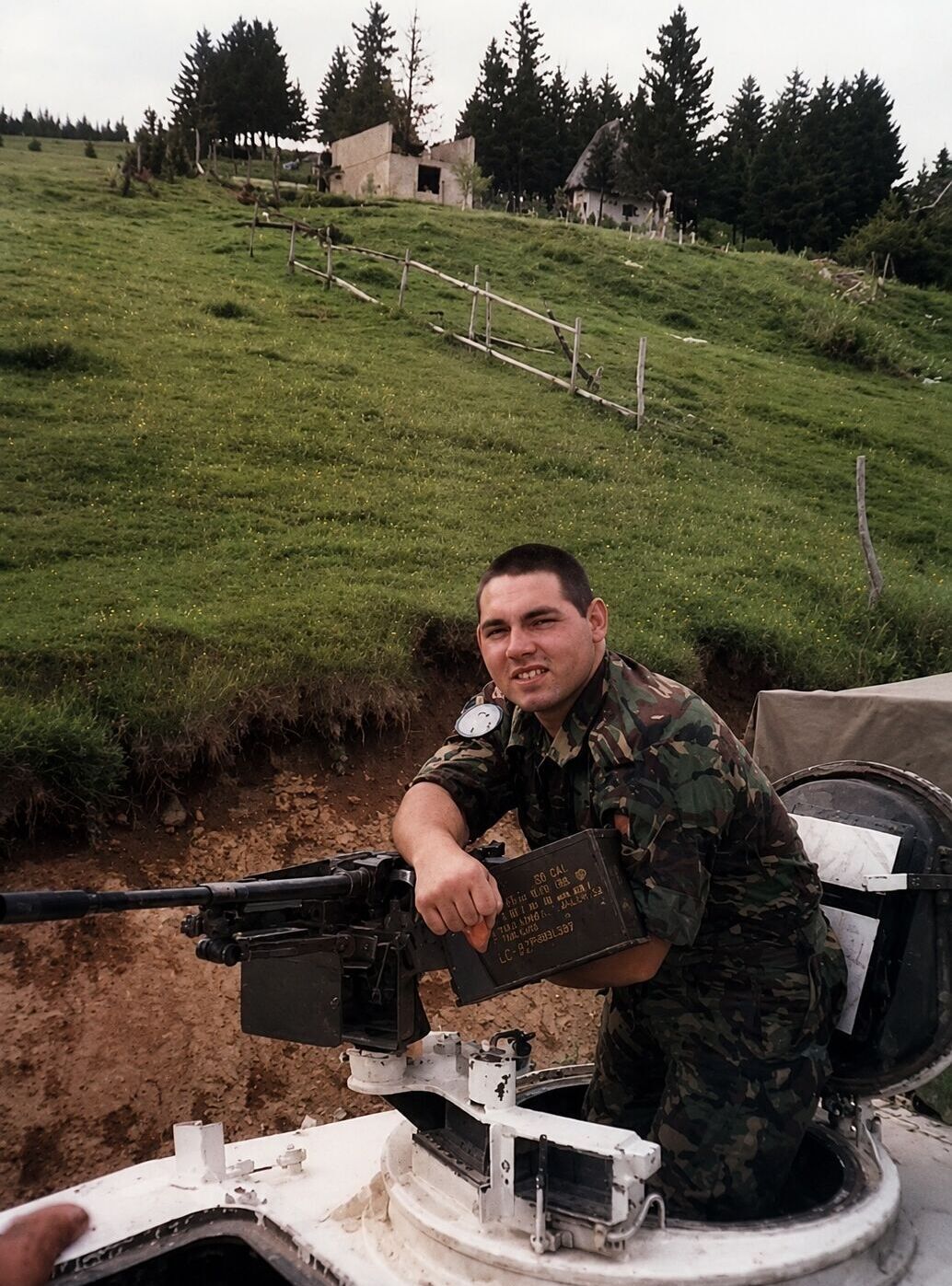
If the training years shaped the engineer, it was the field that revealed the man. In 1995, Dr. Lee Joseph Hunter deployed to the former Yugoslavia, serving with the Royal Engineers within the United Nations Protection Force (UNPROFOR) and later under the NATO-led framework that succeeded it. Here, engineering was no longer an exercise. It was a direct, daily act of service to communities that had been torn apart by conflict, and it left a permanent imprint on how he understood the purpose of his work.
The war had shattered the ordinary infrastructure that communities depend on without ever noticing: the roads that carry food and medicine, the bridges that connect a village to the outside world, the schools where children gather, and the drainage and sanitation systems that keep people healthy. Dr. Lee’s work addressed these needs directly, encompassing road repairs, bridge construction, school restoration, drainage improvements, and the rehabilitation of septic and sanitation systems. Each repaired roadway and each rebuilt crossing was more than an engineering task; it was a lifeline, restoring access, movement, and dignity to people who had lost almost everything.
Bridge construction became especially significant. In many areas, temporary or makeshift crossings had been thrown up that were unsafe or unreliable for vehicle movement, cutting communities off from supplies and from one another. Replacing them with stable, engineered structures, from Medium and Heavy Girder Bridges to Bailey Bridges, demanded not only technical skill but also a real understanding of durability, safety, and long-term usability because these were structures that families, aid convoys, and local traders would depend on for years to come. As the reconstruction effort matured, the spans grew longer and the terrain more demanding, and with them grew his mastery of structural integrity and operational coordination under difficult conditions.
The restoration of a war-damaged school captured the humanitarian heart of this work. The building served both as a reconstruction project and as temporary accommodation during operations, and the effort brought together everything he had learned: repairing drainage systems, restoring roof structures, and rebuilding essential sanitation such as septic systems so that the building could safely serve its community again. For Dr. Lee, restoring a school was never simply a construction job. It was the visible proof that skilled engineering, applied with care, could help a community begin to heal.
Throughout these deployments he witnessed at first hand the transition from United Nations oversight to NATO involvement, which introduced him to different command structures, coordination methods, and models of multinational cooperation. Working across these changing frameworks broadened his ability to operate alongside international forces and civilian agencies alike. Alongside his field responsibilities, he strengthened core technical capabilities in draughtsmanship, site surveying, and engineering report writing, the disciplines of accurate planning and documentation that would later underpin his industrial procedures and technical memoranda.
Note of Thanks
Sincere gratitude is extended to all the individuals, teams, and professional environments that have supported Dr. Lee Joseph Hunter throughout his journey. Every experience, whether in structured service, technical roles, or international industrial projects, contributed to his growth and shaped the way he approaches challenges with focus, care, and practical insight.
Special recognition is given to the early environments that nurtured his development, where discipline, structure, and hands-on learning laid a foundation of responsibility, precision, and problem-solving, and to the communities of the former Yugoslavia whose resilience gave his engineering its deepest sense of purpose.
Thanks are also due to the industrial and operational settings that allowed him to turn knowledge into action and to the colleagues, clients, research partners, and instrument manufacturers whose collaboration refined his chemistry, his analytical methods, and his systems. Appreciation is extended equally to the advisory and governing bodies that welcomed his counsel and through which his work reached a wider public good.
Above all, this note acknowledges Dr. Lee Joseph Hunter for the person he has become, not only through individual accomplishments but also through a lifelong commitment to protecting people and preserving the environment, supported by the many who shared the journey with him.
thanks,
– Dr. Lee Joseph Hunter