
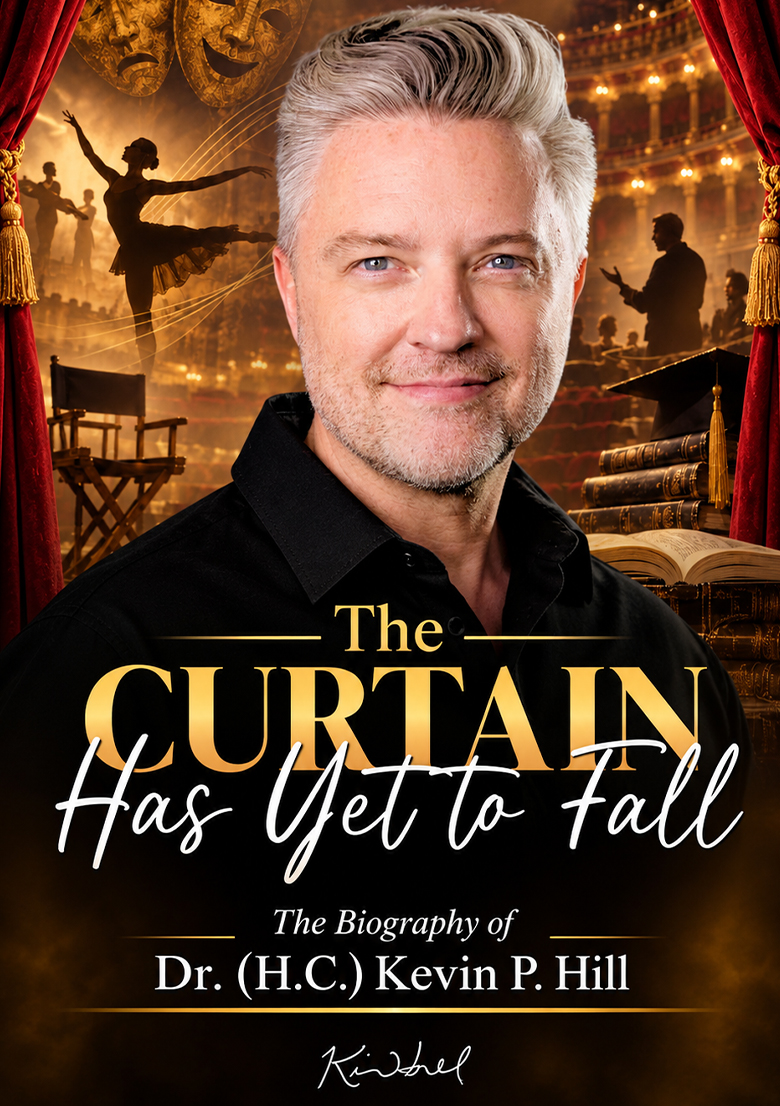
“I want to be a part of something bigger than myself.”
Introduction
For Dr. Kevin P. Hill, theatre has never been confined to what happens in front of an audience. The performance itself matters enormously, but so does everything required to make it possible. There are people who spend months preparing a production, artists who bring different interpretations to their roles, and professionals whose work is completed long before the curtain rises. He has come to know this world from several directions, and each has given him a different understanding of what it means to devote a life to the performing arts. His professional identity cannot be described adequately through a single title. He has worked as a performer, teacher, choreographer, director, studio owner, artistic director, and producer. These responsibilities have involved different abilities and expectations. The performer must respond to the material and the people sharing the stage. The choreographer must understand movement and the individuals expected to perform it. The director must bring separate artistic contributions into a coherent production. The artistic leader must consider the practical circumstances that allow all of this work to happen.
Moving between these responsibilities has given him an appreciation of the profession that extends beyond artistic talent. There are budgets to consider, people to employ, schedules to manage, and decisions that may affect the working lives of many others. A successful production requires more than an attractive creative concept. It also requires planning, cooperation, sound judgement, and the ability to respond when circumstances change. These practical demands have not diminished his affection for performance. On the contrary, they have given him additional ways to participate in the art form that first attracted him. He understands the satisfaction of performing before an audience, but he also recognises the importance of helping another artist succeed. The two experiences are different, yet both belong to the professional life he has chosen. His account also brings attention to the uncertainty that can accompany an artistic career. Interest and ability do not automatically provide a clear professional direction. A young person may know what he enjoys without knowing how to turn that enjoyment into a sustainable livelihood. Advice from others may be well-intentioned while still leading away from what feels personally meaningful. Dr. Kevin encountered such questions early in life and had to decide how much importance to give his own artistic ambitions.
He has also acknowledged that fear influenced some of his choices. As a younger person, he was sometimes reluctant to audition or pursue opportunities because he was worried about negative responses. In discussing these experiences, he does not pretend that confidence came easily or that talent removed every difficulty. His reflections give particular importance to the opportunities a person may miss when fear becomes a reason not to try. That understanding sits alongside his strong expectations of professional commitment. He believes that performers must arrive prepared, remain willing to work, and give themselves fully to the creative process. In his view, ability alone cannot replace discipline. An artist must also be receptive to other people’s knowledge, because valuable learning can take place even after many years of professional experience.
His own understanding of leadership has continued to change. Earlier approaches to dance training often required performers to follow instructions without questioning them. He has since come to favour an environment in which artists can speak openly about movement, character, or decisions that do not feel appropriate to them. This does not remove the director’s responsibility to make decisions. It recognises that the people carrying out those decisions also have experience and perspectives worth hearing. Such changes have required personal reflection. He does not describe his past as a record of perfect choices. He has acknowledged occasions when his conduct or professional judgement could have been better. This willingness to recognise shortcomings is an important part of his account, particularly because he continues to work in an industry where expectations concerning representation, communication, and professional responsibility have developed considerably.
Education has also become more important to him with time. His belief in further learning is not limited to collecting qualifications. He has sought to understand areas of professional practice that were previously less familiar to him, including the business of theatre and the responsibilities associated with inclusive artistic environments. For someone already established in his field, the decision to return to formal study represented another way of taking his work seriously. What gives these different experiences their connection is his determination to remain involved in the arts. His ambitions have changed as he has gained experience, but he has not regarded achievement in one area as a reason to abandon interest in another.
"I had a great upbringing."
Phase 1: A Childhood Surrounded by Family and Faith
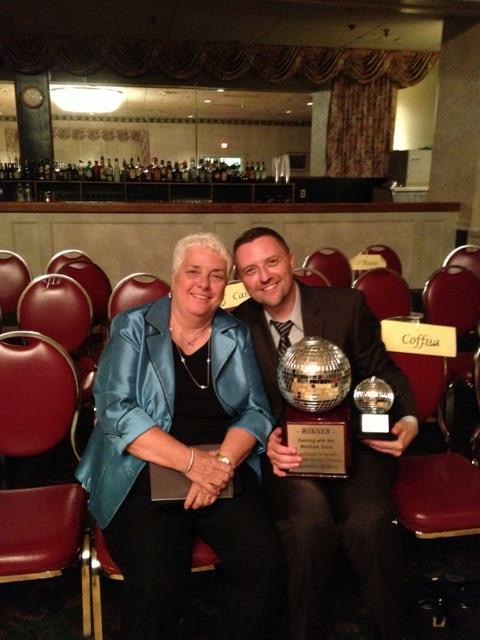
Dr. Kevin P. Hill was born on 29 March 1968 in Waltham, Massachusetts, where he spent his childhood in an Irish Catholic household. He was the only son in a family of five children, growing up with four sisters under the care of his parents, Mary Ellen Hill and Roy Hill. When he speaks about these early years, he remembers them affectionately. Family life and the religious traditions in which he was raised formed the setting of his earliest experiences. As the only boy among four sisters, he occupied a particular position within the family. His childhood was closely connected to the activities and interests of the people around him. He did not grow up apart from his sisters’ experiences, and the family remained an important part of his introduction to the wider world. His relationship with his mother was especially close. He describes himself as someone who enjoyed remaining near her, often preferring her company to participating in whatever else might be happening around him. That attachment would become important in several of his early experiences, although at the time it was simply part of the affectionate relationship between mother and son.
His father was another significant presence in his upbringing. Roy had a strong interest in sports, something Dr. Kevin did not share to the same extent. Their interests differed, particularly as his son grew older, but those differences belonged to a family background that Dr. Kevin remembers with considerable warmth. Religion also occupied a recognised place in the household. Growing up Catholic meant that faith was part of the family environment from an early age. His formal schooling began in a Catholic elementary school, where he received his first years of education before moving into a junior high school that was not affiliated with the Catholic Church.
The transition from a religious elementary school to a more general school environment marked a change in his educational surroundings. The schools formed part of his upbringing in Waltham, a place that would remain closely connected to his early memories and personal development. His childhood was not one that he later characterised as unhappy or lacking affection.
He has spoken positively about his parents, the family environment, and the opportunities available to him. He also recognised that the people closest to him had their own interests and expectations, which did not always match his own as he grew older. This distinction matters when considering his family background. Having different interests from his father did not mean that he lacked a place within the household. Similarly, his closeness to his mother was an important part of his experience without defining every other relationship in his life. As he advanced through school, he began encountering people and activities outside the home that would influence the direction of his interests. Those experiences emerged gradually, through ordinary childhood circumstances rather than through a profession already planned for him.
At this stage, there was no established career or public reputation to consider. He was a boy growing up in Massachusetts, attending school, spending time with his family, and discovering which activities attracted him. The value of these early years lies partly in the way Dr. Kevin remembers them. He does not deny that later experiences brought difficulties or that some aspects of his upbringing became complicated as he approached adolescence. Nevertheless, he continues to describe his childhood as a good one. That affection gives his early family life an important place in his biography. Before professional responsibilities began to shape his days, his world was centred on a household in Waltham, the company of his parents and sisters, and the experiences of a child gradually becoming aware of his own interests. The years that followed would take him well beyond the familiar surroundings of his hometown. Yet Waltham remained the place where his earliest relationships were formed and where the first part of his life unfolded.
“I just loved the atmosphere. I loved the people. I felt at home there."
Phase 2 : The Boy Who Found His Place on Stage
Dr. Kevin’s introduction to the performing arts did not begin with a carefully arranged professional plan. It developed through his family, school activities, and opportunities that arose because other people noticed what he could do. Singing, dancing, and theatre gradually became more than enjoyable activities. They were the forms of expression toward which he repeatedly found himself drawn. His earliest experience with singing came during elementary school. A music director recognised that he had a good voice and began giving him small solos. These were modest opportunities, but they allowed him to experience what it meant to perform for others. Rather than remaining only one voice within a group, he was occasionally trusted to sing a part himself.
As he progressed into junior high school, his interest widened. He became involved in musicals and plays, discovering that theatre brought together several activities he enjoyed. Singing was no longer an isolated interest. It could form part of a performance that also involved movement, character, and the work of other performers. Dance entered his life through an experience he remembered particularly clearly. His sisters were interested in taking dance lessons, and he would accompany them, usually remaining in the background and watching. On one occasion, while they were dancing, he got up and began following the routine himself. The instructor noticed that he appeared to possess a natural ability for movement. She spoke to his mother about the possibility of giving him tap dance lessons. As the only boy at the school at that time, he was offered the lessons free of charge. This opportunity opened an area of performance that became especially important to him. Tap dancing appealed to an interest he had already developed at home, where he and his mother spent Sundays watching films featuring Fred Astaire and Gene Kelly.
He enjoyed watching their dancing and became particularly attracted to tap. What had begun as an interest shared with his mother now had a practical form. He was learning the steps himself, developing technique, and discovering the demands of a discipline that required both musical understanding and physical precision. His progress did not go unnoticed. Someone familiar with his dancing recognised his potential and introduced him to another studio, one involved in competitive dance. Moving into that environment gave him access to further training and opportunities. There, he began learning ballet, jazz, and musical theatre dance styles, adding different techniques to the tap dancing with which he had started. Each discipline brought its own demands. Ballet required a different approach to movement from tap, while jazz and musical theatre offered additional ways of connecting dance to performance. He became involved in competitions through the studio. The group with which he performed achieved recognition as national champions, giving him experience of success as part of a dance ensemble. He also received an individual distinction, being named Mr. Eastern Massachusetts for a tap dance solo. These achievements were important moments in his development as a young dancer. They demonstrated that his interest had progressed beyond casual participation. He was receiving training, performing before others, and earning recognition for the abilities he had been developing.
Yet competitive dancing represented only one part of his growing involvement with the arts. Another important influence came through the local theatre community in Waltham. His mother worked with the Reagle Players, providing makeup and beard work for their productions. Dr. Kevin frequently accompanied her, spending time around rehearsals and performances. He enjoyed watching the actors and observing what happened before a production reached an audience. While his mother attended to her responsibilities, he found himself absorbed in the surroundings. The people, their work, and the shared activity of preparing a show held his attention. As he grew older, those visits became more significant. He did not want to leave the theatre when his mother’s work was finished. There was something about the company of the performers and the activity around him that made the place especially appealing.
Once he was old enough to drive himself, he became involved with the Reagle Players rather than simply accompanying his mother. This gave him a more direct connection to the local theatre community that had attracted him since childhood. Another experience helped make his interest in theatre more personal. His mother had taken the family to see a national touring production of Annie when he was young. He remembered sitting near the front of the auditorium while the performers presented the musical. During the number involving Herbert Hoover, one of the male performers repeatedly pointed toward him. The moment stayed with Dr. Kevin because it felt as though someone onstage was inviting him to imagine himself as part of that world. Years later, he would find himself working with that same performer. The connection was extraordinary to him because the earlier experience had remained such a strong childhood memory. He had first encountered the man as a young audience member, without knowing that their professional paths would eventually cross.
“Something always felt like it was missing.”
Phase 3 : A Painful Goodbye and the Struggle to Belong
Childhood had given Dr. Kevin many happy memories, but it also brought an experience that he struggled to comprehend. When he was twelve years old, his younger sister, who was only ten, died of leukaemia. Her illness and death marked one of the most painful periods of his early life. For a child of twelve, the loss of someone so close was difficult to accept. Dr. Kevin had known his sister as a companion in everyday life, and her absence affected him deeply. He remembered questioning the fairness of what had happened and struggling with the thought that she had died so young. His grief also raised difficult questions about faith. Having grown up in a religious household, he was familiar with the presence of God in family life. Yet when he lost his sister, he found himself asking why such a thing had been allowed to happen.
He recalled becoming so distressed that he wished he could have taken her place. It was an expression of the depth of his grief and the difficulty he experienced in making sense of her death. He could not understand why the life of a child so dear to him had ended. At the same time, he was dealing with questions about himself that he had not yet learnt how to express. During middle school and junior high, he had begun noticing differences between his own interests and those of many other boys around him. He was not particularly attracted to sports.
He preferred dancing, singing, and acting, activities that gave him enjoyment and that he wanted to pursue more seriously. These differences were not simply matters of preference in his mind. They became connected to questions about his identity and whether he belonged among the people with whom he was growing up. He gradually began wondering whether he was gay. At that age, he did not fully understand the feelings he was experiencing, and he found it difficult to speak openly about them. His Irish Catholic upbringing added to the uncertainty. Within the religious and social environment he knew, he was not ready to acknowledge those feelings openly. Instead, he suppressed them while trying to understand what they meant. During high school, he dated girls and had several girlfriends. He was participating in relationships that appeared familiar within his surroundings, but he continued to experience a sense that something was not quite right for him. He later spoke openly about that period of uncertainty. He did not describe himself as someone who had always possessed the confidence to understand or express his identity. His younger years involved questions that remained unresolved for some time.
There was also the fear of being judged for his artistic interests. He worried about negative reactions, including the possibility of being bullied or made fun of for taking dance classes. This apprehension influenced the way he approached opportunities and sometimes made him reluctant to put himself forward. The difficulty was not that he lacked interest or ambition. He knew that he enjoyed performing. What troubled him was the possibility that pursuing those interests openly might expose him to ridicule or rejection. His experiences during adolescence therefore involved two different concerns. One was the grief of losing a family member whose presence had meant so much to him. The other was the personal uncertainty of growing up while keeping important feelings to himself. Neither could be resolved simply through success in school activities or recognition for his abilities. They belonged to areas of his life where external achievement did not necessarily provide the answers he needed.
Looking back, Dr. Kevin has acknowledged that fear sometimes prevented him from attempting things he wanted to do. He believes he might have progressed further in certain areas of his career if he had been less afraid of how other people would respond. This is not a judgement that his younger self lacked ambition. Rather, it is an understanding developed through experience. He knows how difficult it can be for a young person to act confidently when he is still trying to understand himself. As he approached the end of high school, the questions surrounding his future became more immediate. He had to consider what kind of life he wanted to pursue, whether he could build a profession around his interests, and how much confidence he was prepared to place in his own decisions. He completed his education at Waltham High School in 1986. By then, his childhood and adolescence had included affection bereavement, artistic achievement, religious influence, and personal uncertainty. He had not found an answer to every question that troubled him, but he was approaching a point when decisions about his future could no longer be postponed.
Note of Thanks
Dr. Kevin holds deep appreciation for the people who have accompanied him through different periods of his life. His gratitude extends to those who have shared his personal experiences, supported his professional interests, and contributed to the theatre communities of which he has been part. He offers particular thanks to his husband, Matthew, whose place in his life he wishes to acknowledge with affection and appreciation. His gratitude is also directed toward his parents, Mary Ellen Hill and Roy Hill, and the family relationships that have remained important to him.
He wishes to recognise his sisters and the years of family life they have shared. The personal relationships within his family belong to a part of his life that cannot be measured through professional accomplishments, yet remain meaningful in understanding the person he is. Dr. Kevin also expresses his thanks to John Kimbell and the late Michael Mitchell, whose names he specifically wishes to acknowledge among the people connected to his life and professional experiences. His appreciation extends to the employees of North Shore Music Theatre and Theatre By The Sea. Through his work with both organisations, he has been surrounded by people responsible for many different areas of theatrical production. Performers, creative personnel, technical staff, and those working behind the scenes each contribute to bringing a production before an audience. He recognises that such work cannot be accomplished through individual effort alone. Every production depends on people undertaking their responsibilities and contributing their abilities to a shared purpose. His thanks therefore belong not only to those whose work is publicly recognised but also to the many professionals who make theatre possible through their daily commitment. In acknowledging these individuals and organisations, Dr. Kevin expresses appreciation for the relationships that have accompanied his personal and professional life and for the people whose contributions continue to matter to him.
thanks,
– Dr. (H.C.) Kevin P. Hill

AIMLAY is a leading global education platform empowering ACADEMIC and EXPERIENTIAL learners, uniquely focused on recognizing knowledge gained through experience and building a diversified community of doctorates and aspiring researchers.