“When I see people, I see human beings. I tell them we can learn skills to bridge any gap and live fully like others. Every step we take to grow brings us closer to our true potential.”
Introduction
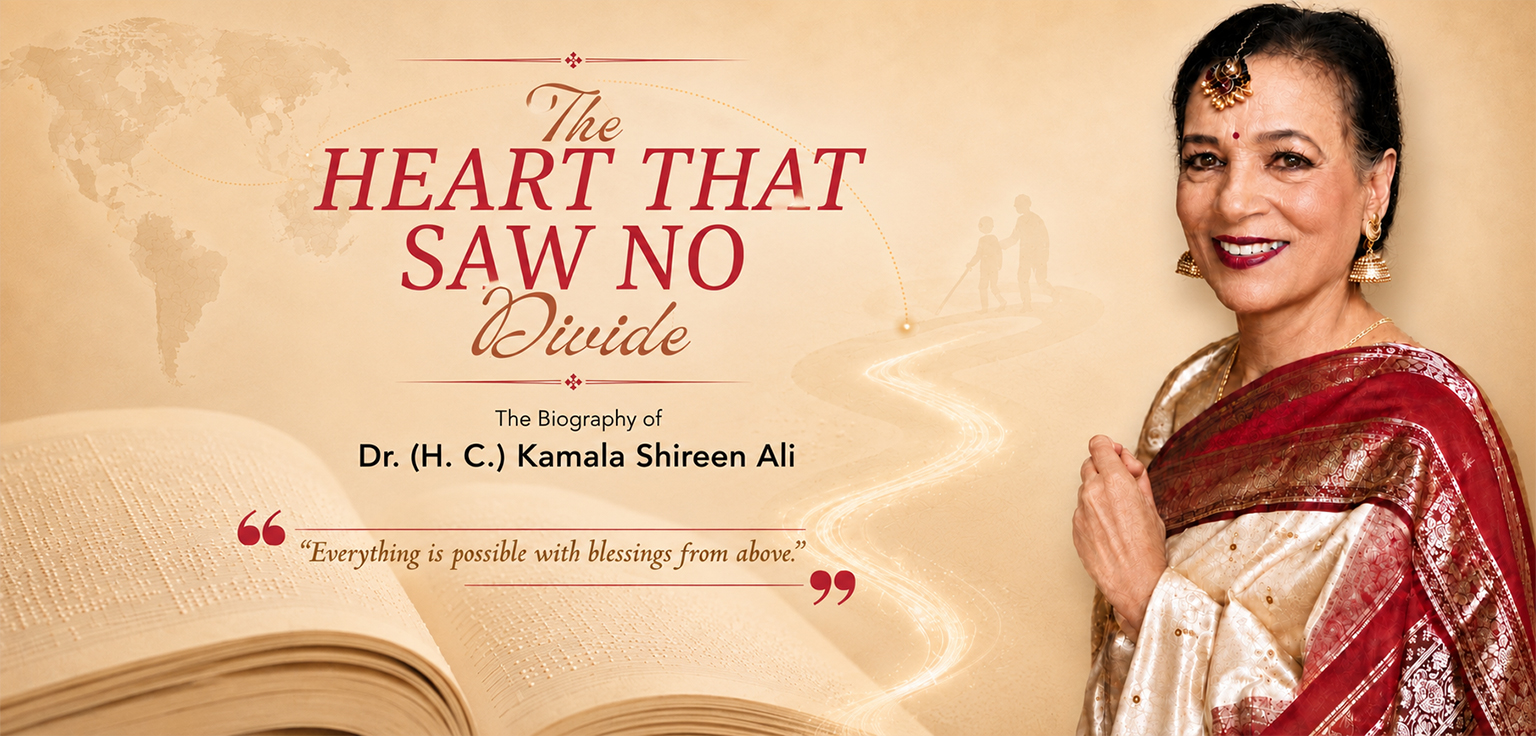
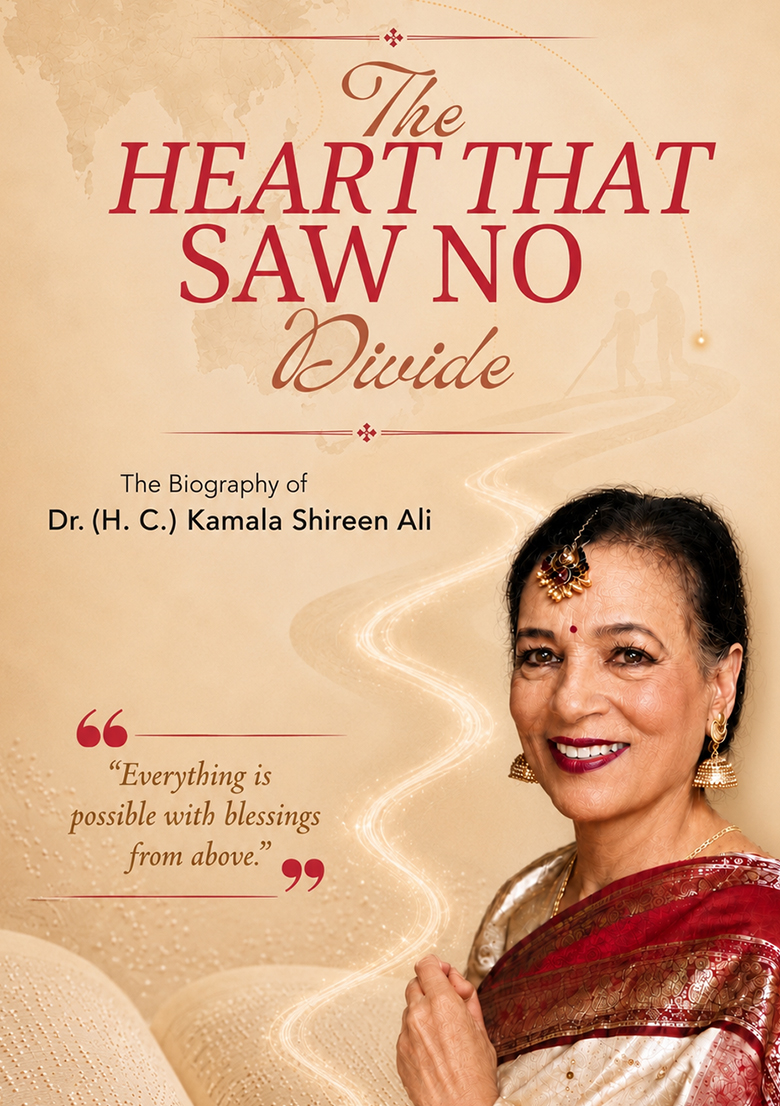
The life of Dr. Kamala Shireen Ali is a story of quiet determination, enduring service, and profound commitment to the blind, deafblind, and low vision community of Aotearoa New Zealand. Born in Malaysia into a family with roots in India and Sri Lanka, she grew up in a household that nurtured independence, discipline, and respect for diverse cultures. Her father managed rubber plantations, and her mother was a devoted, supportive and smart executive wife. Together they provided both structure and encouragement, shaping a childhood that laid the foundation for a life given to learning and service. From an early age, Dr. Kamala’s upbringing balanced high expectations with freedom to explore, instilling in her the understanding that education, resilience, and compassion belong together.
Her formative years were marked by boarding school, which asked of her self-reliance, responsibility, and the ability to navigate life among peers without the steady presence of parents. Those years cultivated a quiet strength, independence, and the capacity to live respectfully within diverse communities. Devoted teachers, particularly those who brought history, English, and drama to life through storytelling, sparked in her a love of learning and a fascination with what education makes possible. In that environment, enriched by the multicultural society of Malaysia, Dr. Kamala absorbed lessons in tolerance, politeness, and empathy. These values would become woven into the fabric of her professional life.
From those early experiences emerged a young woman with ambition and a sense of purpose. She dreamed of furthering her education and set her sights on New Zealand, a country she had encountered through geography lessons and the promise of opportunity. Her drive came from within, a persistent inner voice guiding her toward meaningful achievement. That determination carried her to New Zealand, where she pursued her studies while balancing family responsibilities and early professional roles. Even as a part-time student, she cultivated the discipline and focus that would mark her entire career.
Her working life began in Fiji, where she taught at St. Joseph’s Secondary School. There she did more than impart academic knowledge. She created practical programmes for students preparing to enter the workforce, weaving typing, shorthand, office practice, and civics into the curriculum so that her pupils would leave school with real skills in hand. She found deep satisfaction in watching her students graduate with confidence and capability, and those years strengthened her belief in the transformative power of education and steady mentorship.
Her path turned unexpectedly when she returned to New Zealand following the military coup in Fiji. Facing the challenge of relocating with her husband and two young children, she met the move with resilience and a quiet optimism. It was here that she discovered the calling that would define the decades that followed: service to the blind, deafblind, and low vision community through Blind Low Vision New Zealand.
She began as a volunteer, but soon stepped into a professional role, receiving thorough training funded by the organisation. Over time, she wove her teaching background into specialist skills in adaptive communication and rehabilitation. The programmes she developed addressed not only immediate needs but the deeper work of fostering independence, self-confidence, and the practical abilities required to move through the world with dignity. Through these efforts, she touched the lives of countless individuals and helped shape the ethos of the organisation itself, leaving a professional legacy built on respect and genuine care.
“It is our choices that show what we truly are, far more than our abilities.”
Phase 1: Roots Across Continents
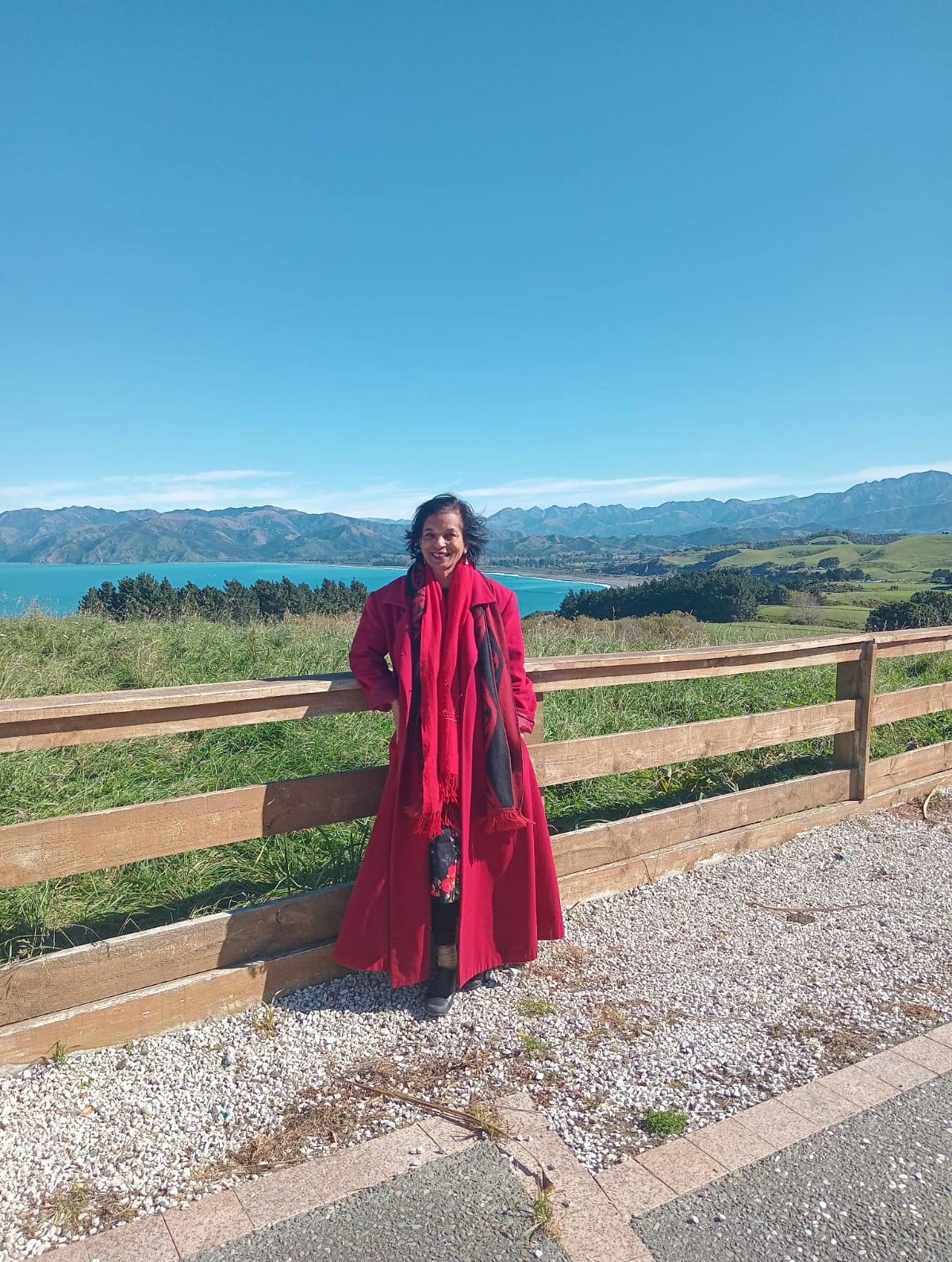
The story of Dr. Kamala Shireen Ali begins in the vibrant, multicultural landscape of Malaysia, a country where diversity is woven into the fabric of everyday life, and tolerance is not simply a concept but something lived and breathed. She was born into a family that carried the legacies of distant lands, and she grew up surrounded by stories of migration, resilience, and a quiet cultural pride. Her paternal grandparents came from India, from Tanjore in the south, while her maternal grandparents traced their roots to Sri Lanka. Though she would never walk the soil of those ancestral homelands, their influence was ever-present, echoing in family traditions, in the values passed down, and in the stories shared around the household.
She had six siblings, and her early life was shaped both by the closeness of her siblings and by the mobility demanded by her father’s profession. As a manager of rubber plantations, her father required the family to shift from one plantation to another, an itinerant rhythm that introduced young Dr. Kamala to the realities of adaptability, observation, and patience from a very tender age. Her mother, a devoted, supportive and smart executive wife, held the family together, ensuring that despite the frequent relocations, the children’s emotional and educational needs were consistently met. Together, her parents cultivated a household where structure met genuine encouragement, and discipline was balanced with the freedom to explore.
A part of Dr. Kamala’s childhood was spent in a boarding school, and this experience would quietly shape her character in ways that lasted a lifetime. Away from the steady presence of her parents, she learned to navigate the rhythms of communal living, balancing the needs and personalities of her peers while holding on to her own sense of self. Those years were not without their difficulties, yet they fostered a deep inner strength. She became adept at understanding responsibility, practicing patience, and appreciating the subtle art of coexisting within a group. The boarding school environment also instilled in her a sense of structure and discipline that would later become the foundation for her professional rigour and her methodical approach to service.
Throughout her school years, Dr. Kamala was surrounded by teachers whose influence reached well beyond the classroom. One history and English teacher, remembered as Miss Balan, left a lasting impression with her storytelling approach to lessons, her dramatic engagement with literature, and her gift for turning ordinary classroom material into vivid, living experiences. It was through educators like this that Dr. Kamala first encountered the power of learning to inspire, the ability of teaching to shape minds beyond the mere transfer of knowledge, and the enduring impact a mentor can have on a young person. Drama and storytelling were not just subjects to her; they became windows into human experience, into empathy, and into the remarkable power of communication.
Her upbringing was further enriched by the multicultural society of Malaysia, a country where Hindu, Christian, and Muslim traditions intertwined naturally in the course of daily life. Her family practised Hindu values and she received most of her formal education in Christian schools, and observed Muslim customs all around her. This immersion in multiple faiths and cultures fostered in her an inclusive way of seeing the world. She learned to respect different beliefs, to navigate diverse communities with courtesy, and to recognise the common humanity in everyone she met. Politeness, empathy, and a natural tolerance were not taught to her in the abstract; she observed, absorbed, and practised them every single day.
“Teaching is the one profession that creates all other professions.”
Phase 2 : The Teacher Who Discovered Her Calling
The early professional life of Dr. Kamala Shireen Ali grew from a quiet but steady commitment to education, to service, and to the belief that people flourish when given the right support. After completing her schooling in Malaysia, she set out on a path that would bring together her love of learning and her desire to make a real difference in the lives of young people. Her first teaching assignment carried her to Fiji, where she joined St. Joseph’s Secondary School. The role would prove both demanding and deeply formative. In a classroom filled with students from varied backgrounds, she began translating the lessons of her own childhood into practical guidance, shaping minds and nurturing potential in ways that would stay with her long after the final bell had rung.
At St. Joseph’s, Dr. Kamala took on responsibilities that stretched well beyond the standard curriculum. As head of the commercial studies programme, she designed and delivered practical courses that prepared her students not just for examinations but for the life waiting beyond the school gates. Typing, shorthand, office practice, and civics were woven into lessons, so that graduates left equipped with the skills they would need to navigate workplaces, communities, and the wider ambitions they carried.
Her teaching was never mechanical. It was thoughtful, deeply personal, and shaped by her understanding that real education must nourish both intellect and character.
Every day in the classroom was an exercise in empathy and quiet leadership. Dr. Kamala came to understand that being a teacher meant as much about understanding each student’s individual needs as it did about passing on knowledge. She learned to recognise potential where it might otherwise have gone unnoticed, to draw out confidence in those who doubted themselves, and to offer the kind of steady guidance that helped students take genuine ownership of their own growth. The lessons she offered were both practical and moral, equipping her pupils with usable skills while quietly reinforcing the values of discipline, respect, and perseverance.
The social environment of the school reflected the rich diversity of Fiji itself. Students came from a range of linguistic, religious, and cultural backgrounds, and Dr. Kamala had to navigate these differences with care and genuine insight. Her own upbringing in the multicultural setting of Malaysia had prepared her well for this challenge. She understood, at a personal level, that respect for individual differences was the foundation of any productive and trusting learning environment. In turn, this experience sharpened her empathy and deepened her cultural understanding, laying the ground for the inclusive, person-centred approach she would later bring to her work in rehabilitation services.
Beyond the classroom walls, Dr. Kamala invested herself in the personal growth of her students. She made time to mentor individuals who showed particular promise or who were wrestling with specific challenges, offering encouragement, quiet advice, and practical support. Her approach was holistic. She did not measure success by academic performance alone but by the development of character, confidence, and real-world capability. She celebrated achievements, walked alongside students through their disappointments, and consistently stressed the importance to keep going. This nurturing presence built trust, and she became a mentor whom students knew they could rely upon, someone whose care extended well beyond the boundaries of the school timetable.
“I feel happy and welcome here. New Zealand looks after its people.”
Phase 3 : A New Land, A New Calling
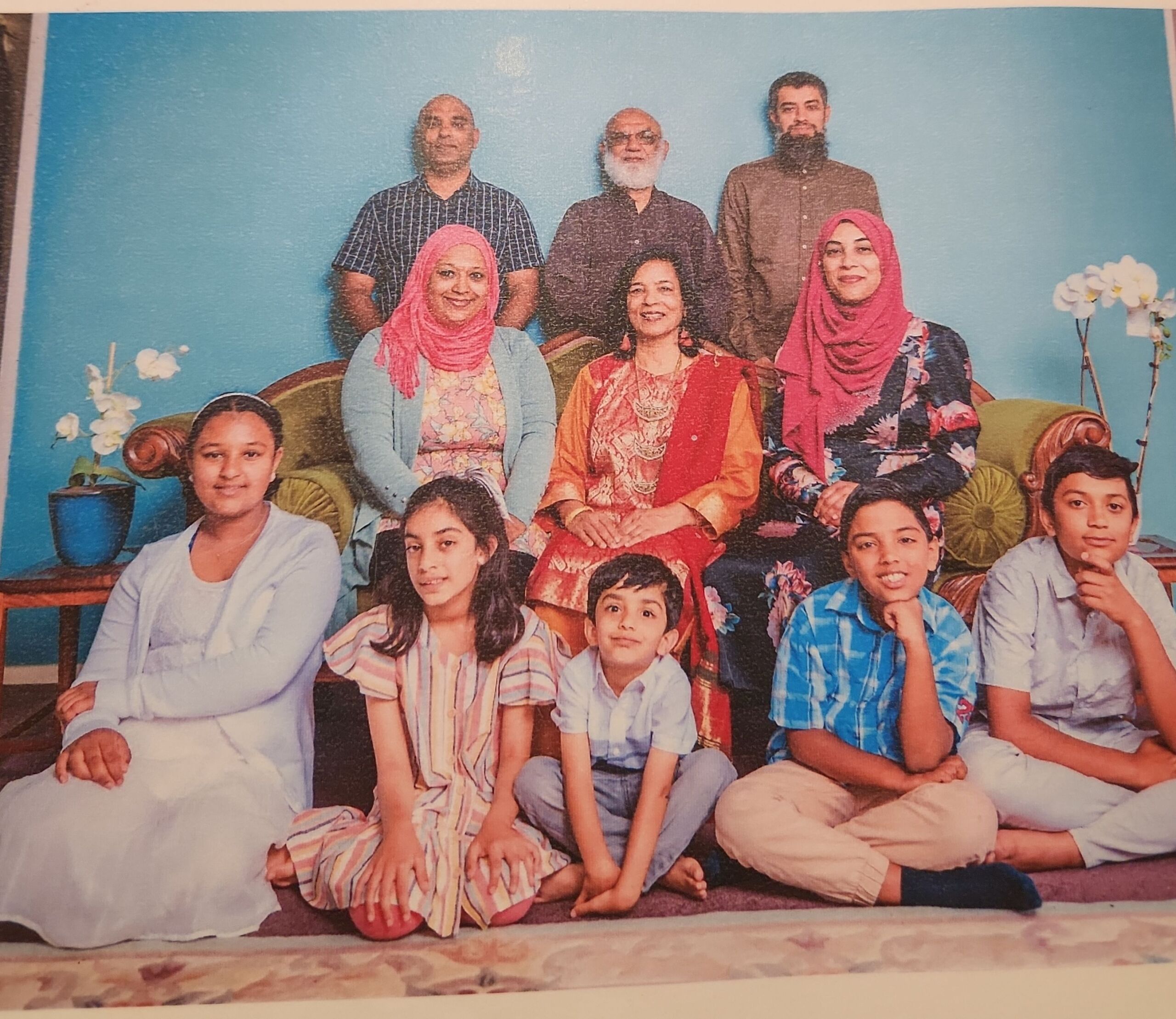
The move from Fiji to New Zealand marked a defining chapter in Dr. Kamala’s life. Her years in Fiji had sharpened her skills as an educator and mentor. Yet the military coup that pushed her to relocate brought challenges she could not have anticipated. It tested her resilience, her patience, and her capacity to adapt. Leaving Fiji with her husband and 2 young children was not simply a physical journey. It was a profound life shift that asked her to reimagine both her professional path and her personal hopes. Yet even in the face of real uncertainty, Dr. Kamala met the change with a quiet, steady resolve, carrying forward the lessons of resilience, independence, and empathy that had shaped her earliest years.
When she arrived in New Zealand, she found a society that offered genuine opportunities and a framework of support that would prove essential to her transition. The country’s multicultural character resonated with her own values and with the experiences she had gathered over a lifetime. In this new environment, she discovered space to rebuild, to nurture her children, and to pursue meaningful professional goals. Every decision she made was guided by the same principles that had carried her through the classrooms of St. Joseph’s Secondary School: patience, empathy, and a deep commitment to helping others reach their potential.
Her early days in New Zealand were spent volunteering at Blind Low Vision New Zealand, an organisation devoted to supporting individuals with vision impairment. The parallels between her teaching experience in Fiji and the work required in rehabilitation became clear almost at once. Both roles asked not only for knowledge and skill but for empathy, patience, and the ability to truly understand individual needs. Dr. Kamala recognised that the principles she had applied as an educator, mentoring, empowering, and fostering independence, were just as relevant in the world of rehabilitation. She embraced the organisation’s mission, sensing that her contribution could extend far beyond any classroom and into the daily lives of people striving for autonomy and dignity.
Volunteering gave her a hands-on introduction to the complexities of low vision rehabilitation. She watched clients navigate daily challenges, learn to adapt, and slowly build confidence in new skills. Through this exposure, she began to see the deep connection between education and rehabilitation, understanding that the patience, structured learning, and steady encouragement she had cultivated as a teacher were invaluable in this new context. Every interaction with clients reinforced her belief that empowerment was never simply about passing on skills. It was about nurturing self-belief and confidence in each person’s own abilities.
In time, her commitment and her growing insight led to a formal role within Blind Low Vision New Zealand, where she received thorough specialist training. This professional transition felt natural, reflecting both her extensive teaching background and her intuitive grasp of human development. Dr. Kamala began weaving Braille, adaptive communication strategies, practical skill-building, low vision rehabilitation, and person-centred approaches into her daily work. The programmes she shaped were designed not merely to meet immediate needs but to encourage long-term independence, helping clients move through their environments with confidence, dignity, and a growing sense of self-reliance.
Note of Thanks
Dr. Kamala Shireen Ali offers her deepest gratitude to all who have walked beside her across a lifetime of service. Her journey with the blind, deafblind, and low vision community of Aotearoa New Zealand has been shaped by the trust, gentle encouragement, and quiet wisdom of the people, colleagues, and families she has been privileged to serve. Every meaningful connection has been possible because of their steady faith in her work.
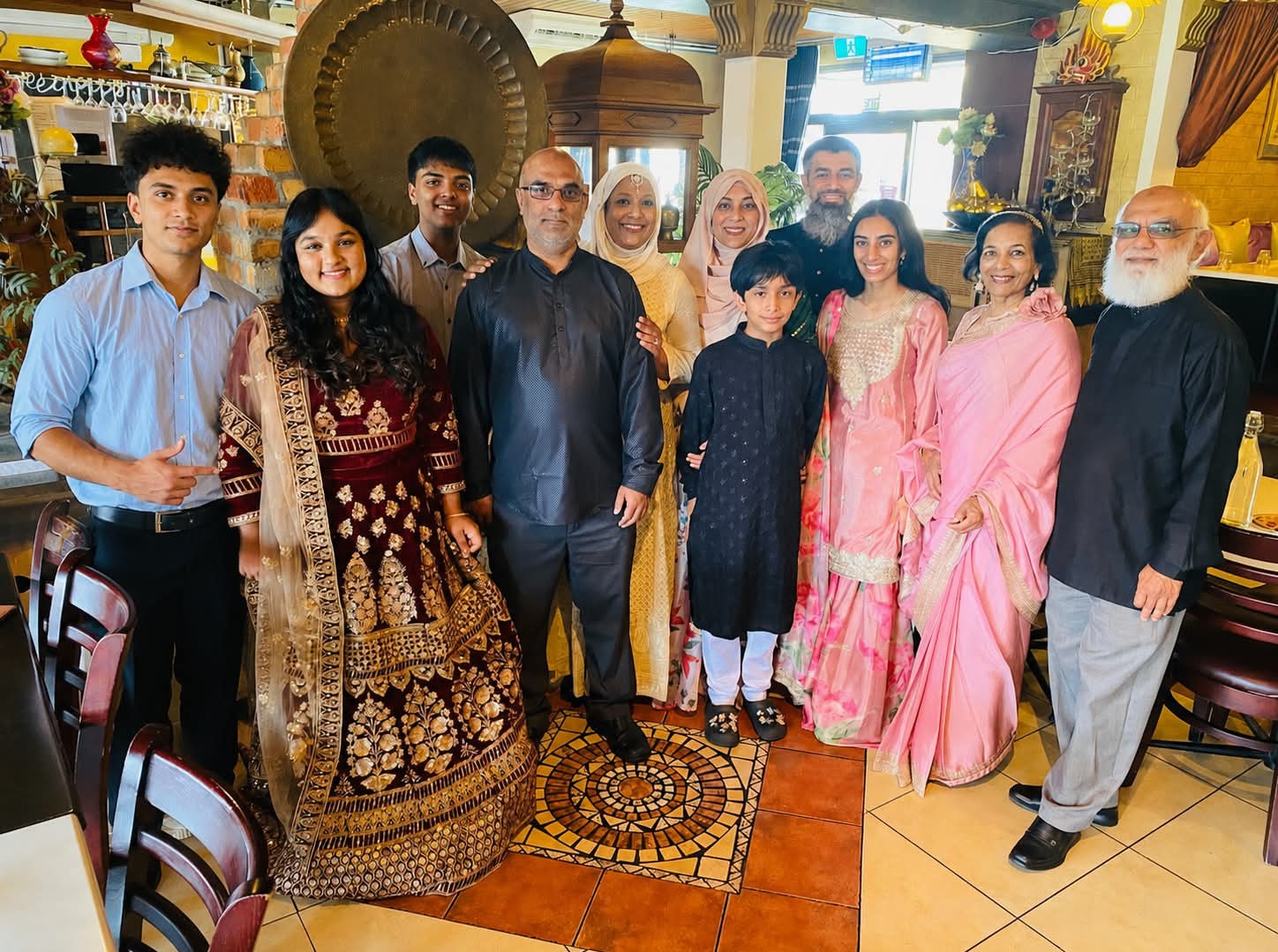
She offers heartfelt thanks to her parents, K. Munusamy and K. Subathra, and her husband, children, children-in-law, grandchildren, siblings and their family. Their unwavering support, quiet encouragement, and constant presence allowed her to pursue her studies, embrace new opportunities, and give herself completely to the community she serves. Their belief in her potential, shown through years of patience and sacrifice, laid the foundation for a career rooted in empathy, integrity, and purposeful service.
Dr. Kamala Shireen Ali extends sincere appreciation to Blind Low Vision New Zealand for the training, mentorship, and opportunities that allowed her to turn knowledge into programmes that touch real lives. To the clients who opened their hearts and shared their stories, she offers lasting thanks. Their courage and trust have been the quiet guiding light of her work, inspiring her to continually refine and expand her services.
She is warmly grateful to colleagues, mentors, and the wider professional community whose insight and collaboration enriched her journey beyond measure. Through this note, Dr. Kamala Shireen Ali acknowledges what she has always known: that her achievements are inseparable from those who walked beside her, their contributions woven into every programme she designed and every life she touched.
Dr. Kamala believes that everything is possible with blessings from above.
thanks,
– Dr. Kamala Shireen Ali