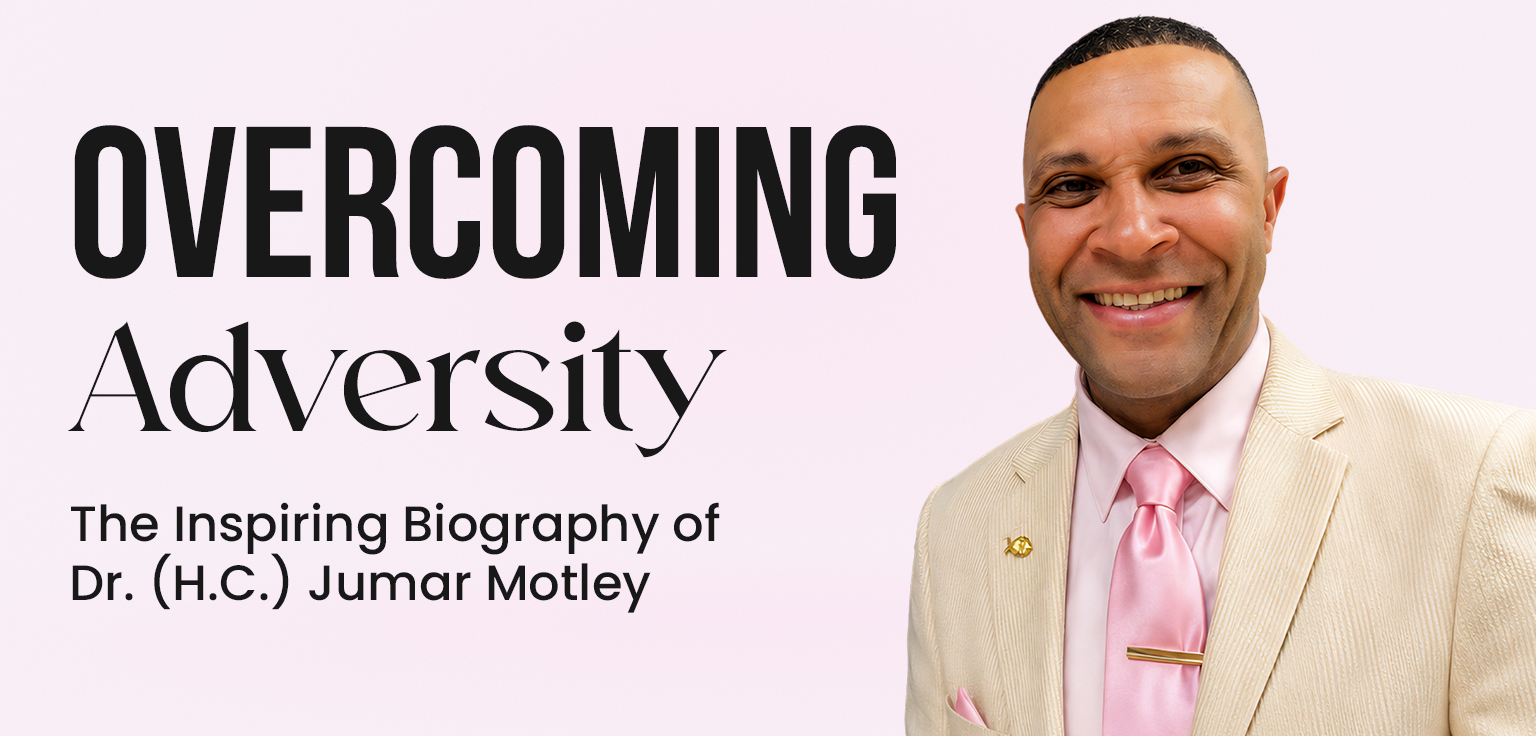
“Don’t take life casually, or you will become a casualty.”
Introduction
Dr. Jumar Motley’s journey is one of profound transformation, resilience, and service to others. Born in the heart of Detroit, Michigan, in a city known for its hardships, Dr. Motley faced early challenges that would have stopped many in their tracks. His early life included struggles with education, speech impediments, and growing up in a household where conflict regularly occurred. However, it was in the face of these difficulties that Dr. Motley began to develop the strength, character, and vision that would define his future. His life story is a testament to the power of perseverance, mentorship, and the belief that anyone, regardless of their background, can overcome adversity and achieve greatness.
From an early age, Dr. Motley’s academic journey was far from typical. Being born in December, he was delayed in starting school, which led to significant challenges in his early education. Not being able to attend school with his peers, he found himself falling behind in his learning. Speech issues and learning disabilities, including stuttering, compounded his academic struggles. These struggles led to his placement in special education, where he felt disconnected from others and began to shut down. The frustration of not being able to keep up with his classmates was a heavy burden for him, and it seemed that his academic future was uncertain.
However, despite these setbacks, Dr. Motley’s story is not one of surrender but of resilience. He was fortunate to grow up in a family where education was deeply valued, even though he was not initially able to keep pace with those around him. His parents, though not wealthy, provided him with something far more valuable than material wealth: love, determination, and a sense of purpose. His family’s dedication to helping him succeed, especially the support from his older sister, was a key factor in his eventual overcoming of these early academic challenges.
As he progressed through school, Dr. Motley found solace in sports. He excelled in swimming and baseball, becoming All-City, All-State, and All-Nation in these activities. Through athletics, he discovered a sense of belonging and achievement that had previously eluded him in the classroom. It was through sports that Dr. Motley realized that success did not come easily, but with hard work, discipline, and the right guidance, anything was possible.
His coaches and mentors, like Coach Robert Jenkins, played an instrumental role in shaping Dr. Motley’s personal growth. Coach Jenkins not only believed in Dr. Motley’s athletic potential but also in his character. Through his coaching and mentorship, Dr. Motley learned the values of perseverance, leadership, and hard work—principles that would guide him throughout his life. This period of growth in athletics would become an essential part of his development, as he began to recognize that overcoming personal struggles required both internal determination and external support.
“The struggles we endure today will be the ‘good old days’ we laugh about tomorrow.”
Phase 1: Early Life and Struggles
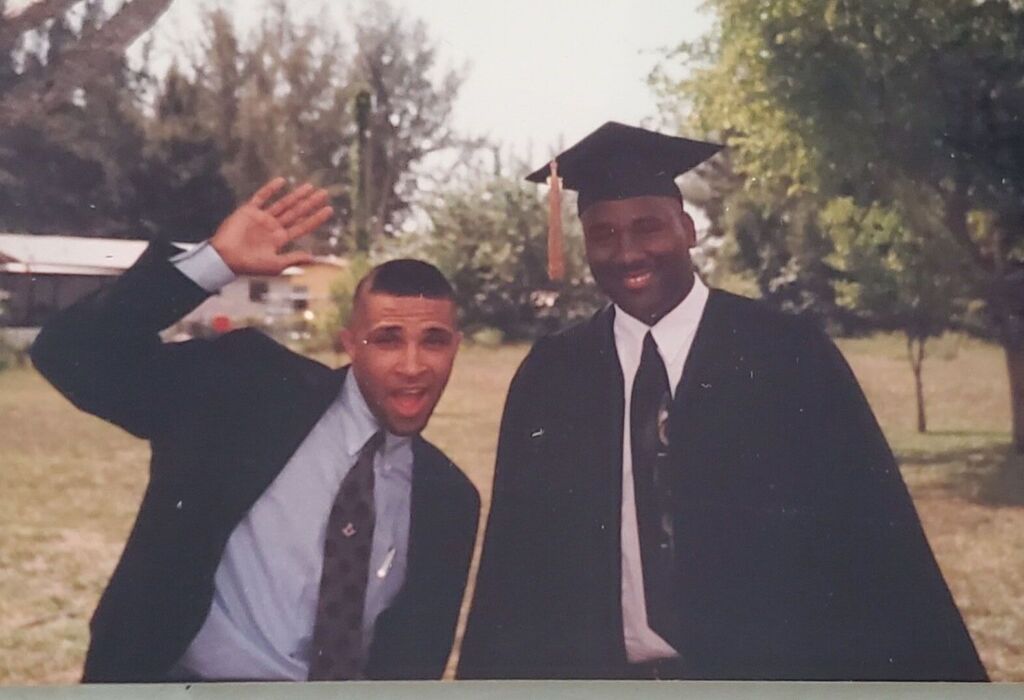
Dr. Jumar Motley was born in a cold December in Detroit, Michigan, into a city grappling with the effects of corruption and hardship. His early years were not defined by privilege or ease, but by the love and determination he received from his parents. Though he was born into a world filled with challenges, the foundation of love in his family provided the resilience he would need to persevere. In a city where adversity seemed commonplace, Dr. Motley’s story began with a struggle that would shape much of his life: an academic one.
From the very beginning, life did not give Dr. Motley the typical start that most children received. He was born in a month that prevented him from starting school like most of his peers, and this delay in his education had a profound impact on his early learning years. At the time, being born in December meant that he wasn’t able to enroll in school at the usual age. This set him back academically and left him feeling disconnected from his peers. As a young child, he found himself shutting down in response to the difficulty of falling behind, and his learning process came to a halt.
For many children, school is a place of self-discovery and growth, but for Dr. Motley, it was an environment that initially highlighted his academic struggles. He had speech impediments and stuttering issues that made him feel different from his classmates. As a result, Dr. Motley’s academic journey did not follow the smooth trajectory that he might have hoped for. He was placed in special education, a system that he struggled to navigate. He did not learn how to read until he was in the 12th grade. His academic road was rocky, but this hardship would become a catalyst for his determination to overcome these obstacles and prove to himself that he could defy the odds.
Yet, despite the difficulties he faced in school, there was a constant source of support in Dr. Motley’s life: his family. Raised in a household full of educators and intellectuals, he surrounded himself with individuals who valued knowledge and hard work. However, their presence only served to amplify his feelings of inadequacy. While his family members excelled academically, Dr. Motley struggled to keep up. The weight of being surrounded by high achievers, while feeling like an outsider in the world of academia, was a heavy burden for a young boy.
But the love and encouragement from his family were steadfast. His mother and father, though not wealthy by any measure, provided him with something far more valuable: a sense of purpose and determination. His older sister, in particular, played a pivotal role in his life, offering the push and support needed to overcome the academic difficulties he faced. With the help of his family and the community around him, Dr. Motley was able to recover and find the strength to keep going.
“Success is not final, failure is not fatal: It is the courage to continue that counts.”
Phase 2 : Overcoming Personal and Academic Challenges
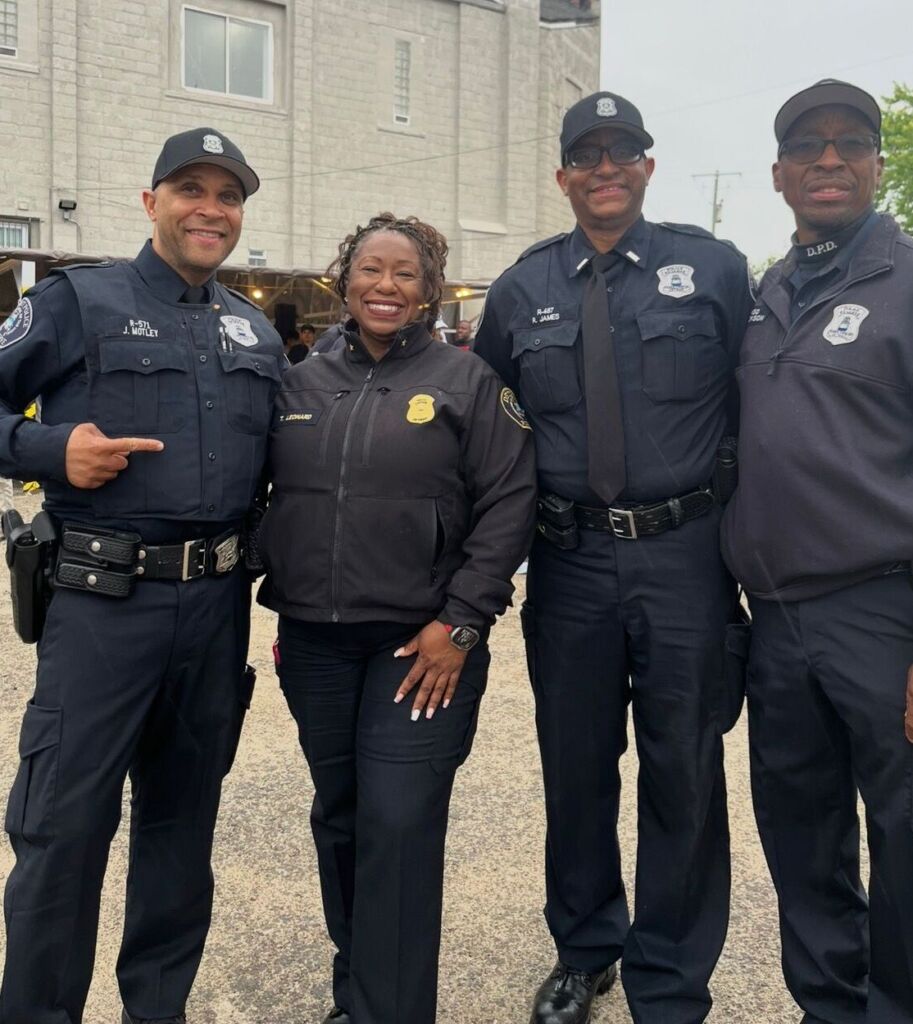
For Dr. Jumar Motley, high school was a time of both personal and academic growth, but it was also a period filled with uncertainty. He had already faced significant obstacles early in life, battling academic challenges and struggling with speech impediments. Yet, high school would become a turning point where he began to realize his potential and the power of resilience. His experience during these formative years was not just about overcoming learning difficulties but also about discovering the importance of mentorship, guidance, and personal transformation.
Throughout his high school years, Dr. Motley faced the lingering effects of his early academic struggles. He had difficulty reading and writing, which caused him to shy away from subjects like English. The fear of failure was something he carried with him, but it was also something that he learned to confront head-on as he grew older. Despite these challenges, he never gave up. Instead, he found ways to push through and achieve success in areas where he felt more comfortable, such as sports.
In high school, Dr. Motley became an accomplished athlete. He joined the swim team and played baseball, excelling in both sports. His achievements were impressive: he became All-City, All-State, and All-Nation in these sports. This was a significant accomplishment for a young man who had struggled academically for most of his life. Through sports, he found a sense of purpose and pride, something that had eluded him in the classroom. His dedication to athletics not only helped him build confidence but also provided an outlet for his emotions. It was through the support of his coaches and teammates that Dr. Motley started to realize that he was empowered to overcome the obstacles in his life.
Coach Robert Jenkins, his swim coach, played a key role in shaping Dr. Motley’s high school experience. Coach Jenkins was not just a coach to Dr. Motley; he became a mentor, offering guidance and encouragement at a time when Dr. Motley needed it most. Coach Jenkins taught him the importance of perseverance, discipline, and hard work—lessons that would serve Dr. Motley well throughout his life. But beyond that, Coach Jenkins helped Dr. Motley see his worth. The coach recognized Dr. Motley’s potential and believed in him even when he didn’t believe in himself. This kind of mentorship would be a crucial element in Dr. Motley’s development.
In addition to the guidance Coach Jenkins provided, another pivotal figure also influenced Dr. Motley during his high school years: Dr. Kimberly Logan-Nolan, a psychologist, helped him with his speech and articulation. Dr. Logan-Nolan was a highly educated professional with multiple degrees in psychology and mental health, and her work with Dr. Motley went beyond just improving his speech. She became a role model for him, someone he looked up to and admired. She helped him with his speech issues and inspired him to pursue higher education in psychology and sociology.
“Education is the most powerful weapon which you can use to change the world.”
Phase 3 : Pursuing Higher Education and Career Decisions
After overcoming the academic challenges of his early years and finding success in high school, Dr. Jumar Motley set his sights on higher education. His decision to attend Alabama State University was not only about earning a degree but also about seeking answers to the questions that had been on his mind since childhood. Why had his home been filled with such turmoil? Why did people behave the way they did? And how could he make a difference in the lives of others who were facing similar struggles? These questions, rooted in his life experiences, led him to pursue a path in sociology and psychology.
At Alabama State University, Dr. Motley found himself in a new world—a world where the lessons he had learned growing up could finally be put to use. It was here that he truly began to understand the importance of education, not just as a means to an end, but as a tool for personal growth and societal change. His time at the university was transformative. It was a place where his curiosity about human behavior could be explored, and it was here that he started to form the foundation for his future career in counseling and social services.
Despite the struggles he had faced in high school, Dr. Motley approached his time at Alabama State University with a renewed sense of purpose. He majored in sociology and psychology not out of interest but because they answered the questions he had been asking throughout his life. Growing up in a home where his father struggled with alcoholism and his parents frequently fought, Dr. Motley had witnessed firsthand the impact of family dysfunction. It was this personal experience that sparked his desire to understand human behavior and to help others who were dealing with similar challenges.
Dr. Motley’s decision to study sociology and psychology was a deeply personal one. His experiences at home had shown him the damaging effects of substance abuse, domestic violence, and family conflict. He chose these fields because he wanted to learn how to help others who were trapped in similar situations. His education at Alabama State University provided him with the tools to do just that. As he studied, he realized that the knowledge he was gaining wasn’t just academic; it was practical. It was the kind of knowledge that could change lives—starting with his own.
Note of Thanks
Dr. Jumar Motley would like to express his heartfelt gratitude to two exceptional individuals whose support and guidance have had a profound impact on his life—Coach Robert Jenkins and Dr. Bennard Coker.
To Coach Robert Jenkins, Dr. Motley is deeply thankful for the mentorship and encouragement he received during his formative years. Coach Jenkins believed in his potential when he struggled to believe in himself, and that belief instilled a sense of confidence and perseverance in Dr. Motley that continues to guide him today. The discipline, resilience, and leadership that Coach Jenkins exemplified shaped not only Dr. Motley’s athletic career but also his personal development. His guidance has been invaluable, and Dr. Motley is forever grateful for the lasting influence Coach Jenkins has had on his journey.
To Dr. Bennard Coker, Dr. Motley extends his sincere appreciation for the wisdom and insight that Dr. Coker shared throughout their relationship. Dr. Coker’s encouragement and support, both in his academic and personal endeavors, have been a beacon of guidance. Dr. Motley is thankful for the trust and belief Dr. Coker showed in him, which inspired Dr. Motley to pursue his path of service, education, and mentorship.
Both of these individuals have left an indelible imprint on Dr. Motley’s life, and for their contributions, he remains deeply grateful.
Thanks,
– Dr. Jumar Motley