
“You go after what you want.”
Introduction
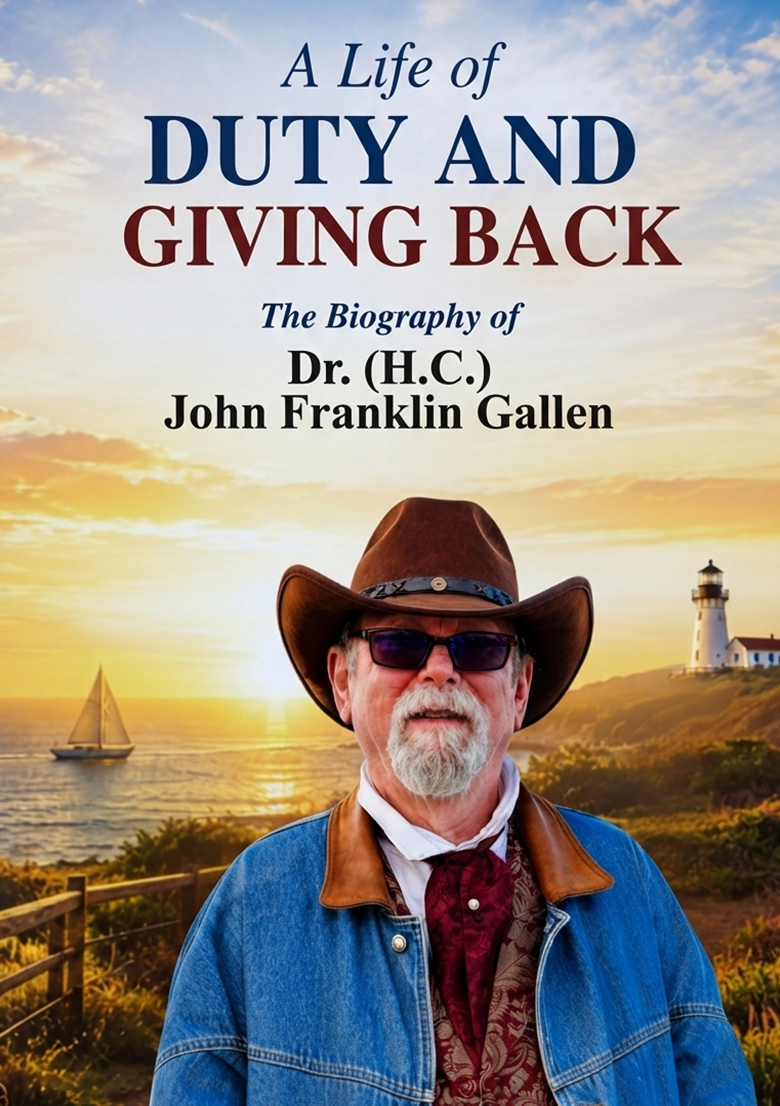
The life of Dr. (H. C.) John Franklin Gallen carries the rhythm of movement, duty, family and service. It began in Milwaukee, Wisconsin, on 8 May 1951, and unfolded across continents, military posts, classrooms, community boards and school governance. His story cannot be understood through a single achievement because its real strength lies in continuity. He learned early that life changes location, responsibility changes form, and service can take many names, yet character remains the same.
Dr. John was raised in a military family, the son of Mr. John William Gallen and Mrs. Geraldine Ann Gallen. His father served in the Army and was a World War II veteran, a medic whose quiet example left a lifelong impression. His mother carried her own strength, a determined spirit that taught him to go after what he wanted. Together, his parents gave him a foundation of discipline, warmth and responsibility. Their family moved from Japan to Denver, from Germany to Fort Sill, Oklahoma, and each place gave him something different. He learned to adjust, to watch people closely, to make friends, and to understand that home was not only a place. It was also the values carried from one place to another.
His education took him back to Milwaukee, where he attended Milwaukee Lutheran High School and later Marquette University. Those years shaped his friendships, his work ethic and his understanding of responsibility. He formed lifelong bonds, worked summer jobs, lived within a household that welcomed friends, and experienced the values of a Jesuit education. At Marquette University, he studied biology and joined ROTC, a decision that became the doorway to a twenty year career in the United States Army.
In the Army, Dr. John’s journey was marked by leadership, learning and adaptability. He began in artillery at Fort Sill, graduated as an honor graduate from the artillery basic course, and later served in the Chemical Corps. He commanded a small detachment and served as commandant of a nuclear biological chemical school. His assignments took him to Korea, Maryland, Norwich University, Fort Riley, Germany and Fort Hood. Along the way, he trained, taught, coordinated, studied and served in positions that required both technical ability and human judgment.
His family story moved alongside his military journey. He met Mrs. Bonita Ellen in Lawton, Oklahoma, and they married in June 1975. Together, they built a life through constant movement, raising four children while managing the demands of military service. Their daughter Natalie was born first, followed by their sons Jonathan, Jeremy and Christopher. The family’s experiences in Germany, especially after learning that Jeremy was autistic, deepened their understanding of education, care and advocacy. Those experiences later became part of the reason Dr. John entered special education.
After retiring from the Army in 1993, he did not step away from service. Instead, he entered a second career as a Special Education Teacher at Copperas Cove High School, where he worked for twenty years. His work was not limited to the classroom. He served as department chair, mentor coordinator, committee member and guiding board participant in the alternative certification program. His teaching career was shaped by personal experience, professional responsibility and a sincere desire to support students who needed patience, structure and belief.
At the same time, Dr. John became deeply involved in Copperas Cove civic life. He served on the Board of Adjustments, the Planning and Zoning Commission, the City Council, the Friends of the Library, the Library Advisory Board, the Retired Teachers Association and the Copperas Cove Historical Society. His service was not ceremonial. He gave time, accepted responsibility and stayed involved because he believed in giving back to the place that had become home.
Today, as a CCISD School Board Member and vice president, Dr. John continues to serve education from another level. His journey reflects a rare kind of steadiness. He has learned from victories and losses, from family challenges and public duties, from military discipline and classroom compassion. Above all, his life shows that service is not a chapter. For Dr. John, it has been the thread that holds the entire story together.
“It is not in the stars to hold our destiny but in ourselves.”
Phase 1: A Childhood Formed by Movement and Service
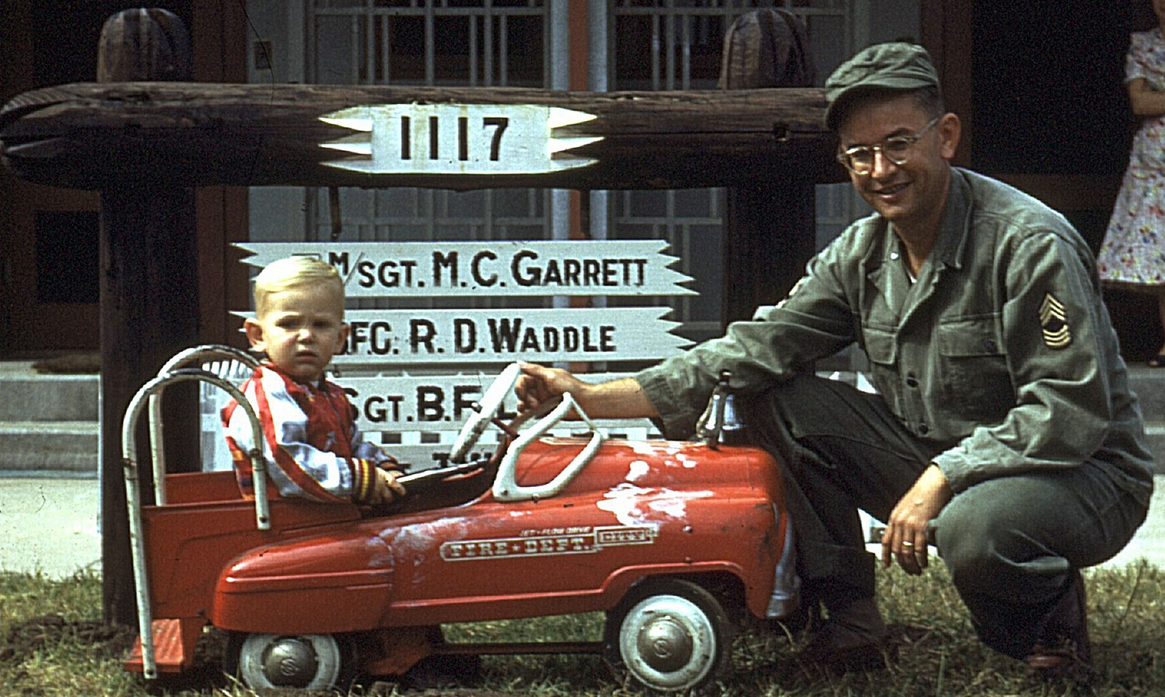
Dr. John’s earliest years were shaped by movement before he was old enough to understand what movement meant. Born in Milwaukee, Wisconsin, on 8 May 1951, he entered a family already connected to service. His father, Mr. John William Gallen, was in the Army when he married Mrs. Geraldine Ann Gallen, and his service gave the family a life of changing places, changing routines and widening horizons. Dr. John would later describe himself as a military child, a familiar expression for someone whose early life was tied to orders, assignments and the rhythm of military duty.
Soon after his birth, his mother took him on a flight to Japan, where his father was stationed at a hospital. His father served there as a medic, a role that reflected both discipline and care. Dr. John was too young to remember the full details of that first overseas experience, yet it became part of the larger family pattern. Service did not remain an idea in his childhood. It was lived daily through his father’s uniform, responsibilities and willingness to go where duty called.
After their time in Japan, the family moved to Denver, Colorado, where his brother Mr. Jeffrey Gallen and sister Mrs. Jody Myers were born. From there, they moved again to Germany, where his father was stationed at Landstuhl, a major hospital. The family spent three years there before returning to the United States in 1959. These early locations gave Dr. John a childhood that was not fixed to one neighbourhood or one schoolyard. Instead, it gave him an early awareness that the world was wide, people were different, and adaptation was part of life.
The family eventually came to Fort Sill, Oklahoma, his father’s final duty station. There, his father worked in charge of the mental hygiene clinic on post. Dr. John attended elementary schools in Lawton, Oklahoma, and continued through junior high there until eighth grade. His life in Oklahoma carried its own texture. He grew up around military families, post routines and a region where local history and American Indian culture were part of what he encountered at school. He was also involved in Boy Scouts and became an Eagle Scout, an achievement that reflected discipline, responsibility and persistence at a young age.
His father’s work left a strong impression. Though Mr. John William Gallen was not an officer, he carried authority through competence. He had served as a medic during World War II, including time on Saipan, and later worked with psychiatrists at the mental hygiene clinic. He did not speak much about the war, yet the fragments he shared revealed a man who had witnessed difficult times and continued serving with steadiness. To Dr. John, his father became a role model not because he gave long lectures about character, but because he lived it.
“The roots of education are bitter, but the fruit is sweet.”
Phase 2 : Milwaukee, Friendship and the First Lessons of Responsibility
When Dr. John returned to Milwaukee, he entered a city that carried family meaning. His parents were from there, and they hoped he would attend the same high school they had attended. That plan did not happen. Because he was not living with his parents at the time and was not considered a resident, the school would not register him. What might have seemed like a setback became another turn in his journey. Through the church he was going to attend, a parochial school became available, and he enrolled at Milwaukee Lutheran High School.
His years at Milwaukee Lutheran High School became important not only for education, but for friendships. He spent his high school years there and graduated before moving on to college. During that time, his parents returned to Wisconsin after his father retired from the Army and bought a house in a familiar neighbourhood. Once they were settled again, Dr. John completed high school with them nearby, and their home became part of his social world.
That home carried warmth. His parents liked young people and welcomed his friends. Their house, once an old fraternity house with several levels, became a gathering place. Friends came over, parties happened there, and his parents wanted to know the people around their son. This mattered to Dr. John because later, when he and Mrs. Bonita Ellen had children of their own, he understood why parents wanted their home to be a safe and open place. He had seen that model first.
His teenage years were not marked by rebellion. He described himself as fairly straight, someone who listened to his parents and stayed away from the things many others were trying. In Wisconsin, young people could drink beer at eighteen, and after high school, he and his friends sometimes went to places where that was allowed. Yet even in those settings, he often became the responsible one. He was usually the designated driver because his parents allowed him to drive, and his mother had taught him how to drive a stick shift. Taking care of friends became natural to him, even before he would have called it leadership.
Church also played a role in his youth. The church he attended had a small gym, and because he was trusted, he was given a key. He and his friends would open the gym and play basketball. Looking back, that experience carried the early shape of responsibility. He was trusted with access, he gathered people, and he helped create a space where friends could come together. It was a quiet form of leadership, simple but revealing.
The friendships he formed in Milwaukee lasted. He remained connected with many high school friends and later became one of the people involved in organising their fiftieth high school reunion. That event was meaningful because it showed how deeply those relationships had stayed with him. The friendships of his youth were not casual memories. They became part of the long thread of his life.
“Leadership and learning are indispensable to each other.”
Phase 3 : Marquette University and the Road to Commissioning
At Marquette University, Dr. John entered a stage of life where learning and service began moving toward the same destination. He studied biology and experienced the values of a Jesuit institution, values he believed helped shape the person he became. The university was located in downtown Milwaukee, close enough to the life he had known, yet large enough to open him to new friendships, new responsibilities and a future he had not fully planned.
His path into ROTC began almost by chance, although it made sense when viewed against the background of his childhood. After high school graduation, his father took him to a small reserve base in Milwaukee for a haircut. While walking up the stairs, they met a major in uniform. His father, warm and sociable as always, greeted the officer. The major noticed Dr. John and, after learning that he was going to Marquette University, mentioned that he was in the ROTC department and told his father to send him over. That meeting became the beginning of Dr. John’s formal path into military service.
He did not enter ROTC through dramatic ambition. It simply fell into place. He had grown up watching his father serve. He had lived on or near military posts. He understood the structure of military life. So when he arrived at college and went to the ROTC department, joining felt natural. It was not a sudden break from his past. It was almost a continuation of the world he had known since childhood.
During his years at Marquette University, he built friendships with students who, like him, would go into service. They followed one another’s careers over the years, and some of those relationships became lifelong. Just as his high school friends had gathered at his family home, college friends also came over and got to know his parents. That continuity mattered. His family home remained a place where friends were welcomed, and his parents continued modelling the importance of knowing the people around one’s children.
In his senior year, Dr. John was commissioned as an officer in the United States Army. His commission was in the Chemical Corps, yet because he was a regular Army officer, he had to serve first in a combat arms branch. He chose artillery. The choice made sense for two reasons. He had a strong background in mathematics, and artillery required that strength. It also brought him back to Fort Sill, Oklahoma, the place connected to his grade school years and his father’s final duty station.
In 1973, after graduating from Marquette University with a Bachelor of Science, he packed his belongings into his car and drove to Fort Sill. The act itself carried symbolism. He was leaving the familiar streets of Milwaukee and returning to a place that held childhood memory, now wearing the responsibility of an officer. He had known Fort Sill as a child in a military family. Now he returned as a young man beginning his own service.
Note of Thanks
Dr. John’s note of thanks begins with Mrs. Bonita Ellen, because no account of his life can stand complete without recognising her. She has been the steady heart of the family and the one who carried responsibilities that often remained unseen by others. Through military assignments, temporary duty, moves across states and countries, and the raising of four children, she remained strong, practical and deeply devoted.
Dr. John gives thanks to her for standing beside him through every season. She raised Natalie, Jonathan, Jeremy and Christopher with patience and courage while he was often away in service. She created stability where military life brought movement. She helped choose Copperas Cove, helped secure the family’s future there, and gave their children the chance to grow in one school system and one community. Her wisdom shaped the home they built and the life they continued to improve over nearly thirty eight years.
He also gives thanks for the strength she showed in her own life. When she faced cancer, she fought and overcame it. In that difficult season, Dr. John stood beside her as she had stood beside him for decades. Their bond, tested through thick and thin, became stronger through shared endurance.
His gratitude is also carried in quiet remembrance of his father, Mr. John William Gallen, whose example helped shape his character. Yet when Dr. John was asked whom he wished to thank for what he had achieved, his answer was clear: his wife, without doubt.
This note of thanks is therefore not only an expression of appreciation. It is a recognition of partnership, sacrifice and love. Behind Dr. John’s service stands the woman who kept the family strong, gave him support, and remained the rock of their shared life.
thanks,
– Mr. John William Gallen