“The greatest good you can do for another is not just to share your riches, but to reveal to them their own.”
Dedication
This biography is devoted to the quiet and unwavering individuals who are able to keep life going forward despite the presence of loud and unpredictable events. It honours every family that has learnt to protect their children by providing shelter and courage, as well as every parent who stays present even when the world seems unstable.
This biography is dedicated to Dr. Hosn Saifeddine’s husband, the pillar of her life, whose unwavering support, love, and encouragement have been the driving force behind her achievements. His belief in her purpose and constant presence have provided the strength she needed to overcome challenges and reach new heights in both her personal and professional journey.
Furthermore, it honours those individuals who have chosen the healthcare field as their sphere of responsibility. However, we can measure the impact of their work by the harm they prevent, the dignity they protect, and the trust they restore. Quality and patient safety disciplines frequently attain success without anyone noticing. Their success stems from the understanding that the best outcomes are those that prevent a crisis from occurring.
On a more personal level, this book is dedicated to Dr. Hosn Saifeddine’s family, mentors, colleagues, and teams that played a significant role in shaping and supporting his path. We pray that these pages not only acknowledge accomplishments, but also the ideals that lie underneath them: compassion, fairness, discipline, and the unceasing endeavour to leave every system in a better state than it was found in.
Her life exemplifies how the peace and dedication of a single individual can safeguard the lives of many others. This commitment is made in honour of all those individuals who work without receiving praise but leave the world safer, stronger, and more humane as a result of the decisions they make on a daily basis.
“In the midst of winter, I found there was, within me, an invincible summer.”
Phase 1: Childhood Under the Shadow of Conflict
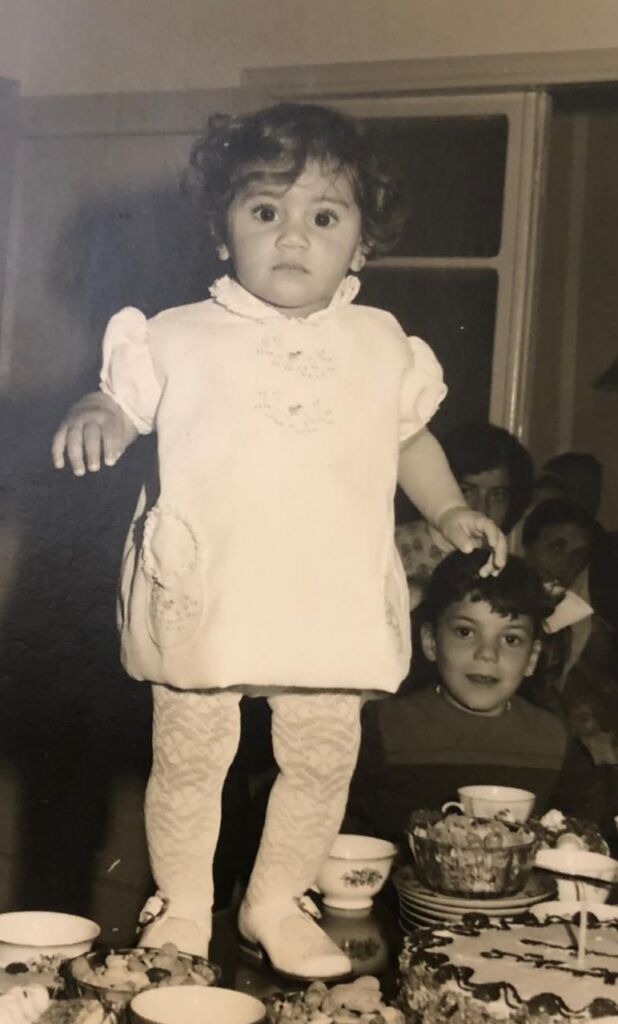
The reality that Dr. Hosn Saifeddine was exposed to throughout her formative years in Lebanon provided little room for her to have a carefree upbringing. She was born in Lebanon. She was raised during a time when the civil war was just beginning, and the environment that she was raised in had a significant impact on everything that was going on around her, including the way families lived, the way children travelled, and the way that safety was perceived. Her childhood was not marked by open streets or her ability to play when she was younger. Caution, intimacy, and constant knowledge that life outside could have a quick change were the defining characteristics of this environment.
She was raised by parents who were quite protective, and this protectiveness served as the foundation for her early world. She remembers that when they were younger, they were unable to experience the kind of life that many youngsters take for granted, such as being allowed to go outside to play, freely walking around, or having the sense that the world was secure in a fairly predictable manner. Her recollections, on the other hand, are characterised by a rhythm that is both confined and secure: school and home, as well as the deliberate choices that her family made to safeguard their children.
The intensity that her father displayed throughout those years is one of the most vivid memories that she keeps with her. She recalls how, on many instances, she was required to rush straight to the school to fetch them since the circumstances outside were becoming increasingly dangerous. Those experiences, which occurred often throughout childhood, are difficult to forget. A child learns something early on and to a profound degree from them: safety is not something that happens automatically, and protection is an act of love that demands ongoing attention. Her early experience with uncertainty contributed to the formation of her emotional world and helped her develop the profound sensitivity she describes even now, as an adult.
In addition, she learnt responsibility at a younger age than most youngsters do because she was raised in that setting. She makes it abundantly known that she is the oldest, and she has always assumed the inherent responsibility of looking out for other people. They were raised together, and her sister is 1.5 years younger. In addition, she had two brothers; one of them was seven years younger, while the other child was one year younger. As she was surrounded by younger siblings, she did not only grow up as a child who received care; rather, she also became someone who was expected to provide care for others.
“Live as if you were to die tomorrow. Learn as if you were to live forever.”
Phase 2 : Education, Language, and the First Big Choice
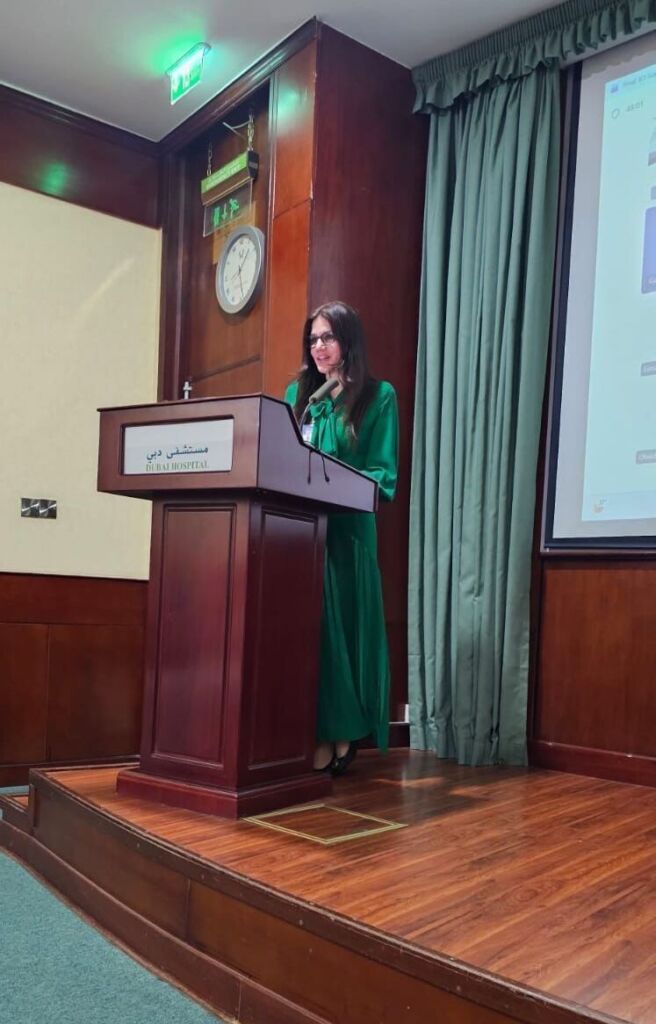
Education served as a bridge for Dr. Hosn Saifeddine as she transitioned from her childhood years into her academic years. It enabled her to bridge the divide between uncertainty and opportunities. In Lebanon, she was brought up in an education system that was founded on French, yet Arabic continued to be the language of home, culture, and feeling throughout her childhood. By the time she was a young child, she had acquired the ability to think in various languages and systems, a skill that would later be crucial in her professional life on a global scale.
Her upbringing in France has instilled in her a sense of discipline, accuracy, and academic seriousness. In later years, as she began her pursuit of further education and professional training in English, she experienced yet another period of transition. For the sake of professional communication, she explains that Arabic is a language that is rich and expressive, French is a language that is structured and strict, and English is a language that is easier and more practical. Because of her capacity to adapt to many languages, she acquired the self-assurance to enter new surroundings without sacrificing her lucidity or her personality.
At the end of her secondary education, she faced a decision that would shape her identity. She initially intended to pursue a career in medicine, and she was admitted into medical school, just like many other students who have achieved a high level of success. In the eyes of her family, this was a route that was both honourable and respected. However, as she contemplated the many years of training that were ahead of her, she came to the realisation that success alone was not sufficient. She was looking for a line of work that was more personable and less impersonal.
After that, she investigated the field of medical laboratory science and even went to an interview for that particular program. During the course of that interview, a director shared with her a piece of information that silently altered her future: the work she would be doing at the laboratory would involve very little connection with other people. That sentence is still fresh in her mind. Despite the fact that she was reserved, she was aware that she did not want a job that was divorced from connecting with other people. She desired to be in the company of other people, to acquire new skills, and to make an emotionally significant contribution.
“We make a living by what we get, but we make a life by what we give.”
Phase 3 : Learning Nursing from the Inside Out
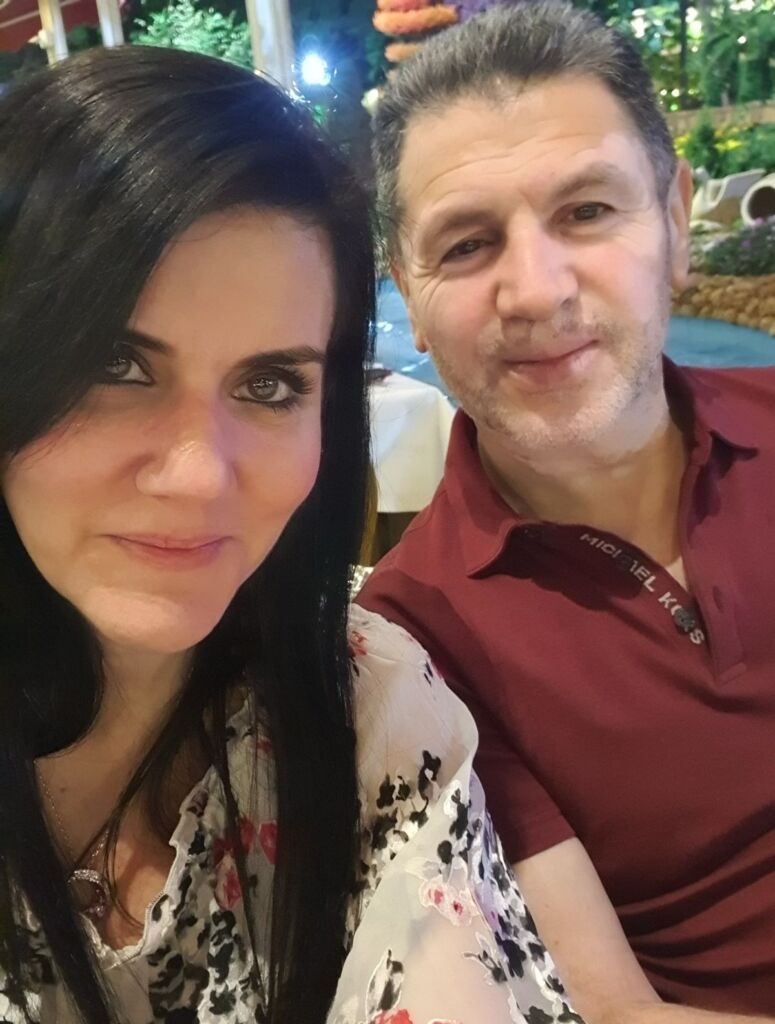
Dr. Hosn Saifeddine began her professional life not in offices or boardrooms, but rather at the bedside, where care is immediate, intimate, and profoundly human. This experience was the beginning of his professional life. Upon graduating with a Bachelor of Nursing degree from the National College of Nursing in Beirut in 1990, Dr. Hosn Saifeddine initiated her career in the hospital at a young age, embracing one of the most demanding environments in the healthcare industry.
She was employed as a Staff Nurse at Makassed General Hospital in Lebanon from October 1990 to June 1992, during which time she provided care to patients in the Intensive Care Unit and the Coronary Care Unit on a regular basis. The patients in these units were people whose lives depended on precision, timing, and compassion. These units exposed her to the full reality of critical disease. The experience was a challenging beginning for a young nurse, but it instilled in her a profound respect for both the scientific community and the fragility of the human condition.
It wasn’t long before her expertise and commitment brought her back into the classroom. Between the months of August 1992 and September 1994, she worked as a Nursing Instructor at the National College of Nursing in Lebanon, which was the same educational establishment where she had completed her nursing education. During her time in this position, she was responsible for teaching Medical-Surgical Nursing, Pharmacology in Nursing, and Fundamentals of Nursing. In addition, she was responsible for overseeing students in Intensive Care Units and Coronary Care Units. To teach so soon after graduation, she needed to have self-assurance, clarity, and a good mastery of the material she was teaching. In addition, it demonstrated how rapidly she gained respect in the professional world.
On her expedition, which began in July 1995, she travelled beyond Lebanon. After relocating to the United Arab Emirates, she established herself as a Nursing Tutor at the Al Ain School of Nursing, where she was employed until June of 1996.
Note of Thanks
This biography serves as a reflection of the many hands and hearts that contributed to the trip that Dr. Hosn Saifeddine has taken. Although her tale is one of self-control, leadership, and tenacity, it is also profoundly based in the assistance that she received along the road. She would like to express her deepest thanks to her family, whose love, patience, and understanding enabled her to successfully carry out the rigorous obligations of healthcare leadership while maintaining her focus on the things that are truly important.
She expresses her gratitude to her parents, whose guidance and principles during her upbringing laid the groundwork for her resilience, as well as to her siblings, who were there for her during the years that shaped her personality, with whom she experienced both uncertainty and intimacy. She would like to express her gratitude to her husband and girls for the sacrifices they have made, the encouragement they have given her, and the steadfast faith they have shown in her purpose, even when she was working long hours and making difficult decisions.
She would also like to express her gratitude to her coworkers, mentors, and teams located in Lebanon, the United Arab Emirates, and other locations, whose consistent dedication to providing high-quality care and ensuring the safety of patients brought about every success. She concludes by expressing her gratitude to each and every patient and family member who has placed their trust in healthcare experts, thereby serving as a constant reminder to her of the significance of this line of work.
Thanks,
– Dr. Hosn Saifeddine