"Knowledge does not shrink when shared. It only grows larger in more hearts, in more hands, in more lives."
Introduction
There are lives in which learning becomes more than an achievement. It becomes a habit, a source of strength, and eventually something to be shared. The journey of Dr. Divya Payasi has unfolded in this spirit. From an academically inclined child in an industrial township of Madhya Pradesh to an educator, mentor, music learner, and social contributor, she has continued to find purpose in knowledge and in the possibilities it can create for another person.
Her beginnings were rooted in a middle class family environment where education carried importance. Growing up in the industrial surroundings of Kymore, near Katni, she developed interests that would remain with her for decades. Books drew her naturally toward language and literature, while music gave her another form of expression. She was comfortable on the stage from a remarkably young age and participated actively in school life. Behind these early experiences was a home that encouraged her to read, learn, and develop her abilities.
The path ahead, however, was not without difficulty. A serious health condition entered her life while she was still young and remained a challenge through later years. At a time when even the continuation of her studies appeared uncertain, she chose not to leave education behind. That decision would become deeply significant. She went on to pursue English Literature, teacher education, and further academic learning, eventually turning the knowledge she had fought to preserve into a means of educating others.
Teaching entered her life early. What began as work while she was still pursuing her own education gradually developed into a long association with students of different ages and backgrounds. Dr. Divya taught within formal school settings, conducted spoken English and tuition classes, and worked with learners who needed to begin from the fundamentals of language. Her approach was shaped by the belief that education must meet a learner where that learner stands. For some, progress began with basic letters and words. For others, it meant stronger communication, confidence, or preparation for opportunities ahead.
Over time, the boundaries of her classroom widened. The villages surrounding the industrial area brought her close to children who did not always have equal access to educational facilities, particularly English learning. She began extending her efforts to such students, including those from financially weaker families. What started at a personal level continued for around three decades, gradually bringing education and social responsibility closer together in her life.
Music remained beside her through these years. From childhood performances to formal classical vocal training later in life, it continued to occupy a deeply personal place. She learned alongside her children and encouraged musical learning within her family and among others around her. For her, music eventually came to mean far more than performance. It became connected with peace, faith, inner growth, and her spiritual understanding of life.
“A childhood filled with good values, meaningful books, and creative expression can quietly shape an entire lifetime.”
Phase 1: A Childhood Shaped by Values, Books, and the Stage
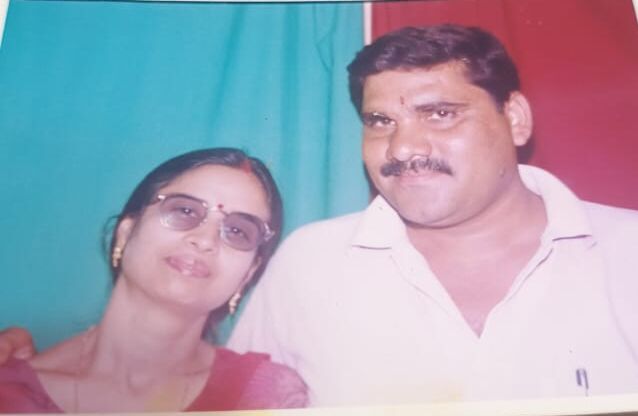
Dr. Divya Payasi grew up in a middle class family in an industrial township near Katni in Madhya Pradesh. The area was closely connected with the cement industry, and people from different professional backgrounds lived there. Employees, managers, and their families formed part of the environment around her, giving everyday life a structured and community oriented character. It was within this setting that her earliest interests, habits, and values began to take shape.
At home, one of the most important influences in her early years was her father, Uma Shankar Shukla. He was associated with INTUC and served in leadership positions, including General Secretary and later Vice President. His professional life remained connected with the cement industry for many years, but what stayed with Dr. Divya most deeply was not only the position he held. She remembered him as an honest, intelligent, highly educated, spiritually inclined, and selfless person. His way of living created a powerful example for her long before she was old enough to fully understand the responsibilities he carried outside the home.
He also took a close interest in her upbringing. He encouraged her to read, supported her studies, and helped create an atmosphere where learning was treated with seriousness. Reading slowly became one of the most natural parts of her childhood. It was not something she associated only with schoolwork. She enjoyed books for their own sake, and that habit remained with her as she grew older.
Her schooling took place in an English medium environment, and she studied there up to Class XII. The school changed in structure and management over time and was later taken over by D.A.V. She remembered it as a good school, one that gave her exposure not only to academics but also to activities beyond the classroom. She was responsible by nature, somewhat reserved, and yet willing to participate. There was a quietness in her personality, but not an absence of involvement. She took part in co curricular and extracurricular activities and remained active in the opportunities that came her way.
Music entered her life unusually early. By around the age of four, she had already begun giving stage performances. Singing came naturally to her, and she also enjoyed acting. For a child so young, standing before an audience with musical instruments around her could have been intimidating, but for Dr. Divya it became familiar very early. The stage was not a place she discovered later in life. It was already part of her childhood.
She also participated in the Kiran competition, which she remembered as an All India level singing competition. According to her own account, she began participating from around four to six years of age and won it three times. These early experiences did not pull her away from academics. Music and studies moved side by side. She remained serious about both and never saw one as a reason to neglect the other.
“Sometimes courage is simply the decision to continue when circumstances offer every reason to stop.”
Phase 2 : When Illness Tested Her Will to Learn
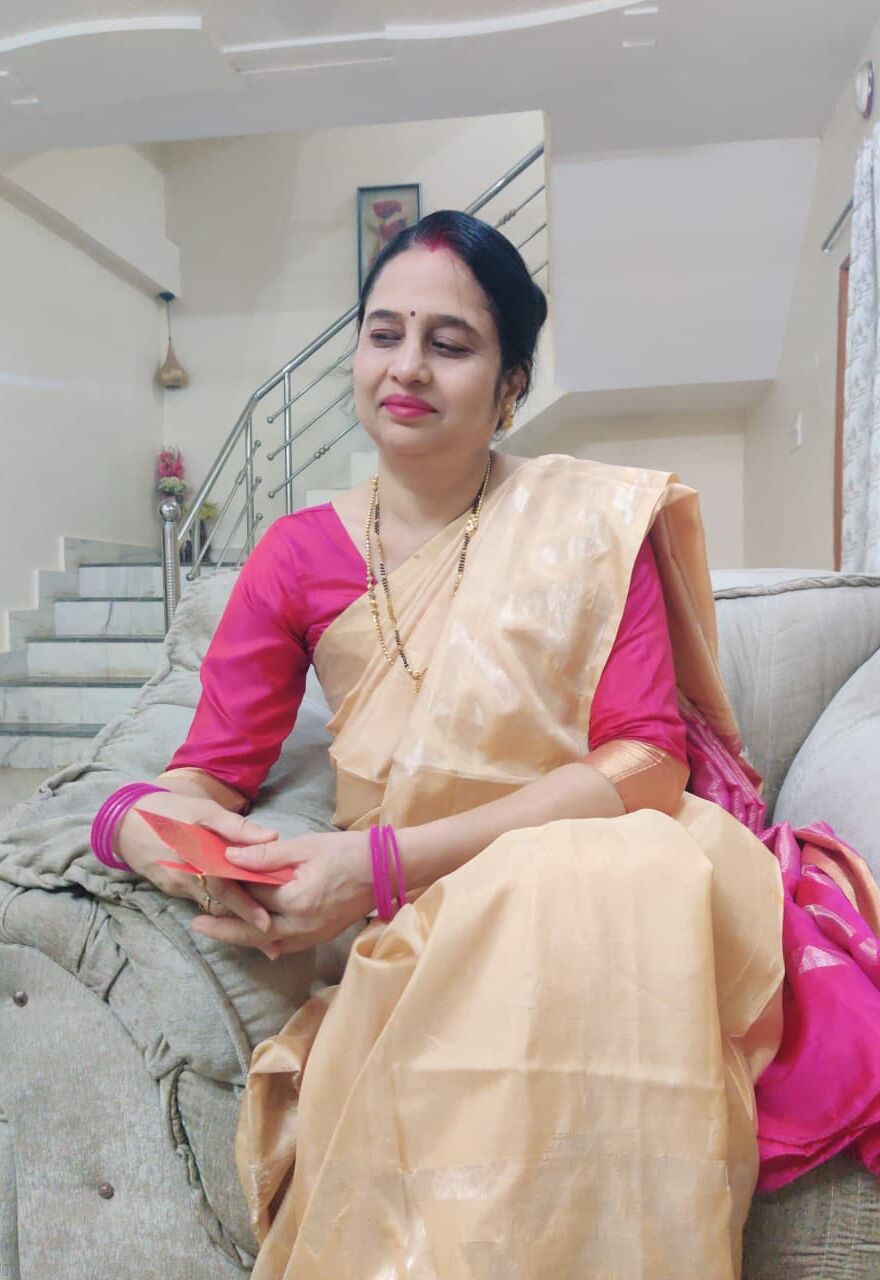
Childhood had given Dr. Divya Payasi a natural closeness to books, music, school activities, and learning. Then, while she was still very young, life changed in a way neither she nor her family could have expected. Around the age of twelve, with the difficulty becoming especially serious during her school years, she began suffering from seizures. What followed was not a passing period of poor health. It became a condition she would have to live with while continuing almost everything else she wanted to do.
The illness was severe enough for her family to take her to Bombay for treatment. Her condition caused serious concern, and the medical opinion at the time was discouraging. There were doubts about whether she would be well enough to continue her studies. For a girl who had always enjoyed learning and performed well academically, the possibility of having to stop studying carried consequences far beyond missing a few classes.
Treatment brought another difficulty. She had to remain on heavy medication. During the earlier years of the condition, the episodes could be frequent. She recalled that at one point she could lose consciousness every three or four days and experience considerable weakness afterward. Ordinary routines therefore had to continue alongside a body that could become unpredictable without warning. Yet education remained part of her life.
There was no dramatic declaration behind that decision. She simply did not leave her studies. Even while undergoing treatment and dealing with repeated physical difficulties, she continued. The same girl who had grown accustomed to reading and learning now had to hold on to those habits under very different circumstances.
Her father became especially important during this period. He did not allow illness to become the only way in which his daughter saw herself. He helped her with her studies and continued encouraging the reading habit he had nurtured in her from childhood. At home, he made it easier for her to remain connected with education when her health could easily have separated her from it.
“The most meaningful choices often begin with a genuine interest that is brave enough to follow its own direction.”
Phase 3 : Choosing English When Few Around Her Did
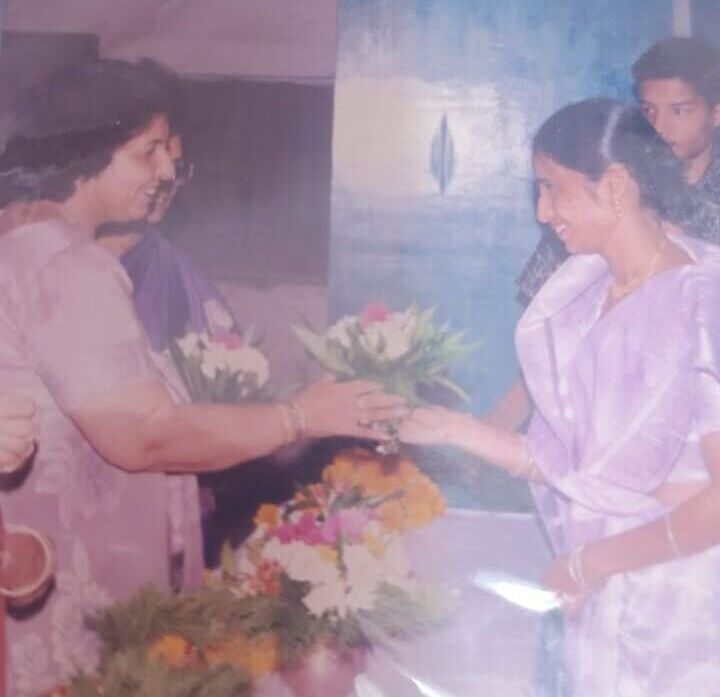
By the time Dr. Divya Payasi reached higher education, reading had already become an inseparable part of her life. English was no longer simply a subject she encountered in school. Literature had begun to hold her attention in a deeper way. Poetry, prose, drama, characters, and the possibilities of language fascinated her enough to influence an important academic decision. She wanted to study English Literature seriously.
That choice carried a different meaning in the small town where she lived. Opportunities and facilities for studying English Literature were limited, and very few students in such surroundings chose it as their area of graduation. Dr. Divya remembers being the first person in her town to opt for English Literature at the graduation level. For her, the decision came naturally from an interest that had been developing for years. She was choosing something she genuinely wanted to understand rather than simply completing a qualification.
She pursued her graduation at Shram Dham College in Kymore. The academic environment introduced her to literature in a more structured and demanding form. The writers she had once approached because she enjoyed reading could now be examined through language, interpretation, criticism, and context. She did not approach the subject casually. She studied literature with what she describes as passion and depth.
Among the people who influenced her during this period was Professor V. C. Pandey, her English Literature professor. Teachers had mattered to her from school onward, particularly those connected with language, but college gave that influence a more focused direction. Under such academic guidance, the interest that had begun privately through books could develop into disciplined study.
English Literature appealed to more than her academic side. It suited someone who had long been interested in expression. Singing had given her one language for emotion, while literature offered another. The written word invited her to observe how thoughts could be shaped, how characters could carry human experiences, and how language could communicate beyond ordinary conversation. She did not abandon her other interests to make room for literature. Instead, reading continued to occupy its own important place beside music.
Graduation did not satisfy her desire to study the subject further. She continued with postgraduate education in English Literature at Rani Durgavati Vishwavidyalaya, Jabalpur. Moving into advanced study allowed her to engage more closely with poetry, prose, drama, and literary criticism. What had begun as an attraction to books was becoming an academic discipline that demanded attention, interpretation, and sustained reading.
Note of Thanks
At the close of these pages, gratitude finds its place not in recounting what has already been lived, but in acknowledging the human connections that continue to matter to Dr. Divya Payasi. Some people entered her life as teachers, some as friends, some as students, and others as family. Each relationship brought its own meaning, and several have remained close to her heart across the years.
She holds sincere regard for Professor V. C. Pandey, whose association with her study of English Literature became meaningful during her academic years. In music, she remembers Shri Kedar Nath Pandey with deep respect. His willingness to recognise her interest and guide her in classical vocal music gave her an opportunity to pursue something that had been part of her life since childhood.
The bond with her children has grown and changed in the most beautiful way. She once held their hands and showed them the way. Now they hold hers. They have become her support, her guides, and her inspiration. Watching them grow gives her a reason to keep dreaming, keep moving, keep looking ahead.
Friendship, too, has retained its value. Rita Gupta, her close friend in Bhopal, remains connected with her despite the distance between them. Such relationships remind Dr. Divya that closeness is not always determined by how often people are physically present in one another’s lives.
Her gratitude also belongs to the many students who allowed her to become part of their lives. Their continued affection, their messages after many years, and the knowledge that they still remember their teacher have given her a kind of happiness she deeply values. Leena Mehdele holds a particularly cherished place among those relationships, representing how a bond formed through education can continue long after lessons have ended.
Dr. Divya remains thankful for every person who trusted her enough to learn from her, encouraged her to keep learning herself, or simply stayed connected through changing years. As she continues looking toward what can still be done, she carries these relationships with gratitude, knowing that the most meaningful part of giving is often the connection that remains afterward.
thanks,
– Dr. Divya Payasi