“Where there is faith, there must also be care; where there is leadership, there must also be humility.”
Introduction
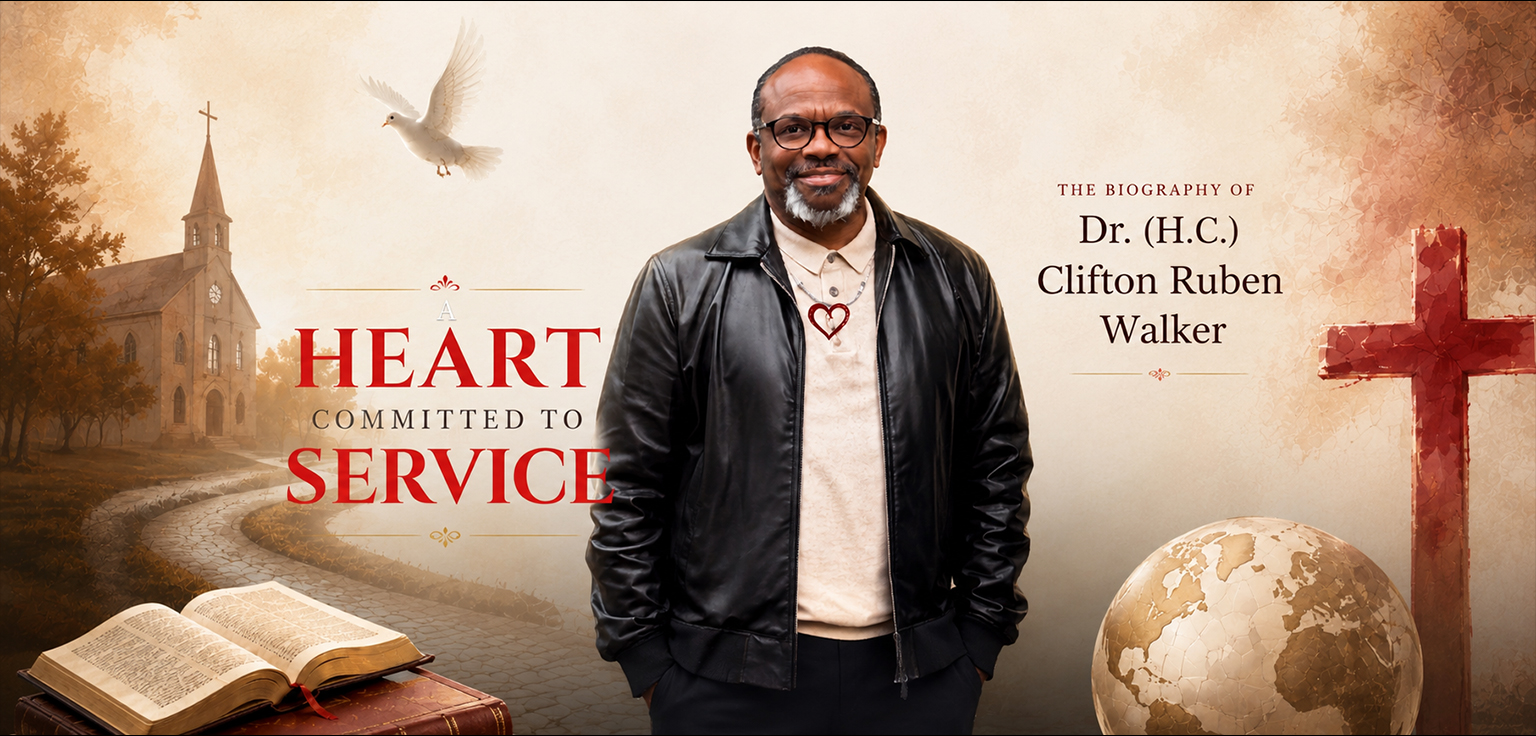
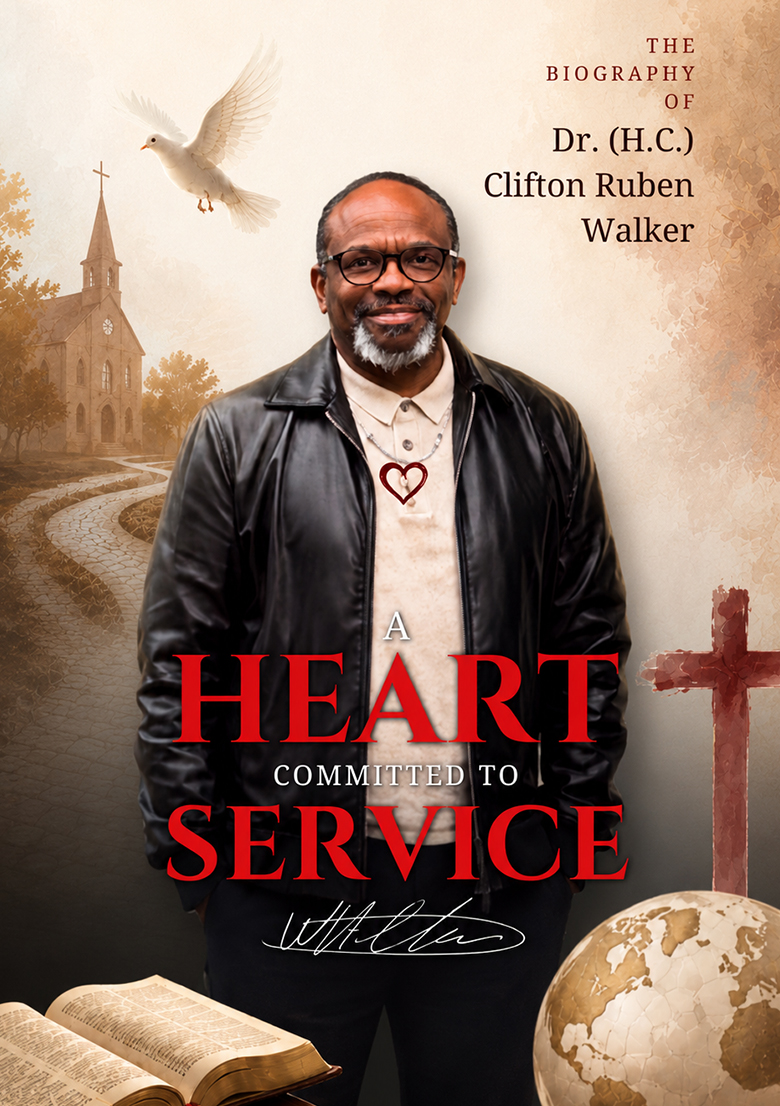
The life of Dr. Clifton Ruben Walker is a journey of faith, service, teaching, and human connection. Born on 4 June 1972 in Paramaribo, he grew into a man whose calling would take him beyond personal ambition and into the deeper responsibility of guiding people, strengthening communities, and serving with compassion. The son of Carlo Walker and Rinette Walker, his story carries the foundation of identity, discipline, and purpose that later shaped his work as a minister, teacher, mentor, and leader.
Before entering the world of theology and ministry, Dr. Clifton completed his Technical Secondary Education at AMTO, the Algemene Middelbare Technische Opleiding, from 1992 to 1995. This early educational stage gave him a disciplined foundation before he stepped into the path that would define the larger direction of his life. From 1995 to 2005, he studied theology at the Theologisch Seminarie, where his spiritual and academic formation deepened over a full decade. His completion of the Hoger Theologische Opleiding became a major milestone in his journey. The diploma, issued in Paramaribo on 16 December 2005, confirmed that he had successfully completed the program and passed the examination. This education was not merely a qualification; it became the soil from which his future service would grow.
His journey into ministry did not remain limited to study alone. Even before his formal ordination, he had already begun walking closely with people in vulnerable circumstances. From 2003 to 2004, he completed an internship with Stichting Stop Geweld Tegen Vrouwen, where he developed the ability to listen with patience, observe with care, communicate with respect, and support women affected by domestic violence and difficult life situations. This experience shaped his pastoral and diaconal sensitivity. From 2004 to 2012, he continued with the organization as a trainer and supervisor, deepening his skills and contributing to a broader approach that looked not only at the victim but also at the wider system and relational dynamics involved in domestic violence.
Alongside this service, Dr. Clifton also stepped into teaching. From 2004 to 2013, he taught religious education at COVAB, the Central Training Institute for Nurses and Allied Health Professions. In that role, he introduced student nurses to spiritual and religious perspectives and helped them understand how belief systems can matter within healthcare and patient care settings. His work reflected a wider vision of care, one that recognized human beings not only through their physical needs but also through their spiritual, emotional, and personal dimensions.
His role as a theological educator continued at the Theologisch Seminarie, where he taught Catechetics and Pastoral Psychology from 2005 to 2006. Through catechetics, he guided students in the content, methodology, and didactics of Christian religion. education, especially in relation to faith formation for children and young people. Through pastoral psychology, he helped students understand how counseling and therapeutic methods could support individuals facing grief, loss, questions of meaning, relationship difficulties, and struggles of faith. These responsibilities showed his ability to bring together spiritual care, education, emotional understanding, and practical guidance.
After completing his theological studies and fulfilling his vicariate and assistant ministry under episcopal supervision, he entered a new chapter of formal church service. From 2006 to 2007, he served as an Assistant Minister within the Moravian Church Suriname, where he was ordained as a Deacon and authorized to assist in administering the sacraments while providing pastoral leadership and care. From 2007 to 2009, he served as an Ordained Minister, working in two congregations and two affiliated schools.
“Every person is born for a purpose, and every life carries a story worth telling.”
Phase 1: Roots in Paramaribo and the Foundation of Identity
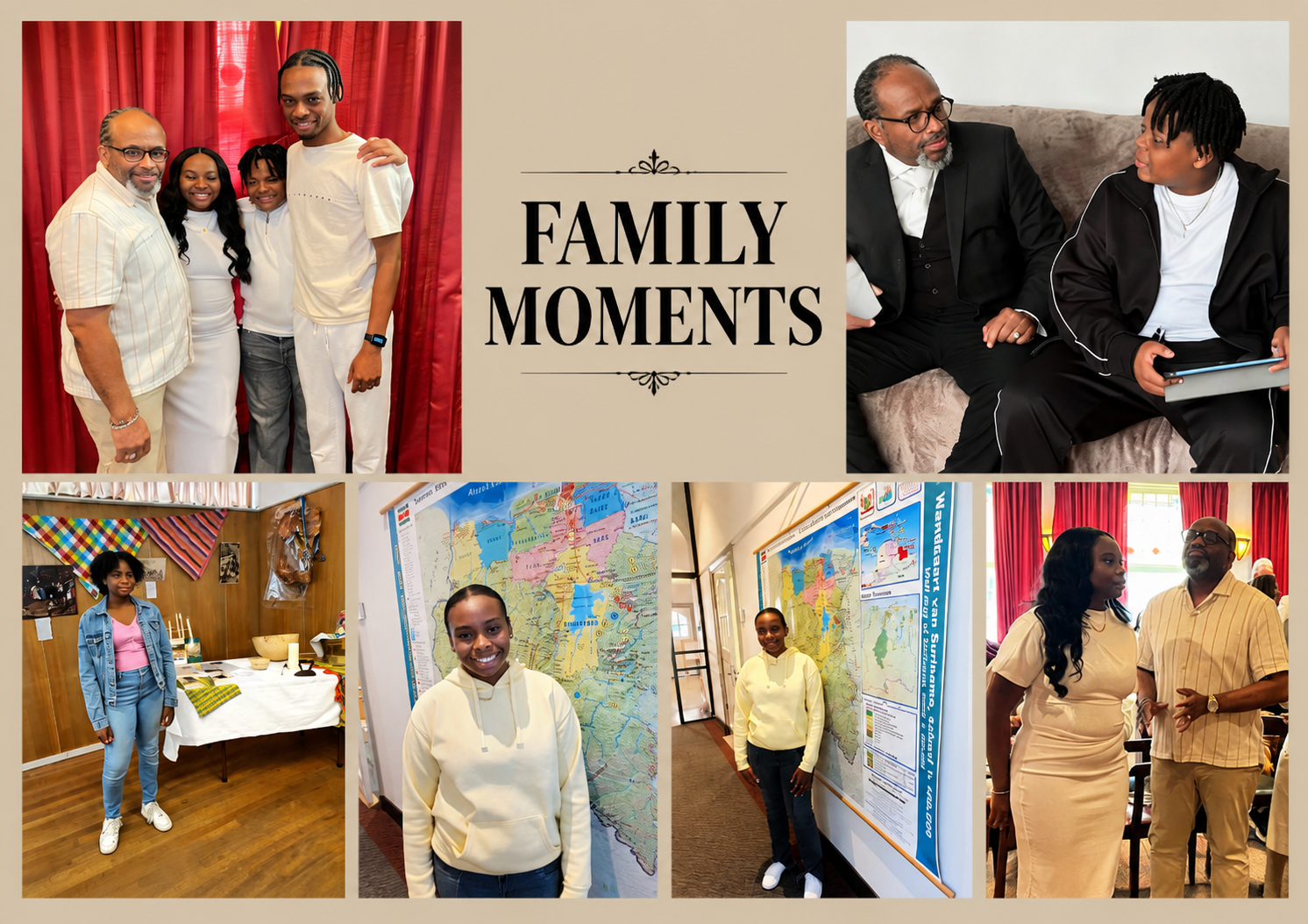
The story of Dr. Clifton Ruben Walker begins in Paramaribo, where he was born on 4 June 1972. Every life begins with a place, a name, and a family, but over time, those beginnings become more than simple facts. They become the quiet foundation upon which character is built, values are shaped, and purpose slowly finds its direction. For Dr. Clifton, his early identity was rooted in the city of his birth and in the family into which he was born. His father, Carlo Walker, and his mother, Rinette Walker, form an essential part of that foundation. Their names are connected to the earliest chapter of his life, the chapter before ministry, before leadership, before teaching, and before the many responsibilities that would later define his public journey.
In understanding the life of Dr. Clifton, it is important to begin with this foundation because a biography is not only about what a person achieves. It is also about where the person comes from, what shaped the first sense of belonging, and how identity quietly prepares the ground for future service. His name, Clifton Ruben Walker, carries with it not merely an official identity but a life that would gradually become connected with faith, care, education, and community.
Before he became known through pastoral leadership and theological work, he was first a son, a child born in Paramaribo, and a person whose journey would unfold step by step through learning, discipline, responsibility, and service.
Paramaribo stands at the beginning of his story as the place where his life first took shape. It is the point from which the rest of his journey can be traced. Later, his path would move through theological education, church leadership, pastoral care, teaching, regional responsibility, and intercultural service, but the emotional beginning remains tied to the place of his birth. The simplicity of this fact carries meaning because it reminds the reader that every larger calling begins with a personal beginning. Dr. Clifton’s work would eventually touch communities across different regions and cultures, yet his life did not begin in the language of titles or positions. It began with family, identity, and the quiet unfolding of a life that would later become deeply rooted in service.
His parents, Carlo Walker and Rinette Walker, are part of the personal ground from which his life journey emerged. Their mention is not simply a formal record but a recognition of the family line connected to him. In a life devoted to guiding people, caring for communities, and supporting individuals in difficult circumstances, the importance of human connection becomes clear. Dr. Clifton’s later work would require patience, listening, responsibility, and the ability to understand people beyond surface appearances. Such qualities do not appear suddenly; they grow over time through life experience, education, and the steady shaping of one’s inner world.
The early phase of his life also introduces the importance of identity before vocation. Long before he served as a minister, lecturer, pastoral coordinator, or leader, he carried the personal identity of someone whose life would gradually move toward a larger calling. His journey shows that purpose is often not revealed all at once. It may begin quietly, without the clear shape it later takes. A person may not immediately know the full meaning of his path, but the early years still hold value because they prepare the heart and mind for what is to come.
“Education is the kindling of a flame, not the filling of a vessel.”
Phase 2 : A Disciplined Beginning Through Technical Education
The early educational journey of Dr. Clifton Ruben Walker reflects the importance of discipline before direction fully reveals itself. Every meaningful life has a stage where the foundation is quietly strengthened, often before the person can see where that foundation will lead. For Dr. Clifton, this stage came through his years of technical secondary education at AMTO, the Algemene Middelbare Technische Opleiding, from 1992 to 1995. This period stands as an important part of his development because it represents the structured beginning of his formal preparation before he moved toward theological education and ministry.
Technical education is often associated with focus, method, patience, and practical understanding. In the life of Dr. Clifton, this period can be seen as a formative stage that helped prepare him for later responsibilities. His journey would eventually take him into pastoral leadership, church service, teaching, counseling, community development, and intercultural ministry, but before those paths opened, he passed through an educational environment that required commitment and steadiness. From 1992 to 1995, he remained connected with a form of learning that demanded regular effort, attention, and a willingness to build knowledge step by step.
This phase of his life is not simply a record of schooling. It is the first visible sign of a disciplined path. Long before he became known as a minister and educator, he was a learner. That identity is important because much of his later contribution would depend on his ability to keep learning, keep adapting, and keep applying knowledge in different human situations. A person who later teaches others must first understand the value of being taught. A person who later guides others must first pass through his own process of preparation. In this way, Dr. Clifton’s time at AMTO becomes more than an educational detail; it becomes part of the inner structure of his journey.
His studies during this period came before his decade of theological education. Therefore, this chapter stands between his personal beginnings and his spiritual formation. It shows that his life did not move suddenly into ministry. It moved gradually, through stages of learning and preparation. Such a progression gives his story a natural human rhythm. He did not begin with titles or public responsibility. He began with education, with discipline, and with the steady development of a foundation that would later support larger responsibilities.
The years from 1992 to 1995 were significant because they marked a phase of concentration and preparation. During this time, Dr. Clifton was not yet standing in the roles through which many would later know him. He was still forming the base of his knowledge. habits, and discipline. This makes the phase important in a biography because it reminds the reader that the visible achievements of a life often rest upon earlier stages that may appear simple but are deeply necessary. The public work comes later, but the capacity to carry that work begins much earlier.
In the life of Dr. Clifton, education became a repeated and meaningful thread. His later studies in theology, his work as a lecturer, his teaching of religious education, his guidance of future church leaders, and his training responsibilities all show that learning and teaching remained central to his journey. Yet this connection with education did not begin at the seminary. It can be traced back to this earlier stage, when he completed technical secondary education and took his first formal steps into a more disciplined world of study.
“Faith is the strength by which a shattered world shall emerge into the light. ”
Phase 3 : Theological Formation and the Deepening of a Calling
The journey of Dr. Clifton Ruben Walker entered a defining stage when he moved toward theological education. After completing his earlier studies, he stepped into a path that would shape not only his knowledge but also his understanding of people, faith, responsibility, and service. From 1995 to 2005, he studied theology at the Theologisch Seminarie, a period that became one of the most important foundations of his life. These years were not simply a passage through academic learning. They were years of formation, patience, discipline, reflection, and preparation for the larger responsibilities that would later become part of his ministry and leadership.
Theological education is different from many other forms of study because it does not remain limited to the mind alone. It asks a person to think deeply, to reflect carefully, to understand human struggle, and to connect belief with life. For Dr. Clifton, this long period of study became a space where his spiritual direction could mature with seriousness.
It was not a short or sudden process. It extended across ten years, showing that his preparation was steady, committed, and rooted in continuity. Such a journey required him to remain focused over time, and this commitment would later be seen in the way he carried his responsibilities in church, education, pastoral care, and community life.
At the Theologisch Seminarie der EBGS, he completed the Hoger Theologische Opleiding, known as HTO. This achievement marked a major academic and spiritual milestone in his life. The program was connected with the theological formation of the Evangelische Broeder Gemeente in Suriname, and it carried great importance in preparing him for the world of ministry. His successful completion of this program confirmed that he had passed through the required learning and examination with commitment. The diploma was issued in Paramaribo on 16 December 2005, recording his result as Geslaagd, meaning that he had passed.
This moment in his journey deserves careful attention because it stood at the point where preparation began moving closer to formal service. A diploma may appear as a document, but behind it lies the unseen journey of years. It represents time spent studying, thinking, developing, and allowing one’s inner life to be shaped by theological understanding. For Dr. Clifton, the completion of the Hoger Theologische Opleiding was not merely an academic success. It reflected his readiness to move forward with a deeper sense of responsibility.
The value of this education was also recognized through its academic standing. The HTO program was considered equivalent to the D1 program of the Protestant Theological University of Kampen. This connection gives a clear sense of the level and seriousness of the formation he received. It shows that his theological education was not informal or limited but structured and recognized within a wider academic framework. From 2005, the HTO program was converted into a Bachelor program, further showing the educational weight attached to this course of study.
Note of Thanks
With sincere gratitude, this biography acknowledges the life and journey of Dr. Clifton Ruben Walker, whose service has been shaped by faith, learning, pastoral care, teaching, and responsibility. His path reflects years of commitment to people, institutions, congregations, students, families, and communities across different cultural and spiritual settings. Through every role he has carried, he has remained connected to the deeper purpose of serving others with patience, humility, and understanding.
Dr. Clifton’s heartfelt thanks belong first to the foundation of his life, his parents, Carlo Walker and Rinette Walker. Their place in his journey remains meaningful, as every life of purpose begins with the roots that give it identity. From his early beginnings in Paramaribo to his growth into ministry, education, and leadership, their names remain connected to the story of the person he became.
He also extends gratitude to the institutions and communities that formed and trusted him, including the Theologisch Seminarie der EBGS, the Moravian Church, COVAB, the congregations and schools he served, and the communities across Suriname, Curaçao, Aruba, Sint Maarten, French Guiana, and the Netherlands. Each place gave him opportunities to serve, learn, guide, and grow.
This note of thanks also honors the students, future church leaders, families, teachers, and individuals who became part of his journey. Their trust gave meaning to his work and deepened his understanding of ministry as a living responsibility.
thanks,
– Dr. Clifton Ruben Walker