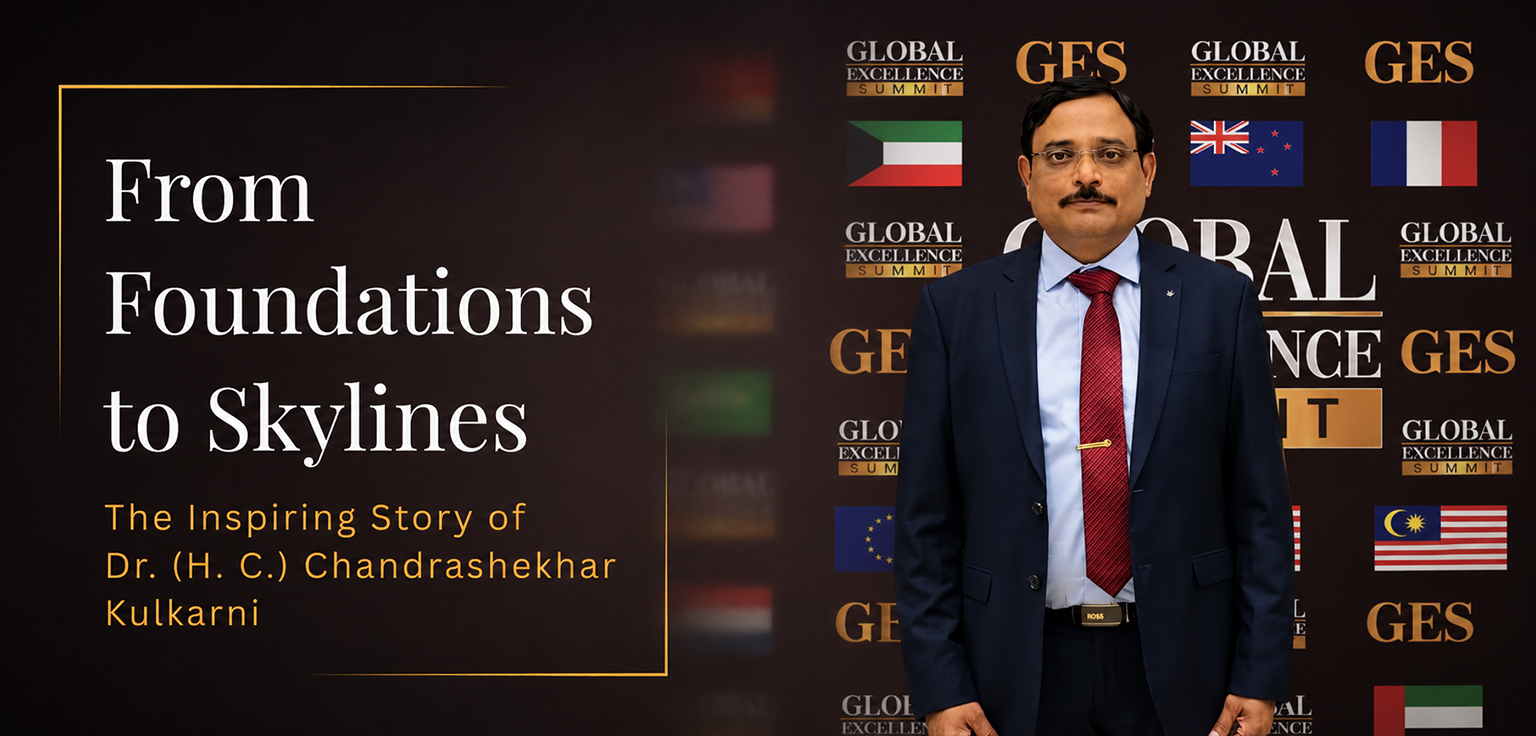
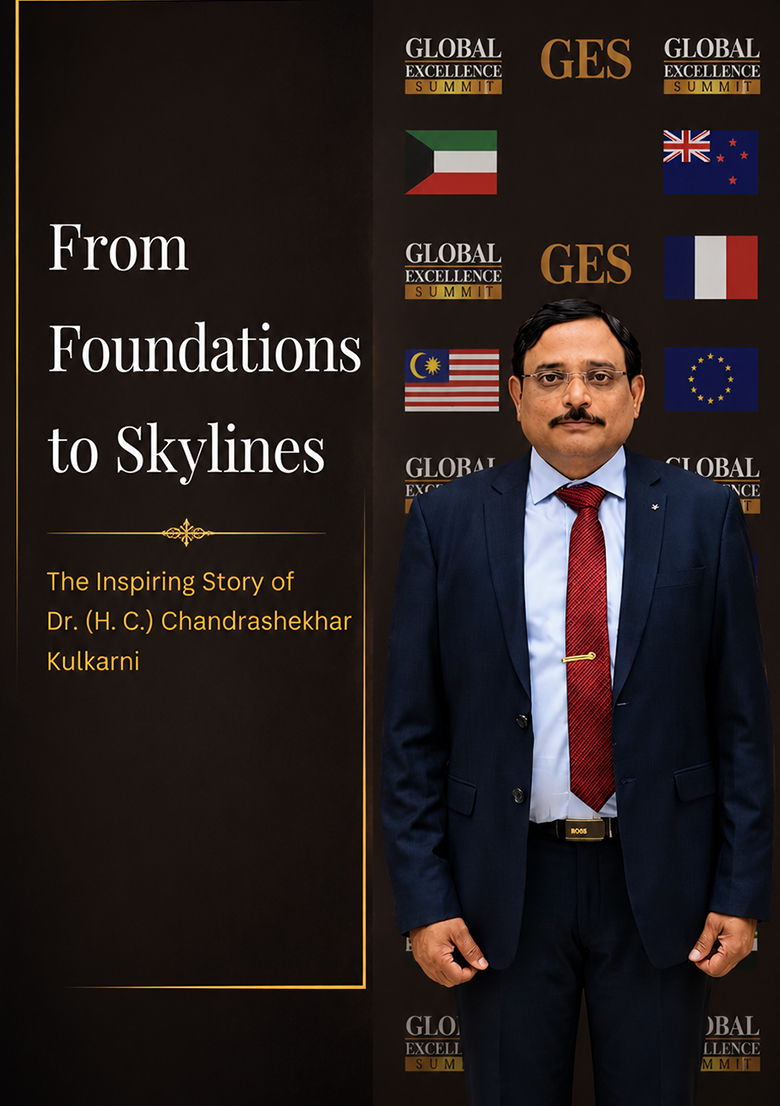
“The measure of a life is not found in the milestones achieved, but in the foundations we lay for generations to build upon.”
Introduction
Dr. Chandrashekhar Kulkarni’s rise from a small village in Maharashtra to a well known civil engineer is a powerful story of hard work, passion, and never giving up on being the best. Dr. Kulkarni was born on November 10, 1972, in Dhondalgaon, a village in the Chh. Sambhajinagar (Aurangabad ) district of Maharashtra. His early life was simple, but it was in these humble beginnings that he learnt the values that would guide him throughout his career. His story is not just about his work achievements; it is also about how he grew as a person, helped others, and stayed committed to making the world a better place through engineering.
Dr. Kulkarni’s journey began when he went to school in his village, where he grew up in a family that valued education. From a young age, he learnt how important it was to work hard and be determined. This sense of discipline stayed with him for many years. He finished high school at Gujarati Highschool, where he started to show his talent for maths and science. He did well in school early on, which helped him figure out what he wanted to do with his life. He quickly realised that civil engineering would be the field where he could make a big difference.
Dr. Kulkarni went to the Government Polytechnic Jalna, Maharashtra, after finishing his 10th grade to get a diploma in civil engineering. He was one of the top 30 students in the state because of his hard work and excellent academic performance. Then he went to the Government College of Engineering in Aurangabad to get his Bachelor’s degree in Civil Engineering. He didn’t stop there with his education. In 1999, he got his Master’s in Structural Engineering, which helped him build on what he already knew.
Dr. Kulkarni figured out during these important years that his true calling was at the crossroads of education and infrastructure development. He started his career as a lecturer at the same school where he got his Bachelor’s degree because he wanted to pass on his knowledge and experiences to the next generation of engineers. Dr. Kulkarni was a professor of civil engineering. He didn’t just teach students about theories; he also showed them how to use those theories in real life. He was clearly passionate about teaching, and his students quickly saw him as a dedicated mentor who wanted them to grow.
Dr. Kulkarni’s career took a big turn when he moved from working in schools to working for the government. He became a Assistant Engineer in the Public Works Department of the Government of Maharashtra in 2000. This job was the start of his long career working on big infrastructure projects that would change the look of Maharashtra. He promoted as subdivisional Engineer in 2017. Dr. Kulkarni worked on a lot of complicated projects while he was with the government. For example, he planned and built roads, bridges, and other public infrastructure. He worked for Tribal development , Zilla parishad . His co-workers and bosses respected and admired him for being able to handle complicated projects, deal with the difficulties of government rules, and make sure that deadlines were met.
“Where we begin does not define us; it only shapes the strength with which we rise.”
Phase 1: Roots of Resilience
Dr. Chandrashekhar Kulkarni’s life started in the small, rural village of Dhondalgaon which is in the Aurangabad district of Maharashtra. He was born on November 10, 1972, and his early years were shaped by a strong connection to his roots and the values his family taught him. Dhondalgaon , which is far away from the busy cities of Maharashtra, was not the usual place for someone who would go on to become a leader in civil engineering. But this village, which was simple and unassuming, would shape Dr. Kulkarni’s character, drive, and goals.
Dr. Kulkarni grew up in a simple farmer home where he learnt the value of hard work, discipline, and the lifechanging power of education. Narayan, his father, was a man of few words who was strong and believed in the power of hard work. His mother, Nalini, was the one who cared for him and showed him love and compassion. They helped him build the values that would help him get through the many problems he would face in life.
Dr. Kulkarni’s family put a lot of emphasis on education in those early years, not just as a way to grow as a person, but also as a way to get ahead in life. Dr. Kulkarni understood how important this was right away. He knew that his education was the key to opening doors outside of the village. He was good at learning from a young age, especially in subjects that needed logical thinking and problem-solving, like maths and science.
He went to the Zilla Parishad School Dhondalgan, a small school that didn’t have a lot of money but gave him a good start on his academic journey. He learnt the basics of maths and science at this school, which would later become his favourite subjects and a lifelong passion. The school was not fancy, but the teachers were very dedicated to teaching the students the value of education, even though they didn’t have a lot of money.
Dr. Kulkarni often talks about how much he enjoyed his time at Zilla Parishad School, where he made close friends with both teachers and other students. He first discovered his love for maths here, which felt like a puzzle that needed to be solved. Dr. Kulkarni loved breaking down hard problems and finding solutions, whether they were in geometry, algebra, or calculus. His outstanding schoolwork quickly made him stand out, and his teachers saw that he had a lot of potential. They thought he was not only a smart student but also someone who could do well in any field if he had the right chances.
“Education is the first architecture of destiny—built one lesson, one struggle, and one victory at a time.”
Phase 2 : Building the Base
Dr. Chandrashekhar Kulkarni’s academic journey, which would eventually take him to the top of civil engineering, really started after he did well in high school. He was on the right track to follow his dreams because of his great grades, but the road ahead was not going to be easy. He did well in school at first, which helped him a lot, but it was during his time at the Government Polytechnic in Jalna and the Government College of Engineering in Aurangabad that he really started to develop his engineering skills.
After finishing high school in his hometown of Dhondalgaon, Dr. Kulkarni decided to continue his education by getting a diploma in civil engineering at the Government Polytechnic in Jalna, Maharashtra. This was an important time in his academic career because it would show him how the theories he had learnt in school could be used in real life. He faced challenges right away when he moved from a small village school to a more formal academic setting, but he was excited to learn more about civil engineering.
Compared to Dhondalgaon, Jalna was a busy town, and the Government Polytechnic was a school that attracted students from all over the area. The schoolwork was harder, and Dr. Kulkarni, who was sure of his skills, quickly realised that he needed to work harder. Going from the simple life of a village to the complicated life of a technical college was both exciting and scary. But he found comfort in his studies, especially in subjects like surveying, structural mechanics, and material science, which were important to his civil engineering training.
Dr. Kulkarni threw himself into his classes when he first started at the Polytechnic. He was very interested in the basics of civil engineering, which include learning how to build structures that last, how to design roads and bridges, and how to make safe, useful places for people to live and work. It was easier for him to make the switch because he was naturally good at maths, solving problems, and thinking logically. But what really set him apart was his work ethic and determination. Dr. Kulkarni was always looking for answers, even when he was up against problems that seemed impossible to solve.
Dr. Kulkarni learnt a lot about civil engineering while he was a student at Government Polytechnic. What he learnt in school about theory was now useful in real life. He worked on projects that needed him to use his hands and think outside the box, like surveying land and figuring out how much weight structures could hold. His professors saw how eager he was to learn and how well he could think critically, and he quickly became one of the best students in his class.
“Knowledge becomes power only when discipline gives it direction.”
Phase 3 : The Scholar’s Path
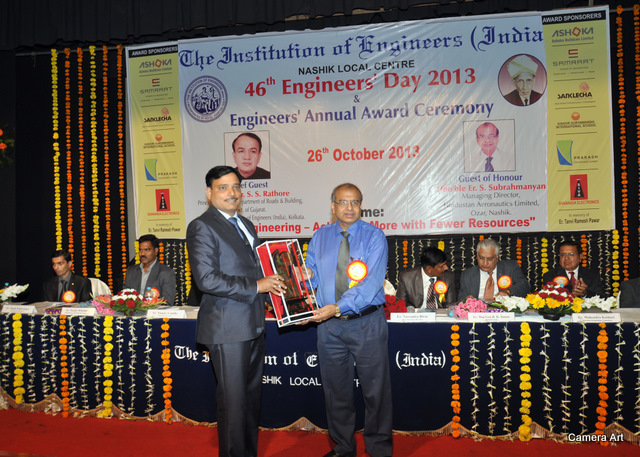
Dr. Chandrashekhar Kulkarni knew exactly what he wanted to do with his life after he got his diploma in Civil Engineering from the Government Polytechnic in Jalna, Maharashtra. His academic journey had already made him smarter, but he wanted to learn more and understand more, so he decided to get a Bachelor’s degree in Civil Engineering. This choice started a new chapter in his life. In this chapter, he would not only learn more, but he would also start to make important contributions to the field of civil engineering.
Dr. Kulkarni went to the Government College of Engineering in Aurangabad, Maharashtra, which is one of the best schools in the area. This school had high academic standards, great teachers, and well-equipped labs, making it the perfect place for a student like Dr. Kulkarni who wanted to do well. The change from a diploma program to a full-fledged bachelor’s degree program was big, both in terms of how hard the work was and what was expected of students. But Dr. Kulkarni’s previous success in Jalna gave him the confidence to start his studies with enthusiasm and determination.
Dr. Kulkarni quickly learnt that civil engineering was a big and complicated field with a lot more to learn than he had thought when he first started college. The Bachelor’s program wasn’t just about learning how to do things; it was also about learning how to think critically, understand the rules of infrastructure design, and find practical solutions to tough problems. Dr. Kulkarni was fascinated by the wide range of civil engineering topics he studied as an undergraduate. His love of maths and logic made it easy for him to move on to more difficult subjects like structural mechanics, geotechnical engineering, and transportation planning.
The quality of the teachers was one of the most important things that happened to him while he was in Aurangabad. Not only were the professors at the Government College of Engineering experts in their fields, but they also loved teaching and helping students. Dr. Kulkarni became friends with many of them and had deep conversations with them about engineering theories and methods. These interactions were very important in shaping his views on school and his career goals. During this time, Dr. Kulkarni came to the conclusion that civil engineering is not only about building things but also about finding ways to solve the problems that society faces, such as those related to transportation, safety, and sustainability.
His teachers told him to think critically about every project he did and to look at problems from different points of view. He learnt not only how to do engineering but also why some designs work, why materials act the way they do, and why some projects work and others don’t. This deeper understanding helped Dr. Kulkarni figure out how he would do his work in the future. He stopped just trying to finish tasks and started to see his job as an engineer as one of finding problems and coming up with long-term solutions.
Note of Thanks
The author would like to extend heartfelt gratitude to all those who contributed to the creation of this biography, particularly to Dr. Chandrashekhar Kulkarni for his unwavering support and cooperation throughout this journey. His insights, wisdom, and willingness to share his experiences have made this biography possible.
Special thanks are due to Dr. Kulkarni’s family Mrs. Mithila , Master Paarth, and other family members for their continued encouragement, understanding, and belief in his work. Their support has been a cornerstone of strength for him throughout his illustrious career.
The author also wishes to thank Dr. Kulkarni’s colleagues, mentors, and friends, and the team at Civiltech India Pvt Ltd. whose perspectives on his professional and personal life have enriched the narrative.
Lastly, the author is sincerely grateful to the team behind the research, writing, and editing process. Their efforts have brought Dr. Kulkarni’s story to life, and this biography stands as a tribute to his enduring legacy.
thanks,
– Dr. Chandrashekhar Kulkarni