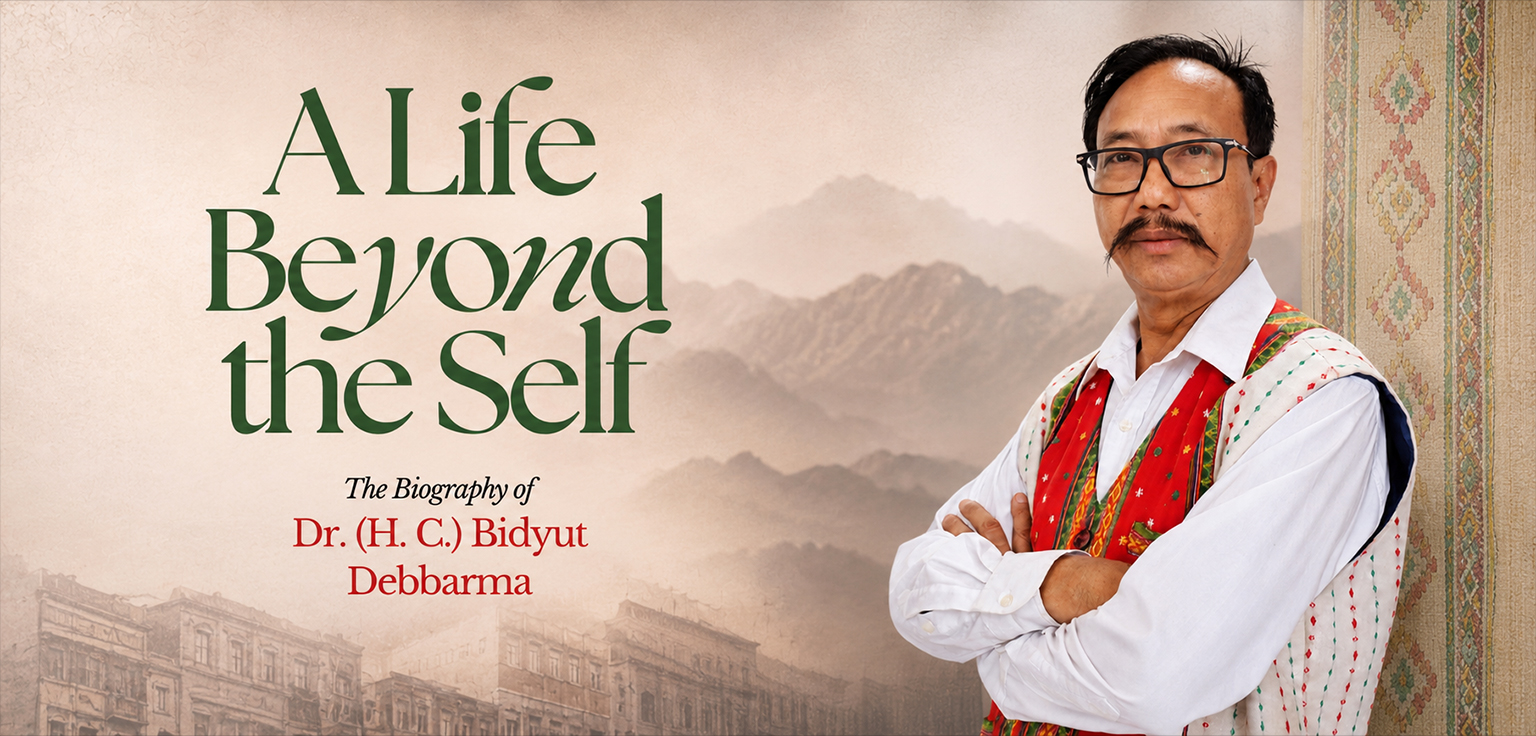
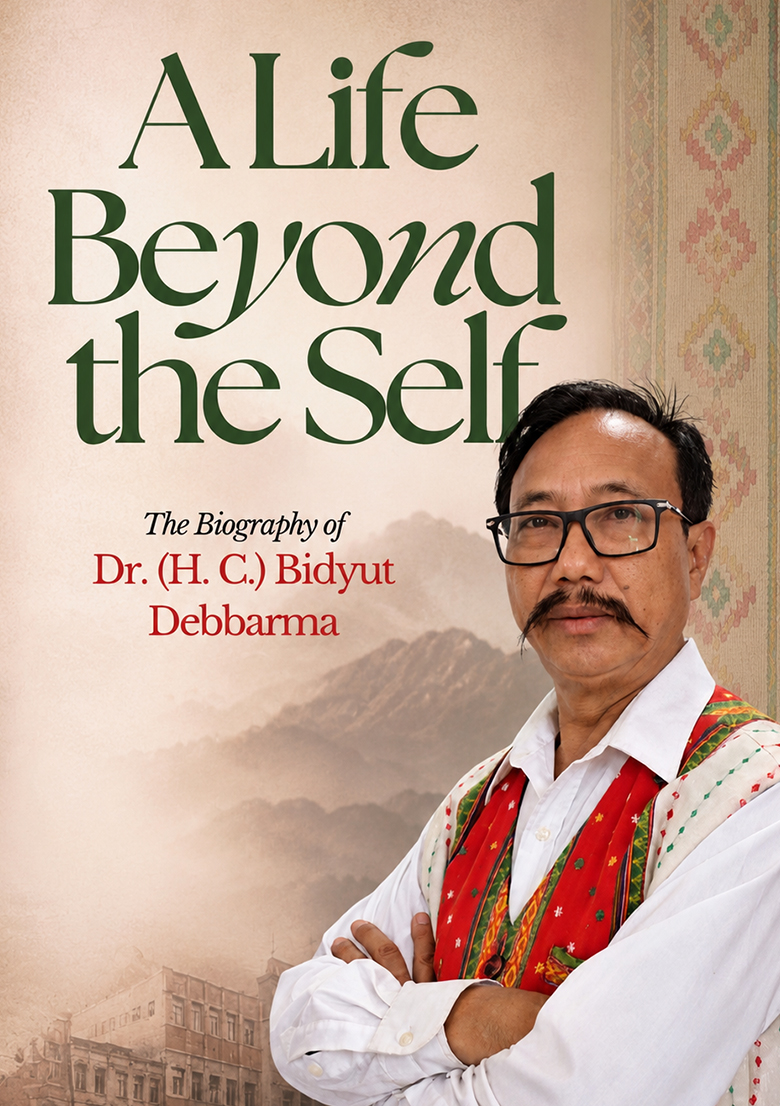
“A life rooted in hardship can still rise with courage, serve with purpose, and leave behind a path of hope for generations to follow.”
Introduction
The life of Dr. Bidyut Debbarma is rooted in the realities of remote rural Tripura, where poverty, limited opportunity, and social uncertainty formed part of everyday existence. Born on 25 January 1969, he grew up in a family that lived within the limitations of a BPL background. His early years were neither protected by comfort nor made easy by privilege. He learnt to adjust, to live away from home when circumstances required it, and to continue his education while carrying responsibilities that many children of his age did not have to face.
Those early conditions gradually shaped the way he understood life. Hardship did not remain only a personal memory for him. It became a lens through which he viewed the struggles of other families, particularly those living in remote villages and indigenous communities. He knew what it meant to study with limited means, to live among people facing poverty, and to search for opportunity without certainty. Because of this, his later interest in public life did not emerge from theory alone. It came from what he had personally seen and endured.
Education became one of the first ways through which he tried to change his circumstances. He studied at Maharani High School, completed the Madhyamik Examination in 1986, and continued to the Higher Secondary level. His academic interests were linked with science, and he appeared in the first batch of the Joint Entrance Examination in 1989. He recalled securing serial number 34 in the PCB category, yet he did not receive the opportunity to pursue an MBBS degree. The disappointment was significant, though it did not end his academic efforts. He continued with B.Sc. studies under Tripura University and later expanded his learning through training in hotel management in Kolkata and a Diploma in Natural Rubber Production from Kerala Agricultural University.
Professional responsibility entered his life through education. In November 1993, he joined Yakhili Academy, where his duties extended far beyond teaching lessons in a classroom. He was expected to live in the hostel with the children, supervise their daily routines, guide them during meals and bathing, and teach them according to the timetable. The work required patience, discipline, and personal involvement. His initial fixed salary was ₹900 per month, and after serving under contractual conditions, he was regularised as a permanent staff member from June 1996. Over nine years as a teacher, he came to understand that education was not limited to books. It also involved care, guidance, example, and the ability to stand beside children as they developed.
The stories they shared with him carried the weight of an unfinished responsibility. They spoke of the movement for the Sixth Schedule, the difficulties involved in reaching Delhi, the preparation of memoranda, and the effort required to make the concerns of indigenous people heard by national leadership. Their words affected him deeply. When they asked him to continue the work they could not complete, he did not receive the request as a casual suggestion. He understood it as a duty.
Dr. Bidyut did not initially imagine politics as his natural field. His academic background was in bioscience rather than political science or law. Yet he gradually came to believe that politics remained the final platform from which decisions affecting large populations could be taken.
“Life should never become too salty. A person must be smart, not oversmart, and must always leave space for the needs of others.”
Phase 1: A Childhood Shaped by Scarcity and Strong Values
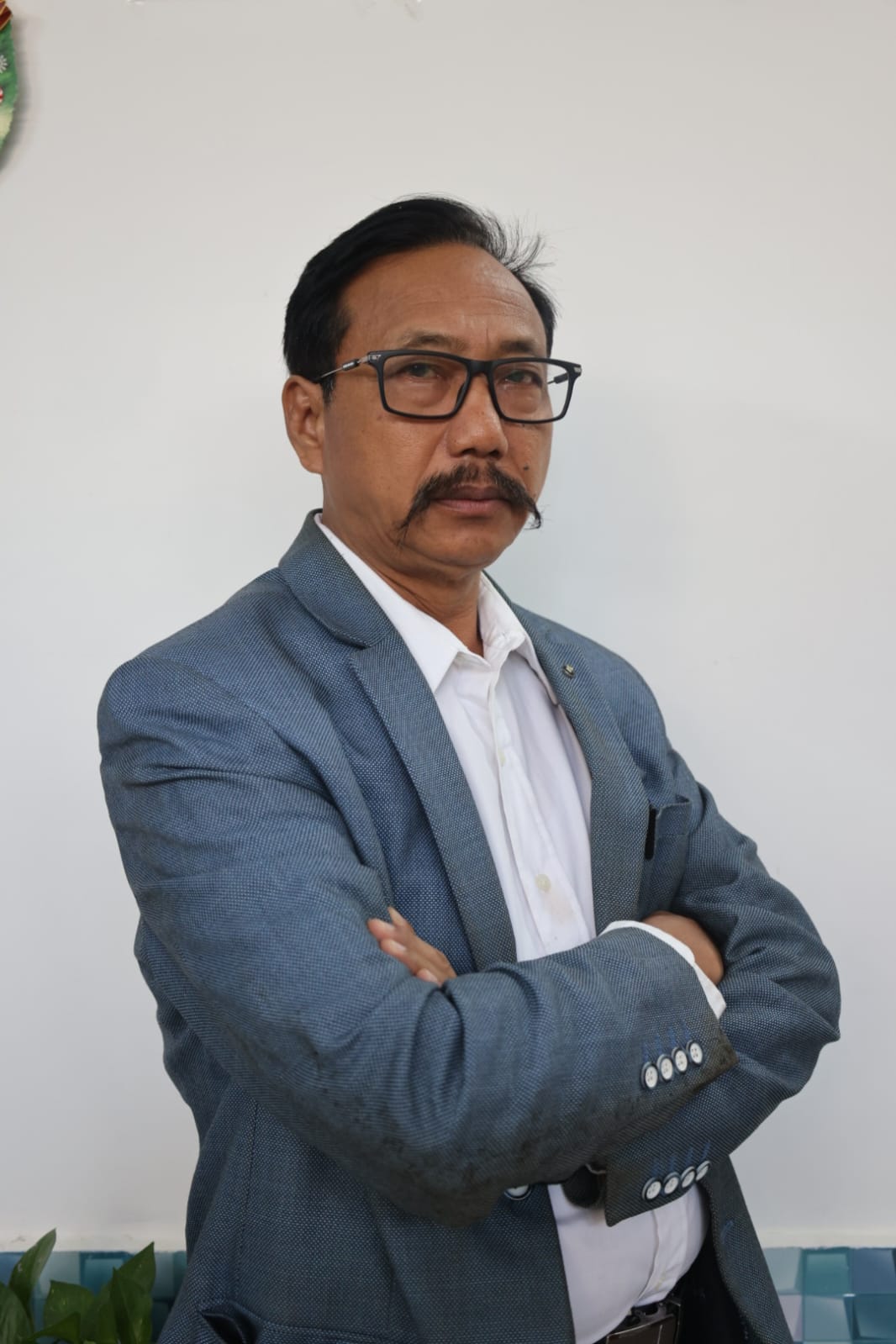
Dr. Bidyut Debbarma was born on 25 January 1969 to Late Banka Debbarma and Late Binapani Debbarma. His childhood unfolded in a remote village of Tripura, far removed from the comfort and opportunities that many families could take for granted. The household belonged to a BPL background, and financial hardship remained a constant part of daily life. Poverty was not an occasional difficulty for the family. It shaped decisions, limited choices, and demanded adjustment from an early age.
The village environment in which Dr. Bidyut grew up offered few material advantages. Life required patience, physical effort, and the ability to manage with whatever was available. He saw how families survived with limited resources and how even basic opportunities could remain beyond the reach of those living in remote areas. These realities entered his understanding long before he became involved in education, social welfare, or public life.
His childhood was challenging, though it did not leave him without direction. At home, his parents gave him values that carried more weight than possessions. Their advice was simple, practical, and connected with everyday life. They did not teach him through complicated ideas. They used examples drawn from food, family, community, and human behaviour. Those lessons gradually became the moral foundation on which he built his decisions.
His father often reminded him that life presents both good and bad choices. A person may receive many suggestions from others, yet the responsibility of choosing correctly remains personal. What appears suitable for one individual may not be appropriate for another. Dr. Bidyut learnt from this that judgement must be guided by awareness, balance, and respect for different perspectives.
One of his father’s most memorable teachings came through the example of preparing food for a large gathering. He asked him to imagine cooking curry or dal for nearly five hundred guests at a wedding or community programme. The cook could not add salt only according to his own preference. He had to consider the tastes of everyone who would eat the meal. Some people might prefer less salt, while others might want more. When the salt was insufficient, a person could add a little to his own plate. When too much had already been added, nothing could easily correct it.
“Even when a person is poor, courage and the willingness to face challenges can keep the future open.”
Phase 2 : Books, Playing Fields and the Refusal to Give Up
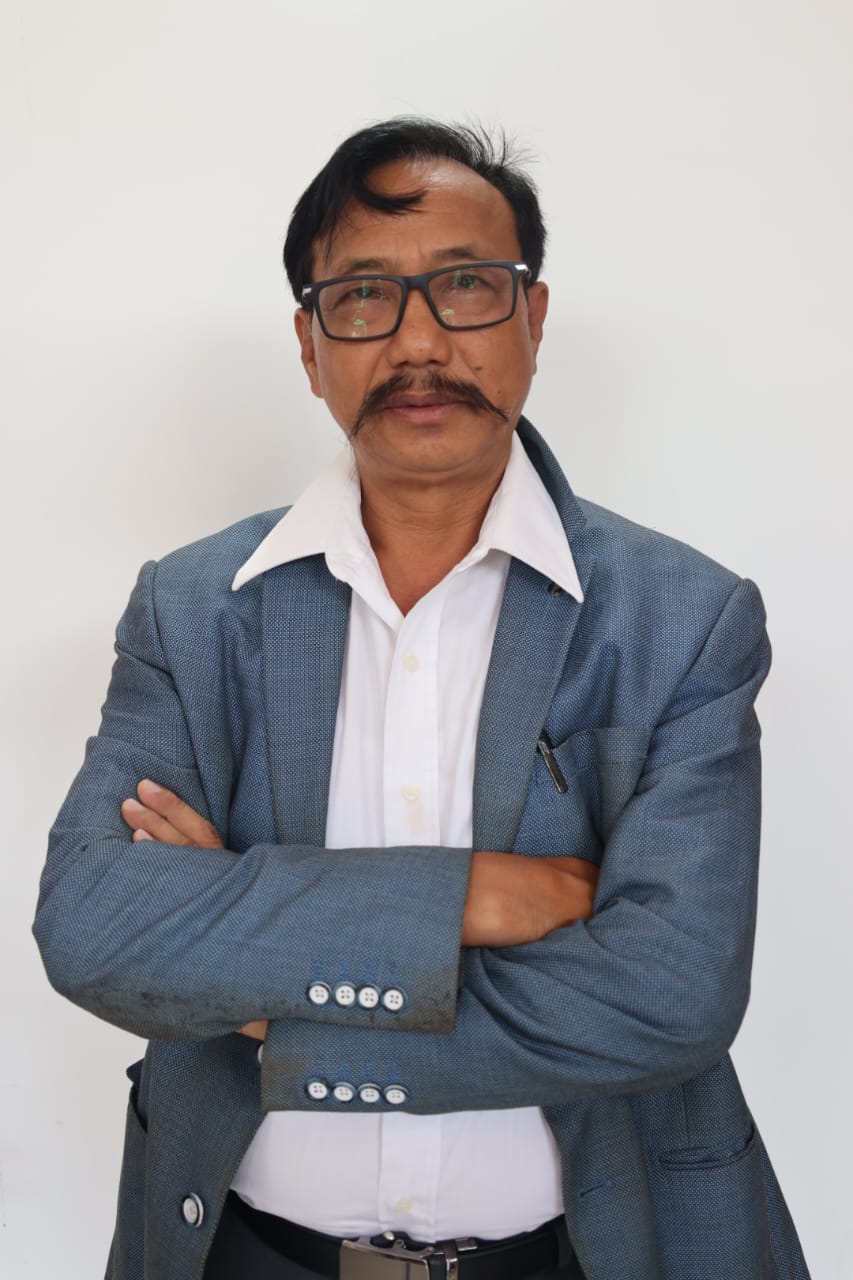
Education gave Dr. Bidyut Debbarma a disciplined direction during years when opportunity could never be taken for granted. He studied at Maharani High School, where he worked his way through the academic demands of secondary education while also remaining involved in sports. His school years did not produce a perfectly smooth record, yet they revealed a quality that would remain visible throughout his life: when one path became difficult, he did not stop looking for another way forward.
In 1986, he appeared for the Madhyamik Pariksha, conducted by the Tripura Board of Secondary Education. The examination commenced on 24 February, marking an important stage in his formal education. His statement of marks recorded performance across languages, science, social studies, work education, physical education, social service, and an additional subject.
In the language group, Dr. Bidyut received 76 marks in the first language and 36 in the second language, giving him a combined total of 112. His science subjects included Mathematics, Physical Science, and Life Science. He obtained 22 marks in Mathematics, 48 in Physical Science, and 46 in Life Science, bringing the science group total to 116.
History and Geography formed the group titled India and Her People. He secured 31 marks in History and 49 in Geography, with a combined total of 80. The examination record also included Work Education, Physical Education, and Social Service, including school performance. His marks in these subjects were 23, 11, and 11 respectively, giving him a group total of 45.
Biology appeared as an additional subject in which he obtained 41 marks. Seven marks earned above the pass requirement were added to his final total in accordance with the examination regulations. His overall score stood at 360, and he passed the Madhyamik Examination in the third division.
The result was significant because it allowed him to continue rather than end his formal education at the secondary level. Academic progress for Dr. Bidyut was not simply about collecting certificates. Each completed stage represented the possibility of reaching a wider field of opportunity. The subjects he studied also strengthened his interest in science, particularly the biological sciences, which later influenced the course choices he attempted to pursue.
“When one opportunity closes, a person must not stand still. Learning can continue wherever courage is willing to carry him.”
Phase 3 : Learning Beyond Familiar Boundaries
After completing his early studies in Tripura, Dr. Bidyut Debbarma began looking beyond the academic environment he had known. His scientific education had already taught him that a changed plan did not have to end the desire to learn. The path before him was no longer limited to one profession or one institution. It began to widen through practical study, travel, and exposure to subjects connected with livelihood and development.
One important stage of this wider learning took him to Kolkata, then commonly referred to as Calcutta. He pursued studies or training connected with hotel management there. The available information does not identify the institution, the exact title of the course, or the duration of the programme. What remains clear is that leaving Tripura for Kolkata represented a meaningful step in his development.
For someone raised in a remote village, studying in a major city demanded adjustment. The change was not merely geographical. It placed him in an environment different from the one in which his early education had taken shape. The experience required him to move beyond familiar surroundings and continue learning in a setting where independence became essential.
His opportunity to study in Calcutta was connected with the support of Dhruv Kumar Reang, an influential figure whom Dr. Bidyut remembered with deep respect. He came from a remote village where proper roads were unavailable, and reaching Agartala involved travelling in a small boat made from bamboo through difficult areas near Bangladesh.
The route was surrounded by forests in which wild animals, including elephants, tigers, and monkeys, were present. His pursuit of education therefore represented far more than academic ambition. It reflected a willingness to overcome isolation, distance, and physical danger in order to reach opportunities that were otherwise inaccessible.
By the time he supported Dr. Bidyut’s studies in Calcutta, Dhruv Kumar Reang was serving as the Tribal Welfare Minister. His assistance carried particular meaning because it came from someone who understood the hardship faced by students from remote indigenous communities. He knew that talent alone was not always enough. Many young people also needed someone willing to recognise their potential and help them cross the distance between aspiration and access.
Dr. Bidyut did not forget this support. The opportunity to study away from home became part of a larger lesson about responsibility. Education could transform an individual, yet its reach became stronger when one educated person helped another move forward. The help he received was therefore not merely personal assistance. It became an example of how leadership could open a door for someone whose circumstances might otherwise keep it closed.
Note of Thanks
Dr. Bidyut Debbarma carries sincere gratitude for all those whose presence, guidance, and confidence gave strength to his life. He remains deeply thankful to his parents, Late Banka Debbarma and Late Binapani Debbarma, whose values taught him to recognise right from wrong, remain content without becoming passive, and consider the needs of others before acting only for himself.
He expresses heartfelt appreciation to his wife, son, and daughter for standing beside him while he balanced family duties with education, agriculture, social welfare, and public service. Their progress and commitment gave him encouragement to continue working for a future larger than his own.
His gratitude also extends to Harinath Debbarma, N. C. Debbarma, Swamcharan Tripura, and Dhruv Kumar Reang. Their wisdom, courage, writings, political experience, and concern for indigenous communities shaped his understanding of leadership. They trusted him with responsibilities they could not fully complete, and that trust became a lasting source of strength.
Dr. Bidyut is equally thankful to Yakhili Academy, where he received the opportunity to teach and guide young students, and to the people of the 9-Halahali-Asharambari Constituency, who elected him as their representative in the Tripura Tribal Areas Autonomous District Council. Their faith placed a public responsibility in his hands.
He also acknowledges the young people, poor families, social workers, blood donors, students, farmers, and indigenous communities whose lives gave purpose to his efforts. Their struggles reminded him why education, health, land, dignity, and opportunity must remain protected.
Above all, Dr. Bidyut offers thanks to every person who encouraged him to keep moving forward. Whatever he has planted through service, he hopes others will continue to nurture until it bears fruit for generations to come.
thanks,
– Dr. Bidyut Debbarma